Skincare
Visceral Fat Testing in Lonehill with Body Composition Scans
· The Glow Up Society
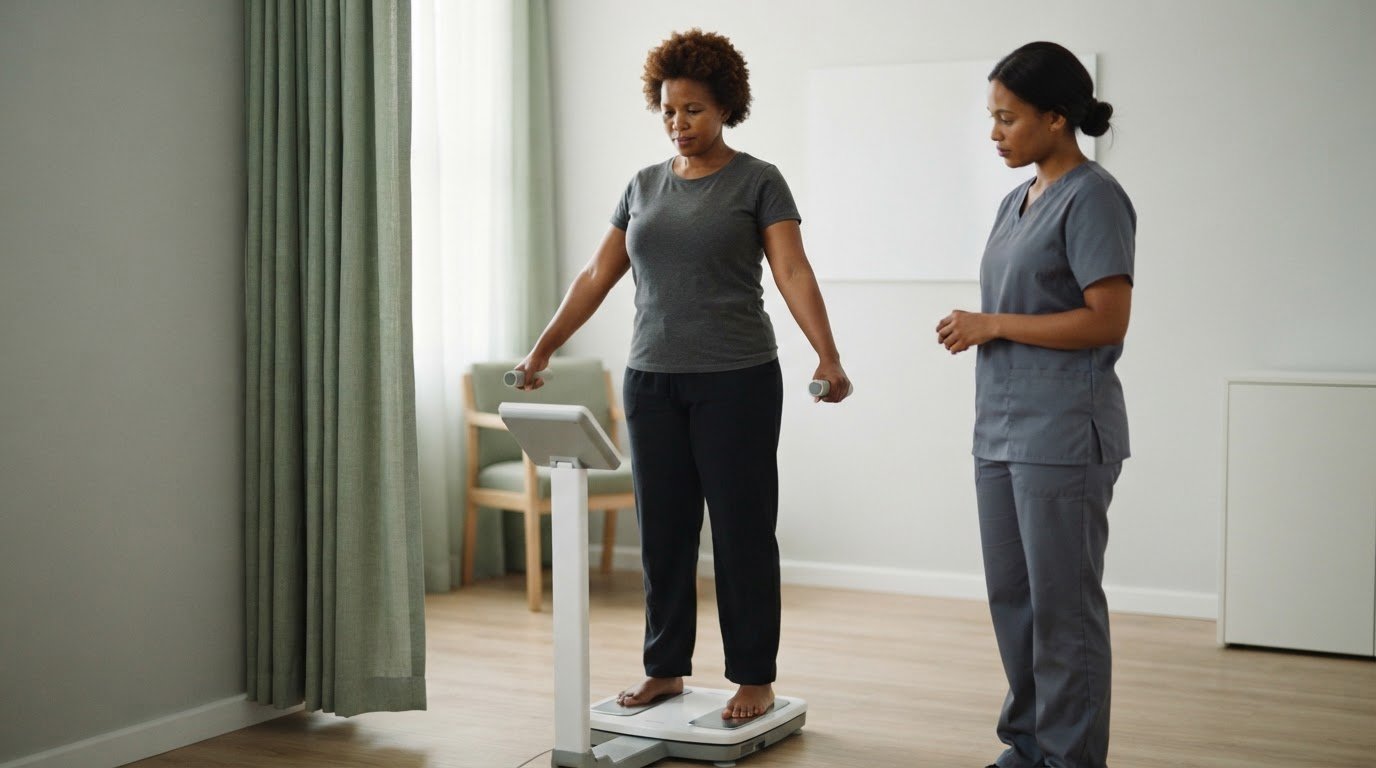
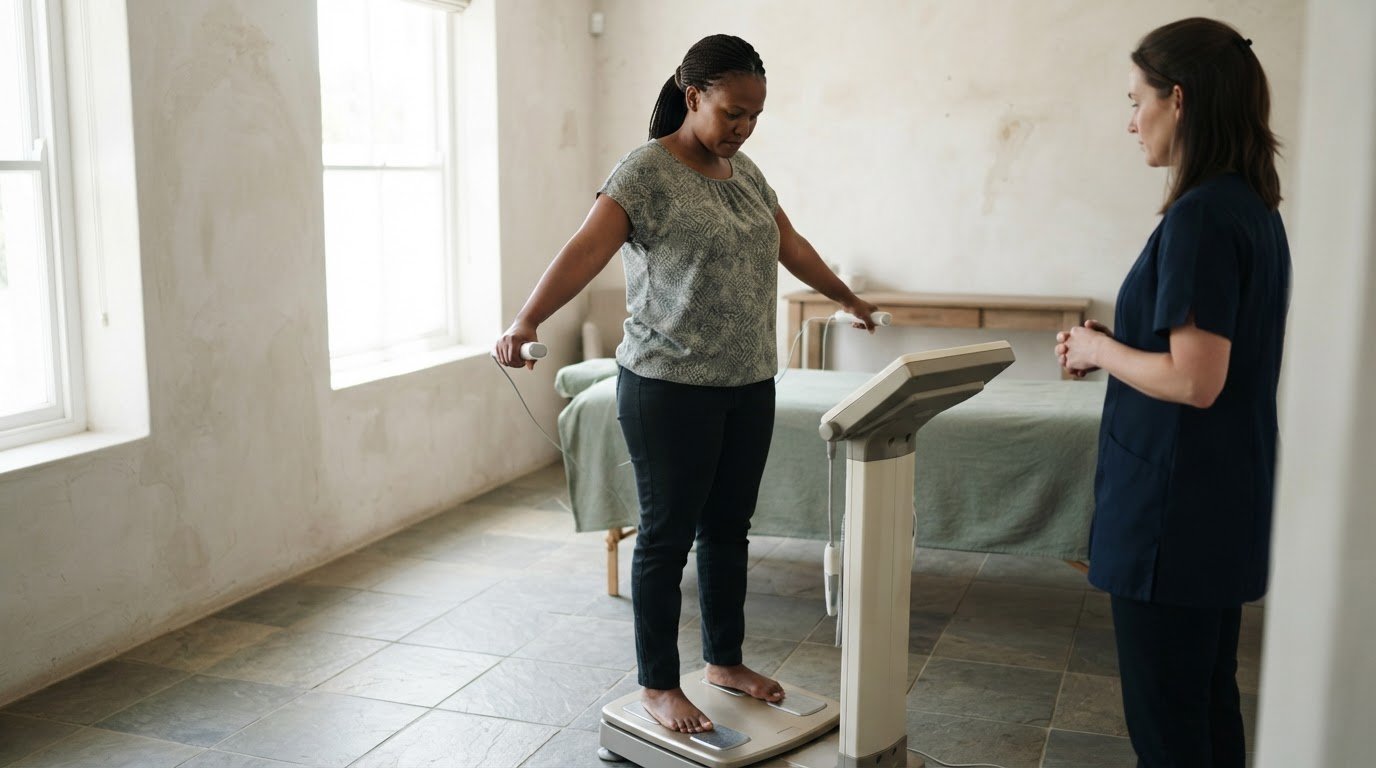
What if the number on the scales tells only part of the story? A visceral fat testing clinic in Lonehill may use bioelectrical impedance analysis to estimate visceral fat as part of a broader body composition assessment, giving context that body weight alone cannot provide.
It’s helpful to understand what that estimate can, and can’t, show. Visceral fat is stored around the organs, and higher levels are linked to heart disease, insulin resistance and inflammation. According to the World Health Organization, imaging techniques are needed to quantify it directly; bioelectrical impedance analysis is moderately accurate compared with gold-standard methods such as DEXA. This guide explains how the scan works, why its estimate is best read as part of a wider picture, and how repeat body composition tracking can reveal changes beyond weight.
Key Takeaways
- Learn what a bioelectrical impedance scan can estimate about visceral fat, and why its reading is not the same as direct measurement.
- See how body composition results can add useful context when the number on the scales changes little.
- Understand what can affect scan timing and when results are available, without assuming every clinic follows the same process.
- Explore how The Glow Up Society’s treatments may fit into a considered approach to personal care and wellbeing.
Table of Contents
- Tracking changes beyond weight
- How long does visceral fat testing take, and when are results available?
- The Glow Up Society
Tracking changes beyond weight
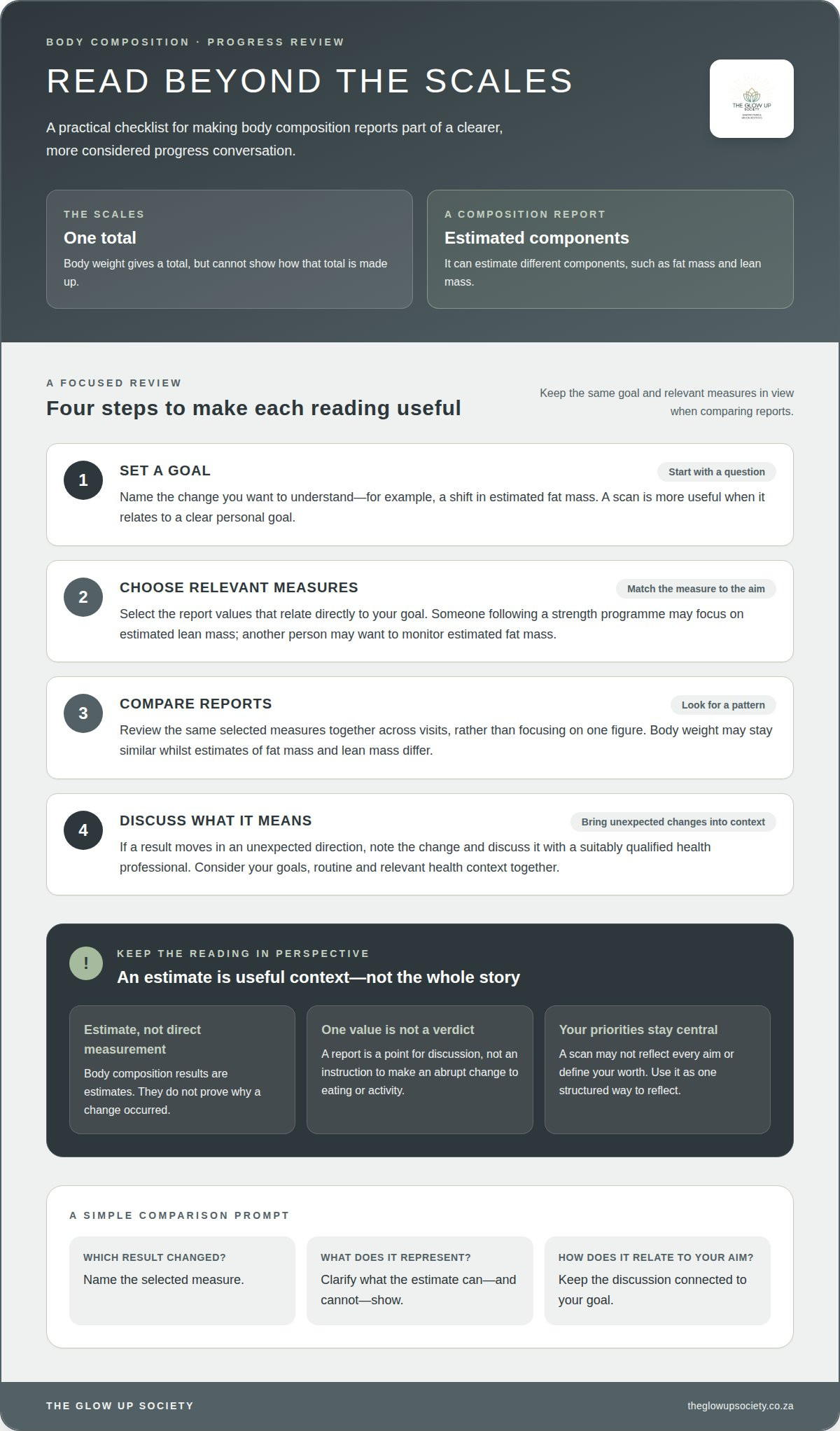
A weight reading gives one total, while a body composition report estimates different components of that total. This distinction can make a progress review more informative. For example, two visits might show similar body weight but different estimates of fat mass and lean mass. The scale alone cannot show that contrast. Consider the measures together rather than treating either result as a complete account of change.
Start by deciding what you want to track. Someone following a strength programme may be interested in estimated lean mass, while another person may want to monitor estimated fat mass. These are different questions, so choose the measure that matters before comparing reports. A scan is most useful when it relates to a clear personal goal, not simply because the device displays several values.
Look at the pattern across reports, not one figure in isolation. If a result moves in an unexpected direction, note the change and discuss its meaning with a suitably qualified health professional. They can consider your goals, routine and relevant health context. Treat a result as a point for discussion, not as an instruction to make an abrupt change to eating or activity.
Body composition estimates can also add context when total weight stays steady. Imagine your weight has barely changed between two reviews, but the composition results differ. That may prompt a more useful conversation about your routine than the scale alone. It does not prove why the change occurred; it gives you another measure to discuss alongside your choices.
Keep comparisons focused. Choose a small set of measures that relate to your goal, then use those same measures in later reviews. A long list of values can distract from the question you wanted answered. If your focus is estimated fat mass, for instance, centre the discussion on that measure. Consider other values only when they help explain the broader picture.
A simple review can follow these steps:
- Set a goal: Name the change you want to understand, such as a shift in estimated fat mass.
- Choose relevant measures: Identify which report values relate directly to that goal.
- Compare reports: Review the selected values together, rather than focusing on one number.
- Discuss meaning: Bring questions about an unexpected pattern to a qualified health professional.
This approach connects measurement to decisions. If a report raises questions about your plan, discuss practical adjustments with an appropriate professional instead of reacting to a single value. Someone reviewing a training routine, for example, might ask whether the measures they selected match the programme’s aims. The conversation can then focus on relevant goals rather than an assumed result.
It is also useful to separate measurement from judgement. A composition report gives estimates; it does not define your worth or determine whether you have succeeded. Progress can involve several aims, and a scan may not reflect all of them. Use the report as one structured way to reflect, while keeping your priorities central to the discussion.
Over time, each review is most useful when it answers a genuine question. A comparison might show whether your chosen measures are changing, or indicate that another goal deserves attention. Keep the discussion specific: which result changed, what does it represent, and how does it relate to your aim? These questions turn readings into a considered progress conversation.
How long does visceral fat testing take, and when are results available?
The appointment length depends on what it includes. Taking a measurement is one part; entering details, clarifying the purpose and discussing the report also take time. A visit focused on collecting results may differ from one that includes a detailed review. Ask what the appointment covers so you can plan for the full visit, not just the measurement.
At the start, the practitioner can clarify what you hope to learn. You might want a baseline for future comparisons or a clearer picture of a particular measurement. This conversation helps keep the review relevant. The practitioner may record information required by the device before taking the measurement. Correct positioning and following the device’s instructions are also part of the process.
After the measurement, the report needs to be reviewed. A device may display values, but understanding them depends on how the results are explained. The appointment can include a discussion of what each figure represents, which measures relate to your goal, and what the report cannot establish. Leave time for questions, especially if this is your first body composition assessment.
“Results available” can mean different things: when the device produces its report, when someone explains the values, or when you receive a copy. These are separate steps. The answer depends on the clinic’s process and the type of review included. Clarify these details beforehand so you know what to expect from the appointment.
To make the visit useful, consider these points:
- Purpose: Decide what you want the measurement to help you understand.
- Report: Ask which measurements the device provides and how they’ll be explained.
- Timing: Find out whether interpretation happens during the appointment or later.
- Follow-up: Clarify how you can discuss questions that arise after reviewing the report.
A result should come with clear limits. An estimated measurement is not, by itself, a diagnosis or a full health assessment. If you have a health concern, raise it during the discussion so the practitioner can explain how it relates to the scan. If your question requires medical assessment beyond body composition, a separate clinical conversation may be more suitable.
For a later comparison, keep the report with its date. This makes it easier to identify which measurement came from each appointment. If you receive a printed or digital copy, store it somewhere you can access for the next review. If a figure is unfamiliar, note the term and ask what it means rather than interpreting it in isolation.
Appointment length also depends on the questions you bring. A focused visit may need less discussion than a review involving several goals or an unexpected result. The most helpful conversation connects the report to your purpose, explains the terminology and leaves room for your questions. If you’re exploring body composition scans, understanding how results are delivered can help you decide what information you need from the appointment.
The Glow Up Society
The Glow Up Society in Fourways offers aesthetic care alongside your wider wellbeing goals. A visceral fat estimate relates to body composition, while skin treatments address different personal concerns, so they serve distinct purposes. If you are also considering skincare, options include GA Peels, LHA Peels, Retinol Peels and Optiphi Microneedling.
These treatments do not replace visceral fat testing or medical advice. They may suit goals that include a considered skincare plan as well as understanding body composition. A conversation about your priorities can help clarify which type of care is appropriate, without treating a scan result as a measure of skin health.
For questions about aesthetic treatments that complement your personal care goals, contact The Glow Up Society.
Choose a considered next step
Before arranging a scan, decide what you hope the information will help you understand. A clear personal question can make the discussion more focused, whether you want a starting point or are considering how to monitor your wellbeing over time. If you are considering a visceral fat testing clinic in Lonehill, keep your next step centred on what matters to you, not on a number alone.
The Glow Up Society can help you explore the options that relate to your personal care goals. Share what you’re hoping to achieve and the questions you’d like answered. That gives the conversation a practical starting point, without assuming one approach suits everyone.
If you’d like to discuss your next step, contact The Glow Up Society. Take it at your own pace, with a clear sense of what you want to understand.