Skincare
How to Track Skeletal Muscle Mass in Kyalami Over Time
· The Glow Up Society
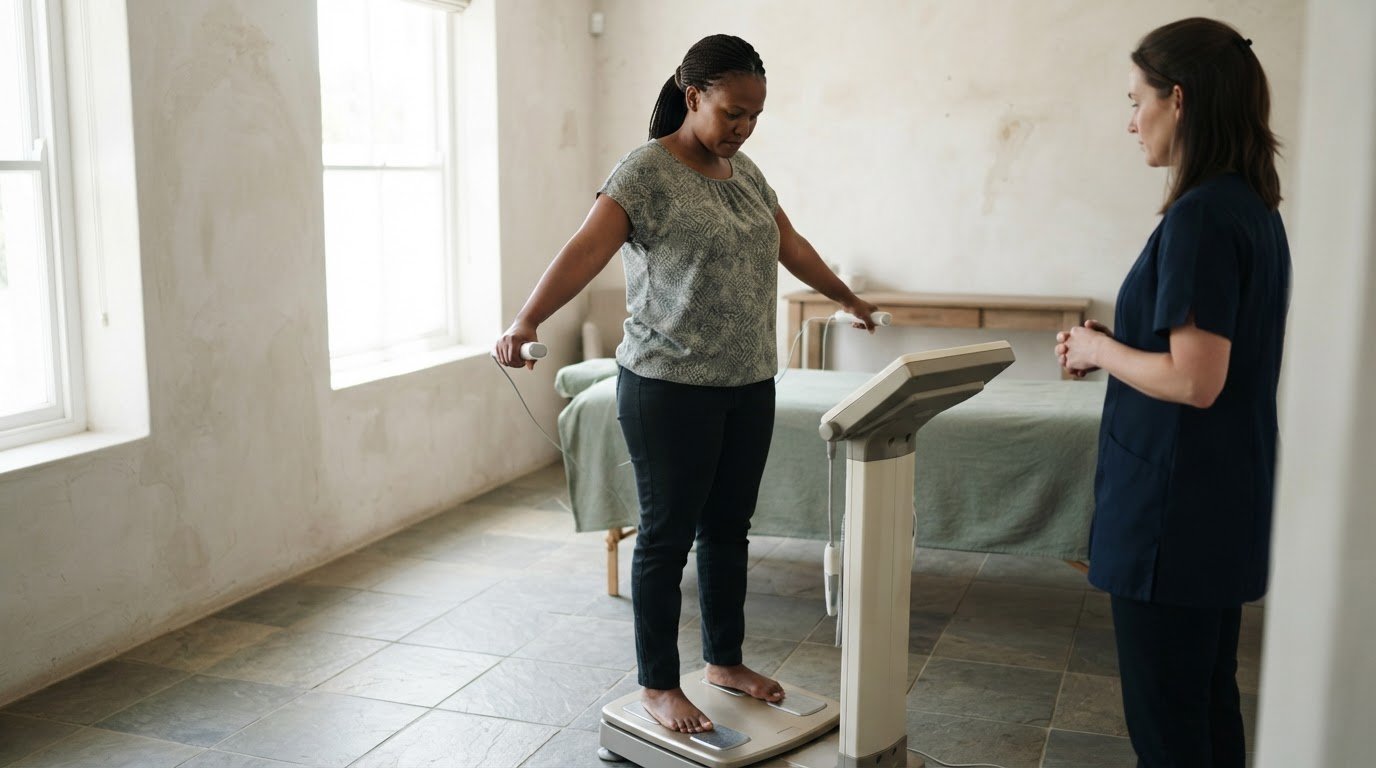
A single muscle-mass reading is less useful than a consistent series. To understand how to track skeletal muscle mass in Kyalami over time, use the same measurement method under similar conditions and compare results across repeat assessments. MRI, DEXA and bioelectrical impedance can all provide useful information, but their readings aren’t directly interchangeable.
It’s natural to want a clear number that shows whether your training or wellness routine is making a difference. This guide explains what each method measures, where its limitations lie and how to make follow-up readings easier to interpret. You’ll also learn why hydration and other day-to-day changes can affect bioelectrical impedance, and how an InBody 270 assessment can support a steady approach to tracking body composition. The aim is a calmer, more meaningful picture of change, rather than placing too much weight on one result.
Key Takeaways
- Understand how MRI, DEXA and bioelectrical impedance differ, so you can make sense of what each assessment can show.
- Build a more useful comparison by keeping your measurement method and assessment conditions consistent over time.
- Learn how to read the units and muscle-related figures on a body composition report without relying on one number alone.
- Recognise everyday factors that can shift a result and make a measured change harder to interpret.
Table of Contents
- Differences between MRI, DEXA and bioelectrical impedance
- Tracking muscle consistently over time
- What numbers and units do body composition reports use for skeletal muscle mass?
- What factors can make skeletal muscle measurements inaccurate or fluctuate?
- The Glow Up Society: Massage Treatments
Differences between MRI, DEXA and bioelectrical impedance
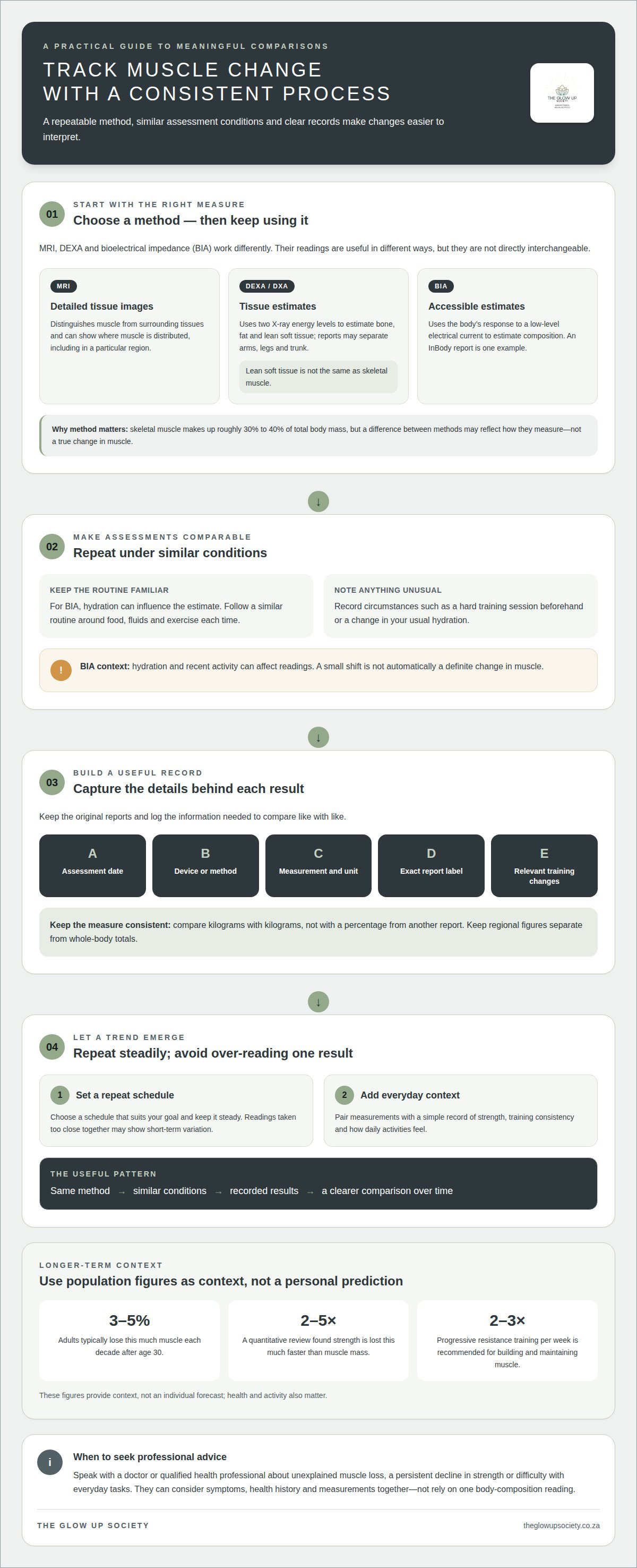
MRI, DEXA and bioelectrical impedance assess body composition in different ways. Skeletal muscle makes up roughly 30% to 40% of total body mass, but no method produces a perfectly interchangeable reading. MRI creates detailed images of tissues, DEXA estimates tissue composition using X-rays, and bioelectrical impedance estimates composition from the body's response to a small electrical current. The method behind a result matters as much as the number itself.
MRI distinguishes muscle from surrounding tissues in images, making it useful when detailed anatomical information is needed. It does not rely on the same estimation process as a body-composition scale. Its detailed view can show where muscle is distributed, rather than only providing a whole-body estimate. For example, an image-based assessment can examine muscle in a particular region. This makes MRI different from methods designed for routine whole-body measurements.
DEXA, also called DXA, uses two X-ray energy levels to estimate bone, fat and lean soft tissue. Its report can provide a regional breakdown, such as differences between the arms, legs and trunk. However, lean soft tissue is not identical to skeletal muscle: it includes other non-fat, non-bone tissue. Read the report label carefully. A lean-mass figure should not automatically be treated as a direct skeletal-muscle measurement.
Bioelectrical impedance analysis, or BIA, passes a low-level electrical current through the body and uses resistance to estimate body composition. Water and lean tissue conduct electricity differently from fat, so the device combines the signal with personal details to calculate estimates. An InBody report is one example of this format. BIA is convenient for repeat assessments, but hydration and recent activity can affect its readings.
For tracking, choose a method that reports the measure you want and use it consistently. MRI offers detailed images, DEXA separates tissue categories, and BIA provides accessible estimates. A change between different methods may reflect their measurement approaches, not a true change in muscle. Compare like with like, and interpret results alongside their units and report labels.
Tracking muscle consistently over time
A useful trend comes from repeat readings taken with the same method. Record the assessment date, device or method, reported measurement, unit and relevant training changes. For example, compare a result in kilograms with another in kilograms, not with a percentage from a different report. Keep original reports so you can check what each figure measures. If you’re deciding how to track skeletal muscle mass in Kyalami, begin with a repeatable method.
Use similar conditions for each assessment. With bioelectrical impedance, hydration can influence the estimate, so follow a familiar routine around food, fluids and exercise. Note unusual circumstances, such as a hard training session beforehand or a change in your usual hydration. This context helps you assess a small shift without treating every difference as a definite change in muscle.
Set a repeat schedule that suits your goal, then keep it steady. An assessment after a change in training or nutrition can offer a comparison point, but readings taken too close together may show short-term variation. Pair the measurement with a simple record of strength, training consistency and how daily activities feel. A clear plan for how to track skeletal muscle mass in Kyalami can include these observations alongside the readings.
Age can shape the longer-term picture. Adults typically lose about 3 to 5% of muscle each decade after age 30. A quantitative review found that strength is lost two to five times faster than muscle mass. Progressive resistance training two to three times a week is recommended for building and maintaining muscle. These figures provide context, not a personal prediction; health and activity also matter.
Consult a doctor or qualified health professional if you notice unexplained muscle loss, a persistent decline in strength or difficulty with everyday tasks. They can consider your symptoms, health history and measurements together, rather than relying on one body-composition reading.
What numbers and units do body composition reports use for skeletal muscle mass?
Reports may express skeletal muscle as an absolute mass in kilograms or as a percentage of body weight. These figures answer different questions. A kilogram value estimates the amount of muscle; a percentage shows how much of total body weight it represents. For example, weight can change while muscle mass stays similar, shifting the percentage. Check the unit and the measure’s exact label before comparing readings.
Some reports also separate results by body region, such as arms, legs and trunk. A regional figure can help show where a change appears, while a whole-body total summarises muscle across the body. Not every method uses identical categories, so a figure labelled “lean mass” should not automatically be read as skeletal muscle. Lean tissue includes more than muscle, and report terminology affects interpretation.
Reference values offer context, not a personal target. A whole-body MRI study of 468 adults aged 18 to 88 found average skeletal muscle equal to 38.4% of body weight in men and 30.6% in women. In the 18-29 age group, average total skeletal muscle mass was 33.7 kg for men and 21.8 kg for women. Age and sex influence comparisons, so these group averages cannot define an individual’s ideal result.
For a useful comparison, record the value, unit, date and report label together. If one assessment shows kilograms and another shows a percentage, don’t compare them as though they were the same measurement. Keep regional figures separate from whole-body totals, too. A body composition assessment such as the InBody 270 can provide a structured snapshot; interpret its reported measures according to their labels and units.
Read change as a pattern, not a verdict from one figure. If body weight shifts, a muscle percentage may move without the same change in muscle mass. Compare like units and like measures across assessments, then consider the result alongside strength and daily function. This approach keeps the numbers informative without asking one report to say more than it can.
What factors can make skeletal muscle measurements inaccurate or fluctuate?
A body-composition reading can shift without a lasting change in muscle tissue. Bioelectrical impedance is particularly sensitive to hydration because body water affects electrical conductivity. A reading after a sweaty training session may differ from one taken when you’re normally hydrated. Food and fluid intake can also alter body weight, which may influence estimates calculated from that weight.
Recent exercise is another factor to record. A demanding session can change fluid distribution and leave muscles temporarily swollen, affecting measurement conditions. Compare assessments taken at a similar point in your training routine. For example, don’t compare a post-workout reading with a rested baseline. Consistency helps separate short-term effects from a longer-term pattern.
Measurement setup matters, too. With a scale-based assessment, foot placement, hand contact and following the device’s instructions can affect the signal. For imaging, body position and the area assessed should remain comparable. If a later scan covers a different region, its result may not match the earlier total. Keep the same method, device and reporting measure for follow-up readings.
Body weight changes can also alter percentages. If the report shows muscle as a proportion of total weight, a change in water or other body mass may shift that percentage, even when the kilogram estimate moves differently. Check whether a report gives skeletal muscle, lean mass or a percentage before interpreting a difference. Those labels describe distinct measurements, not interchangeable values.
Record the assessment date, method, recent exercise and any unusual hydration conditions alongside each result. If an unexpected change appears, compare the report labels and testing conditions before drawing conclusions. A consistent record can make it easier to discuss a pattern with a qualified health professional. For a calm next step, explore support for your wellness goals.
The Glow Up Society: Massage Treatments
The Glow Up Society offers Massage Treatments as a complementary part of a wider wellness routine, not as a way to measure skeletal muscle mass. A massage may suit you when you’re seeking time to relax and ease everyday muscular tension; it doesn’t replace body-composition assessment or progressive resistance training. Keeping those roles distinct helps you choose support that fits your goal.
If your focus is tracking muscle, continue comparing consistent body-composition readings and discuss unexplained changes with a qualified health professional. If you’d also value a restorative treatment alongside your routine, Massage Treatments may be a suitable option. The Glow Up Society also offers GA, LHA and retinol peels for separate skincare goals.
Contact The Glow Up Society to discuss whether Massage Treatments suit your wellness routine.
Make your next step personal
Let your measurements support a practical decision, rather than become a score to chase. If you’re considering how to track skeletal muscle mass in Kyalami, begin by choosing what you want the information to guide, such as a conversation about your routine or a broader wellness goal. A clear purpose can make future assessments more relevant and help keep your attention on progress that matters to you.
Body-composition tracking and skincare treatments serve different priorities. The Glow Up Society offers GA Peels, LHA Peels and Retinol Peels for skincare goals, alongside Massage Treatments as a separate wellness choice. These treatments don’t measure skeletal muscle, so choose support that matches your aim. For a considered conversation about your next step, contact The Glow Up Society. You can move forward at a pace that feels right for you.
Frequently Asked Questions
What methods can measure skeletal muscle mass accurately?
MRI provides detailed images for assessing muscle, while DEXA and bioelectrical impedance estimate body composition using different techniques. The most useful method depends on whether you need detailed anatomical information or practical repeat assessments. For tracking, use one method consistently and check whether its report specifically labels skeletal muscle. A figure for lean tissue or total body composition may represent a different measure.
How do DEXA, InBody, and skinfold measurements compare for tracking muscle mass?
DEXA estimates bone, fat and lean soft tissue; InBody uses bioelectrical impedance to estimate body composition. Skinfold measurements use callipers to assess folds of skin and underlying fat at selected sites, so they don’t directly measure skeletal muscle mass. For example, a skinfold change can inform a body-fat assessment, but it can’t be compared directly with an InBody muscle estimate.
How should I prepare for a body composition scan for consistent results?
Follow the specific device instructions and keep your routine similar before each assessment. Arrive normally hydrated, avoid an unusual meal or strenuous exercise immediately beforehand, and record anything that could affect the reading. For an InBody assessment, use the same preparation approach at follow-ups. These steps help make comparisons more meaningful, whether you’re tracking results in Kyalami or elsewhere.
How often should I measure skeletal muscle mass to track changes?
There isn’t one measurement schedule that suits everyone. Choose intervals that allow your training, nutrition or wellness routine time to develop, then compare readings using the same method. For example, align assessments with planned reviews of your routine instead of measuring after every workout. If readings cause concern or coincide with unexplained strength loss, discuss the changes with a qualified health professional.