Skincare
Visceral Fat Health Risks and a Practical Reduction Plan for Lonehill
· The Glow Up Society

Abdominal fat can matter beyond how your clothes fit. Visceral fat sits deep in the abdomen around internal organs, and too much is associated with a higher risk of cardiovascular disease. For local readers, understanding visceral fat health risks and building a practical reduction plan starts with sustainable habits: balanced eating, regular movement and strength work, supported by quality sleep and stress management.
It is understandable to want a clear way to address abdominal fat without relying on quick fixes. At The Glow Up Society, the aim is to help you understand how visceral fat may affect health and choose manageable changes that support your overall wellbeing. A useful activity goal is to build towards 150 minutes of moderate activity each week, with strength work on two days. This guide explains what visceral fat is, outlines the health concerns associated with it, and explores how exercise, sleep and stress management may support gradual reduction.
Key Takeaways
- Visceral fat lies deep in the abdomen, so appearance alone cannot show the full picture of your health.
- Use your waist in relation to your height as one way to understand central-fat risk, alongside other health indicators.
- Build supportive routines around sleep, stress management and a mix of aerobic activity and strength training.
- For skin-focused care, The Glow Up Society offers treatments such as peels and Optiphi Microneedling; these are distinct from a plan to reduce visceral fat.
Table of Contents
- Sleep and stress management
- What are some conditions and disorders that affect visceral fat?
- Exercise and resistance training
- Health risks including type 2 diabetes and cardiovascular disease
- The Glow Up Society
Sleep and stress management
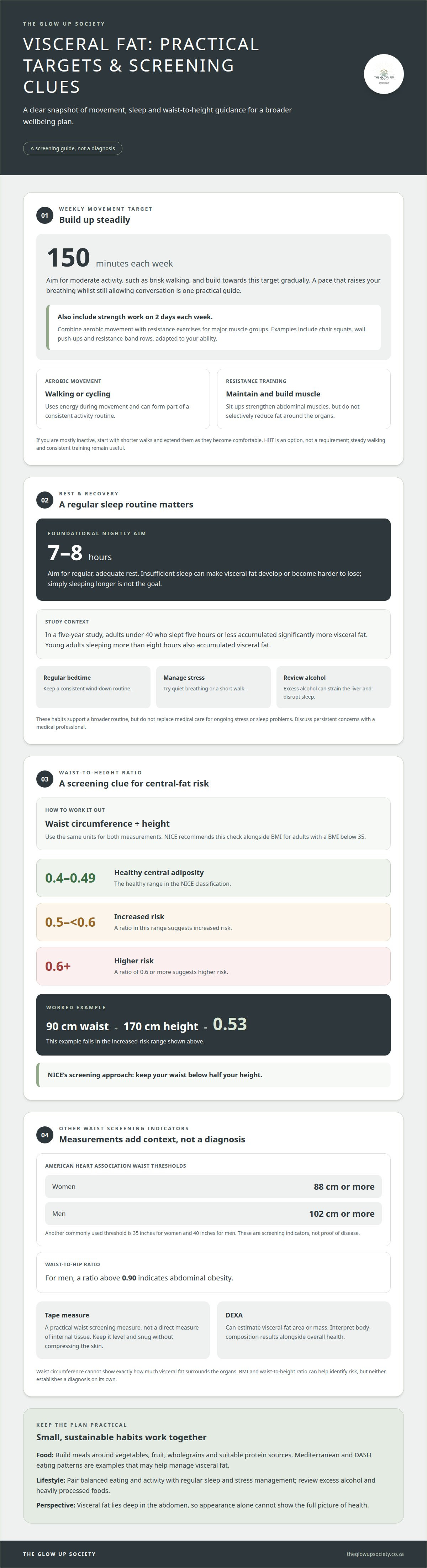
Sleep is part of a practical visceral-fat plan, not a substitute for balanced eating or activity. Cleveland Clinic advises getting enough quality sleep, since insufficient sleep can make visceral fat develop or become harder to lose. A foundational plan can aim for 7-8 hours nightly. In a five-year study, adults under 40 who slept five hours or less accumulated significantly more visceral fat. Young adults sleeping more than eight hours also accumulated visceral fat, so the aim is regular, adequate rest rather than simply sleeping longer.
Stress can also play a role. The stress hormone cortisol may influence visceral-fat storage. Try a calming routine that fits your day, such as a short walk, quiet breathing or a consistent wind-down before bed. Preparing for the next morning, for example, may make it easier to keep a regular bedtime. These steps can support a broader health routine, but they do not replace medical care for ongoing stress or sleep problems.
Alcohol deserves attention alongside sleep and stress. Excess alcohol can strain the liver, which processes fat for the body to use. Consider how often you drink and whether alcohol disrupts your sleep or makes balanced food choices harder the next day. Smoking is also a health concern, but it should be addressed as part of broader health support, not treated as a stand-alone measure of visceral fat. Blood pressure and heart disease risk involve multiple factors.
What diet changes are most effective for reducing visceral fat? Choose a balanced eating pattern that supports a healthy weight. The Mediterranean and DASH diets are examples that may help manage visceral fat. In practice, build meals around vegetables, fruit, wholegrains and suitable protein sources, while limiting excess alcohol and heavily processed foods. The most useful pattern is one you can maintain in everyday life.
Can sleep, stress, alcohol or smoking affect visceral fat? Sleep, stress and excess alcohol can influence visceral-fat patterns, so include them in your plan alongside food and activity. As a starting point, keep a regular bedtime, practise stress management and review your alcohol habits. If poor sleep or stress persists, discuss it with a medical professional as part of your overall care.
What are some conditions and disorders that affect visceral fat?
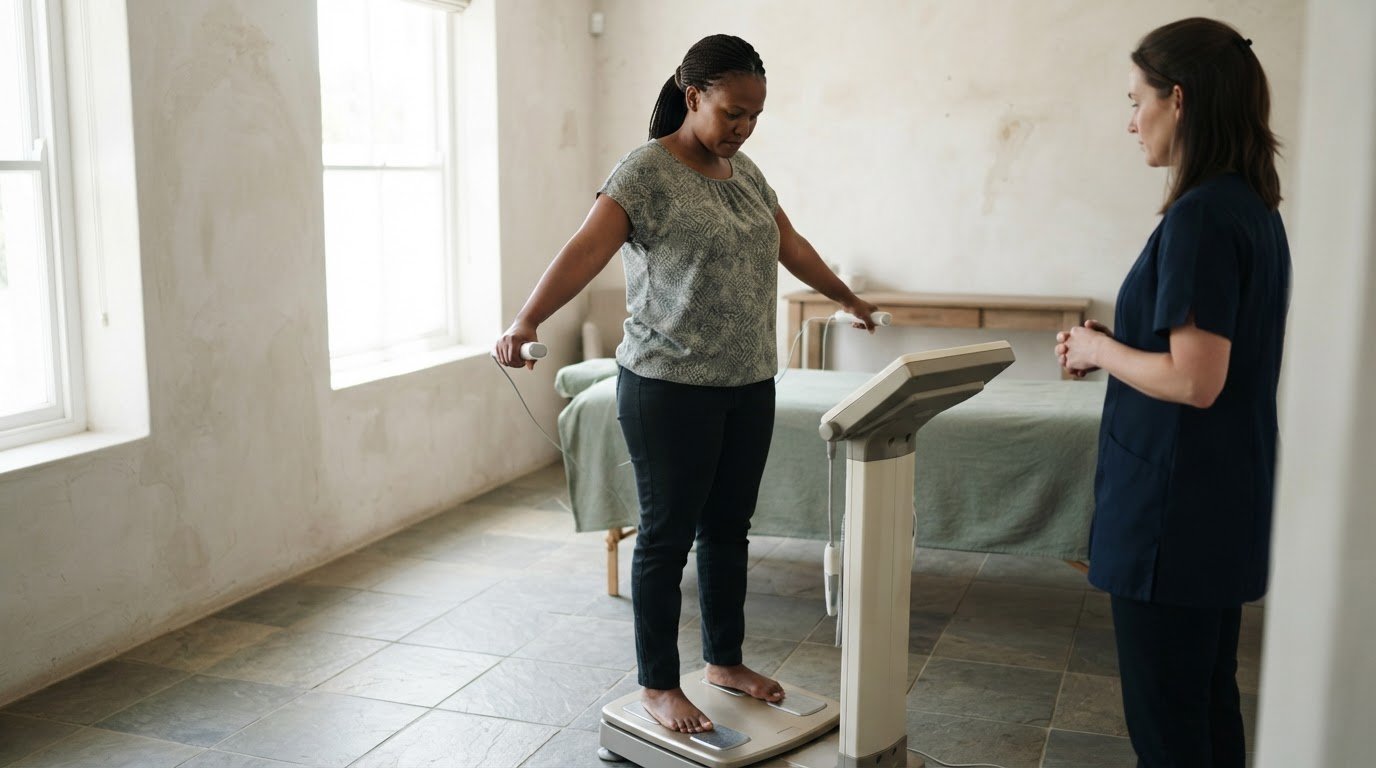
A tape measure offers a useful screening clue, but waist circumference cannot show exactly how much visceral fat surrounds your organs. A body-composition assessment may offer additional context, but results should be interpreted alongside your overall health.
For adults with a BMI below 35, NICE recommends checking waist-to-height ratio alongside BMI. Divide your waist circumference by your height using the same units. A ratio from 0.4 to 0.49 is classified as healthy central adiposity; 0.5 to under 0.6 suggests increased risk, and 0.6 or more suggests higher risk. For example, a 90 cm waist and 170 cm height give a ratio of 0.53.
How can visceral fat be measured accurately, and what are healthy waist circumference limits for adults in South Africa? DEXA estimates visceral-fat area or mass, while a tape measure provides a practical waist screening measure, not a direct measure of internal tissue. NICE recommends keeping your waist below half your height. This is a screening approach, not a South African diagnostic threshold.
For waist circumference, the American Heart Association cites 88 cm or more for women and 102 cm for men as abdominal-obesity thresholds. Another commonly used threshold is 35 inches for women and 40 inches for men. These are screening indicators, not proof of disease. For men, a waist-to-hip ratio above 0.90 also indicates abdominal obesity.
Are there South African public health guidelines or local services for obesity and metabolic-risk screening? BMI and waist-to-height ratio can help identify risk, but neither establishes a diagnosis on its own. A health assessment can consider these measurements alongside blood pressure, activity, diet and medical history.
Measure your waist consistently with a tape measure, keeping it level and snug without compressing the skin. If you want additional context on body measurements, explore a body-composition discussion as part of your broader wellbeing planning.
Exercise and resistance training
Regular movement helps your body use energy and may help reduce visceral fat. Cleveland Clinic advises aiming for at least 30 minutes of exercise a day, five days a week. A practical weekly target is 150 minutes of moderate activity, built up gradually. Brisk walking is one accessible option: choose a pace that raises your breathing while still allowing conversation. If you’re mostly inactive, begin with shorter walks and extend them as they become comfortable.
What exercise plan helps reduce visceral fat, including weekly activity recommendations? Build towards 150 minutes of moderate activity each week, and include strength work on two days. Combine aerobic movement, such as walking, with resistance exercises that work major muscle groups. For example, a session might include chair squats, wall push-ups and resistance-band rows, adapted to your ability. Readers considering visceral-fat health risks and a reduction plan in Lonehill can use these targets as a practical starting point.
Aerobic activity and strength training support health in different ways. Walking or cycling uses energy during movement, while resistance training helps maintain and build muscle. Both can help reduce visceral fat or prevent it from increasing. Sit-ups strengthen abdominal muscles, but they do not selectively reduce fat around the organs. Subcutaneous fat lies beneath the skin, and exercise cannot determine which fat store changes first.
HIIT is another option, using short, more intense efforts followed by recovery. It may suit people who already exercise, but it isn’t essential; steady walking and consistent training remain useful. A moderate calorie deficit alongside HIIT has been associated with measurable visceral-fat reductions after 8-12 weeks. For a Lonehill plan addressing visceral-fat health risks, choose a pace that fits your fitness rather than pushing through pain or exhaustion.
Keep the routine simple enough to repeat. Schedule walks across the week, add two strength sessions, and record activity or waist size to notice patterns. Cleveland Clinic says consistent activity and food management may lead to visible fat loss in two to three months. Progress can also support energy and daily function, even when changes in belly fat are gradual.
Health risks including type 2 diabetes and cardiovascular disease
Visceral fat is stored around abdominal organs, unlike subcutaneous fat beneath the skin. Excess visceral fat is associated with cardiovascular disease and metabolic concerns, including type 2 diabetes. Cleveland Clinic also lists high cholesterol and circulatory diseases such as atherosclerosis among conditions associated with obesity and visceral fat. These links describe increased risk, not a diagnosis in an individual.
The concern is not limited to the number on a scale. Central fat can matter even when body weight or BMI appears normal, because those measures do not show where fat is stored. A larger waist can be one sign to discuss alongside blood pressure, cholesterol and blood-glucose results. Muscle, activity, family history and existing medical conditions also contribute to a fuller health assessment.
Waist measurements provide context, but they cannot confirm heart disease or diabetes. In a study of healthy, non-smoking women, every additional 2 inches of waist size was associated with a 10% higher cardiovascular-disease risk. Men with waist circumferences above 40 inches face twice the risk of cardiovascular disease, according to the supplied findings. These associations do not mean waist size alone causes disease.
When should someone consult a doctor about abdominal fat or related health risks? Arrange a medical assessment if your waist is increasing or you are concerned about diabetes, blood pressure or cholesterol. A clinician can consider your measurements alongside symptoms, health history and appropriate tests, rather than treating abdominal appearance as a diagnosis. Seek prompt medical attention for new or severe symptoms such as chest pain.
For a broader conversation, a clinic can help assess risk factors and decide what follow-up is appropriate. If your goal is separate from abdominal health, explore dermal filler treatment options for facial aesthetics; fillers don’t reduce visceral fat or manage cardiovascular risk.
The Glow Up Society
The Glow Up Society can support your personal care goals alongside the health habits discussed above. Its skin-focused treatments include GA Peels, LHA Peels, Retinol Peels and Optiphi Microneedling, chosen to suit your skin needs and treatment goals.
These treatments are for skin care, not visceral-fat reduction. If your main concern is abdominal fat or related health risks, focus on sustainable lifestyle changes and discuss health assessments with a medical professional. Aesthetic treatments may also be relevant if you are considering your skin’s appearance as part of your wider wellbeing.
For a considered conversation about your skincare goals and suitable treatment options, contact The Glow Up Society.
Make your next step personal
Your next step is to make health priorities part of everyday life, rather than waiting for a perfect week. For a Lonehill plan addressing visceral fat health risks and reduction, start with one manageable routine, such as keeping a regular bedtime or planning a walk into your day. Keep it flexible enough to fit work, family and changing energy levels. If health concerns persist, speak with a medical professional about an assessment suited to your circumstances.
Skin care can sit alongside that journey, but it serves a different purpose from reducing visceral fat. The Glow Up Society offers GA Peels, LHA Peels and Retinol Peels for skin-focused care, with options shaped around individual goals. A thoughtful next step is to decide which concern you would like support with, whether it relates to health habits or your skin.
Contact The Glow Up Society to discuss your skincare goals, and continue building wellbeing in a way that feels considered and sustainable.
Frequently Asked Questions
What Is Visceral Fat?
Visceral fat is stored deep in the abdomen, around internal organs. Unlike fat just beneath the skin, it is not directly visible or easily assessed by appearance. It forms part of normal body fat, but excess levels are associated with health concerns. A waist measurement offers a useful screening clue, while a clinician considers it alongside your overall health and other measurements.
What Does a Visceral Fat Level on Scales Mean?
A scale’s visceral-fat level is an estimate generated by that particular model, not a universal measurement. A score of 10 on one home-scale model isn’t necessarily equivalent to 10 on another. Use the number as a trend only when comparing readings from the same device under similar conditions. It doesn’t diagnose disease or replace assessment of waist measurements and other health factors.
What is the difference between visceral and subcutaneous fat?
Visceral fat sits inside the abdomen around organs, while subcutaneous fat lies beneath the skin. You can pinch some subcutaneous tissue, but you cannot directly feel visceral fat. This difference matters because waist appearance alone cannot establish how much internal fat is present. A clinician may consider waist measurements, body composition and other health indicators to build a more useful picture.
What waist size is risky?
Common screening thresholds identify a waist circumference of 35 inches or more for women and 40 inches or more for men as a possible risk marker. Waist-to-height ratio offers another way to interpret the measurement: NICE classifies 0.5 to under 0.6 as increased risk for adults with a BMI below 35. These indicators support screening, not a diagnosis on their own.
What is visceral fat and how is it different from subcutaneous fat?
Visceral fat is stored deeper in the abdomen, whereas subcutaneous fat is the softer tissue beneath your skin. Both are body fat, but they are in different locations. For example, a waist measurement may prompt further health discussion even when someone's weight seems typical. Measurements are clues, not a complete assessment of fat distribution or personal health.
What health risks are linked to excess visceral fat?
Excess visceral fat is associated with higher cardiovascular risk and metabolic conditions, including type 2 diabetes. Cleveland Clinic also lists high cholesterol and circulatory diseases such as atherosclerosis among conditions associated with obesity and visceral fat. These associations don’t mean that a waist measurement predicts an individual outcome. If you’re concerned, discuss your measurements and health history with a medical professional.