Skincare
Ultrasonic Cavitation for Cellulite in Kyalami: How It Works
· The Glow Up Society
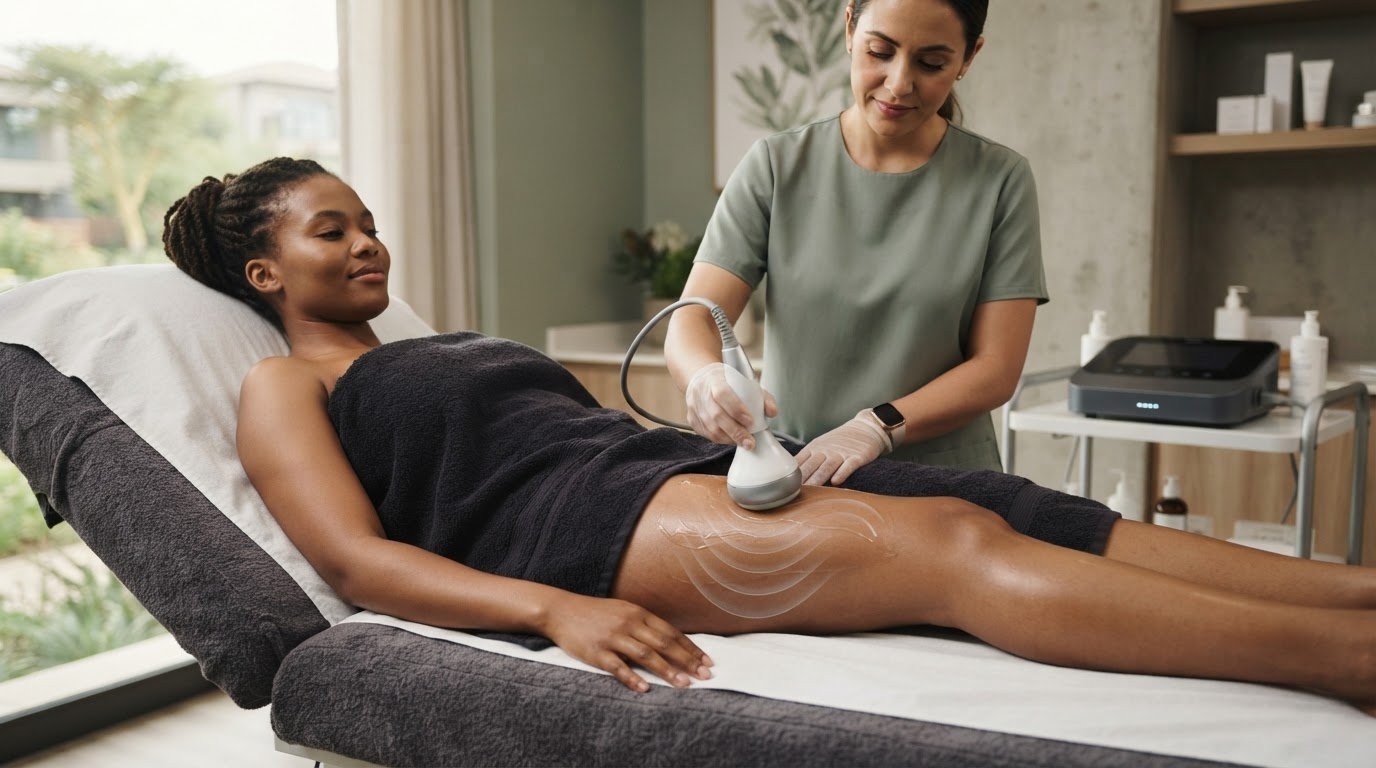
Cellulite and localised fat can affect the same area, but they aren’t the same concern. Ultrasonic cavitation for cellulite reduction in Kyalami uses 40K ultrasound to target localised fat. The treatment requires no downtime, although its focus on fat reduction doesn’t make it a direct answer to every kind of skin dimpling. Understanding that distinction can help you decide whether it fits your goals.
If you’re considering ultrasonic cavitation for cellulite reduction in Kyalami, you may want to know what happens beneath the skin and what a session involves. This guide explains how cavitation works, which body areas may be considered, and how treatment timing relates to changes in localised fat and cellulite. Suitability and your specific goals matter when weighing up body contouring.
Key Takeaways
- Learn which body areas may be considered for 40K ultrasound cavitation and why the treatment is aimed at localised fat rather than every form of cellulite.
- Understand how skinfold thickness and BMI relate to suitability, and what the treatment may feel like during a session.
- See how session length, spacing and the time results may take to appear can shape realistic expectations.
- Explore how GA Peels may be a relevant next step when your focus is skin rather than body contouring.
Table of Contents
- On what area of my body can I use the Ultrasound Cavitation?
- Is the Ultrasound Cavitation treatment painful?
- Cavitation session duration and frequency
- Cellulite and localized fat reduction
- The Glow Up Society: GA Peels
On what area of my body can I use the Ultrasound Cavitation?
40K ultrasound cavitation is described as targeting localised fat, not every form of cellulite. Body area choice centres on the specific zone and contour concern.
Body areas targeted for cavitation
These are localised zones chosen for focused fat reduction, rather than whole-body change. That distinction links treatment to a particular contour concern. For example, a consultation can map an abdomen, flank or thigh as separate zones, then identify which area matters most to you. The device is described as 40K ultrasound cavitation. Here, 40K refers to ultrasound frequency, not a guaranteed result or a complete list of eligible body parts.
Areas treated with cavitation
Treatment areas are chosen according to the localised fat concern and the applicator’s contact with the body. The abdomen, flanks or thighs may be discussed as example zones, but they are not interchangeable. Body shape, surface and access affect how treatment can be applied to each area. Describe your goal precisely, such as a defined contour beneath a waistband, to keep the discussion focused on a particular region rather than general weight loss.
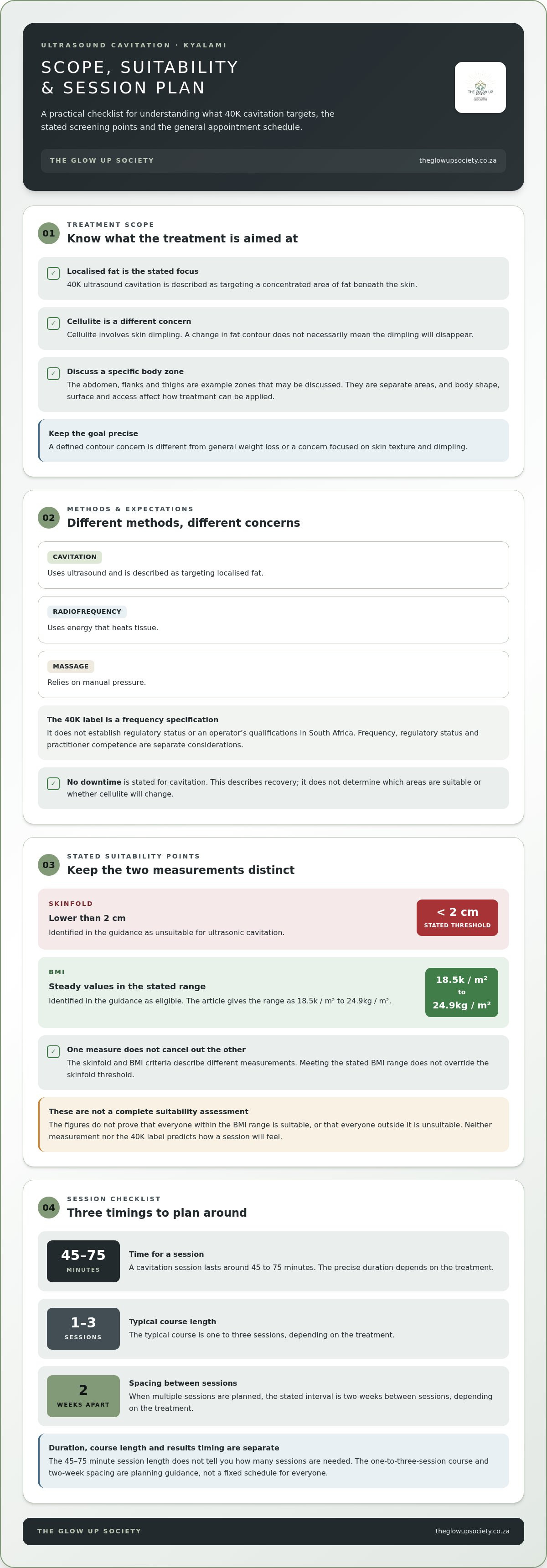
Cavitation uses ultrasound. Radiofrequency uses energy that heats tissue, while massage relies on manual pressure. These methods work differently and are not interchangeable. Compare them with the concern you want to address, such as localised fat, skin texture or the appearance of dimpling.
A 40K label doesn’t establish a device’s regulatory status or an operator’s qualifications in South Africa. Frequency is a device specification; regulatory status and practitioner competence are separate considerations.
Cavitation is described as requiring no downtime. That refers to recovery, not to which body areas are suitable or whether cellulite will change. When discussing the abdomen, flanks or thighs, keep the distinction clear: the stated focus is localised fat reduction, while cellulite concerns skin texture and dimpling.
Is the Ultrasound Cavitation treatment painful?
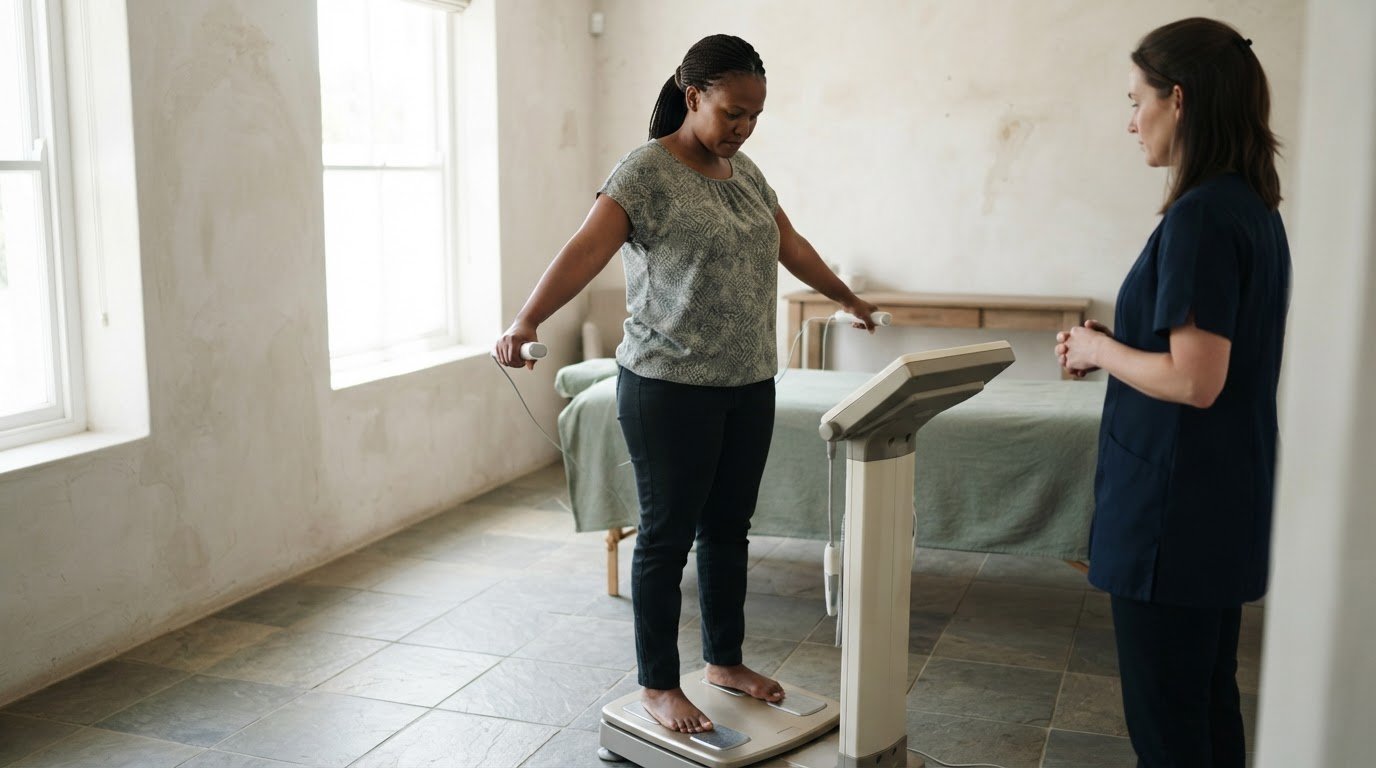
Pain cannot be predicted from the 40K ultrasound label alone. The stated eligibility criteria focus on skinfold and BMI, not on a pain score or a particular sensation. Those measurements help frame suitability; they don’t describe how a session will feel for you.
Two figures matter in the available eligibility guidance. People with a skinfold lower than 2 cm are identified as unsuitable for ultrasonic cavitation. Individuals with steady BMI values between 18.5k / m2 and 24.9kg / m2 are identified as eligible. These criteria describe different measurements, so meeting the BMI range doesn’t cancel out the skinfold threshold.
For a practical discussion, keep your goal and the area you want treated clear. For example, note whether you’re concerned about a small, localised area or a broader change in body shape. This helps distinguish a local contour goal from weight management. Neither the 40K label nor a BMI value can, on its own, explain a person’s pain experience.
The specific suitability points provided are:
- Skinfold: a measurement lower than 2 cm is identified as unsuitable.
- BMI: steady values between 18.5k / m2 and 24.9kg / m2 are identified as eligible.
- Pain: neither measurement states how the treatment will feel.
These figures are screening criteria, not a complete list of contraindications. They do not prove that everyone within the BMI range is suitable or that everyone outside it is unsuitable. For example, someone within the stated BMI range still needs to consider the skinfold criterion. Keep the two measures distinct when assessing eligibility and comfort.
Cavitation session duration and frequency
A cavitation session lasts around 45 to 75 minutes. Treatment is typically one to three sessions, with two weeks between sessions depending on the treatment.
Session duration
An ultrasonic cavitation session takes around 45 to 75 minutes. That range helps you plan time for the treatment itself. The precise duration within it depends on the treatment, so a session for one area may differ from one addressing another area. Allow for the full stated range when arranging your day, rather than assuming each appointment will take the same amount of time.
For example, if your appointment concerns a defined area, ask how the treatment plan relates to that target. The session length is not the same as the number of sessions needed. A 45-minute session doesn’t mean a shorter course, just as a 75-minute session doesn’t establish that more appointments are required. Duration and course length describe separate parts of the treatment plan.
Treatment frequency and timing
The typical course is one to three sessions, with two weeks between sessions, depending on the treatment. Use this as a planning guide, not a fixed schedule for everyone or every area. The number of sessions and the interval depend on the treatment being considered, so keep both in mind when planning.
A one-session course and a three-session course involve different appointment commitments. If your course includes multiple sessions, the stated two-week interval means appointments are not arranged on consecutive days. Factor this into plans around work, family or travel. The schedule should reflect the selected treatment and target area.
Keep three details distinct: each session lasts around 45 to 75 minutes, a typical course involves one to three sessions, and multiple sessions are spaced two weeks apart depending on treatment. Those figures help you understand the general time structure. They don’t describe how long results take to appear, which is a separate consideration from appointment duration and frequency.
Cellulite and localized fat reduction
Cellulite and localised fat affect appearance in different ways. Cellulite creates dimpling in the skin, while localised fat refers to a concentrated area of fat beneath it. Ultrasonic cavitation is described as targeting localised fat. A change in fat contour does not necessarily mean cellulite dimpling will disappear.
After ultrasonic cavitation, destroyed fat cells do not grow back. This refers to the cells destroyed during treatment, not every fat cell in the area, and it does not mean body shape can never change again. Remaining tissue and surrounding contours still affect how the abdomen or thigh looks. The stated focus is localised fat reduction, not a promise of smooth skin.
Timing is another important part of setting expectations. Results from ultrasonic cavitation may take about 6 to 12 weeks to appear. That interval means an immediate post-session appearance isn’t the full picture. It also differs from session spacing: the period before visible changes and the time between appointments describe separate parts of the process.
Start by identifying your main concern. If you want to address fullness in a small, defined area, localised fat reduction speaks more directly to that goal than skin dimpling. If cellulite is the visible concern, clarify what the treatment is intended to change and distinguish fat contour from skin texture. This keeps your goal specific and helps you assess claims against the treatment’s stated purpose.
The clearest takeaway is that cavitation targets localised fat, while cellulite is a separate skin-texture concern. Fat cells destroyed during treatment do not grow back, but that fact alone doesn’t establish a cellulite result. Allow about 6 to 12 weeks for results to appear, and keep the treatment goal in view. Discuss your body-contouring goals as part of deciding which concern you want to address.
The Glow Up Society: GA Peels
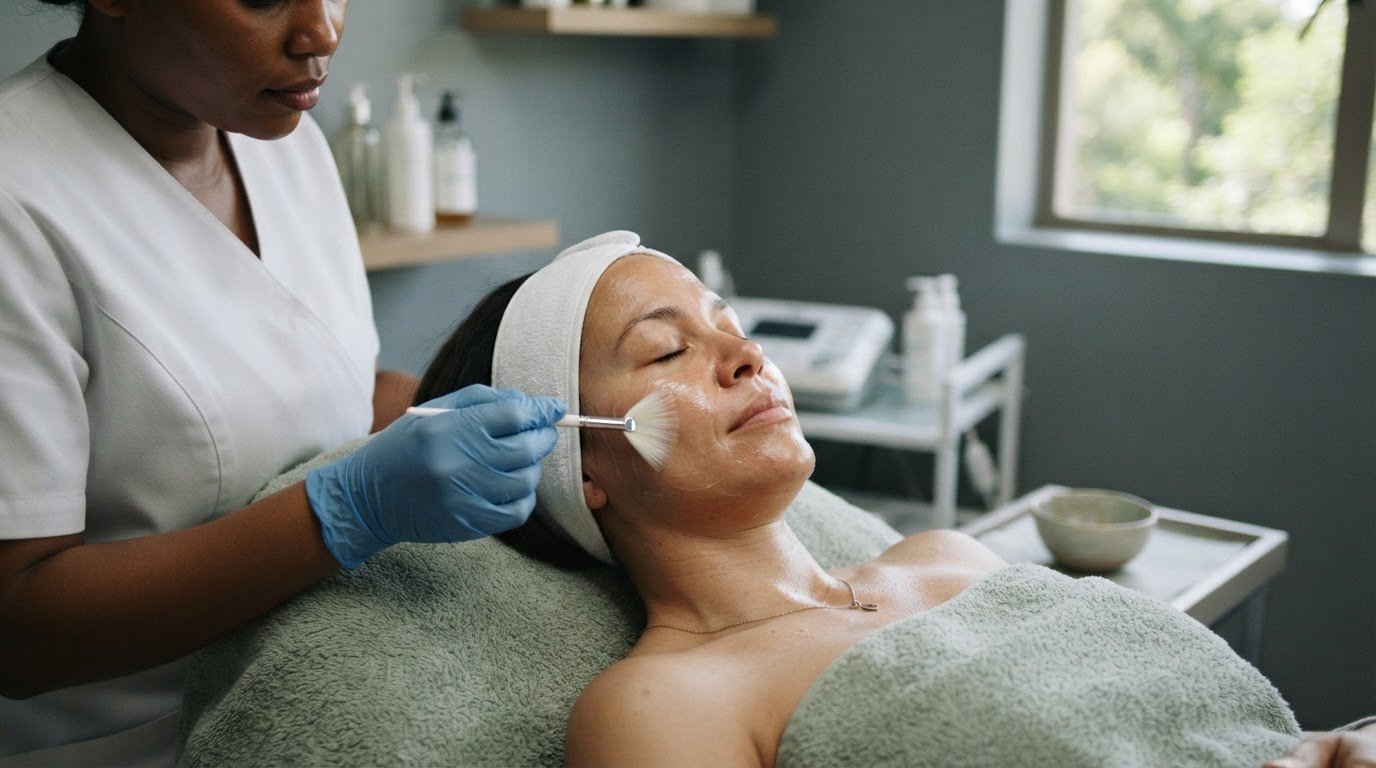
For a skin-focused concern rather than localised body fat, The Glow Up Society offers GA peels. Cavitation and a peel address different aesthetic goals, so the distinction matters if your priority is skincare rather than body contouring.
The Glow Up Society also offers LHA peels, retinol peels and Optiphi microneedling. These skin-focused treatments are a separate option if cellulite dimpling, skin texture or localised fat reduction is not your only concern. Discussing your goals can help you explore which treatment may suit your skincare priorities.
Contact The Glow Up Society to discuss GA peels and your skincare goals.
Choose a next step that fits your goals
Before choosing a treatment, decide what you most want to address: a localised body contour, visible skin dimpling or a separate skincare concern. That priority gives your next conversation a useful starting point. If you’re considering ultrasonic cavitation for cellulite reduction in Kyalami, keep expectations focused on the concern the treatment is intended to target, rather than assuming one approach addresses every goal.
A considered choice can also mean exploring a different aesthetic focus. The Glow Up Society offers GA Peels, LHA Peels and Retinol Peels for skin-focused care. Take time to describe what you’d like to change and what matters most to you. Arrange a conversation with The Glow Up Society and take your next step with clarity and confidence.
Frequently Asked Questions
How Does it Work?
Ultrasonic cavitation applies 40K ultrasound to a selected body area for localised fat reduction. The treatment is non-surgical and described as requiring no downtime. If you’re considering ultrasonic cavitation for cellulite reduction in Kyalami, start by identifying the specific contour you want to address. That keeps the discussion focused on a defined area, rather than expecting whole-body change or assuming every kind of cellulite is treated.
How long are the treatments and how many should I have done?
Plan for a session lasting around 45 to 75 minutes, with a typical course of one to three sessions. For multiple appointments, the stated interval is two weeks, depending on the treatment. These figures can help you consider how appointments fit into your routine. They describe typical session planning, not a promise of a particular change in your body shape.
Is the treatment safe?
The stated eligibility criteria don’t establish that cavitation is suitable for everyone. A skinfold lower than 2 cm is identified as unsuitable, while a steady BMI between 18.5k / m2 and 24.9kg / m2 is identified as eligible. Those measurements aren’t a complete safety assessment. Meeting the BMI criterion alone doesn’t resolve the separate skinfold criterion or other individual considerations.
What is ultrasonic cavitation and how does it reduce the appearance of cellulite?
Ultrasonic cavitation is a 40K ultrasound treatment described as targeting localised fat. Its stated purpose isn’t the same as directly treating cellulite’s skin dimpling. For ultrasonic cavitation for cellulite reduction in Kyalami, it helps to separate a concern about uneven-looking skin from a specific area of fullness. This distinction keeps expectations aligned with the treatment’s stated target, rather than assuming fat reduction necessarily smooths the skin.
What results can ultrasonic cavitation achieve for cellulite, and how long do they last?
The stated outcome relates to localised fat reduction, not a guaranteed change in cellulite. Results may take about 6 to 12 weeks to appear, so an immediate visual comparison won’t show the full timeline. Destroyed fat cells do not grow back, but this doesn’t establish that cellulite will disappear or that body contours can never change. Keep the intended outcome distinct from skin texture.
How many ultrasonic cavitation sessions are typically needed, and how often?
A typical course involves one to three sessions, with two weeks between sessions, depending on the treatment. This helps you distinguish a single appointment from a course with follow-up visits. If your plan involves multiple sessions, allow for the interval when arranging your calendar. The number of appointments is a treatment-course detail, separate from the time needed to see results.