Skincare
RF skin tightening for loose abdomen skin in Lonehill
· The Glow Up Society

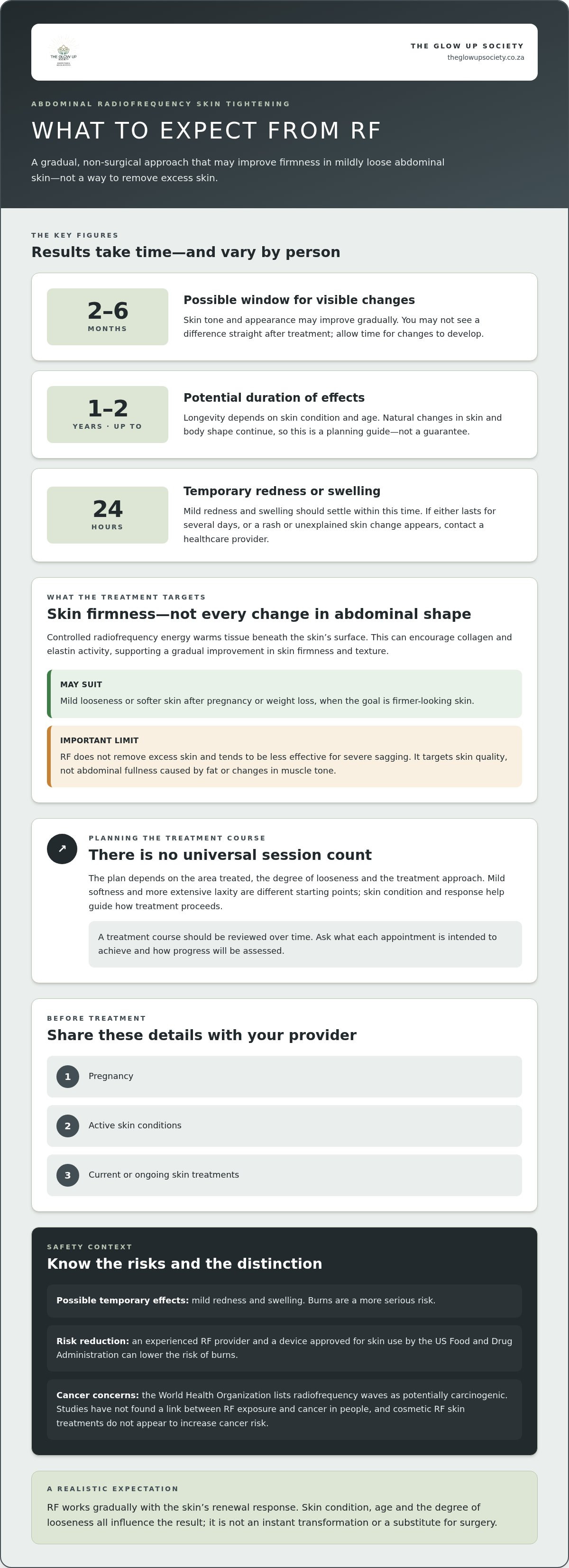
RF skin tightening for loose abdominal skin in Lonehill uses controlled radiofrequency energy to warm tissue and encourage collagen and elastin activity. It may improve firmness when looseness follows pregnancy or weight loss, although it is less effective for severely sagging skin. Visible changes may appear within two to six months, and effects may last up to 1-2 years, depending on your skin condition and age.
If your abdomen feels softer or less supported after a major body change, it’s understandable to look for a non-surgical option that works gradually, without promising an instant transformation. The result depends partly on your skin and the degree of looseness.
This guide explains how RF works, what it may realistically do for loose abdominal skin, and what to consider about treatment duration, results, benefits and risks. It also covers recovery and how to decide whether this approach fits your goals.
Key Takeaways
- Use the degree of abdominal skin looseness to consider whether RF may suit your goal.
- Understand how skin condition and age can affect the timing and longevity of visible changes.
- Learn which temporary reactions may occur and which symptoms call for medical advice.
- Before treatment, be ready to mention active skin conditions, current skin treatments or pregnancy.
Table of Contents
- Treatment duration and longevity
- Benefits and risks
- Collagen and elastin stimulation
- Loose skin after weight loss or pregnancy
- The Glow Up Society: GA Peels
Treatment duration and longevity
Abdominal RF results develop gradually, not immediately after treatment. Session planning, the timeline for visible changes and how long they may last all matter when setting expectations.
Typical session requirements
There is no universal session count for abdominal RF. The course depends on the area treated, the degree of looseness and the treatment approach. Mild softness and more extensive laxity are different starting points. Your plan should relate the amount of skin being treated to the change you hope to see, rather than assume one session suits every abdomen.
Think of sessions as part of a planned course, not a single-event fix. The exact number and spacing cannot be given as a standard figure here. Skin condition and the area’s response help guide how treatment proceeds. Ask how the proposed course will be reviewed, so you understand what each appointment is intended to achieve.
Results timeline
Changes in skin tone and appearance may become visible within two to six months after RF skin tightening. Because the body’s response is gradual, your abdomen may not look different straight away. Allow time for changes to develop before judging the overall effect.
You might notice a subtle change first, followed by a clearer impression of firmness over the following months. The two-to-six-month window is a guide, not a specific date for results. Track how the treated area looks and feels over time, rather than relying on one early impression.
Result longevity and maintenance
RF skin-tightening effects may last up to 1-2 years, depending on your skin condition and age. This gives you a useful planning horizon, but it does not mean every person’s results follow the same course. The treated area continues to reflect natural changes in skin and body shape.
To support the appearance of your abdomen, aim to maintain a steady body weight and follow a consistent skincare routine. These habits support general skin care; they cannot guarantee a longer RF result. If your weight changes substantially after treatment, the abdomen’s contour and skin laxity may change too. Use the 1-2-year estimate as context, then assess your own results over time.
Benefits and risks
Abdominal RF skin tightening may improve firmness and skin tone without surgery, making it an option for mild looseness. It cannot remove excess skin, and severely sagging skin tends to respond less effectively. The treatment targets skin quality, not every cause of a changed abdominal shape.
People with early signs of skin ageing or loose skin after giving birth may be suitable candidates. Discuss pregnancy, active skin disease and current skin treatments before treatment, as these can affect suitability. RF is less effective for severe sagging, so matching the treatment to the degree of laxity helps set realistic expectations.
Temporary reactions can include mild redness and swelling, which should settle within 24 hours. Burns are a more serious risk. An experienced RF provider and a device approved for skin use by the US Food and Drug Administration can lower that risk. Skin changes should still be monitored after treatment.
The World Health Organization lists radiofrequency waves as potentially carcinogenic, while studies have not found a link between RF exposure and cancer in people. Cosmetic RF skin treatments do not appear to increase cancer risk. This distinction can help put general concerns about radiofrequency into context without treating every exposure as identical.
Contact a healthcare provider if redness or swelling lasts for several days, or if a rash or unexplained skin change develops. These signs deserve attention rather than being dismissed as routine recovery. Before your appointment, disclose pregnancy, active skin conditions and ongoing skin treatments so they can be considered.
If you’re weighing aesthetic options for concerns beyond abdominal skin, explore treatment options suited to your goals as part of a considered next step.
Collagen and elastin stimulation
Radiofrequency (RF) delivers energy that gently warms tissue beneath the skin’s surface. This controlled heating can encourage the body’s repair response and support collagen and elastin activity. For the abdomen, the aim is gradual improvement in skin firmness and texture, not immediate removal of loose tissue. RF works with the skin’s own renewal and is not a substitute for surgery.
Collagen gives skin much of its structure, whilst elastin helps it stretch and return. After weight loss, for example, improving the skin’s supportive framework may make a loose abdominal area look firmer. RF aims to prompt this response in treated tissue. It does not restore lost volume or remove excess skin, so the cause of the looseness matters.
New collagen develops over time, which helps explain why the appearance may change gradually after a session. Abdominal skin can vary in thickness and laxity across the treatment area. Skin above the navel, for example, may feel different from skin lower down. Treatment planning needs to account for these differences rather than treat the abdomen as uniform.
Elastin supports flexibility, while collagen contributes structure. Together, these fibres influence how skin responds when you move, bend or sit. RF aims to encourage both, but the visible effect depends on your skin’s starting condition and degree of looseness. It is most relevant to skin laxity, not abdominal fullness caused by fat or changes in muscle tone.
Before choosing RF, identify what you want to improve: surface creasing, mild looseness or a broader change in contour. These concerns involve different tissues. If you’re considering RF skin tightening for loose abdomen skin in Lonehill, this distinction keeps your goals focused on skin laxity. Clarify whether your concern is loose skin, abdominal fullness or muscle tone, so the approach reflects what you actually want to address.
Loose skin after weight loss or pregnancy
After weight loss or pregnancy, abdominal skin may remain loose even when your body shape has changed. RF may suit mild laxity if your goal is firmer-looking skin rather than removal of excess tissue. It is less effective for severe sagging. Changes in weight can also affect abdominal contour, so consider whether your body shape is still changing.
People aged 25-70 are identified as a group in whom optimal RF outcomes may be obtained. Age alone does not determine suitability. Skin condition, the amount of excess skin and your treatment goal all matter. For example, mild creasing differs from a pronounced fold of loose skin. A clear description of what you want to change helps distinguish skin laxity from concerns involving abdominal fat or muscle.
RF, HIFU and microneedling RF use different approaches to deliver energy or stimulate the skin, while a tummy tuck is surgery that removes excess skin. These options are not interchangeable. RF aims to improve skin firmness; surgery addresses excess tissue more directly. Consider the degree of laxity, the treatment approach and your preferences around surgery.
In South Africa, look for a practitioner with relevant clinical or aesthetic training and specific experience using RF. Ask them to explain the device, treatment approach and possible risks in plain language. Disclose pregnancy, active skin disease and current skin treatments before treatment, as these details can affect whether it should proceed and how your abdomen is assessed.
If you’re considering a treatment plan after weight loss or pregnancy, explore options for your skin goals and discuss which approach best fits your concerns.
The Glow Up Society: GA Peels
The Glow Up Society offers GA Peels for people whose skincare goals also include facial concerns. A peel is a separate skincare option, not a treatment for loose abdominal skin, so keep those goals distinct. If abdominal firmness is your priority after weight loss or pregnancy, focus on an approach suited to skin laxity. If you also want to address facial skin, a GA Peel may be relevant.
The Glow Up Society also offers LHA Peels, Retinol Peels and Optiphi Microneedling. The right choice depends on your skin concerns and treatment goals, rather than assuming one option suits everyone. Contact The Glow Up Society to discuss your skincare goals.
Choose a next step that fits your goals
Start by defining the change you want, whether that means feeling more comfortable with your abdomen or exploring separate facial skincare goals. A decision about RF skin tightening for loose abdomen skin in Lonehill should centre on the area you want to address and the improvement you hope to see. The most suitable approach depends on your skin and personal priorities.
If facial care is also on your mind, The Glow Up Society offers GA Peels, LHA Peels and Retinol Peels. These differ from abdominal skin-firming treatments, so keep each concern clear when considering your options. A thoughtful conversation can help you focus on a treatment category that aligns with your aims.
Contact The Glow Up Society to discuss your skincare goals and possible next steps. Take the time you need to choose a path that feels considered and right for you.
Frequently Asked Questions
What is radio frequency (RF) skin tightening?
Radio frequency skin tightening is a non-surgical treatment that uses radiofrequency energy to warm tissue beneath the skin. The controlled heat is intended to encourage the skin’s repair response and support collagen and elastin activity. For example, treatment can focus on skin laxity rather than removing abdominal fat. It’s useful to distinguish these concerns before deciding whether RF matches your goal.
Can I tighten loose skin on stomach without surgery?
Yes, non-surgical options such as RF can target mild abdominal skin looseness. They work differently from surgery and do not remove folds of excess skin. If you have a pronounced overhang after substantial weight loss, skin firming may not address the full change you want. First identify whether your main concern is loose skin, fat or abdominal muscle separation.
What is the best treatment for loose skin after weight loss?
There isn’t one best treatment for everyone after weight loss. The suitable approach depends on whether you’re concerned about mild skin laxity, more extensive excess skin or abdominal fullness. RF aims to support skin firmness, while surgery removes excess tissue. If your weight is still changing, consider how that may affect your abdominal shape before choosing an approach.
What is the process of the skin tightening treatment?
RF treatment applies controlled radiofrequency energy to the selected skin area. The plan should account for your abdomen’s condition, your goals and relevant health details. Before starting, disclose pregnancy, active skin disease and current skin treatments. Mild redness or swelling can occur afterwards. Monitor the treated skin and seek medical advice if concerning changes develop.
What is RF skin tightening and how does it treat loose abdominal skin?
RF skin tightening uses radiofrequency energy to warm tissue beneath the skin, encouraging a repair response associated with collagen and elastin. On the abdomen, it targets skin firmness rather than removing excess skin or changing muscle tone. It may be considered for mild looseness, while a prominent fold calls for a different discussion about the amount of excess tissue.
How effective is radiofrequency skin tightening for loose abdomen skin?
RF is most suited to mild looseness and early skin changes; it is less effective for severely sagging skin. To assess progress fairly, focus on the specific area and change you wanted to address, rather than expecting a different body shape overall. In Lonehill, start by describing whether your concern is surface laxity, excess tissue or abdominal fullness.