Skincare
Retinol Peel Preparation for Your Appointment
· The Glow Up Society
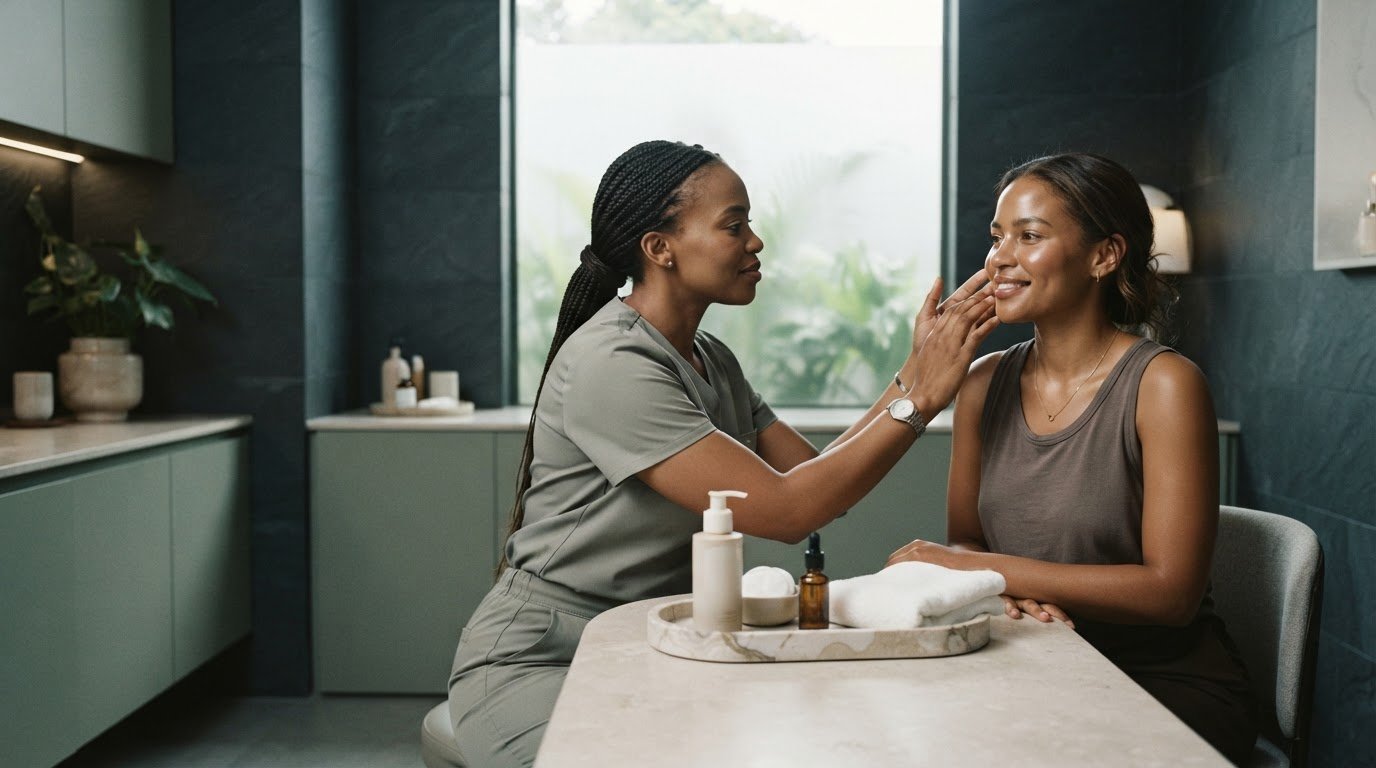
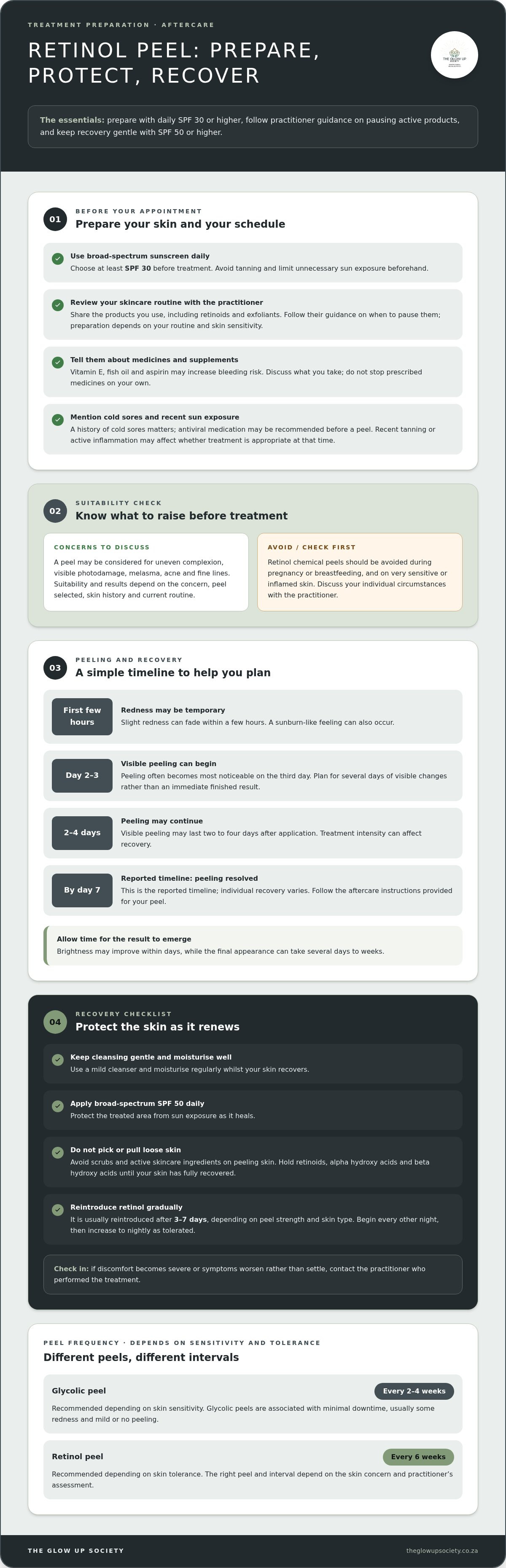
Preparation matters as much as the peel itself. Retinol peel preparation starts with daily broad-spectrum sunscreen of at least SPF 30 before treatment, alongside guidance on when to pause retinoids and exfoliating products. A retinol peel is a vitamin A-based exfoliating treatment that promotes cell turnover and collagen production.
It’s natural to want a clear idea of what to expect before booking a skin treatment. This guide explains what retinol is, which concerns a peel may address, how to prepare your skin, what happens during an appointment and what recovery can involve. Your skincare routine and skin sensitivity help shape preparation, so understanding them can help you approach treatment calmly and informed.
Key Takeaways
- Learn how retinol supports skin renewal and which concerns may make a peel worth discussing.
- Daily broad-spectrum sunscreen of at least SPF 30 is recommended before a chemical peel; your skincare routine also affects preparation.
- Find out what to expect during the appointment, including how the peel is applied and how long it may remain on your skin.
- Visible peeling can begin around day two or three, so plan for gentle skincare and sun protection during recovery.
- Retinol peels are generally avoided during pregnancy or breastfeeding and when skin is very sensitive or inflamed.
Table of Contents
- Skin concerns treated
- Peeling and recovery
- Retinol peel ingredients and skin renewal
- Stopping retinol and exfoliating products before a peel
- What happens during the procedure
- The Glow Up Society: GA Peels
Skin concerns treated
A retinol peel may be considered for concerns such as uneven complexion, visible photodamage, melasma, acne and fine lines. Its vitamin A-based action encourages skin renewal, helping to exfoliate surface cells and improve the appearance of texture and tone. Results depend on the concern and the peel selected, so an assessment should take your skin history and current skincare routine into account.
Study authors enrolled female peel candidates aged 18-65 years, and 24 subjects participated in the study. The research examined different concerns, including photodamage and melasma. Within the photodamage group, the acne subgroup included five participants. Study authors reported statistically significant improvements in several dermatologist-graded measures in the photodamaged group, with P<0.05. These findings describe that study, rather than predicting the result for every individual.
How do retinol peels compare with glycolic acid and TCA peels? Glycolic peels use an alpha hydroxy acid, while retinol peels use a vitamin A derivative; TCA stands for trichloroacetic acid. Formulations and treatment intensity differ, so the right option depends on the skin concern and practitioner’s assessment, not simply the ingredient name. Glycolic peels are associated with minimal downtime, usually involving some redness and mild or no peeling.
Frequency also differs: glycolic peels are recommended every 2-4 weeks depending on skin sensitivity, while retinol peels are recommended every 6 weeks depending on skin tolerance. Avoid tanning and limit unnecessary sun exposure before your appointment. Use broad-spectrum sunscreen of at least SPF 30 daily during preparation. After treatment, keep to gentle cleansing, moisturising and daily sun protection; stronger exfoliation can wait until the skin has recovered.
Before treatment, tell the practitioner about medicines and supplements. Vitamin E, fish oil and aspirin may increase bleeding risk, so discuss their use rather than stopping prescribed medicines on your own. A history of cold sores matters because antiviral medication may be recommended before a peel. Retinol chemical peels should be avoided during pregnancy or breastfeeding, and on very sensitive or inflamed skin.
Plan your appointment around your skin’s condition and routine. Active inflammation or recent sun exposure, for example, may affect whether treatment is appropriate at that time. Share the products you use, including retinoids and exfoliants, and mention any recent tanning. After the peel, moisturise regularly and apply broad-spectrum sunscreen daily. Consistent sun protection helps care for freshly treated skin as it renews.
Peeling and recovery
After a retinol peel, visible peeling and temporary redness can occur as part of skin renewal. Your aftercare routine and treatment intensity shape the recovery period.
Recovery expectations
Plan for several days of visible changes rather than an immediate finished result. Slight redness can fade within a few hours, while peeling often becomes most noticeable on the third day. A sunburn-like feeling and more intense peeling can also occur for several days. Keep your schedule flexible if you have an event or cosmetic appointment coming up.
Care for your skin gently as it recovers. Use a mild cleanser, moisturise well and apply broad-spectrum sunscreen of at least SPF 50 daily. Avoid picking or pulling loose skin, which can disturb the healing surface. Hold retinoids, alpha hydroxy acids and beta hydroxy acids until your skin has fully recovered. These steps help protect your complexion while it renews.
Peeling and treatment timeline
Visible peeling usually begins on day two or three after treatment. It may last two to four days after application, with the third day often bringing the most noticeable shedding. In the reported timeline, peeling had resolved by day seven. Individual recovery can vary with treatment intensity, so follow the aftercare instructions provided for your peel.
Skin brightness may improve within days, but the final appearance can take several days to weeks to emerge. Consistent care over several weeks supports the gradual effect of a chemical peel. When resuming retinol, it’s usually reintroduced after 3-7 days, depending on peel strength and skin type. Begin every other night, then increase to nightly as tolerated.
Risks and side effects
Redness, peeling and a sunburn-like sensation are possible short-term effects of a retinol peel. Peeling may be more intense than with some other cosmetic exfoliation treatments, and the amount of visible shedding depends partly on treatment intensity. Don’t use scrubs or active skincare ingredients on peeling skin, as they can cause further irritation.
Protect the treated area from sun exposure with broad-spectrum SPF 50 sunscreen, and keep moisturising whilst the skin recovers. If discomfort becomes severe or symptoms worsen rather than settle, contact the practitioner who performed the treatment. For guidance on treatment and aftercare, explore retinol peel treatments.
Retinol peel ingredients and skin renewal
A retinol peel is a chemical peel based on vitamin A. It promotes cell turnover, helping the surface shed older cells as fresh skin develops. Retinol is also associated with collagen production, which supports skin structure. These actions explain why a retinol peel may be considered for uneven texture, fine lines and visible photodamage. The formulation and strength influence how the treatment is used, so the ingredient name alone doesn’t describe the full peel.
Chemical peels exfoliate by applying an active solution to the skin’s surface. A glycolic peel uses glycolic acid, an alpha hydroxy acid derived from sugar cane, to help dead skin cells shed. Retinol works differently: as a vitamin A derivative, it supports renewal rather than relying on glycolic acid’s exfoliating action. Trichloroacetic acid, or TCA, is another peel ingredient, but its presence alone doesn’t tell you how a treatment will feel or how much peeling to expect. Formulation, application and skin response all matter.
Research has evaluated more than one retinol strength. A physician-strength superficial peel containing 3% retinol was used in a study. That figure describes the studied formulation, not every retinol peel. Other formulations may combine retinol with ingredients such as vitamin C, so check the treatment details and instructions you receive. Don’t assume that a higher concentration means a better match for your skin. The practitioner considers your skin concerns, sensitivity and existing skincare regimen when selecting an approach.
People with skin of colour can also be considered for chemical peels. The study’s skin-of-colour group included participants with Fitzpatrick skin types IV-VI. This shows those skin types were represented in that research, but it doesn’t mean every peel or strength suits every complexion. Skin history, current irritation and previous responses to exfoliating products can affect the plan. Share these details during your assessment, including any history of dark marks after inflammation.
After a peel, caring for the renewed surface is part of the process. Follow the aftercare instructions, moisturise and apply broad-spectrum sunscreen daily. Choose a skincare routine that avoids unnecessary irritation while your skin recovers. This is particularly relevant after exfoliation, when the surface may be more sensitive. A chemical peel can gradually improve the appearance of skin; visible peeling is not the only measure of renewal. Keep expectations aligned with the specific formulation and your skin’s response.
Stopping retinol and exfoliating products before a peel
Pause certain active skincare products before your appointment to limit unnecessary irritation. Preparation varies with peel strength, your routine and skin sensitivity, so follow the schedule provided for your treatment.
Published preparation advice gives different retinoid pause periods. Some guidance recommends stopping topical retinoids two weeks before a peel; other recommendations suggest 3-5 days beforehand or a couple of days. These differences reflect variation between protocols and skin needs, not a single timetable for every treatment. Follow the instructions for your specific peel rather than combining several schedules or restarting products early.
Gentle exfoliation is commonly paused a few days before a chemical peel. This includes products containing alpha hydroxy acids, such as glycolic acid, and beta hydroxy acids. Glycolic acid, an alpha hydroxy acid derived from sugar cane, helps dead skin cells shed. Using it alongside another exfoliating treatment may intensify your skin’s response, so tell the clinic which acids, retinoids and scrubs you use.
Preparation can take longer for some people. Advice for first-time peel clients, people with sensitive skin, or those new to retinol-based products recommends preparing for 2-4 weeks before treatment. Some chemical peels require weeks of preparation, and preparation for a deep peel might take several months. These timelines depend on the treatment and the skin’s condition; they don’t replace the product pause instructions for your appointment.
Can you shave, wax or have other facial treatments before a retinol peel? Shaving, waxing and other treatments can leave skin feeling sensitised, so avoid scheduling them close to your peel unless your practitioner’s instructions allow it. Mention the method and timing, such as facial waxing or a scrub, when discussing your skincare routine.
For a clear preparation plan, list your products by name and how often you use them. Include retinol, prescription retinoids, glycolic acid, salicylic acid, exfoliating toners and physical scrubs. The pause period can depend on the ingredient, frequency of use, peel strength and whether your skin is already irritated. Don’t replace a paused active with another exfoliant; use simple cleansing and moisturising instead.
Sun protection is also part of preparation. Apply broad-spectrum sunscreen of at least SPF 30 daily before a chemical peel, and avoid tanning or unnecessary sun exposure. If your skin develops irritation before the appointment, share that change rather than applying more active products to compensate. A calm, consistent routine gives the practitioner useful context for planning the treatment.
What happens during the procedure
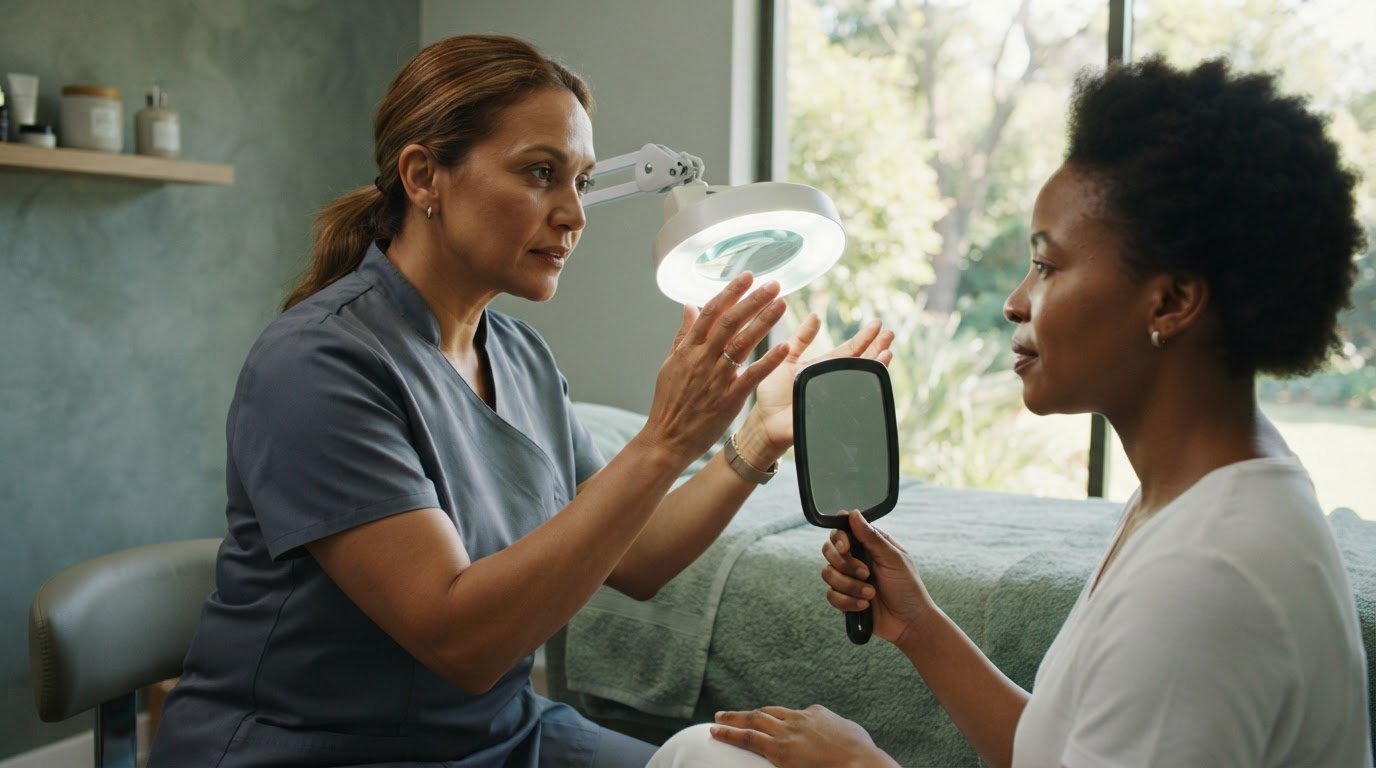
Your appointment begins with a review of your skin concerns, skincare routine and preparation instructions. Share the products and medicines you use, along with any recent irritation or sun exposure. These details help guide the choice and application of the peel. The treatment plan should reflect your skin’s condition and the ingredients being used, rather than the peel’s name alone.
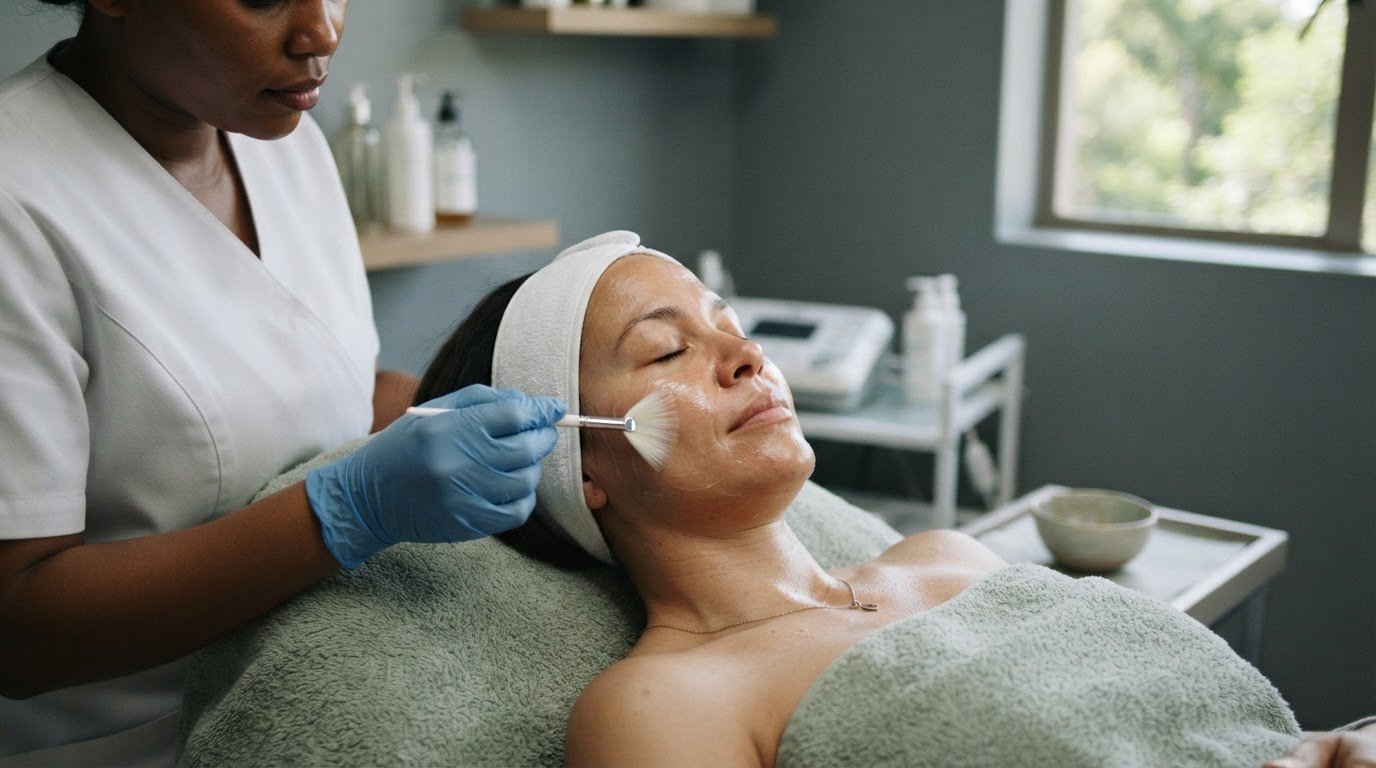
Peel appointments differ in length according to depth. A light chemical peel typically takes around 30 minutes, while a medium peel may take up to an hour. A deep peel can take a couple of hours. These timings describe general peel categories, not a guaranteed appointment length for every retinol treatment.
During application, the retinol solution is placed on the skin. Unlike peels that are neutralised in the treatment room, patients leave a retinol peel on their skin after application. The recommended leave-on period is 3 - 8 hours. Your instructions should make clear when to wash it off and how to care for your skin afterwards.
The ingredients and strength shape the treatment. A physician-strength superficial peel evaluated in a study contained 3% retinol. That formulation is one example, not a description of every peel. Some retinol peels include other ingredients, such as vitamin C, an antioxidant. Ask for clear application and removal instructions, especially if your formula combines active ingredients.
A retinol peel works at the skin’s surface to promote cell turnover. It is not the same as a deeper peel, and the word “retinol” alone doesn’t indicate treatment depth. The concern being addressed, such as uneven texture or hyperpigmentation, and your skin’s response inform the approach. Application time and leave-on time are separate: the peel may be applied during an appointment, then remain on your skin at home.
Before leaving, make sure you understand the aftercare steps and when to remove the solution. Arrange your day around the 3 - 8-hour leave-on period, and avoid guessing if you’re unsure about the timing. Follow the specific instructions provided for your treatment. Gentle cleansing, moisturising and sun protection are important parts of caring for skin after a peel.
If you’re considering a peel, plan your skin treatment appointment with your goals, current skincare and recent sun exposure in mind. This gives you a clear opportunity to discuss the procedure, application instructions and the care your skin will need afterwards.
The Glow Up Society: GA Peels
The Glow Up Society in Fourways offers GA peels for people exploring a chemical peel for their skin concerns. Other treatment options include LHA peels, retinol peels and Optiphi microneedling. Each approach differs, so your choice can take account of your complexion, skincare routine, sensitivity and preferred recovery experience.
If you’re considering a retinol peel, discuss your goals and preparation questions during an appointment. This helps you understand the treatment process and aftercare before deciding how to proceed. You can also discuss other peel approaches if they may better suit your needs. Contact The Glow Up Society to talk through your skin treatment options.
Choose a considered next step for your skin
Your next step is to connect your skin goals with a treatment approach that feels manageable for your routine. Think about the changes you’d like to address, your current skincare habits and the recovery time you can comfortably plan for. This gives you a useful starting point for a focused conversation, rather than choosing a peel by name alone.
The Glow Up Society in Fourways offers GA peels, LHA peels and retinol peels. Discussing these options can help you understand which approach best aligns with your complexion and preferences. Bring your product list and questions about retinol peel preparation, application or aftercare, so the conversation can focus on the details that matter to you.
Contact The Glow Up Society to talk about your skin treatment options. A thoughtful, personalised next step can help you feel prepared to make a choice that suits your skincare journey.
Frequently Asked Questions
What Is Retinol?
Retinol is a form of vitamin A used in skincare to support skin renewal. In a peel, it forms part of an exfoliating treatment intended to improve the appearance of concerns such as uneven texture. It isn’t the same as a moisturiser or a simple surface scrub. If you already use a retinol serum, tell the practitioner its name and how often you apply it.
WHO SHOULDN’T HAVE A PEEL?
People who are pregnant or breastfeeding, or whose skin is very sensitive or inflamed, should avoid retinol chemical peels. Active irritation matters: tell the practitioner if your face is currently sore, swollen or unusually reactive. A history of cold sores is also relevant, as a practitioner may recommend antiviral medication before treatment. Share your skin and health history during your consultation.
How should you prepare your skin before a retinol peel?
Prepare by following the treatment-specific instructions, protecting your skin from sun exposure and simplifying your skincare routine as directed. List your products, including prescription creams, exfoliating toners and spot treatments, so nothing is overlooked. Mention recent waxing, shaving or other facial treatments, too. For retinol peel preparation, tell the practitioner about changes in your skin, such as new irritation or a recent flare-up.
How many days before a retinol peel should you stop using retinol and other active ingredients?
There isn’t one pause period that applies to every retinol peel. Guidance varies: some recommendations say to stop topical retinoids two weeks beforehand, while others suggest 3-5 days or a couple of days. The product, peel strength and your skin’s sensitivity affect the schedule. Ask for clear instructions for your appointment, and don’t combine different timelines or stop prescribed treatment without guidance.
What medications or skin conditions make a retinol peel unsafe?
Some medicines and supplements can affect preparation, so disclose everything you take. Vitamin E, fish oil and aspirin may increase bleeding risk before a chemical peel. Very sensitive or inflamed skin is a reason to avoid retinol peels, and a history of cold sores may prompt a recommendation for antiviral medication. Bring your medication list and mention skin conditions or recent changes before treatment.
Should you avoid retinol peels during pregnancy or breastfeeding?
Yes. Retinol chemical peels should be avoided during pregnancy and breastfeeding. If either applies to you, tell the practitioner before planning treatment, including if you’re still establishing whether a pregnancy is possible. Don’t rely on pausing your home retinol product as a substitute for avoiding a peel. You can discuss your skin goals and revisit treatment planning when this precaution no longer applies.
What should you expect during a retinol peel appointment?
Expect the appointment to include a discussion of your skin concerns, skincare routine and preparation, followed by application of the peel. Retinol peels are generally left on the skin after the appointment, so make sure you understand the product-specific removal instructions before leaving. Tell the practitioner if you feel unusual discomfort during application. Arrive with your skin free of unapproved active products or makeup, as instructed.
What aftercare and sun protection are needed after a retinol peel?
Aftercare centres on gentle cleansing, moisturising and daily broad-spectrum sun protection. Use sunscreen with at least SPF 50 after treatment, and avoid picking or pulling peeling skin. Don’t restart retinoids, AHAs or BHAs until your skin has fully recovered. If redness or discomfort worsens rather than settling, contact the practitioner who treated you. Follow the aftercare plan provided for your specific peel.