Skincare
Red Light Therapy for Skin in Fourways: Home and Clinic Options
· The Glow Up Society
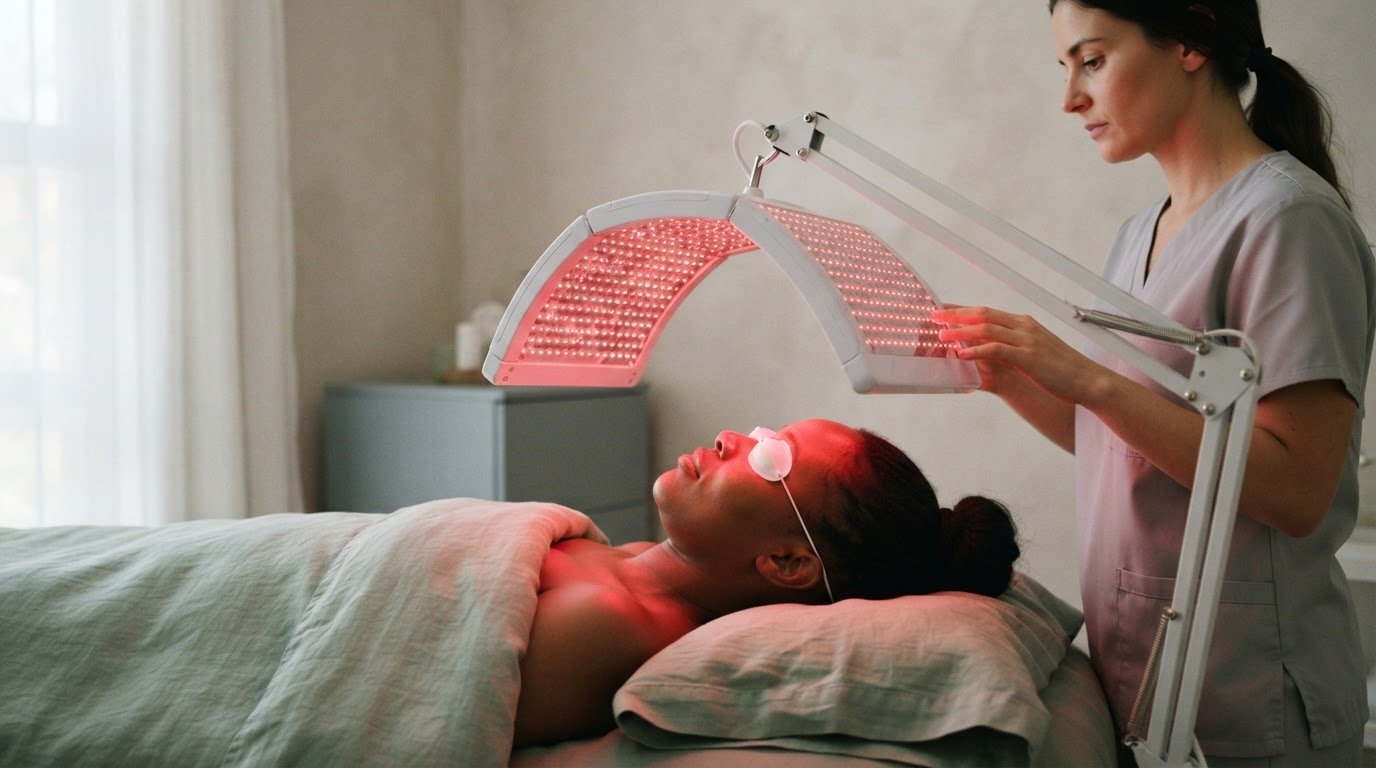
Red light therapy is not a tanning treatment. It uses red light without the ultraviolet light associated with sunlight and tanning booths, and red light therapy for skin in Fourways may be planned as an initial course of 6-10 sessions followed by monthly maintenance. It’s being explored for skin concerns including redness, acne, scars and wrinkles, although results and treatment plans vary.
If you’re weighing a home device against a clinic session, it helps to understand how the options differ and what eye protection involves. This guide explains red light therapy for skin in Fourways, why professional care may suit your needs, and what precautions to consider. If you have a skin or eye concern or take medication that increases sensitivity, speak with a healthcare professional before treatment. This gives you a calm, informed starting point for deciding whether this light-based treatment belongs in your skincare routine.
Key Takeaways
- Understand what red light therapy is designed to address and how it differs from other light-based treatments.
- Learn how clinics approach eye protection and device safety during a session.
- See what to consider when choosing between home use and professional LED light therapy near Fourways.
- Explore how treatment frequency can depend on your skin goals and the plan discussed with a professional.
Table of Contents
- What is red light therapy?
- How do clinics manage eye protection and device safety during red light therapy?
- LED light therapy providers in Fourways and nearby areas
- How many red light therapy sessions are typically recommended, and how often?
- The Glow Up Society: Skinboosters
What is red light therapy?
Red light therapy uses low-level red light as a non-invasive skin treatment. Unlike sunlight or tanning booths, it doesn’t use ultraviolet light. Skin concerns being investigated include wrinkles, scars, redness, acne, psoriasis, rosacea and eczema. It’s an option some people consider for a specific condition or as part of a beauty routine.
LED facials may combine red light with other skincare steps, such as cleansing or applying products. Laser treatments use a more concentrated beam, while red light devices commonly deliver light across a treatment area. Red light can also be used in photodynamic therapy, where low-power red laser light activates a photosensitiser drug and triggers a reaction that destroys cells. These treatments are not interchangeable.
For skin, treatment plans commonly begin with 6-10 sessions, followed by monthly maintenance. The number of sessions and the schedule depend on the skin concern and the treatment approach. People receiving red light therapy for skin conditions may need sessions one to three times a week for weeks or months.
Fresha says results from LED light therapy are likely within 8 to 10 sessions, depending on skin type. This is a suggested course, not a fixed schedule for every person. The area treated, the condition and how the skin responds help shape ongoing sessions.
In Fourways, the cost depends on the treatment plan and session details; the fee is provided after a quote request. Session length and the type of treatment are factors that shape the plan, rather than a single price applying to every case.
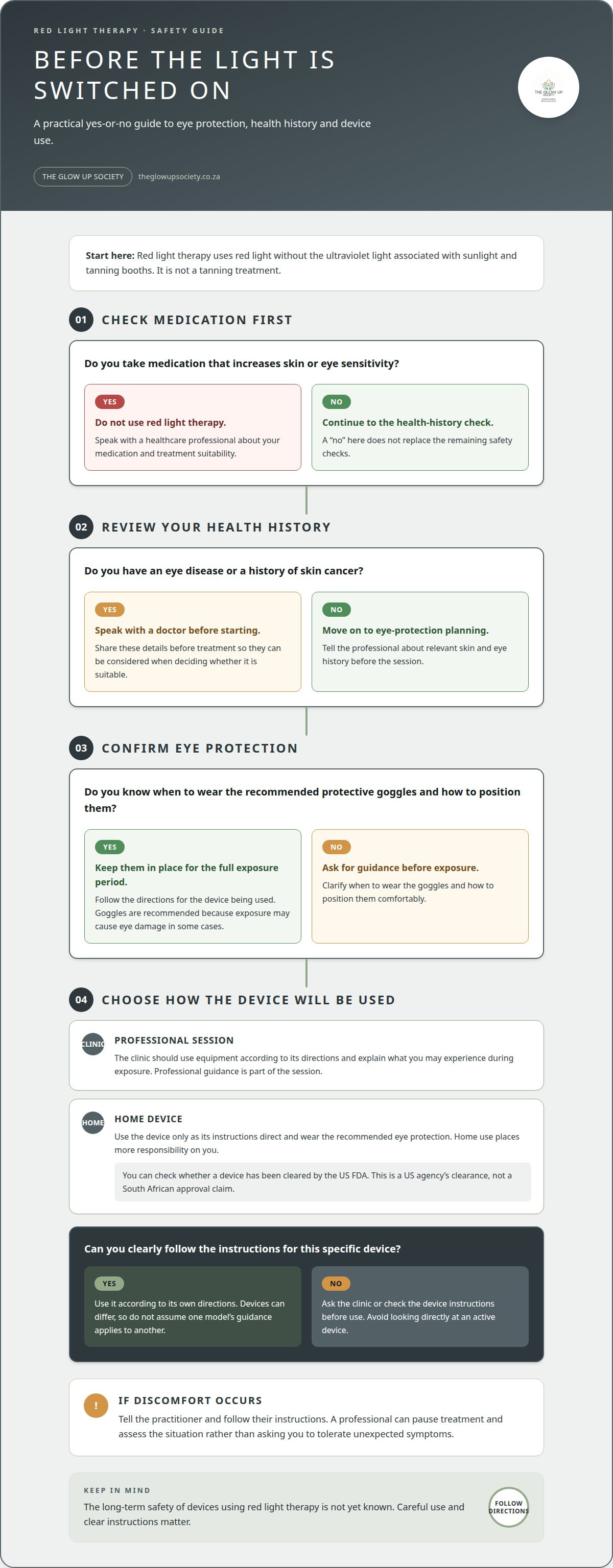
Before a session, tell the professional about your skin concerns and medicines, especially medicines that increase skin or eye sensitivity. People taking these medicines should not use red light therapy. Speak with a healthcare provider or dermatologist about whether it suits you, particularly if you have a skin condition.
Prepare your skin according to the clinic’s instructions and follow its aftercare guidance. Use eye protection as directed during treatment. A professional can discuss your skin goals, explain the session plan and advise you on caring for your skin afterwards.
How do clinics manage eye protection and device safety during red light therapy?
Eye protection is a practical part of a red light session, not an optional extra. Protective goggles are recommended because exposure may cause eye damage in some cases. Before treatment, ask when to wear them and how to position them comfortably. Keep them in place for the full exposure period, following the device’s directions.
Before treatment, discuss relevant eye and skin history. If you have an eye disease or a history of skin cancer, speak with a doctor before starting red light therapy. Share those details before the session so they can be considered when deciding whether treatment is suitable.
Device instructions matter, even in a professional setting. The clinic should use the equipment according to its directions and explain what you may experience during exposure. Red light devices can differ, so guidance for one model should not be assumed to apply to another. The long-term safety of devices using red light therapy is not yet known, making careful use particularly important.
Powerful light sources can pose risks when used incorrectly, so avoid looking directly at an active device. If you experience discomfort, tell the practitioner and follow their instructions. A professional can pause treatment and assess the situation rather than asking you to tolerate unexpected symptoms.
At home, use a device only as its instructions direct and wear the recommended eye protection. Check whether it has been cleared by the US FDA; this is a US agency’s clearance, not a South African approval claim. Clinic sessions offer professional guidance, while home use places more responsibility on the user. Before treatment in Fourways, discuss eye disease, past skin cancer and any concerns with a doctor.
LED light therapy providers in Fourways and nearby areas
Fourways and nearby Bryanston have listings for LED light therapy services. Across those listings, the average rating is 4.0 out of 5 from 3,007 reviews. This gives a broad local snapshot, not a measure of how your skin will respond. Reviews may describe different treatments and personal expectations, so use them as context rather than the deciding factor.
When comparing red light therapy for skin in Fourways, look for a clear explanation of the service. A listing may use the general phrase “LED light therapy” without stating whether it focuses on red light. Ask what the session is intended to address and how the practitioner describes the treatment. Redness and acne, for example, are different concerns, so discuss your own skin goals.
Consider how the treatment relates to your concern. If you’re exploring red light therapy for skin in Fourways for wrinkles or acne, discuss the aim of the session rather than assuming every LED service follows the same approach. A useful explanation distinguishes a treatment goal from a guaranteed result and helps you decide whether the option fits.
Location can shape whether a course of appointments feels practical. If you’re travelling from Bryanston or another part of Fourways, consider the journey alongside the proposed schedule. Convenience matters, but so do a clear treatment explanation, eye-protection guidance and an approach that accounts for your skin concerns.
Before choosing a local LED treatment, make sure the practitioner discusses relevant health history and explains how the device is used. If you have eye disease or a history of skin cancer, speak with a doctor before treatment. These details help you assess the service beyond its ratings and understand how the process will work.
How many red light therapy sessions are typically recommended, and how often?
A common starting course for LED light therapy is 6-10 sessions, followed by monthly maintenance. The course gives a practitioner several opportunities to assess how your skin responds. Your concern matters: a plan for acne may differ from one addressing redness or wrinkles. Skin type also influences expectations, so the schedule should relate to your treatment goal.
For skin conditions, treatment may be scheduled one to three times a week, over weeks or months. This means regular appointments may form part of the plan, rather than relying on one isolated session. The length of the course depends on the condition being treated and the intended approach. A practitioner can use your progress to guide ongoing sessions.
Fresha says LED light therapy results are likely within 8 to 10 sessions, depending on skin type. This sits within the broader 6-10-session starting-course recommendation, but the figures describe typical guidance, not a promise of a particular outcome. Track your skin’s response across appointments, including changes in the concern you wanted to address.
Maintenance is separate from the initial course. Monthly sessions are commonly recommended after the first series, helping continue a routine once the initial appointments are complete. The ongoing plan should reflect your skin’s condition and response, rather than becoming an automatic schedule unrelated to your goals.
Before beginning, discuss your skin concern, skin type and treatment history with the practitioner. These details help shape the course and appointment rhythm. If a doctor is managing a skin condition, include that context in the discussion. A considered schedule makes it easier to plan regular visits and review progress over time.
For a personalised discussion of your treatment plan, get in touch about red light therapy.
The Glow Up Society: Skinboosters
The Glow Up Society offers red light therapy and skinboosters for people considering professional skin treatments in Fourways. If your goal is to explore a light-based approach, discuss red light therapy with the team. If you’re considering skinboosters, ask how that option relates to your skin concerns and treatment goals.
GA Peels and LHA Peels are also available for different skincare needs. These are distinct options, so start by discussing what you’d like to address, your skin condition and any relevant treatment history. A professional conversation can help you understand which approach fits your goals, or whether another option is more appropriate.
For a calm next step, contact The Glow Up Society to discuss your skin goals and treatment options.
Choose a considered next step for your skin
If you’re considering red light therapy for skin in Fourways, let your skin goals guide the conversation. A professional discussion can help you decide whether this is the approach you want to explore or whether another treatment better suits your priorities. The Glow Up Society offers red light therapy alongside skin treatments including GA Peels, LHA Peels and Retinol Peels. Each is a distinct option to discuss in relation to your skin and preferences.
Bring your main concern and relevant treatment history to the conversation. This gives the team useful context for discussing an appropriate direction without treating every skin goal alike. You can take the next step at your own pace and ask about the option that feels most relevant to you. Contact The Glow Up Society to discuss your skin goals. A thoughtful plan begins with a conversation.
Frequently Asked Questions
Can it cause cancer?
Red light therapy uses red light, not the ultraviolet light associated with sunlight and tanning booths. That makes it different from UV tanning, but the distinction alone cannot establish that cancer risk is impossible. If you have a history of skin cancer, speak with a doctor before treatment. Discuss your medical history and any concerns before deciding whether this therapy suits you.
What is red light therapy for skin and what skin concerns can it treat?
Red light therapy is a light-based treatment being investigated for several skin concerns, rather than a proven solution for every condition. Areas of investigation include wrinkles, scars, redness, acne, psoriasis, rosacea and eczema. The treatment does not use ultraviolet light. Start by identifying the concern you want to address, then discuss whether light therapy is appropriate for that specific skin issue.
What evidence supports red light therapy for skin rejuvenation and acne?
A 2021 research review reported benefits in all 10 studies it included. Red light therapy is also being investigated for acne and signs of skin ageing, but that review finding does not mean every concern has equal evidence. Nor does it establish a predictable result for an individual. For persistent acne or changing skin symptoms, discuss treatment choices with a healthcare professional.
What are the risks, side effects, and contraindications of red light therapy?
Eye exposure may cause damage in some cases, so protective goggles are recommended. The long-term safety of red light therapy devices is not yet known. People taking medication that increases skin or eye sensitivity should not use it. If you have eye disease or a history of skin cancer, speak with a doctor before considering treatment.
Which Fourways clinics or salons offer red light therapy for skin?
The Glow Up Society offers red light therapy in Fourways. If you’re considering an appointment, clarify that your goal is skin treatment and discuss your relevant health history before starting. The clinic is at The Golf Place Fourways, within reach of Sandton, Lonehill, Kyalami, Bryanston and North Riding. Choose a treatment setting that explains the session and its safety approach clearly.
What devices and wavelengths do Fourways red light therapy providers use?
The Glow Up Society’s service is identified as red light therapy, rather than by a specific device model or wavelength. A treatment label alone does not show that different providers use identical equipment or settings. Focus on understanding the device instructions, treatment area and eye-protection approach for the session. Avoid assuming a particular wavelength or product based only on the service name.