Skincare
PRP treatments: How blood becomes a tissue repair injection
· The Glow Up Society
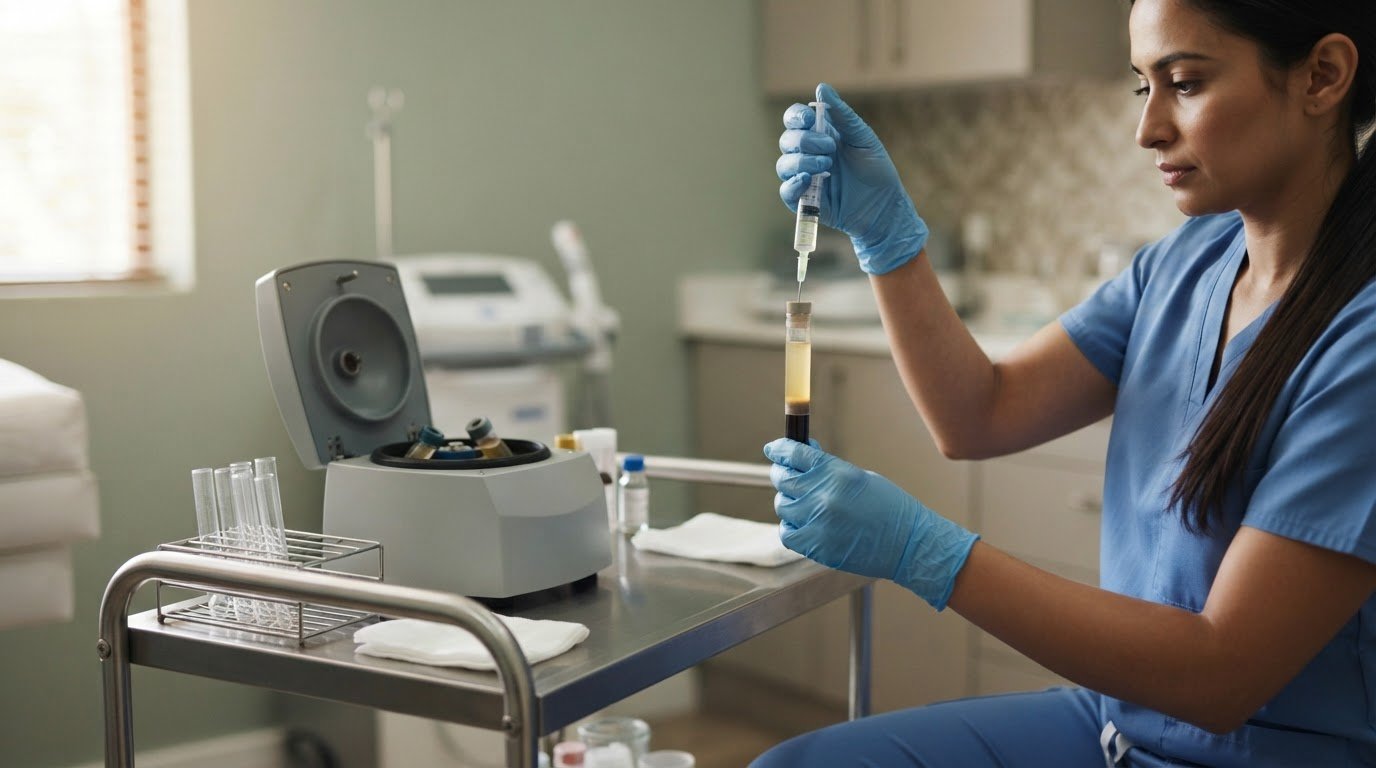
A tissue-repair injection starts with your own blood, not a manufactured ingredient. In PRP treatments, a blood sample is processed to concentrate platelets, then the plasma is applied to the skin or injected into a targeted area. The aim is to use components already present in your blood to support the body’s repair response.
It’s natural to wonder how a blood draw becomes a treatment and what happens once the plasma reaches the skin or tissue. The process is straightforward, but its effects depend on the area treated and your individual needs. This guide explains how blood is collected and prepared, how platelet-rich plasma may influence inflammation and tissue repair, and what to expect during and after an injection. It also explores aesthetic uses, including PRP paired with microneedling in dermatology, so you can consider where this approach may fit into a skincare plan.
Key Takeaways
- Understand how a blood sample is processed into platelet-rich plasma and then applied or injected.
- Learn what centrifugation does and why the preparation process matters to the final injection.
- Explore how platelets may influence inflammation and support the body’s tissue-repair response.
- See how PRP may be used in skin treatments, including alongside microneedling, and how other aesthetic options can complement your goals.
Table of Contents
- How PRP is prepared and injected
- Blood collection and centrifugation
- How PRP may affect inflammation and tissue repair
- Dermatology and aesthetic applications
- The Glow Up Society
How PRP is prepared and injected
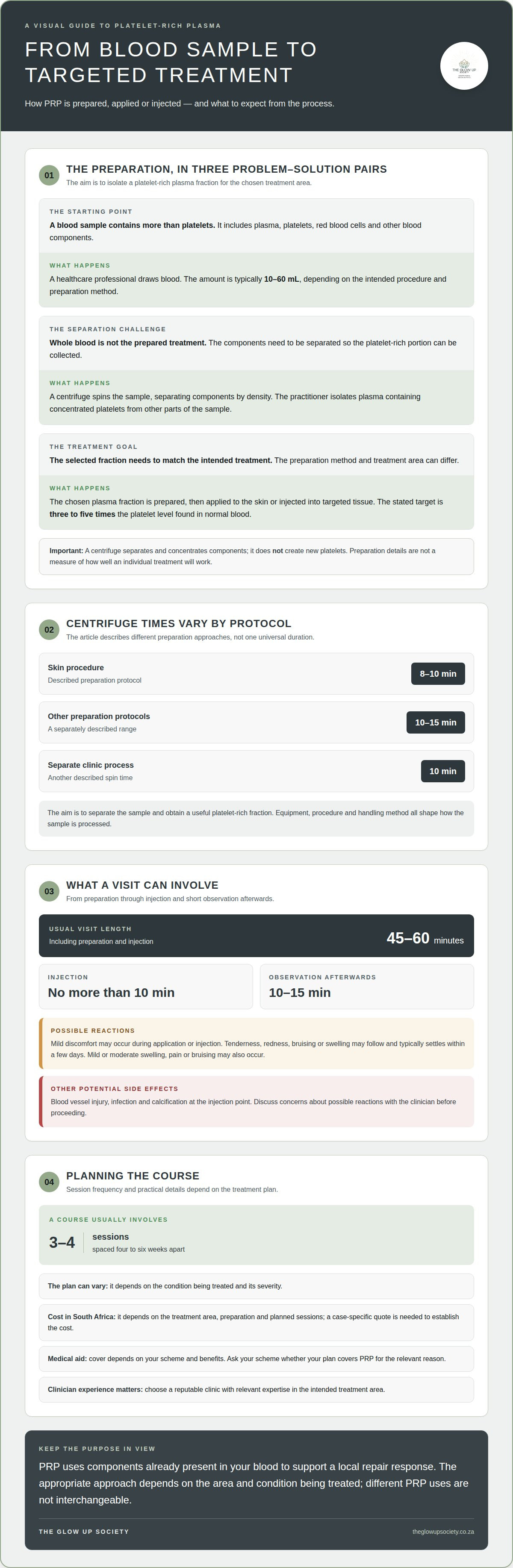
The procedure starts with a blood sample, which is processed to concentrate platelets. PRP treatments use this prepared plasma to support a targeted repair response. A visit usually takes 45 to 60 minutes, including preparation and injection.
- Collect: A healthcare professional draws a sample of your blood.
- Process: A centrifuge separates blood components and concentrates platelets in the plasma.
- Apply or inject: The prepared plasma is placed on skin or injected into targeted tissue.
The injection usually takes no more than 10 minutes. Afterward, you’re observed for 10-15 minutes. Mild discomfort can occur during application or injection. Tenderness, redness, bruising or swelling may follow and typically settles within a few days. Potential side effects also include blood vessel injury, infection and calcification at the injection point.
PRP treatments differ from other options for hair loss, joint pain and skin concerns because they address different areas and goals. They aren’t interchangeable, and the appropriate approach depends on the condition being treated.
A course usually involves three to four sessions, spaced four to six weeks apart. The treatment plan can vary according to the condition and its severity.
In South Africa, cost depends on the treatment area, preparation and planned sessions. A case-specific quote is needed to establish the cost.
Choose a reputable clinic with relevant expertise. The clinician’s abilities can affect treatment outcomes, so experience with the intended treatment area matters.
Medical aid cover depends on your scheme and benefits. Contact your scheme to ask whether your plan covers PRP for the relevant reason.
Mild or moderate swelling, pain or bruising may occur after PRP treatment. Discuss any concerns about these possible reactions with the clinician before proceeding.
Blood collection and centrifugation
Preparation begins with a blood draw, typically 10-60 mL for a PRP procedure. The sample contains plasma, platelets, red blood cells and other blood components. Processing separates these components so the platelet-rich portion can be collected. The required volume depends on the intended procedure and preparation method.
Next, the sample is placed in a centrifuge, which spins the blood to separate its components by density. The resulting layers allow the practitioner to isolate plasma containing concentrated platelets from other parts of the sample. This plasma is then prepared for application or injection into the chosen area.
Spin times vary between described protocols. A skin procedure may use eight to 10 minutes, while other preparation protocols describe 10-15 minutes. A separate clinic process describes a 10-minute spin. These figures reflect different preparation approaches, rather than one universal duration. The aim is to separate the sample and obtain a useful platelet-rich fraction.
The stated target concentration is three to five times the platelet level found in normal blood. Concentration matters because the treatment uses platelets in plasma rather than whole blood. The centrifuge helps separate and concentrate these components; it does not create new platelets. Once separation is complete, the selected plasma fraction is drawn up for treatment.
Volume and spinning time are parts of the preparation, not measures of how well an individual treatment will work. The procedure, equipment and handling method all shape how the sample is processed. For a skin-focused plan, explore personalised skin treatment options alongside learning how PRP is prepared.
How PRP may affect inflammation and tissue repair
Platelets are involved in the body’s response to tissue injury. In PRP, concentrated platelets are placed near the treatment area, where they may release signals involved in local repair. The aim is to support the body’s response, not replace damaged tissue or switch inflammation off instantly.
Inflammation is part of the body’s response to injury, but persistent irritation can affect comfort and movement. PRP is intended to influence activity around the treated site. The local response depends on the tissue involved, the condition being treated and how the plasma is prepared. A joint, for example, presents a different treatment context from skin.
Repair takes time. Platelet signals may contribute to activity among nearby cells, but an injection cannot guarantee that tissue will recover in a particular way. The aim is to encourage a local biological response, not to replace assessment of the cause of pain, skin changes or hair loss.
What does the evidence say? Findings need to be considered by condition and treatment protocol, rather than treated as proof of one universal effect. According to the World Health Organization, a study of 40 patients with knee osteoarthritis compared three PRP injections with a single dose of high-molecular-weight hyaluronic acid. That comparison alone does not establish which treatment worked better.
For a fair assessment, it matters which outcome is measured. Knee pain and movement, hair density and skin appearance are distinct endpoints. Results from one cannot automatically predict results for another. The number of injections and the preparation method also shape what a study is testing.
PRP is best understood as a treatment designed to support local repair processes, not as a rapid or universal anti-inflammatory solution. Your treatment goal should match the area and concern being addressed. A considered plan weighs the evidence for that use, the intended outcome and the time needed to assess change.
Dermatology and aesthetic applications
In dermatology, PRP is used for concerns such as hair loss and skin appearance. The approach varies by treatment area: hair protocols target the scalp, while aesthetic procedures focus on facial or other skin. PRP is also used for some joint conditions, including osteoarthritis, but that is a distinct clinical application.
For skin, platelet-rich plasma may be applied after microneedling to help it absorb. Microneedling creates tiny channels in the skin, and the plasma is placed on the treated area. This combines a physical skin procedure with a blood-derived preparation. The aim is to support a local repair response, not promise a particular cosmetic result.
Collagen production after PRP treatment can take up to three months. This gradual timing matters when considering skin texture or other appearance goals. Change may develop over time rather than appearing immediately after a session. The treatment plan should match the concern and allow time to assess the skin’s response.
For hair, PRP is delivered to the scalp rather than applied as a facial treatment. Hair-treatment results are appreciated after three to four months, so early impressions may not reflect the full response. PRP is therefore not an instant solution for visible thinning. Hair loss has different causes, and the underlying reason shapes which approach is suitable.
What conditions are PRP treatments used for? They may be used for hair loss, selected skin concerns and joint conditions such as osteoarthritis. These uses have different goals, treatment sites and timelines, so evidence for one application cannot automatically be applied to another.
If your interest is skin renewal, take a considered next step: explore aesthetic treatment options suited to your skin goals.
The Glow Up Society
The Glow Up Society offers PRP injections for people considering PRP treatments. If you’re exploring this option for a skin concern, consider how it fits your wider skincare goals.
Other aesthetic options include Optiphi Microneedling, GA Peels, LHA Peels and Retinol Peels. Each takes a different approach to skin concerns, so your goals can guide a considered discussion about suitable care.
For a personal conversation about your goals and treatment options, contact The Glow Up Society.
Choose a next step that fits your skin goals
Your next step is to connect the treatment with the concern you want to address. If you’re considering PRP treatments for a skin goal, think about how they fit your wider skincare plan rather than treating them as a standalone promise. A calm, focused conversation can help clarify what matters most to you and which options are relevant.
The Glow Up Society offers several skin treatments, including GA Peels, LHA Peels and Retinol Peels. These are distinct options to discuss when your focus is skin appearance and renewal. Your goals can guide a considered conversation about the approach that feels right for you.
For a personal discussion about your aesthetic goals and available treatment options, contact The Glow Up Society. Take the next step at a pace that feels comfortable, with your priorities at the centre.
Frequently Asked Questions
How does it work?
PRP treatments use platelets from your own blood to encourage a local repair response. Once prepared, the plasma is delivered to the treatment area, such as the scalp or a joint. Platelets release biological signals that may influence nearby tissue activity. The intended response depends on the treatment site and concern, so effects can differ between applications and individuals.
What should you expect after treatment?
You can usually return home and resume light daily activities on the same day. The treated area may feel tender or look mildly swollen, red or bruised. Avoid strenuous exercise and activities involving the treated area for at least 24-48 hours. You may also be advised to avoid anti-inflammatory medicines such as ibuprofen for a few days after an injection.
Are there any reasons why you can’t have PRP therapy?
PRP treatment is not recommended for people receiving anticoagulation treatment or those with certain conditions, such as autoimmune conditions, an infection or a history of cancer. It is also not recommended during pregnancy or breastfeeding. Bleeding problems or infections may make alternatives more suitable. Share relevant health conditions and medicines during your clinical assessment so these factors can be considered.
How soon will you see PRP results?
Changes may take time because PRP treatments aim to support the body’s own response rather than create an immediate effect. Noticeable improvement is often seen within 2-4 weeks, while the full effects may develop over 2-3 months. For hair treatment, results are appreciated after three to four months. The treatment area and your overall health can influence the timeline.
What Is Platelet-Rich Plasma (PRP)?
Platelet-rich plasma is a portion of your blood prepared to contain a higher concentration of platelets than normal blood. It can be applied to skin or injected into a targeted area. Platelets take part in the body’s response to tissue injury, which is why this preparation is used to support repair processes. Its intended use depends on the concern being addressed.
What are the side effects of PRP?
Possible effects include mild discomfort during injection, followed by tenderness, redness, bruising or swelling around the treated area. Mild symptoms typically settle within a few days. Potential complications also include injury to blood vessels, infection and calcification at the injection point. The treatment area and procedure influence which effects are relevant, so discuss your health history during your clinical assessment.