Skincare
Photobiomodulation: Skin Benefits & How It Works
· The Glow Up Society
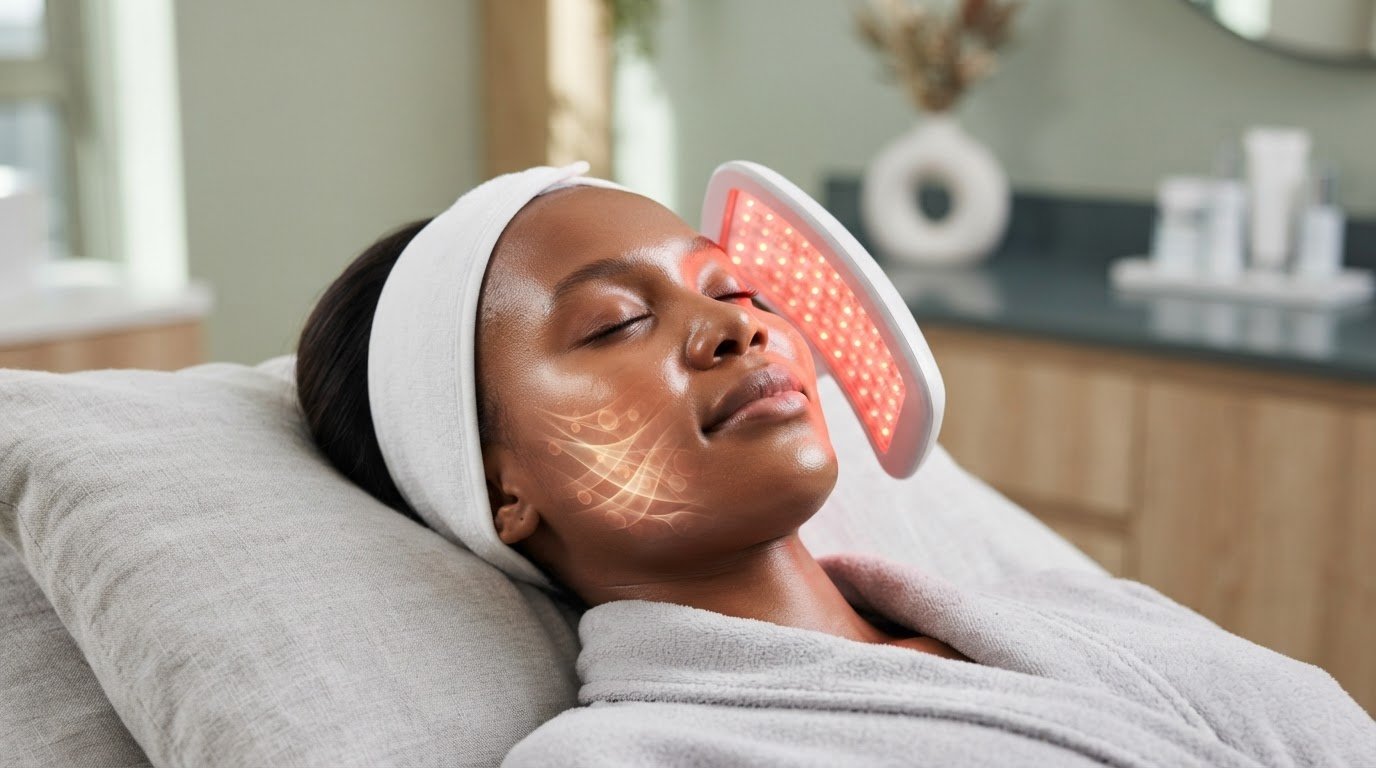
The shift from “low-level laser therapy” to Photobiomodulation reflects a broader way of describing how light interacts with tissue. This light-based approach uses specific wavelengths of visible or near-infrared light, and its effects can vary according to the tissue and treatment settings.
If you’re curious about red-light treatments, it helps to know that Photobiomodulation does not produce the same response in every cell or under every setting. Wavelength, intensity, exposure and the tissue being treated can all influence how biological processes respond.
This article explains how the terminology developed from low-level laser therapy, what may happen inside cells and how these mechanisms relate to skincare. It also explores why light’s path through tissue matters, including the limits on light reaching the brain. You’ll gain a clear, balanced understanding of Photobiomodulation without confusing potential benefits with guaranteed results.
Key Takeaways
- Learn why red and near-infrared light can prompt different cellular responses depending on the tissue and treatment settings.
- Trace how the field moved beyond its early low-level laser therapy label to describe light-based approaches more broadly.
- Understand why skin exposure does not mean light can travel easily through tissue to reach the brain.
- See how GA Peels may offer a separate skin-focused option when your goals centre on complexion care rather than light therapy.
Table of Contents
- Cellular and molecular mechanisms of red and near-infrared light
- How photobiomodulation developed from low-level laser therapy
- Limits of light penetration to the brain
- What is photobiomodulation and how does it work?
- The Glow Up Society: GA Peels
Cellular and molecular mechanisms of red and near-infrared light
Photobiomodulation uses light to influence biological activity in tissue. The response depends on the tissue and the treatment settings.
Proposed Biological Effects
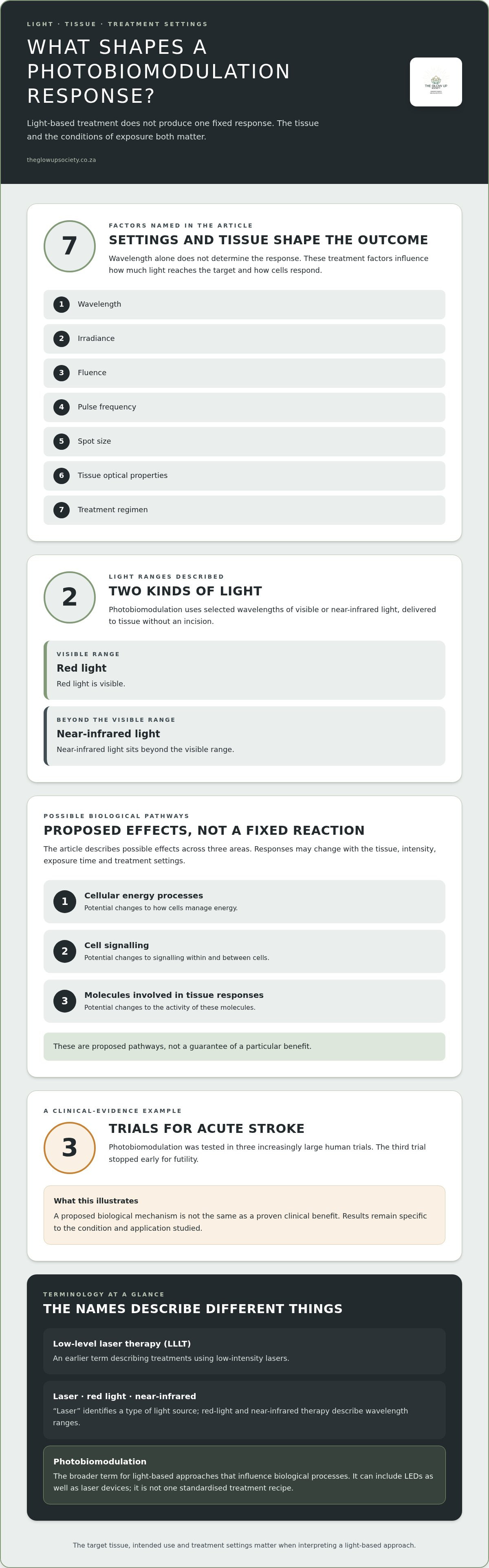
Proposed effects include changes to cellular energy processes, signalling and the activity of molecules involved in tissue responses. These are possible pathways, not a single fixed reaction. The same wavelength may prompt different effects when intensity, exposure time or target tissue changes.
For skin, that distinction matters: a surface treatment may not produce the same response as light directed towards deeper tissue. Researchers have studied light-based therapy in wound care, including for skin ulcers, venous ulcers and diabetic foot ulcers. These examples show why intended use matters when considering potential benefits.
Visible and Near-Infrared Light
Photobiomodulation uses selected wavelengths of visible or near-infrared light, delivered to tissue without an incision. Red light is visible, while near-infrared light sits beyond the visible range. Both can be used in light-based approaches, but wavelength alone does not determine the outcome.
Other factors include irradiance, fluence, pulse frequency, spot size, tissue optical properties and treatment regimen. These settings influence how much light reaches the target and how cells respond. For example, changing the spot size or exposure pattern changes the conditions at the tissue. Device settings are part of the treatment, not a minor detail.
Are devices regulated or approved in South Africa? Device approval depends on the specific device and its intended use. A therapy label alone does not establish South African approval.
What are the risks, side effects and contraindications? Eye exposure and photosensitivity are important safety considerations. Tell a healthcare professional about relevant medicines or health conditions before treatment.
Where can I access treatment in South Africa, and what qualifications should providers have? Medical-aesthetics and skin clinics may offer light-based treatments. Provider training should suit the device and treatment purpose, with clear explanations of the target and settings.
What happens during a session, and how many are usually needed? A session involves exposing the selected area to a device set for its treatment purpose. The treatment plan depends on the target tissue, light parameters and schedule.
How photobiomodulation developed from low-level laser therapy
Low-level laser therapy, often shortened to LLLT, described treatments using low-intensity lasers. As research explored other light sources, terminology broadened. Photobiomodulation now names a wider approach to light-based treatment, including methods that use visible or near-infrared light without relying solely on lasers.
This change shifts attention from the device to the interaction being explored. “Laser therapy” identifies a type of light source, while Photobiomodulation describes using light to influence biological processes. Light-emitting diodes, or LEDs, can therefore fall within this broader description. Their output and treatment settings still differ from those of laser devices.
How does photobiomodulation compare with laser therapy, red light therapy and near-infrared therapy? Laser therapy describes the source; red-light and near-infrared therapy describe wavelength ranges. Photobiomodulation is the broader term for light-based approaches, so the names overlap but do not describe a device’s exact settings interchangeably.
The distinction matters because a treatment label alone does not explain its purpose. Wavelength, intensity, exposure pattern and target tissue all shape the approach. For example, a red-light device used on skin should not automatically be treated as equivalent to a laser protocol designed for another tissue. Photobiomodulation is a category, not a single standardised treatment recipe.
Clinical testing also shows why a proposed mechanism should not be mistaken for proven benefit in every situation. Photobiomodulation for acute stroke was tested in three increasingly large human trials; the third stopped early for futility. This illustrates how an approach can progress from a proposed biological effect to clinical study, while results remain specific to the condition and application.
For skin-focused care, consider the intended target and treatment settings when comparing options. Red light therapy is one light-based approach to explore as part of a considered skincare plan.
Limits of light penetration to the brain
Light reaching the scalp does not arrive at the brain unchanged. Hair, skin, blood and bone absorb or scatter some of the energy, while deeper tissue further alters the light that passes through. The skull is therefore a substantial barrier between an external device and brain tissue. A device’s wavelength and output alone cannot show how much light reaches a particular brain region.
Near-infrared wavelengths are used in research because they interact with tissue differently from visible light. Even so, penetration depends on the route through the head, tissue composition and optical properties. The forehead, for example, presents a different path from the side of the head, where bone and tissue structures differ. Light reaching the surface does not prove that a biologically useful amount reaches a deeper target.
Device placement and treatment aim matter. A surface treatment directs light towards the skin, whereas a proposed brain application aims beyond the scalp and skull. These goals require different interpretations of exposure. Irradiance at the device is not the same as the light dose received by brain tissue, because absorption and scattering reduce and redistribute light along its path.
Clinical outcomes also need to be distinguished from laboratory mechanisms. Photobiomodulation for acute stroke was tested in three increasingly large human trials, and the third stopped early for futility. This illustrates why a proposed pathway or detectable light exposure cannot, by itself, establish meaningful clinical benefit. For readers considering red-light treatments for skin, brain-focused claims concern a different target and should not be inferred from surface-level use.
Photobiomodulation is a non-invasive light-based therapy that applies light at a specific wavelength in the visible or near-infrared range. That description identifies the type of approach, but it does not state how much light passes through the scalp and skull or reaches a brain target. Those questions are separate from the therapy’s name and wavelength category. For a brain-focused application, the distinction is between light applied externally and exposure received in deeper tissue; the latter cannot be inferred from the description alone.
What is photobiomodulation and how does it work?
Photobiomodulation describes using light to influence biological processes in living tissue. A device delivers selected visible or near-infrared wavelengths to a chosen area, such as facial skin. The light interacts with molecules in cells, which can alter cellular signalling and activity. The response depends on the tissue and light parameters, not the device label alone.
Think of the process as a chain. First, light reaches the target tissue. Next, cellular photoacceptors absorb some of that light. This interaction can affect energy-related processes and signals between cells. Those changes form the proposed basis for effects on tissue function. The precise response varies with wavelength, irradiance, fluence, pulse frequency, spot size and treatment schedule.
That variation helps explain why two devices described as red-light treatments are not necessarily equivalent. A device’s wavelength and output, its distance from the skin and the area treated all influence exposure. Tissue matters too: skin and deeper structures absorb and scatter light differently. A treatment designed for the face therefore needs settings suited to that area, rather than assumptions based on another device or target.
Researchers have studied this approach in different contexts, including skin ulcers, venous ulcers and diabetic foot ulcers. Randomised clinical studies have also examined its use as a main or adjunctive therapy. These are distinct treatment aims, not proof that every device or setting produces the same result. For skincare, the relevant questions are the intended tissue, light parameters and outcome being assessed.
If you’re exploring aesthetic options, consider your skin treatment options in relation to your goals and the area you want to address.
The Glow Up Society: GA Peels
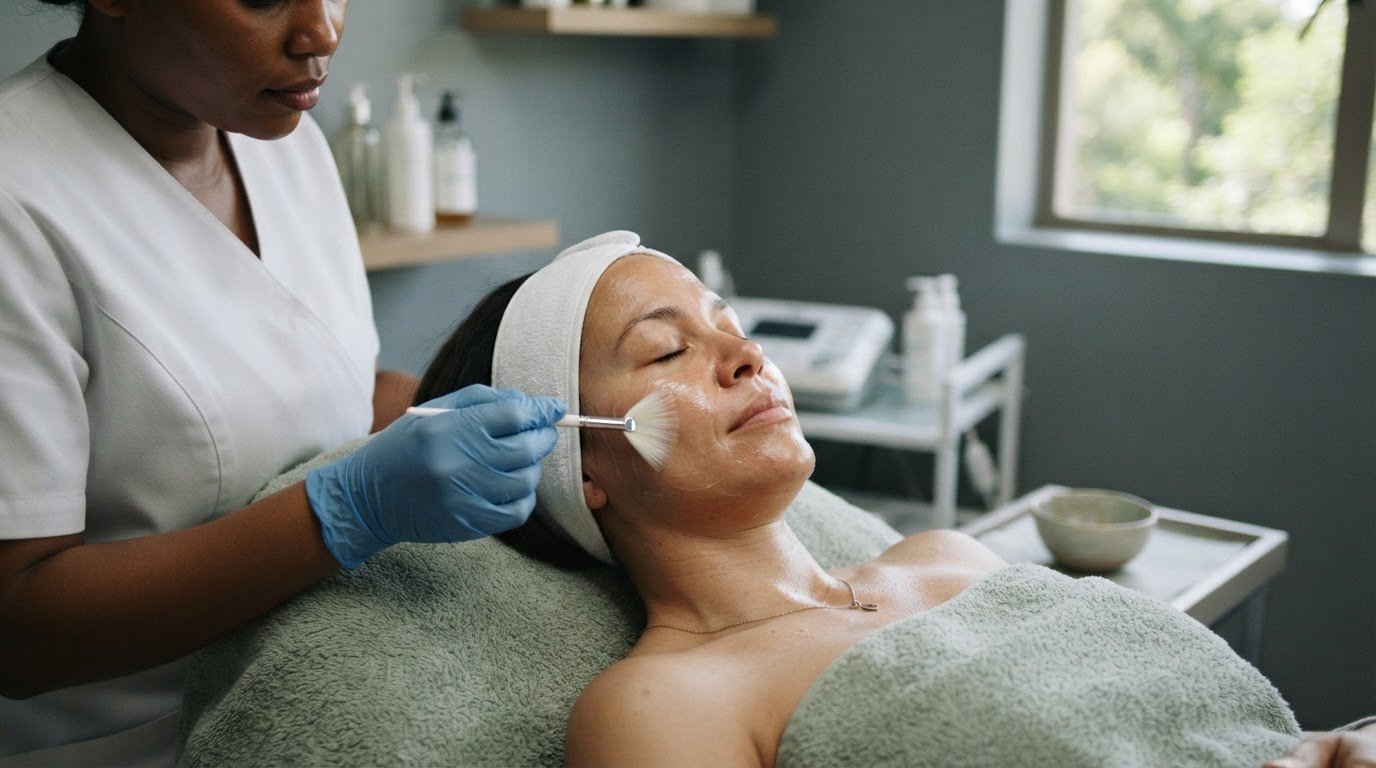
The Glow Up Society offers GA peels for readers whose skin goals may be better suited to a peel than to light-based treatment. A peel is a distinct skincare approach, so the choice depends on your concerns and the treatment method you are considering.
For other skin goals, the clinic also offers LHA peels, retinol peels and Optiphi microneedling. These options offer different approaches to skincare, making it helpful to consider your priorities and how they shape your treatment choice.
If you’re considering a skin-focused treatment, contact The Glow Up Society to discuss your goals, or visit theglowupsociety.co.za.
Choose a skin-care path that fits your goals
Understanding how light-based treatments interact with tissue can help you think more clearly about your skincare priorities. The next step is to match the approach to the concern you want to address, rather than choosing a treatment simply because it is familiar. Photobiomodulation is one option; a peel may suit a different skincare goal.
The Glow Up Society offers GA peels, LHA peels and retinol peels. These are skin-focused alternatives to consider when your priorities centre on complexion care. The most suitable option depends on your skin and the outcome you’re seeking, so discussing your goals can help guide your decision.
If you’d like to explore a suitable treatment, contact The Glow Up Society. A considered next step can make your skincare routine feel more intentional and personal.
Frequently Asked Questions
What conditions is photobiomodulation used to treat, and what does the evidence show?
Photobiomodulation has been studied for wound-related concerns, including skin ulcers, venous ulcers and diabetic foot ulcers. Randomised clinical studies have reported benefits when it is used as a main or adjunctive therapy, but findings depend on the condition and treatment approach. For acute stroke, the third of three increasingly large human trials stopped early for futility, showing that results in one application do not establish benefit in another.
What wavelengths, doses and treatment schedules are used for photobiomodulation?
Devices use selected visible or near-infrared wavelengths, but there is no single dose or schedule for every purpose. Treatment protocols account for factors such as irradiance, fluence, pulse frequency, spot size and the tissue being treated. For example, a protocol intended for a small skin area may differ from one designed for a larger area. Compare settings only within the same treatment purpose.
How can I choose and safely use a photobiomodulation device at home?
Choose a device with clear information about its wavelength, output and intended use, then follow its instructions for placement, exposure and eye protection. Do not assume similar-looking red-light devices deliver the same treatment. Avoid using a home device as a substitute for care recommended for a medical condition. If you have questions about your skin, medicines or treatment suitability, discuss them with a healthcare professional before starting.