Skincare
Non-Surgical Tummy Tuck Alternatives in Sandton and How They Work
· The Glow Up Society
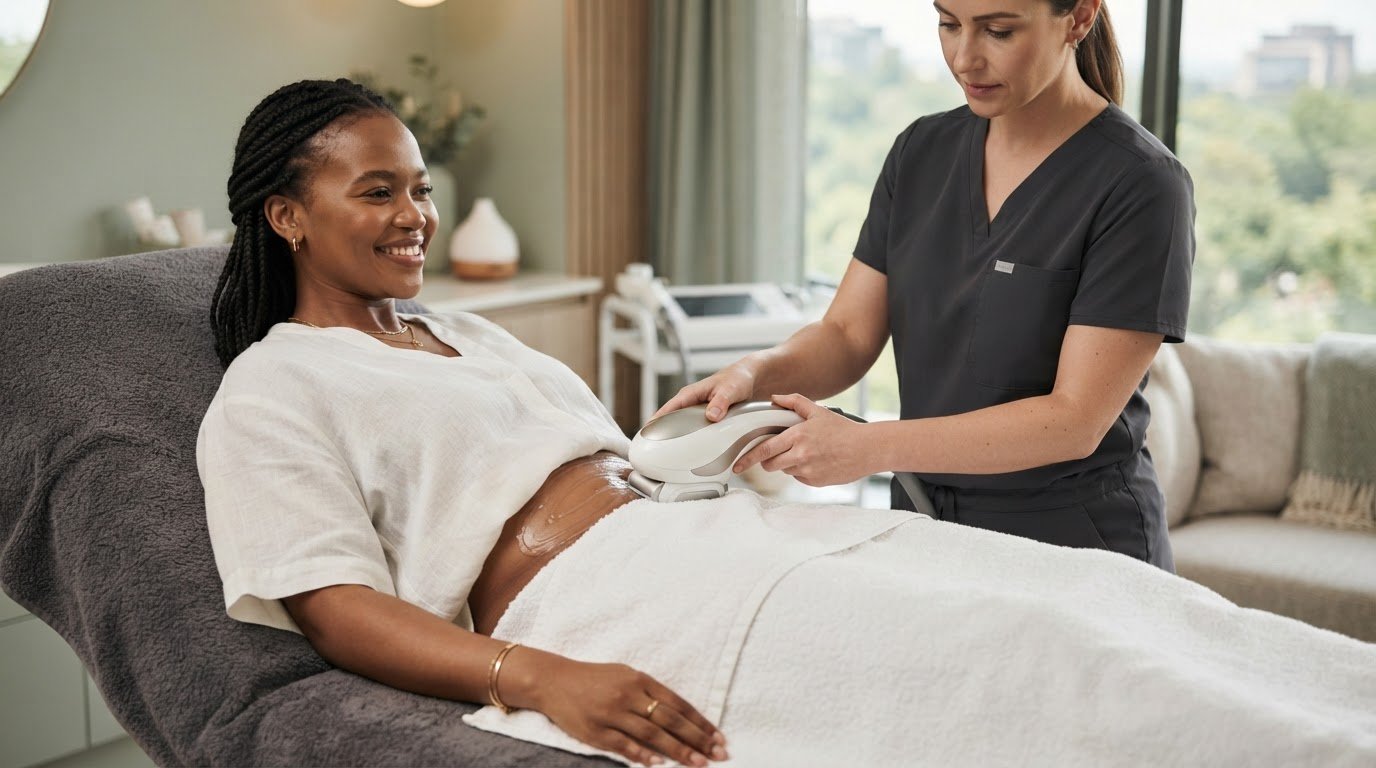
A smoother-looking abdomen doesn’t always require surgery, but non-surgical tummy tuck alternatives in Sandton cannot do everything a tummy tuck can. Fat freezing, radiofrequency and electromagnetic muscle stimulation may help address localised fat, skin laxity or muscle tone, depending on the concern. They don’t remove large amounts of excess skin or repair separated abdominal muscles.
It’s understandable to prefer a less invasive approach to contouring, especially after pregnancy or weight changes. The key is to match the treatment to your goal: localised fat, loose skin and abdominal muscle concerns are different, and one option won’t address them all.
This guide explains how non-surgical contouring works, how it differs from tummy tuck surgery, and what fat freezing or EMS may do for loose skin. It also covers the limits of these approaches, so you can compare options and understand which concerns each treatment is designed to address.
Key Takeaways
- Separate concerns about localised fat, loose skin and abdominal muscle changes to understand which options may be relevant.
- Fat freezing targets fat, while EMS focuses on muscle stimulation; neither should be treated as a substitute for surgery when excess skin or muscle repair is the concern.
- Radiofrequency and ultrasound use different energy-based approaches, so their relevance depends on the tissue change you want to address.
- GA Peels are a skin-care option, not a tummy-tightening treatment, and may suit a separate goal of refreshing your complexion.
Table of Contents
- Does fat freezing or EMS help loose skin after pregnancy or weight loss?
- How tummy tuck surgery differs from non-surgical contouring
- How do radiofrequency, ultrasound, cryolipolysis and injectable treatments compare for tummy tightening?
- Who is a suitable candidate for non-surgical tummy tuck treatments?
- The Glow Up Society: GA Peels
Does fat freezing or EMS help loose skin after pregnancy or weight loss?
Pregnancy and substantial weight loss can leave the abdomen with stretched skin, localised fat or changes in muscle support. These concerns may look similar beneath clothing, but involve different tissues. Fat freezing targets fat cells, while EMS stimulates abdominal muscles. Neither approach removes excess skin.
After pregnancy, abdominal muscle separation, known as diastasis recti, can also affect the abdominal profile. One study of 300 women found separation in 60% at six weeks postpartum. Around a third of women in that study still had separation at twelve months postpartum. This is a muscle issue, not simply a skin-tightening concern.
For people comparing non-surgical tummy tuck alternatives in Sandton, identifying the main tissue concern is a useful starting point. High-intensity electromagnetic muscle stimulation uses energy to trigger repeated muscle contractions. Studies report abdominal muscle thickness gains of 15 to 19%. EMS treatments, including EmSculpt, focus on muscle toning rather than removing loose skin or surgically repairing separated muscles. Improved muscle tone and skin tightening are different aesthetic goals.
CoolSculpting is a brand name associated with cryolipolysis, which cools fat cells in a treated area. The cooling triggers apoptosis, or programmed cell death; phagocytes then remove the dead cells. This treatment targets a localised fat layer, not skin laxity or diastasis recti. It differs from liposuction, which removes fat surgically.
A small, localised abdominal fat pocket with relatively firm skin is a different concern from hanging skin after major weight loss. Non-surgical contouring is generally suited to mild to moderate abdominal concerns. It cannot remove large amounts of excess skin or repair weakened abdominal muscles. If you’re comparing non-surgical tummy tuck alternatives in Sandton, first identify whether fat, skin or muscle is your main concern.
How tummy tuck surgery differs from non-surgical contouring
A tummy tuck, or abdominoplasty, is surgery that removes excess abdominal skin and may repair weakened underlying muscles. It is performed under general anaesthesia, unlike non-surgical contouring, which uses treatments without an operation. Surgical results are immediate, while changes from non-surgical treatments develop gradually. The procedures address different degrees of skin laxity and abdominal change.
In Sandton, a consultation with a plastic surgeon is the place to discuss whether surgery suits your concerns. The surgeon assesses loose skin, abdominal muscle separation, health history and your desired contour. For example, removing a substantial fold of skin is a different treatment question from addressing a small area of localised fat. Abdominoplasty is not a treatment for being overweight.
A tummy tuck involves recovery demands. The procedure typically takes two to three hours. After surgery, bandages and an abdominal binder support recovery, while surgical drains remove excess fluid or blood beneath the skin. Strenuous activity is avoided for approximately four weeks; patients can expect to return to their normal exercise routine at the end of six weeks. Non-surgical treatments generally avoid this level of downtime.
There are also surgical risks and lasting considerations. Overall complication rates in surgical literature are roughly 10 to 20%. Maintaining the aesthetic result involves a healthy diet and avoiding weight fluctuations. People planning pregnancy are advised to postpone abdominoplasty until after having children, since pregnancy can alter the abdominal contour again. A plastic surgeon can explain the procedure, recovery plan and risks during consultation. Weighing removal of excess skin against anaesthesia, recovery and surgical risks helps clarify whether surgery or a less invasive approach better fits your priorities.
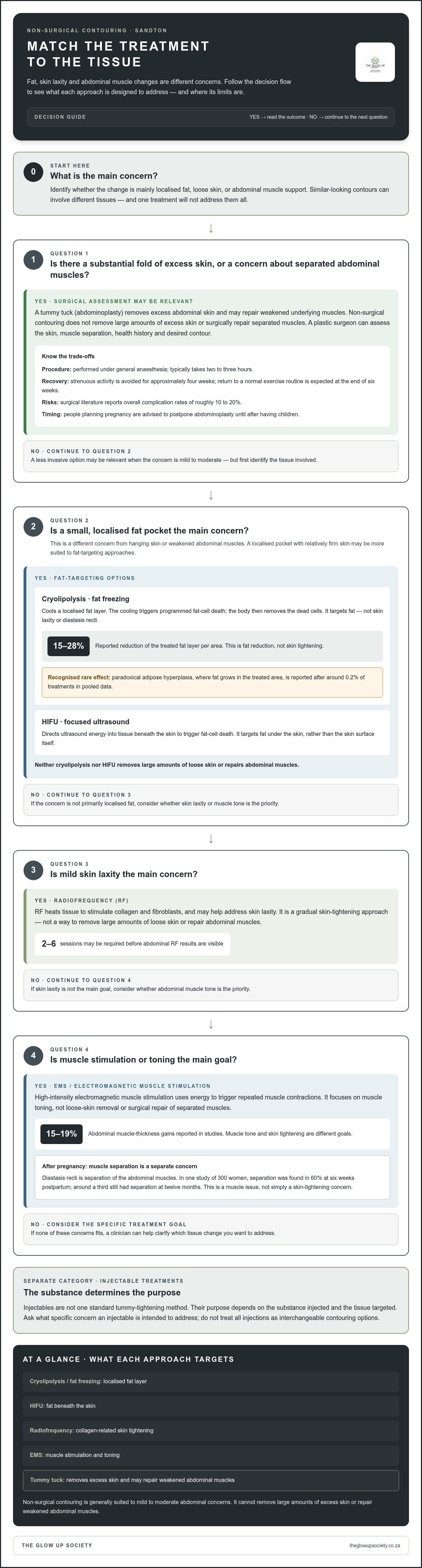
How do radiofrequency, ultrasound, cryolipolysis and injectable treatments compare for tummy tightening?
These treatments use different methods and target different tissues. Radiofrequency (RF) heats tissue to stimulate collagen and fibroblasts, which may help address skin laxity. Abdominal RF treatment may require 2-6 sessions before results are visible. It is a gradual skin-tightening approach, not a method for removing large amounts of loose skin or repairing abdominal muscles.
High-intensity focused ultrasound (HIFU) directs ultrasound energy into treated tissue beneath the skin to trigger fat-cell death. It targets fat under the skin, rather than the skin surface itself. RF and HIFU therefore have different aims: RF focuses on collagen-related tightening, while HIFU targets fat cells. Neither is equivalent to surgery that removes excess skin.
Cryolipolysis, commonly called fat freezing, cools a localised fat layer. Reported reductions are roughly 15 to 28% of the treated fat layer per area. This is fat reduction, not skin tightening. A rare but recognised effect is paradoxical adipose hyperplasia, where fat grows in the treated area; pooled data report this after around 0.2% of treatments.
Injectable treatments are a separate category, not one standard method for tightening the abdomen. Their purpose depends on the substance injected and the tissue targeted. They don’t use RF heat, focused ultrasound or cooling to affect fat cells. Ask what specific concern an injectable is intended to address rather than treating all injections as interchangeable contouring options.
Some combination devices pair RF with pulsed electromagnetic fields. This approach is described as supporting collagen production through dermal fibroblasts and stimulating new blood cells. The key distinction is the target: RF addresses skin laxity, ultrasound and cryolipolysis target fat, and injectables have substance-specific effects. Start by identifying whether your main concern is skin, a localised fat pocket or another contouring goal.
Who is a suitable candidate for non-surgical tummy tuck treatments?
Non-surgical contouring is generally suited to mild or moderate abdominal concerns. The deciding factor is the tissue you want to address: a small, localised fat pocket differs from loose skin or separated abdominal muscles. Fat freezing targets a defined fat layer, while radiofrequency focuses on skin laxity. Matching the treatment to your concern helps set a realistic goal.
If you’re considering non-surgical tummy tuck alternatives in Sandton, identifying your main concern is a practical starting point. Someone with relatively firm skin and localised abdominal fat may consider a fat-reduction approach. Someone focused on skin laxity may explore radiofrequency, which stimulates collagen and fibroblasts. These treatments don’t remove large amounts of excess skin or repair weakened abdominal muscles.
After pregnancy, the abdomen may show skin changes alongside diastasis recti, or separation of the abdominal muscles. EMS stimulates muscle contractions and may support muscle toning, but it doesn’t surgically bring separated muscles together. Consider whether the visible change is mainly loose skin, localised fat, muscle separation or a combination. Each concern leads to a different treatment discussion.
Non-surgical options are less suited to anyone seeking removal of a large amount of hanging skin or repair of weakened abdominal muscles. Abdominoplasty addresses those concerns surgically; it isn’t a treatment for being overweight. If you’re planning a pregnancy, surgery is generally postponed until after having children, since pregnancy can change the abdominal contour. When weighing non-surgical tummy tuck alternatives in Sandton, note what bothers you, such as a lower-abdominal fold or a localised fat pocket. This helps focus the discussion on the tissue involved and the outcome you want.
The Glow Up Society: GA Peels
The Glow Up Society offers GA Peels for skin care, a goal separate from abdominal contouring. A peel isn’t a tummy-tightening treatment and won’t remove abdominal fat or excess skin. If your priority is improving your abdominal contour, consider treatments according to the specific concern they target.
If you’re also exploring complexion care, GA Peels may suit that separate goal. The Glow Up Society also offers LHA Peels, Retinol Peels and Optiphi Microneedling. These are skin-focused options, not substitutes for fat reduction, skin tightening or surgery. Keeping your goals distinct can help you choose an approach that fits the area you want to address.
Contact The Glow Up Society to discuss its skin treatments and your goals.
Choose your next step with clarity
Start by naming the change you want to make. Is your priority your abdominal contour or a separate skin-care goal? Keeping those aims distinct helps you explore suitable care without expecting one treatment to address different concerns.
If you’re exploring non-surgical tummy tuck alternatives in Sandton, use your main concern to guide the conversation. For complexion-focused care, The Glow Up Society offers GA Peels, LHA Peels and Retinol Peels in Fourways, serving Sandton, Lonehill, Kyalami, Bryanston and North Riding. These are skin treatments, not abdominal contouring procedures. Discuss your skin goals to find out which option may suit that separate aim.
Let your next choice be informed and personal. Contact The Glow Up Society to discuss its peel treatments and your skin-care goals. Take the time you need to choose an approach that feels right for you.
Frequently Asked Questions
What Is a Non-Surgical Tummy Tuck?
A non-surgical tummy tuck is a general label for treatments intended to refine the abdomen without an operation. It doesn’t refer to one standard procedure. Devices may target localised fat, skin firmness or muscle tone, so the label alone doesn’t tell you what a treatment can achieve. Check which tissue it addresses and whether that matches your main concern, such as a small fat pocket or changes in skin texture.
Can non-surgical treatments fix abdominal separation (diastasis recti)?
No. Non-surgical contouring doesn’t repair separated abdominal muscles. EMS stimulates muscle contractions and can support muscle toning, but it doesn’t bring separated muscles together. This distinction matters if your abdomen protrudes despite having little localised fat. Diastasis recti is a structural muscle concern, so treatment decisions need to address the separation itself rather than rely on fat-reduction or skin-focused procedures.
How do non-surgical tummy tuck treatments work, and what results can they achieve?
These treatments use different methods for different targets: cooling affects localised fat, radiofrequency stimulates collagen-related skin tightening, and EMS stimulates muscle contractions. The outcome depends on the tissue treated and the concern being addressed. Reducing a fat pocket won’t remove loose skin, while firmer-looking skin won’t correct muscle separation. In Sandton, compare options by their intended target, not by the broad “tummy tuck” label.
How do non-surgical treatments compare with a surgical tummy tuck for cost, results and downtime?
Non-surgical treatments avoid an operation and generally involve less disruption to recovery, but they don’t remove substantial excess skin or surgically repair abdominal muscles. Surgery can address those concerns, but involves a longer recovery and operative risks. There’s no direct like-for-like cost: treatment area, method and session plan affect non-surgical pricing, while surgical costs depend on the surgeon, anaesthetist, hospital and aftercare. The price depends on the case and is provided after a quote request.