Skincare
Neuromodulation Explained: A Clear Guide
· The Glow Up Society
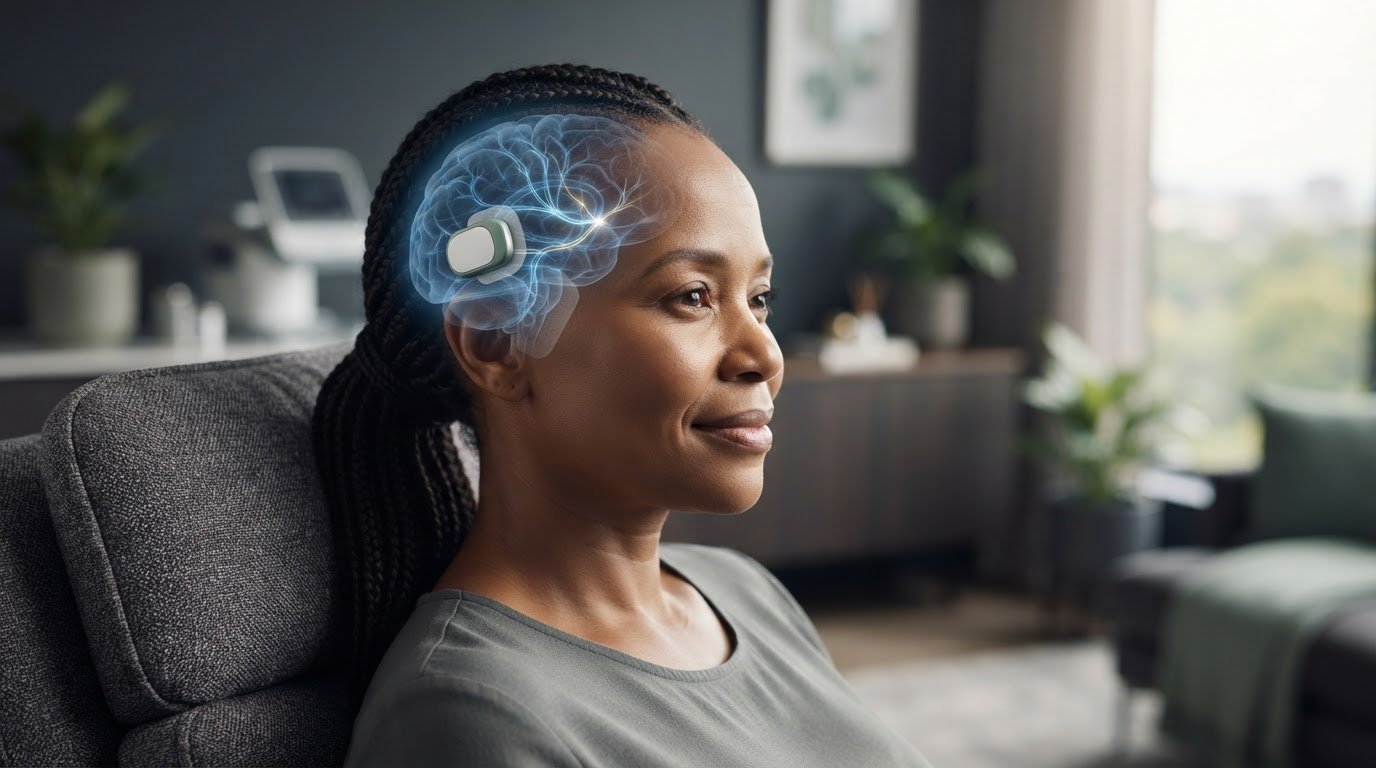
Neuromodulation changes nervous-system activity through electrical stimulation or medication directed at a specific target. Different approaches act on different nerves or brain circuits, so the method depends on the condition and pathway involved. It describes a way of influencing nerve signals, not one particular device or procedure.
The term can sound specialised, but the basic idea is straightforward: alter nerve signalling to help manage a health problem. Neuromodulation may be used to treat chronic pain and conditions such as Parkinson’s disease, tremor, migraine, epilepsy and pelvic disorders. Each approach has a distinct purpose and method, so understanding the treatment is important.
This guide covers the main types of neuromodulation, the conditions they may address, and how treatment approaches and device features differ. It also explains how these treatments differ from aesthetic and wellness services, so you can understand where the term applies and what to consider when exploring a specific treatment.
Key Takeaways
- Understand how electrical stimulation and targeted medication can influence nerve signals in different ways.
- Explore the range of conditions these approaches may address, from chronic pain to movement and pelvic disorders.
- Compare treatment options by how they deliver stimulation or medication, and which part of the nervous system they target.
- Learn why outcomes and considerations differ between approaches, so you can better understand the evidence behind each one.
Table of Contents
- Definition and purpose of neuromodulation
- Conditions treated with neuromodulation
- Neuromodulation product features and treatment options
- What evidence supports neuromodulation treatments and how effective are they?
- The Glow Up Society: GA Peels
Definition and purpose of neuromodulation
Neuromodulation changes nervous-system activity using electrical signals or medicines directed at a target. The aim is to influence how nerve cells carry messages, rather than simply treat symptoms at their surface. For example, spinal cord stimulation delivers electrical impulses near the spinal cord to alter pain signalling. Deep brain stimulation uses implanted electrodes to influence brain circuits involved in movement disorders such as Parkinson’s disease.
The term describes a group of approaches, not one device or procedure. Treatments may be invasive, with electrodes or pumps implanted, or use stimulation from outside the body. Neurosurgeon C. Norman Shealy is credited with the first implantable neuromodulatory device for intractable pain relief in 1967. The shared purpose is to change nerve activity in a targeted way, with possible effects on pain, movement or other functions.
What qualifications and regulations apply to neuromodulation providers in South Africa? The clinical qualifications required depend on the method. Implanted devices and drug-delivery pumps involve specialist medical procedures, while external stimulation follows a different care pathway. The technique and the professional’s role determine the relevant clinical oversight.
How much does neuromodulation cost in South Africa, and does medical aid cover it? Cost depends on the procedure, device and care involved, and is provided after a quote request. Medical-aid cover varies by scheme, benefits and treatment, so there is no single answer for every patient.
What are the risks, side effects and contraindications? Spinal cord stimulation risks include infection, pain at the incision site, lead movement or breakage, cerebrospinal fluid leakage and battery failure. Drug-pump complications can include catheter problems, medication side effects, headache and spinal fluid leak. Suitability depends on the treatment and the person’s health factors.
Where can patients access neuromodulation services in South Africa? Patients access these treatments through clinical services that provide the relevant procedure, such as spinal cord stimulation or deep brain stimulation. The route depends on the condition and whether treatment uses an implant, medication or external stimulation.
Conditions treated with neuromodulation
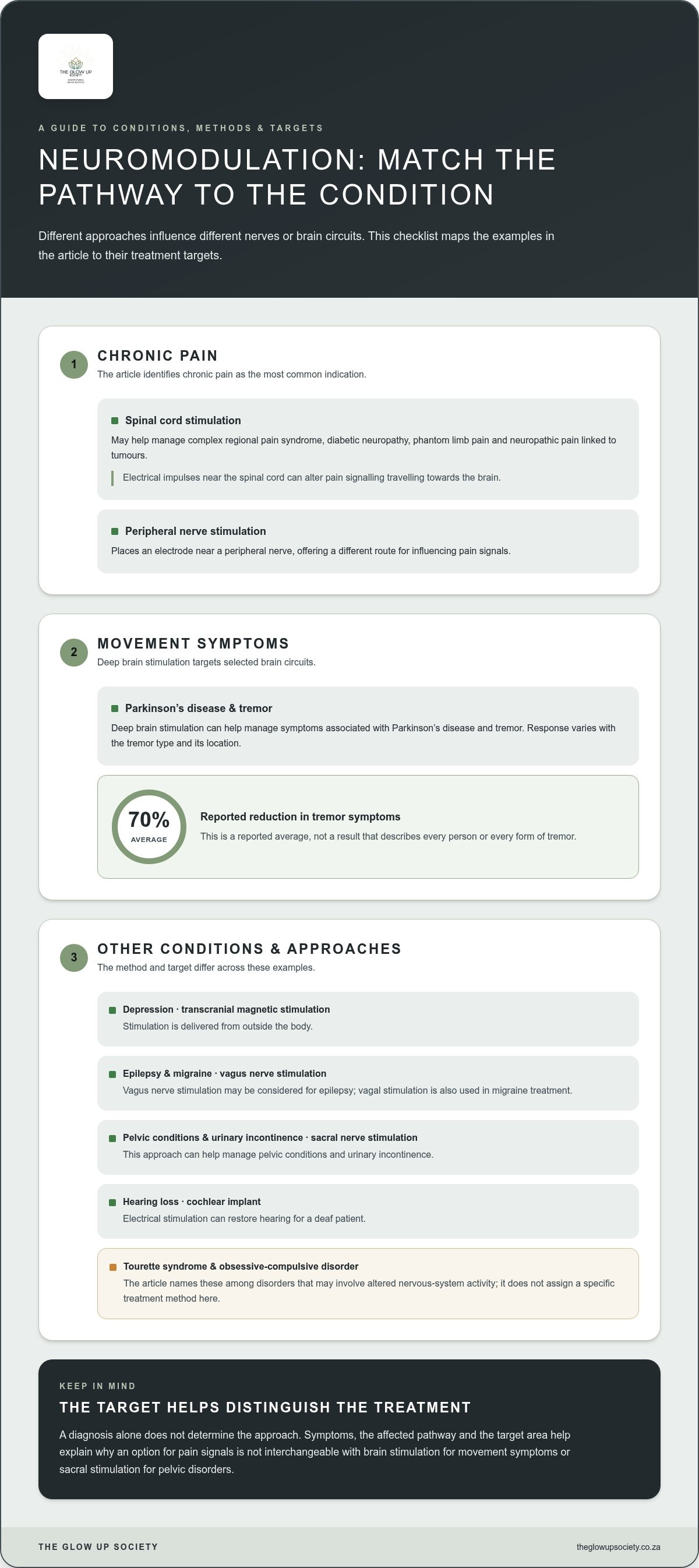
Chronic pain is the most common indication for these treatments. Spinal cord stimulation may help manage complex regional pain syndrome, diabetic neuropathy, phantom limb pain and neuropathic pain linked to tumours. Peripheral nerve stimulation targets an electrode near a peripheral nerve, offering a different route for influencing pain signals. The choice of target depends on where symptoms arise and which nerve pathways are involved.
Movement disorders are another area of use. Deep brain stimulation can help manage symptoms associated with Parkinson’s disease and tremor by stimulating selected brain circuits. The response varies with the tremor type and its location. One reported figure is an average 70% reduction in tremor symptoms, but that result does not describe every person or every form of tremor.
Other approaches address conditions beyond pain and movement:
- Depression: Transcranial magnetic stimulation uses stimulation delivered from outside the body and is used as a treatment for depression.
- Epilepsy and migraine: Vagus nerve stimulation may be considered for epilepsy, while vagal stimulation is also used in migraine treatment.
- Pelvic disorders: Sacral nerve stimulation can help manage pelvic conditions and urinary incontinence.
- Hearing loss: A cochlear implant can use electrical stimulation to restore hearing for a deaf patient.
- Tourette syndrome and obsessive-compulsive disorder: These conditions are also discussed among disorders that may involve altered nervous-system activity.
These examples show why a diagnosis alone does not determine treatment. The affected pathway, symptoms and target area help distinguish an invasive option, such as an implanted stimulator, from external stimulation. A treatment intended to modify pain signals is not interchangeable with brain stimulation for movement symptoms or sacral stimulation for pelvic disorders. Understanding the target clarifies the purpose of each therapy.
Neuromodulation product features and treatment options
Different devices use electrical stimulation or medication, and their components reflect the treatment target. Spinal cord stimulation uses a thin lead placed in the epidural space and connected to a generator beneath the skin. The generator may sit in the abdomen or buttock, with leads routed to the spinal cord. Low-voltage impulses can modulate pain signals travelling towards the brain. Some patients feel tingling or buzzing, known as paresthesia.
Other systems target different nerves or circuits. Peripheral nerve stimulation places an electrode close to a peripheral nerve. Deep brain stimulation uses leads, electrodes, extension cables and an implantable pulse generator. Its stimulation settings can be adjusted to modulate brain circuits and symptoms. These features distinguish the devices, rather than making them interchangeable options for every disorder.
Medication-delivery systems work differently from electrical devices:
- Intrathecal pumps: A catheter sits in the intrathecal space and connects to a reservoir beneath the abdominal skin. It can deliver pain medication or muscle relaxants into spinal fluid.
- Targeted dosing: An implanted pump delivers medication near its site of action. Doses can be in the range of 1/300 of an oral dose.
- Vagus nerve stimulation: An invasive system has an electrode implanted on the left vagus nerve, connected to a pulse generator in the left pectoral region.
How is a neuromodulation treatment assessed and performed? Clinical assessment considers the condition, symptoms and target pathway, then matches these with an approach such as spinal cord stimulation or an intrathecal pump. A trial may help assess whether a neurostimulation device is likely to reduce pain, since responses vary and procedures can have complications. The trial is important because responses vary and implantation can involve complications.
For chronic back pain, spinal cord stimulation delivers electrical current to the spinal cord. Neuromodulation devices can be implanted in an affected area and use electricity or drugs to alter problematic nervous-system circuitry. Drug pumps deliver medication directly to its site of action in smaller doses, without first passing through the body for metabolism.
What evidence supports neuromodulation treatments and how effective are they?
Evidence is specific to each treatment and the condition it targets. A 2011 summary described how spinal cord stimulation affects cerebral blood flow and local metabolism. Those mechanisms help explain how electrical stimulation can influence nervous-system activity. They do not, on their own, show how much relief a particular patient will experience. Clinical benefit is considered alongside the symptoms being treated and the response observed.
Implanted drug pumps are described as effective for cancer pain, severe back pain, neuropathic pain, muscle spasticity and postoperative pain. These examples cover different causes and symptoms. Their inclusion reflects use across varied clinical needs, rather than evidence that one pump works identically for every condition. The medication delivered and its target are central to the intended effect.
Effectiveness is best understood through the outcome a treatment aims to change. For a person with chronic pain, that could mean reduced pain or improved mobility. For Parkinson’s disease, the focus is movement symptoms; for epilepsy, seizure control. A reported average 70% reduction in tremor symptoms illustrates a measured result, but it depends on tremor type and location. That figure is not a general measure for all stimulation treatments.
Individual response matters too. A trial may help assess whether neurostimulation is appropriate for a patient. Responses vary, and the procedure can involve complications, so trial results offer practical evidence about a patient’s likely benefit. They complement broader evidence about a method’s use and mechanism. Together, these perspectives help distinguish a plausible explanation from a meaningful clinical outcome.
For a balanced understanding, compare evidence by condition, target and measured outcome. A result for tremor does not establish effectiveness for chronic back pain, just as pump outcomes for cancer pain do not determine results for muscle spasticity. The relevant question is whether the specific approach improves the symptom it is designed to address, and how that improvement is assessed in clinical care.
The Glow Up Society: GA Peels
The Glow Up Society offers GA Peels for people exploring targeted skincare, not treatment for a nervous-system condition. Neuromodulation and aesthetic skin treatments address different concerns: one acts on nerve activity, while the other focuses on skin care. Recognising the distinction helps you choose a service that matches your goal.
Skin-focused options include GA Peels, LHA Peels, Retinol Peels and Optiphi Microneedling. Each is a distinct treatment, so the right option depends on your skin concerns and the approach discussed with your practitioner. These services do not replace neurological assessment or neuromodulation treatment.
If your interest is skincare, contact The Glow Up Society in Fourways to discuss which treatment may suit your goals.
Choose a next step that fits your goal
Your next step depends on the concern you want to address. Neuromodulation relates to nervous-system conditions, while aesthetic skincare focuses on skin goals. Keeping those needs distinct helps you find information and care relevant to your situation in Fourways, Sandton, Lonehill, Kyalami, Bryanston or North Riding.
If you’re considering a skin treatment, take time to describe what you’d like to address and what matters in your skincare routine. A considered conversation can help you explore suitable options without confusing aesthetic care with neurological treatment. The Glow Up Society in Fourways offers GA Peels, LHA Peels and Retinol Peels for skin-focused goals.
For a calm, personal discussion about skincare, contact The Glow Up Society. Take the next step at your own pace, with a clearer sense of the care you’re seeking.
Frequently Asked Questions
WHAT IS NEUROMODULATION?
Neuromodulation is the deliberate alteration of nerve activity using electrical stimulation or medication. It describes a family of treatments, rather than one device or diagnosis. For example, an implanted stimulator and an external magnetic stimulation treatment both influence nervous-system activity, but use different methods. That distinction clarifies why the treatment name alone does not explain what a person’s care involves.
What is neuromodulation and how does it work?
Neuromodulation works by influencing signals that nerve cells send through the body or brain. The method depends on the target: deep brain stimulation uses adjustable electrical settings, while other approaches stimulate from outside the body or deliver medication near its site of action. In practice, a device or treatment is selected to influence a particular pathway, rather than every nerve equally.
What conditions can neuromodulation treat?
Potential uses include chronic pain, Parkinson’s disease, tremor, epilepsy, migraine, depression, pelvic disorders and urinary incontinence. Cochlear implants can also use electrical stimulation to restore hearing in a deaf patient. These examples involve different nerves, brain circuits and treatment methods, so the condition’s name alone does not show which approach is relevant. The intended outcome, such as pain relief or improved movement, helps define the treatment goal.
How do neuromodulation treatments compare with medication, surgery, and psychotherapy?
Neuromodulation targets nerve activity with electrical stimulation or medication. It has often been offered after conventional treatments such as medication or surgery, though it may be considered earlier in chronic pain planning. The material does not provide a comparison with psychotherapy.