Skincare
Microneedling in Fourways: Risks, Aftercare and Acne Scar Sessions
· The Glow Up Society
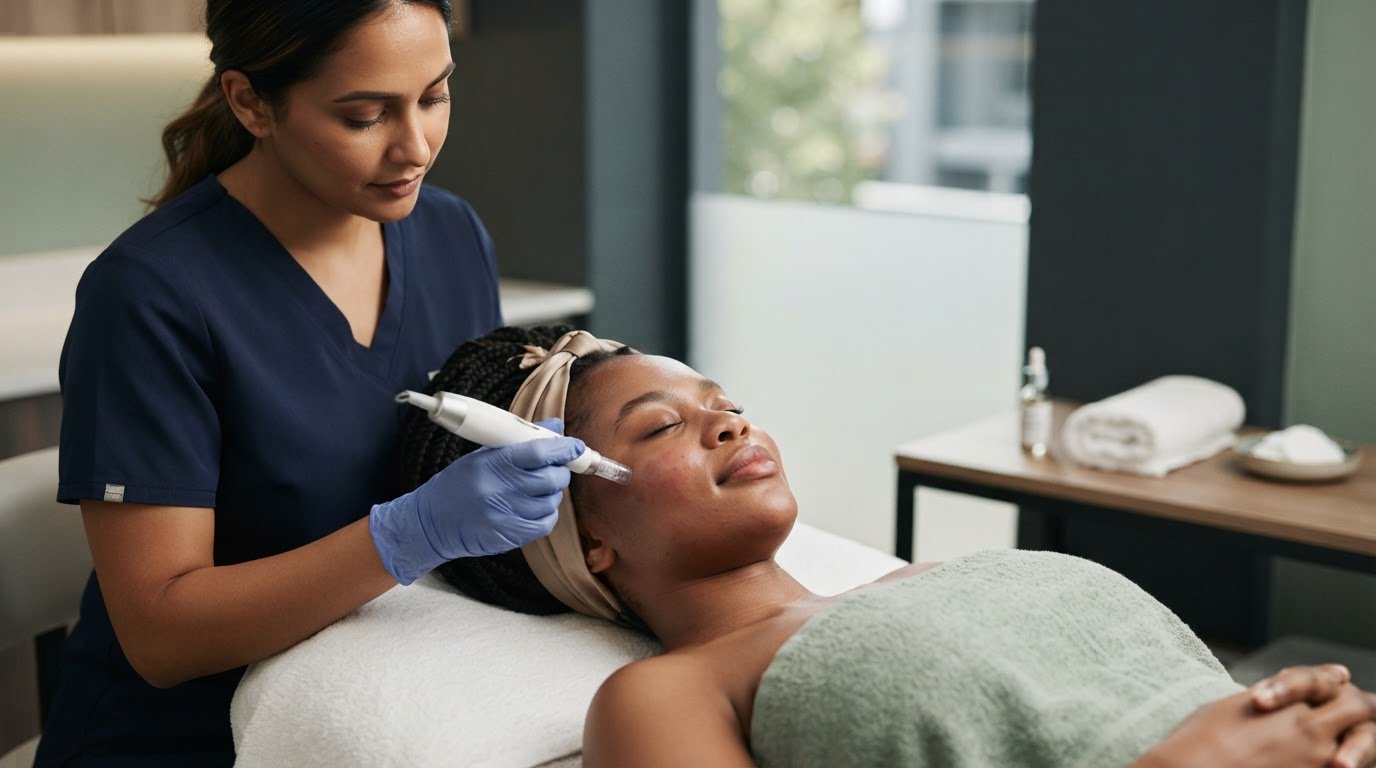
Microneedling can leave skin red, swollen, burning or temporarily darker, but these reactions usually settle within a few days to a week. If you’re considering a microneedling clinic in Fourways, understanding what is temporary and how aftercare supports healing can help you prepare.
Questions about discomfort, possible side effects and the differences between professional treatment and a home roller are natural. This article covers common risks, aftercare and how microneedling may be considered for acne scars, including why results take time and vary according to your skin and goals. It also compares professional sessions with home rollers to help you make an informed decision.
Key Takeaways
- Learn which aftercare choices can help protect freshly treated skin while it settles.
- Understand why acne-scar treatment is usually planned as a course, with timing shaped by your skin and treatment goals.
- Recognise common short-term reactions and the skin conditions or medicines that can affect suitability.
- Compare professional treatment with home rollers to make a more informed choice about your skincare routine.
Table of Contents
- What is the optimal care for skin after microneedling?
- How many sessions of microneedling do I need for acne scars?
- Are there any risks or side effects?
- Professional microneedling compared with home rollers
- The Glow Up Society: GA Peels
What is the optimal care for skin after microneedling?
Fourways clinics may offer professional, device-based microneedling; some treatment plans combine it with platelet-rich plasma (PRP), while home rollers are a separate option. Before treatment, follow the skin-preparation advice you’re given; afterwards, avoid makeup for 24 hours and sunlight or harsh chemicals for one week.
Downtime and recovery
Downtime is the period when skin settles after the microneedling session. Allowing for this recovery helps you plan work, exercise and social commitments around temporary redness or sensitivity. An average session lasts approximately 2 hours in total, so allow time for treatment as well as recovery. Skin may look flushed afterwards, and mild sensitivity can make a gentle routine more comfortable.
Keep plans flexible during the first week if your skin is still settling. Recovery varies, so pay attention to how your skin feels instead of expecting it to look unchanged straight away. Avoid harsh skin treatments, sunlight and harsh chemicals during this period.
Post-treatment aftercare
Aftercare means protecting the skin while it recovers from the treatment. It matters because freshly treated skin can be more sensitive to makeup, sunlight and active skincare. Wait 24 hours before applying makeup, and avoid sunlight and harsh chemicals for one week. Keep your routine simple during that period, rather than introducing unfamiliar products.
Choose gentle cleansing and avoid rubbing or picking at the treated area. If a product stings, pause it and follow the aftercare guidance you received. Make-up timing is a clear first step: give skin the full 24 hours before applying it. For the following week, keep harsh chemicals out of your routine and limit direct sun exposure.
Preparation begins before the appointment. A dermatologist may recommend a pre-treatment skincare routine for 2 to 4 weeks, depending on your skin and treatment plan. Follow that advice consistently, and discuss your current products so the routine can account for them. A topical anaesthetic is typically applied approximately 45 minutes to 1 hour before microneedling.
Recovery also depends on the area treated and your skin’s response. Plan around the full appointment, which averages 2 hours, and leave room afterwards for your skin to settle. Avoid treating aftercare as an optional extra: following the one-week guidance on sunlight and harsh chemicals, alongside the 24-hour makeup pause, gives you practical boundaries for the immediate recovery period.
How many sessions of microneedling do I need for acne scars?
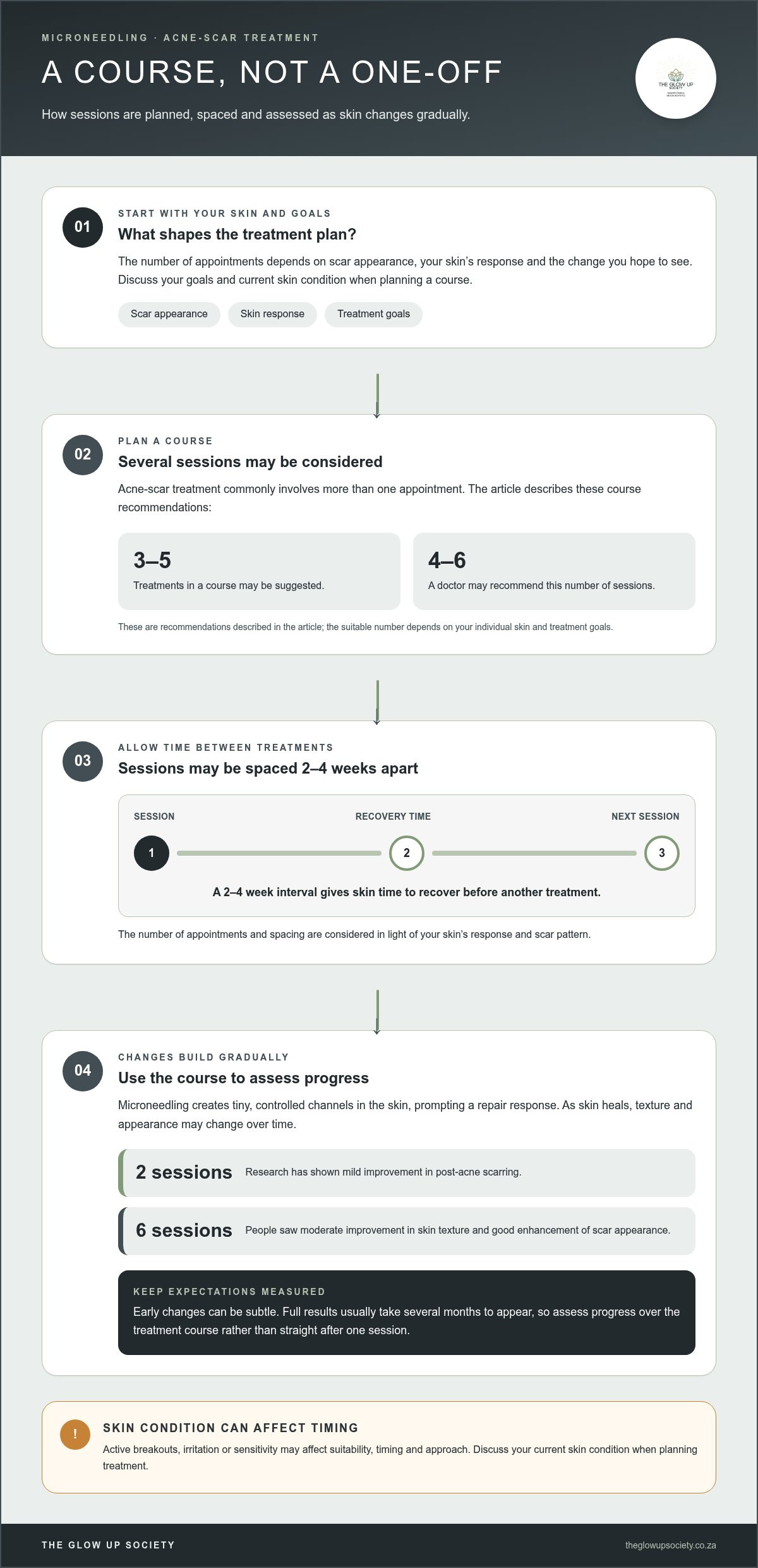
Acne-scar treatment commonly involves several sessions rather than one appointment. A course may include 3 to 5 treatments, while a doctor may recommend four to six sessions. The number depends on scar appearance, skin response and the change you hope to see. At a microneedling clinic in Fourways, discuss these factors alongside your treatment goals before planning a course.
Microneedling creates tiny, controlled channels in the skin, prompting a repair response. As the skin heals, its texture and appearance may change gradually. The American Academy of Dermatology Association says this healing can help reduce the appearance of scars and dark spots and improve elasticity. Assess progress over the treatment course, rather than immediately after a session.
Early changes can be subtle. Research has shown mild improvement in post-acne scarring after two sessions. After six sessions, people saw moderate improvement in skin texture and good enhancement of scar appearance. These findings show why a treatment plan may extend beyond the first appointment, and why it is better not to judge results after one session.
For acne scars, sessions may be performed every 2 to 4 weeks. Spacing gives skin time to recover before another treatment, while the number of appointments depends on your skin’s response and scar pattern. Full results usually take several months to appear, so allow time for gradual healing between sessions. A microneedling clinic in Fourways can help frame a course around these considerations.
Microneedling may also be considered for uneven texture, dark spots and concerns about skin elasticity. Suitability depends on your concern and the current condition of your skin. Active breakouts, irritation or sensitivity can affect the timing and approach, so discuss them when planning treatment.
To explore professional acne-scar treatment options, consider how a tailored plan could match your skin goals. A measured course, spaced sessions and time to observe changes help make progress easier to assess.
Are there any risks or side effects?
Redness, temporarily darker skin, burning or swelling can occur after microneedling. These reactions usually settle within a few days to a week. Use this as a general recovery window, not a reason to judge the final result immediately. Note whether each reaction eases, stays the same or becomes more pronounced. Tell the practitioner which area was treated and when the symptoms began.
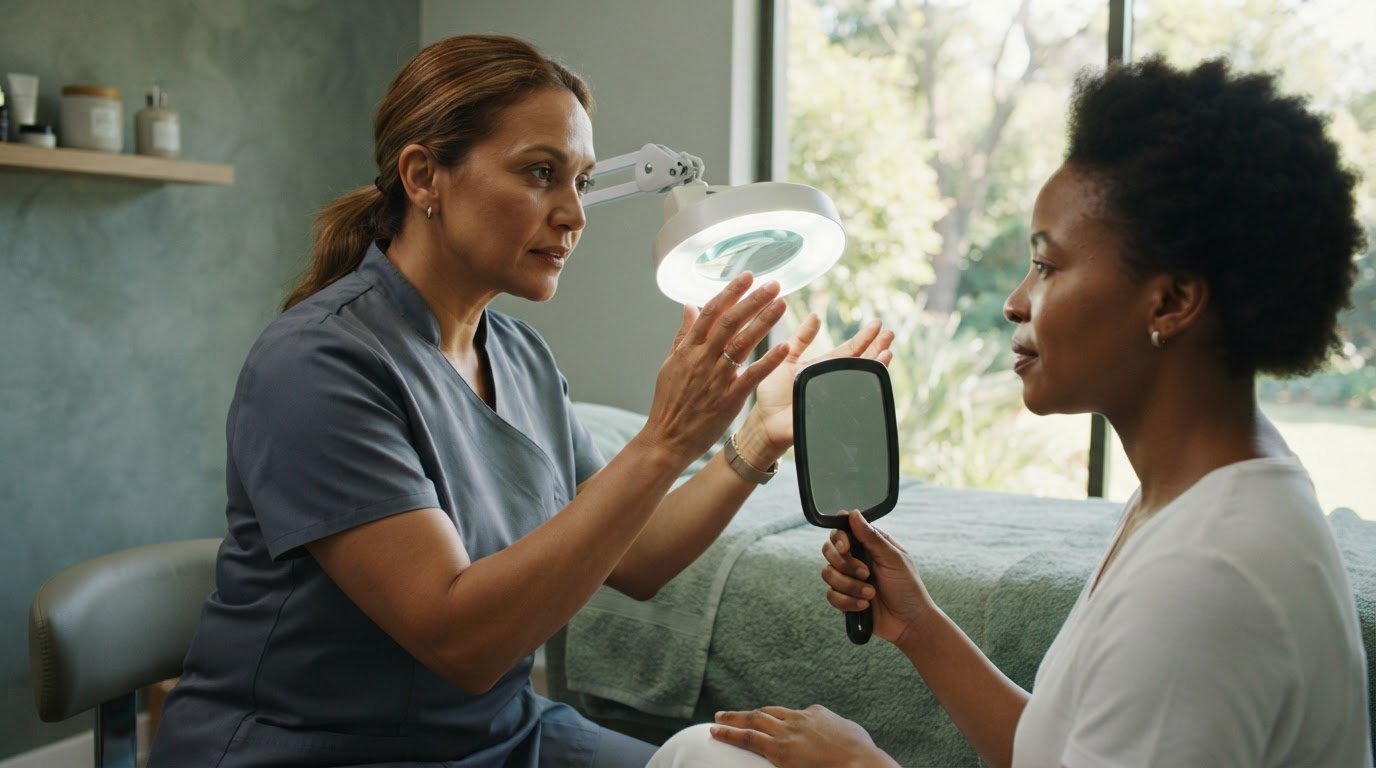
Suitability starts with an honest review of your skin and medicines. Tell the practitioner about active breakouts, irritation, diagnosed skin conditions and every medicine you take. Mention isotretinoin specifically, including recent use, as it affects treatment timing. Share when you last used it so it is included in your treatment history. This information helps determine whether microneedling is appropriate and when it should take place.
Monitor how your skin changes after the appointment. A brief flush or swelling that settles within a few days to a week differs from a reaction that worsens or persists. If symptoms intensify or do not settle within that period, contact the treating practitioner for assessment. Describe the change clearly, including where it is and when it started.
Your skin’s condition on the day of treatment matters. Tell the practitioner if an area feels irritated or has active breakouts, as this may inform the treatment area and timing. Mention any previous reactions to skin treatments too. These details provide a fuller picture than discussing your treatment goal alone.
Before booking, prepare a complete list of your medicines and skincare products. Include isotretinoin, even if you have stopped taking it, and note any recent skin changes. During your assessment, discuss the expected recovery response and aftercare plan. Knowing which changes usually settle within a few days to a week can help you monitor your skin calmly and respond appropriately.
Professional microneedling compared with home rollers
Professional microneedling uses a treatment device selected for the area and skin concern. A home roller is handled by the user, making pressure and coverage harder to control. For example, rolling over an uneven acne scar may irritate nearby skin instead of treating the scar evenly. The difference is not simply where the treatment happens, but how it is assessed and applied.
In a professional setting, the practitioner can assess your skin before treatment and adapt the approach to the area. Home rollers offer less opportunity for tailored assessment. Repeated use, forceful pressure or rolling over irritated skin can cause unwanted irritation or injury. A roller also needs careful cleaning and storage, but cleaning it does not replace professional assessment.
Non-medical spa microneedling also calls for careful consideration. Ask about the practitioner’s training, the device, hygiene measures and how your skin will be assessed. If a treatment plan skips your skin history or overlooks active irritation, pause before proceeding. Concerns such as acne scarring need a considered approach, not repeated rolling over every uneven area.
In South Africa, choose a practitioner with documented microneedling training, skin-assessment skills and infection-control knowledge. For scar-focused or deeper treatment, prioritise clinical training and the ability to recognise and manage complications. A device course alone does not establish those broader skills.
Before choosing a home roller, consider whether you can assess your skin, maintain the device carefully and respond appropriately to irritation. For acne scars or sensitive skin, professional assessment offers a more considered starting point. Explore professional microneedling treatment as an option for a tailored approach.
For people considering scar-focused care, a treatment course of microneedling with platelet-rich plasma has been found to fade acne scars by 50% to 70%. This result can inform a conversation, but it does not replace an individual assessment. Ask a practitioner to explain whether this option suits your skin concerns, what the course involves and how progress will be reviewed before deciding whether to proceed.
The Glow Up Society: GA Peels
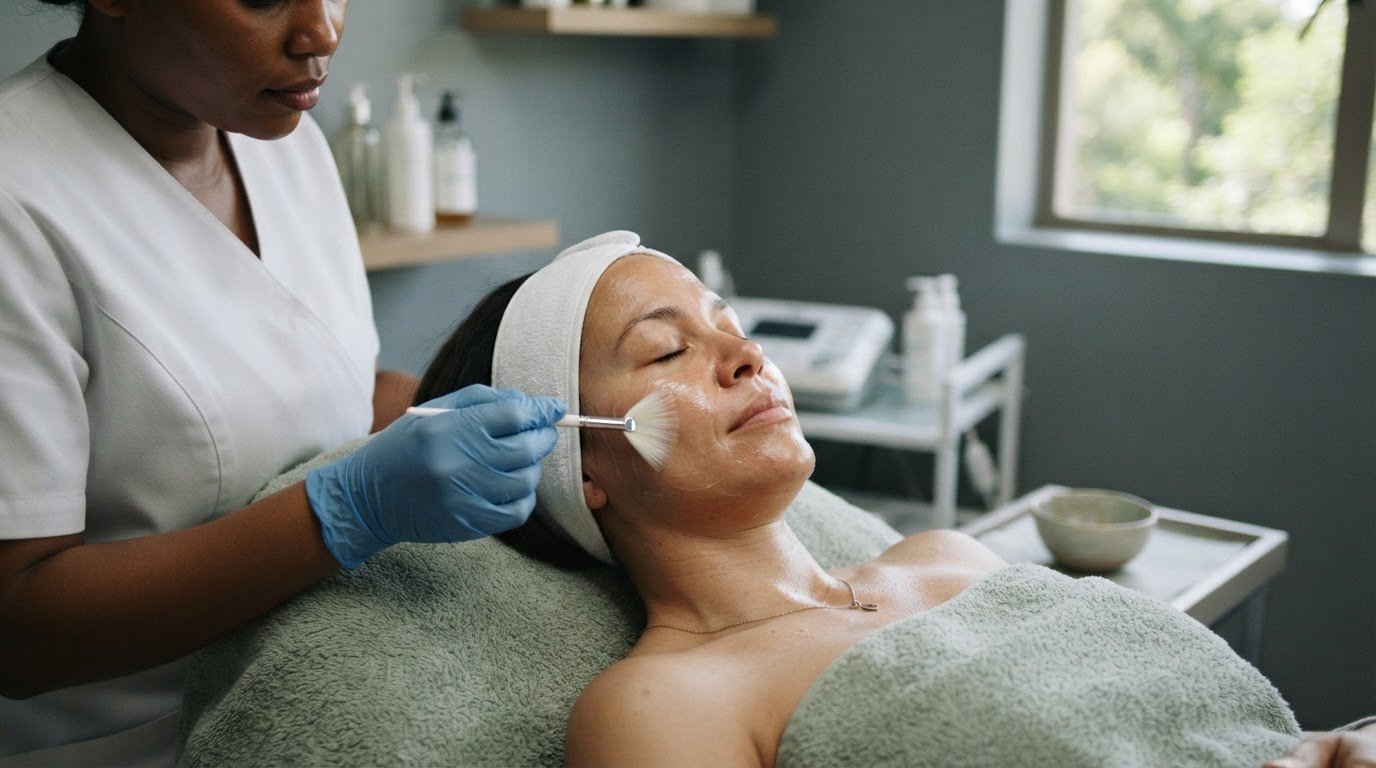
The Glow Up Society offers GA peels for those considering a peel-based approach to their skincare goals. The clinic also offers LHA peels, Retinol Peels and Optiphi microneedling. These are distinct treatments, and the most suitable option depends on your skin concerns, current condition and preferences.
Discuss your priorities before choosing a treatment. You may, for example, want to focus on acne scarring, uneven texture or another skin concern. A considered conversation can help you understand which approach aligns with your goals and what preparation and aftercare involve. The Glow Up Society offers these treatments in Fourways.
For a calm conversation about GA peels or microneedling, contact The Glow Up Society or visit theglowupsociety.co.za.
Choose a considered next step for your skin
Your next step can be a conversation about the skin changes you want to address and the approach that feels right for you. Choosing a microneedling clinic in Fourways is about more than selecting a treatment. It is an opportunity to discuss your priorities and consider a suitable plan without rushing.
The Glow Up Society offers GA peels, LHA peels and Retinol Peels alongside Optiphi microneedling. Discuss whether a peel or microneedling aligns more closely with your skin goals, taking your preferences and concerns into account.
Contact The Glow Up Society to talk through your options and take a considered next step towards caring for your skin.
Frequently Asked Questions
What is microneedling?
Microneedling uses fine needles to create controlled micro-injuries in the skin, prompting its natural repair process. It is used to address concerns such as acne scarring, uneven texture and dark spots. For example, a practitioner may assess the depth and pattern of acne scars before deciding whether microneedling suits your skin and treatment goals.
How many microneedling sessions are usually recommended, and how far apart?
For acne scars, a treatment course commonly involves 3 to 5 sessions, with appointments spaced 2 to 4 weeks apart. The number depends on factors such as scar pattern, skin response and the progress seen during treatment. For instance, shallow textural changes and more noticeable scars may call for different plans. Allow several months to assess the full effect.
What are the risks and side effects of microneedling?
Temporary redness, darker skin, burning or swelling can occur after microneedling. These reactions usually settle within a few days to a week. Before treatment, tell the practitioner about current irritation, active breakouts, skin conditions and medicines, as these details affect suitability and timing. If symptoms worsen or persist beyond the usual recovery period, contact the treating practitioner for advice.