Skincare
Microneedling for Skin: Professional or At Home
· The Glow Up Society
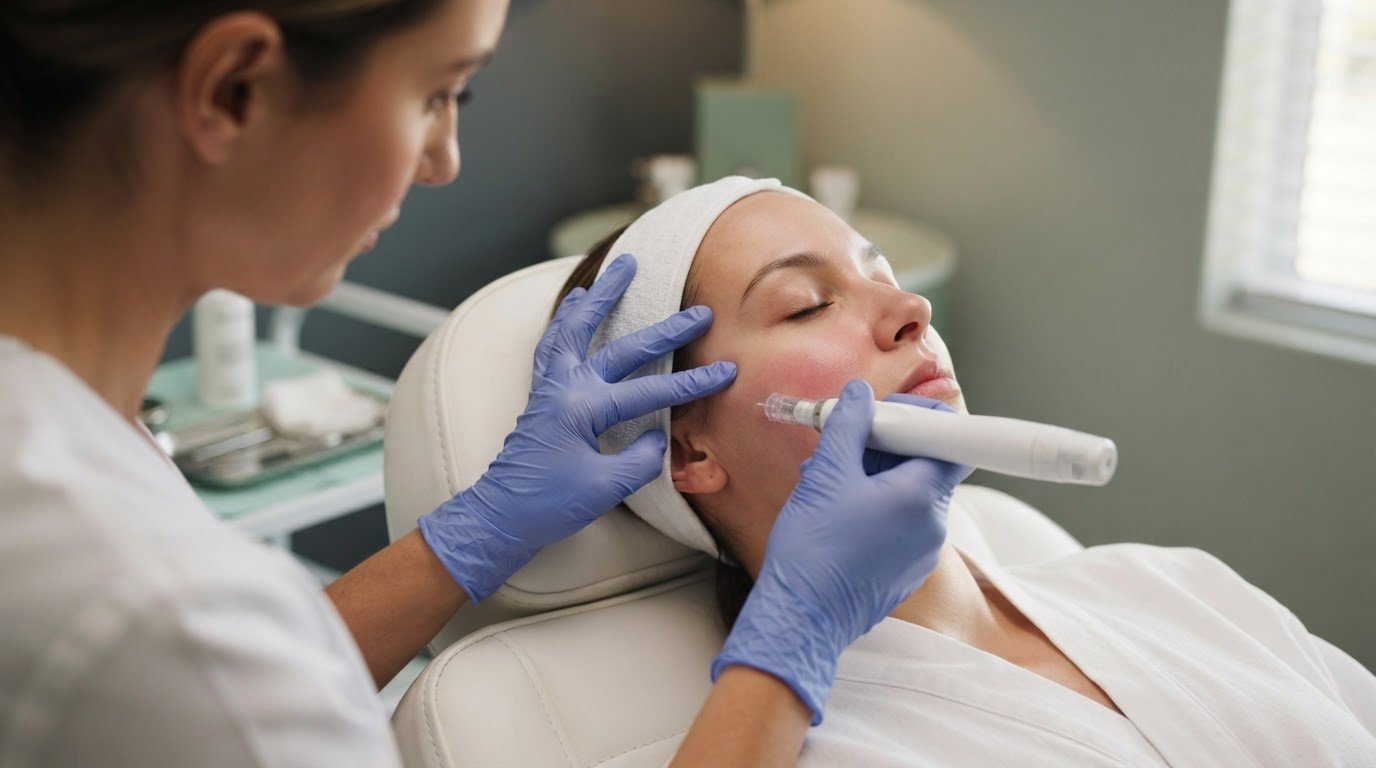
Microneedling for skin rejuvenation works by stimulating the skin’s natural healing response. Fine needles create controlled micro-injuries that encourage collagen and elastin production. Professional devices can reach deeper into the skin than at-home devices, so the treatment method and depth matter.
If you’re looking for smoother-looking texture or a fresher glow, it helps to understand what the needles do and what they don’t. Microneedling is not simply a way to push skincare products into the skin. It creates a measured stimulus, followed by a period of recovery.
This guide explains how professional microneedling works, which concerns it may help address, and what redness, sensitivity and aftercare can involve. It also compares professional treatment with at-home devices, helping you understand the difference in depth and consider which approach suits your skin goals.
Key Takeaways
- Understand why professional and at-home devices differ, and what that means for the skin’s repair response.
- Learn which concerns, including acne scars and wrinkles, may be suited to treatment and how results can develop over time.
- Know what redness and sensitivity may involve, and which gentle recovery habits can support your skin.
- Explore how professional Optiphi microneedling may fit into a considered approach to your skin goals.
Table of Contents
- Are at-home microneedling devices effective?
- What Skin Concerns Can Microneedling Help With?
- Expected redness, swelling and recovery
- How microneedling works
- The Glow Up Society: Optiphi Microneedling
Are at-home microneedling devices effective?
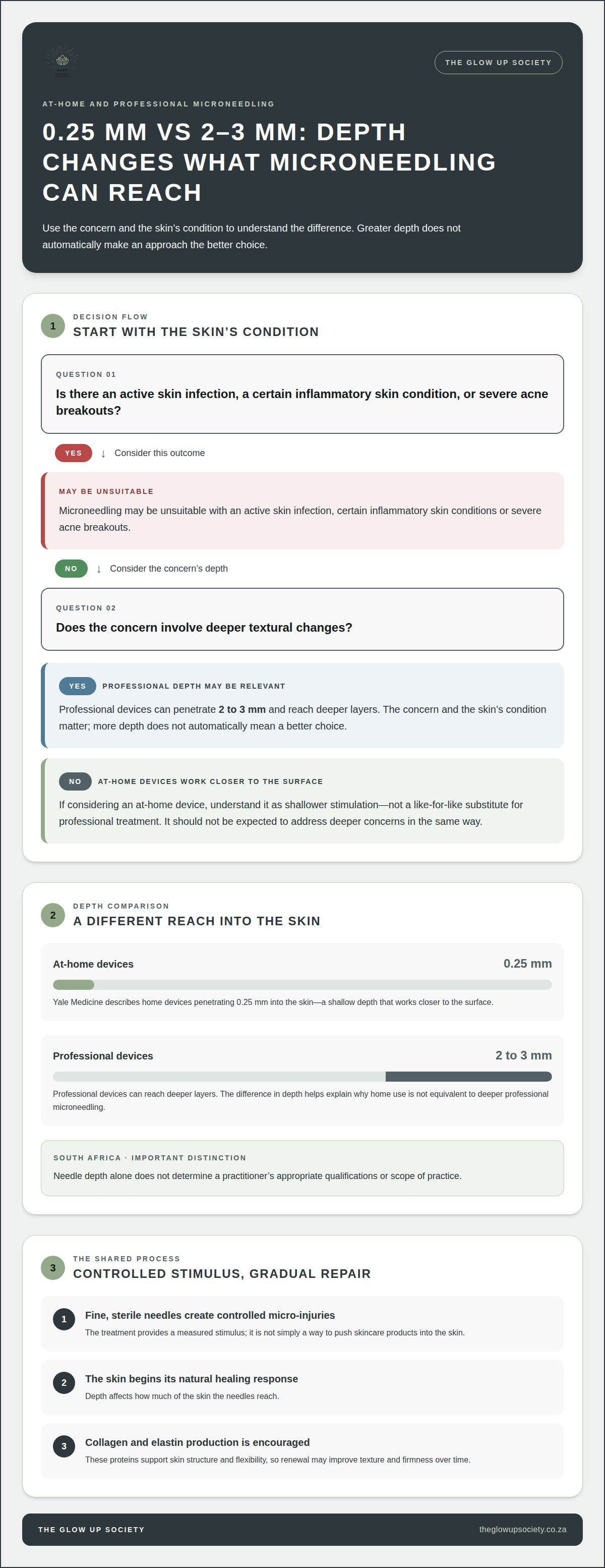
At-home microneedling can stimulate the skin’s repair response, but its reach differs from professional treatment. Yale Medicine describes home devices penetrating 0.25 mm into the skin. That shallow depth helps explain why home use isn’t equivalent to deeper professional microneedling.
In South Africa, needle depth alone does not determine a practitioner’s appropriate qualifications or scope of practice. Both treatment depth and the skin being treated matter when distinguishing home use from a professional procedure.
The basic process is similar at different depths. Fine, sterile needles create controlled micro-injuries, prompting the body’s natural healing response. As the skin repairs itself, collagen and elastin production is encouraged. These proteins support skin structure and flexibility, so gradual renewal may improve texture and firmness.
Depth affects how much of the skin the needles reach. Professional devices can penetrate 2 to 3 mm, compared with the 0.25 mm described for at-home devices by Yale Medicine. That difference means a professional treatment can target deeper layers, while a home device works closer to the surface. More depth doesn’t automatically mean a better choice; the suitable approach depends on the concern and the skin’s condition.
At-home devices have limits. A surface-level tool provides a different degree of stimulation from a professional procedure, and should not be expected to address deeper concerns in the same way. Microneedling may also be unsuitable with an active skin infection, certain inflammatory skin conditions or severe acne breakouts.
Think of at-home needling as a shallower form of stimulation, not a like-for-like substitute for a professional treatment. For example, if your concern involves deeper textural changes, the greater reach of professional devices may be relevant. If you’re considering any form of needling, the distinction between 0.25 mm and 2 to 3 mm helps clarify what each approach can reach, while collagen-led repair takes place over time.
What Skin Concerns Can Microneedling Help With?
Microneedling may address fine wrinkles, acne scars, stretch marks and uneven skin texture. Its relevance depends on the concern’s appearance and depth, not simply its name. For example, a shallow textural change and a deeper acne scar may call for different treatment planning. Microneedling for skin rejuvenation describes an approach to these concerns, rather than a single treatment plan that suits every skin type.
Yale Medicine recommends three to five treatments, scheduled monthly or biweekly, to achieve desired results. Treatment intervals are also usually described as three to eight weeks apart. These schedules allow time between sessions, with the skin’s response and treatment depth influencing the spacing. Before a session, a healthcare provider may recommend vitamin A or C cream about a month beforehand. Numbing cream may be applied 30 to 45 minutes before treatment.
Visible changes develop gradually. An early glow may appear within days, while improvements in texture and tone often take a few weeks. Results can take three to six months to appear, and maintenance may be needed once a year after a course. Keep this timeline in mind when planning around an event or setting expectations for acne-scar texture. Microneedling for skin rejuvenation involves a course of care, not an instant, finished result.
Microneedling differs from chemical peels, laser resurfacing and radiofrequency treatments because each works differently. Peels use exfoliating acids, lasers deliver focused light, and radiofrequency uses energy to heat tissue. The concern and treatment approach help determine which method may be relevant. Microneedling can also affect how topical products meet the skin, but that does not make every serum suitable immediately afterwards. A provider may advise on product choice and timing, particularly for active ingredients such as vitamin A.
Expected redness, swelling and recovery
After microneedling, redness, swelling or sensitivity typically subsides within 24 to 72 hours. Skin sensitivity and treatment depth influence how long these effects last. Redness and swelling can continue for up to five days, so a flushed appearance on day three can still fit the expected recovery range.
Recovery varies from person to person. A deeper treatment can produce a different response from a shallower one, while sensitive skin may stay red or feel tender for longer. Pay attention to changes from the first day onwards. Redness that gradually fades is different from swelling that continues beyond a week.
Keep aftercare simple during recovery. Protect treated skin from sun exposure until it heals, and follow a gentle skincare routine. Avoid introducing irritating products while the skin is sensitive. Makeup is usually avoided for at least 24 hours after treatment; most people can wear it the following day. This gives the initial recovery period space before cosmetics are applied.
Plan around that first day. For example, scheduling treatment before a day without social plans can make temporary redness easier to manage. Don’t assume that makeup is suitable just because the next day has arrived: the guidance is to avoid it for at least 24 hours, and the skin’s condition matters.
Two signs call for medical advice. Contact a healthcare provider if swelling lasts longer than a week, or if the treated area bleeds for longer than 24 hours. These clear time markers help distinguish an expected short-term response from symptoms that need attention.
Sun protection and gentle care remain important until the skin heals. Consider the recovery period when planning outdoor activities or applying makeup. A calm routine, attention to changes over the first five days, and awareness of the one-week swelling threshold can help you care for treated skin thoughtfully.
How microneedling works
Microneedling uses fine, sterile needles to create controlled micro-injuries in the skin. For microneedling for skin rejuvenation, these tiny punctures provide a measured stimulus for the skin’s repair process.
The Microneedling Process
A professional appointment begins with a skin assessment, followed by cleansing. Topical numbing cream may be applied if appropriate. A professional device then passes over the treatment area, creating tiny channels with its needles. Professional devices can penetrate 2 to 3 mm into the skin. The selected area and treatment depth shape how the device is used.
After needling, calming or hydrating products may be applied. The procedure can take 15 minutes to a few hours, depending on the size of the treatment area. A smaller area, such as one section of the face, takes less treatment time than a larger area. Assessment, preparation, needling and finishing care are separate parts of the appointment.
Skin Rejuvenation Effects
Each controlled micro-injury activates the body’s natural healing response. During repair, collagen and elastin production is encouraged. These proteins support skin structure and flexibility. This is how microneedling for skin rejuvenation works: it prompts a biological response rather than simply exfoliating the surface.
That distinction matters when you’re considering treatment. Microneedling for skin rejuvenation relies on a controlled stimulus followed by the skin’s repair activity. The needles provide the initial trigger; the body carries out the healing process. The treatment area and depth influence where the stimulus occurs. Renewal is gradual, not an instant change made during the appointment.
The Glow Up Society: Optiphi Microneedling
The Glow Up Society offers Optiphi microneedling for people considering a professional approach to skin renewal. It may suit you if you’re weighing professional treatment against an at-home device or want to discuss concerns such as uneven texture or acne scarring.
Your skin goals can also guide the discussion. GA peels, LHA peels and retinol peels are other skin treatment options available at the clinic. They work differently from microneedling, so the choice depends on the concern you want to address and the treatment method you’re considering.
Contact The Glow Up Society to discuss Optiphi microneedling and your skin goals.
Choose a next step that feels right for your skin
To decide whether microneedling for skin rejuvenation suits you, start with your priorities: the concern you want to address, your comfort with recovery, and whether you prefer professional care. A focused conversation can connect those preferences with a suitable treatment approach, without turning skincare into a race for change.
If you’re exploring options, The Glow Up Society offers Optiphi microneedling alongside GA peels, LHA peels and retinol peels. These treatments take different approaches to skincare, so your goals can guide which option to discuss. Share what you hope to improve and what matters to you in a treatment experience.
For a considered conversation about your skin goals and available treatments, contact The Glow Up Society. Take your next step at a pace that feels comfortable, with your personal priorities at the centre.
Frequently Asked Questions
What is microneedling?
Microneedling uses fine needles to create controlled punctures in the skin. The body responds by repairing the treated area, which can encourage collagen and elastin production. For example, a professional device can be used on a selected area of the face or body. Needle depth and treatment area affect how the procedure is performed.
When will results be visible?
An early glow may appear within days, while changes to texture and tone often take longer to notice. Results can take three to six months to appear as the skin’s repair process continues. If you’re planning around an event, allow time for recovery and gradual changes rather than expecting the final effect immediately after an appointment.
What skin concerns can microneedling treat, and who is a suitable candidate?
Microneedling may help with concerns such as wrinkles, acne scars, stretch marks and uneven texture. Suitability depends on your skin’s current condition and the concern being treated. Active skin infections, certain inflammatory skin conditions and severe acne breakouts can make treatment unsuitable. For example, treatment should be reconsidered if the intended area has an active infection.
What is the difference between professional microneedling and at-home derma rolling?
The main difference is treatment depth and how the procedure is managed. Yale Medicine describes at-home devices penetrating 0.25 mm, while professional devices can reach 2 to 3 mm. A professional treatment includes assessment and selection of the treatment approach. A home roller is not a like-for-like substitute, particularly when the concern involves deeper textural changes.
How many microneedling sessions are needed, and how far apart should they be?
Yale Medicine recommends three to five treatments, scheduled monthly or biweekly, to achieve desired results. Treatments are also usually spaced three to eight weeks apart, depending on the plan and skin response. These intervals offer different scheduling guidance, not one fixed timetable. Your treatment course should allow the skin to recover between sessions.
What are the side effects and risks of microneedling, including infection and scarring?
Temporary redness, swelling and sensitivity are common recovery effects. Infection and scarring are concerns because the needles create openings in the skin, making sterile equipment and appropriate aftercare important. Avoid treatment over active infections, and seek medical advice if swelling lasts longer than a week or bleeding continues beyond 24 hours. Protecting the skin while it heals also matters.