Skincare
Microneedling for Acne Scars in Fourways: Recovery Time
· The Glow Up Society
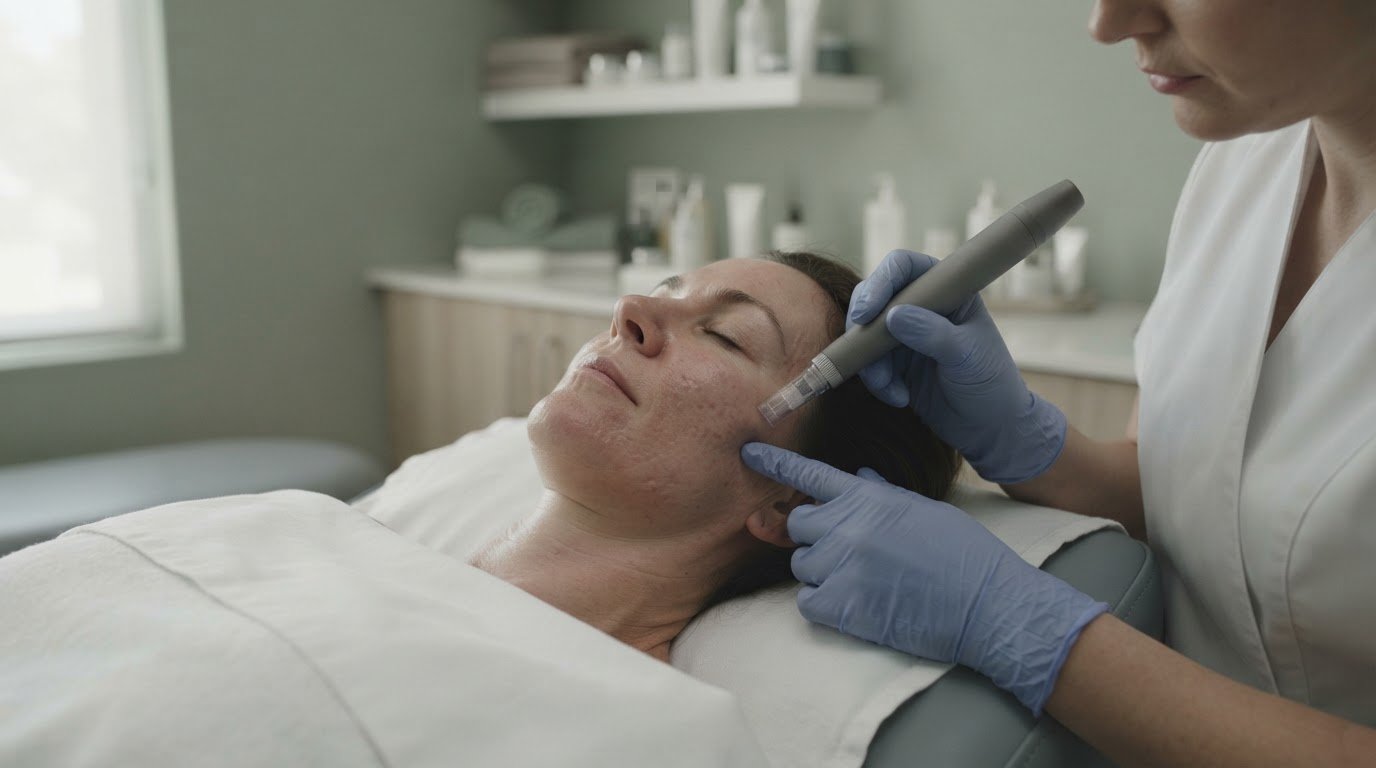
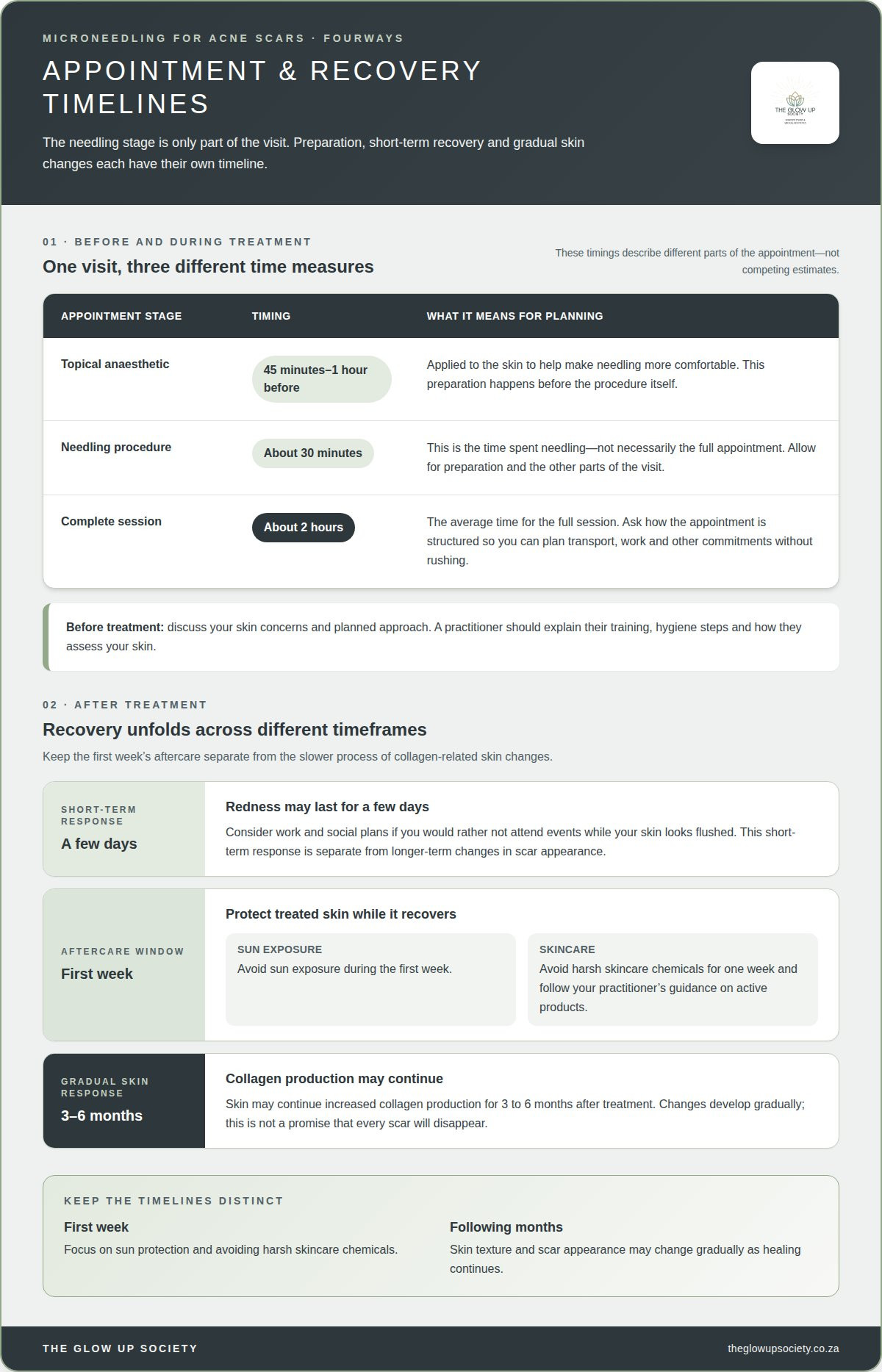
Microneedling for acne scars in Fourways takes about 30 minutes for the procedure itself, while a complete session averages about two hours. It may help improve the appearance of acne scarring, but redness can last for a few days afterwards, and it’s best to avoid sun exposure during the first week of recovery. The treatment works gradually, so the immediate healing period is only part of the picture.
If you’re considering microneedling for acne scars in Fourways, it helps to know what the treatment involves and what recovery may look like. Microneedling uses fine needles to create controlled micro-injuries in the skin, prompting a healing response that may support changes in skin texture and scar appearance.
This guide covers how microneedling works for acne scars, what can affect the number of sessions, how long an appointment may take and what recovery involves. It also outlines practical aftercare considerations to help you understand the process and plan around your skin’s healing.
Key Takeaways
- Allow time for preparation as well as the procedure when planning your appointment, and understand what topical anaesthetic is used for.
- Keep your recovery calm and protect treated skin from sun exposure while it heals.
- Understand that collagen-related changes develop gradually, so skin texture may continue to evolve after treatment.
- Learn how scar type and skin healing influence a treatment plan, and where Optiphi Microneedling at The Glow Up Society may fit.
Table of Contents
- Procedure duration and anaesthetic
- Aftercare and recovery
- Collagen induction and skin healing
- Microneedling for acne scars
- The Glow Up Society: Optiphi Microneedling
Procedure duration and anaesthetic
The needling itself takes approximately 30 minutes; a complete session averages about two hours. In South Africa, choose a practitioner who explains their training, hygiene steps and skin assessment clearly.
Treatment session length
Treatment session length means the time spent needling, not necessarily the full appointment. This distinction helps you plan around preparation and treatment. The procedure itself takes approximately 30 minutes. A complete microneedling session averages approximately two hours, allowing for other parts of the appointment.
Ask how the appointment is structured, including preparation and the needling stage. These timings describe different parts of the visit, rather than conflicting estimates. For example, setting aside only 30 minutes may not account for the full session. A longer appointment estimate can help you plan transport, work and other commitments without rushing.
Use of anaesthetic
A topical anaesthetic is applied to the skin to help make needling more comfortable. It typically goes on about 45 minutes to one hour before microneedling. This preparation time matters when arranging your appointment, since it comes before the procedure itself. The needling stage still takes approximately 30 minutes.
During your consultation, ask how anaesthetic fits into the appointment and what preparation involves. Your practitioner should explain the steps, including when the product is applied and when needling begins. This gives you a clearer picture of the full session, which averages approximately two hours, and why the visit can take longer than the needling itself.
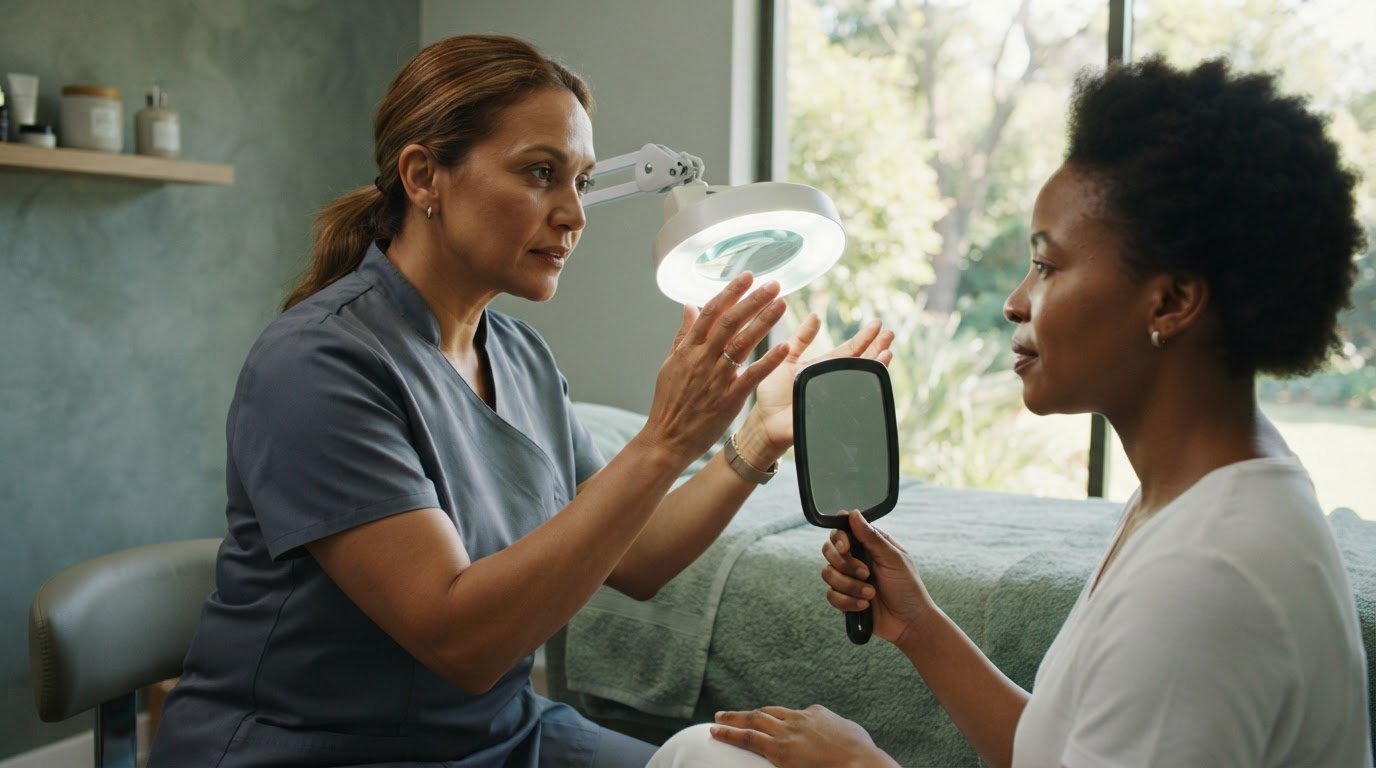
For acne-scar treatment, discuss your skin concerns, the planned approach and each appointment stage. Your practitioner should explain their training and hygiene process, and how they assess your skin before treatment. Clear answers help you understand what to expect, from topical anaesthetic preparation to the microneedling procedure.
Aftercare and recovery
Prepare by planning a low-sun week after your appointment and avoiding harsh skincare chemicals for one week. Redness can last a few days. Visible changes develop gradually; skin may continue increased collagen production for 3 to 6 months after microneedling treatment.
Avoid sun exposure during the first week while your skin recovers. In Fourways, consider outdoor plans before booking, particularly if you spend time outside. Choose a time when you can limit direct sunlight and give your skin space to settle. This can make it easier to follow your aftercare routine.
Keep harsh chemicals away from treated skin for one week. Take care with your usual skincare routine rather than returning immediately to every active ingredient. If you use several products, note which contain stronger actives before treatment, then follow your practitioner’s guidance on managing them during recovery.
Redness may last for a few days after treatment. This short-term response is separate from the slower process of changes in acne-scar appearance. Consider your work and social plans during those days, especially if you would rather not attend events while your skin looks flushed.
Collagen production follows a longer timeline: skin may continue increased production for 3 to 6 months after treatment. That does not mean redness lasts throughout those months. The first week concerns sun exposure and skin care; the following months allow gradual skin changes to develop. Keeping these timelines separate helps set realistic expectations.
After microneedling, avoid sunlight and harsh chemicals for one week. Keeping post-treatment care simple during this time can support your recovery.
Collagen induction and skin healing
Microneedling creates tiny, controlled openings in the skin, prompting a local repair response that includes collagen production. Collagen is a structural protein that supports the skin’s framework. This process is gradual, not an instant filling of acne scars, which is why the skin’s appearance may continue to change after your appointment.
As the treated skin heals, collagen-producing cells contribute to its repair and remodelling over time. For example, a shallow depression may look different as the surrounding skin texture changes. The appearance of a scar does not transform as soon as needling ends: early redness and longer-term repair are separate stages.
The skin may continue increased collagen production for 3 to 6 months after microneedling treatment. This is a period of ongoing activity, not a promise that every scar will disappear. Texture, scar depth and the skin’s response all influence what becomes visible. Looking at the skin only immediately after treatment cannot show the full course of remodelling.
Allow your skin to recover before returning to your usual skincare routine. Follow the aftercare instructions for your session, particularly guidance on sun exposure and active products. For example, avoid harsh chemicals during the first week. This keeps your routine focused while the skin’s repair response continues beneath the surface.
Expect gradual change rather than a guaranteed result or fixed timetable. Collagen induction describes the skin’s response, but outcomes vary. To track progress, compare the same areas in similar lighting instead of judging texture after a day. Your practitioner can assess how your skin is healing and whether the approach remains suitable for your acne scars.
Microneedling for acne scars
Microneedling may improve the appearance of post-acne scars through controlled skin needling. Your scar pattern and treatment choice help shape realistic expectations.
Treatment options for acne scars
Microneedling uses fine needles, while RF microneedling also applies radiofrequency energy. Laser treatment uses focused light instead. Because these methods differ, the treatment name alone cannot show which approach suits your concerns.
When considering microneedling for acne scars in Fourways, discuss the method, treatment areas and intended outcome. A doctor may recommend four to six sessions. Research reported mild improvement after two sessions, and moderate texture improvement with good scar-appearance enhancement after six. These findings offer context, not a direct comparison between treatments.
Acne scar types
Microneedling may improve post-acne scarring, but the available findings do not establish which scar shapes respond best. Describe your concerns, such as uneven texture or visible depressions, so your practitioner can assess the areas directly.
When discussing microneedling for acne scars in Fourways, explain whether you have active breakouts or mainly established scars. These are different concerns, and identifying your main goal helps focus the conversation on the appearance of existing marks.
Timing matters after isotretinoin: wait at least 6 months after stopping it before starting microneedling treatment. Share your medication history during assessment, as this informs treatment timing and planning.
Use session findings as a guide, not a promise of a particular result. If you’re considering treatment in Fourways, discuss microneedling for acne-scar concerns as part of an individual skin assessment.
The Glow Up Society: Optiphi Microneedling
The Glow Up Society offers Optiphi Microneedling for clients considering treatment for acne-scar concerns. A skin assessment can help clarify whether microneedling suits your skin, which texture concerns you want to address and what you hope to achieve.
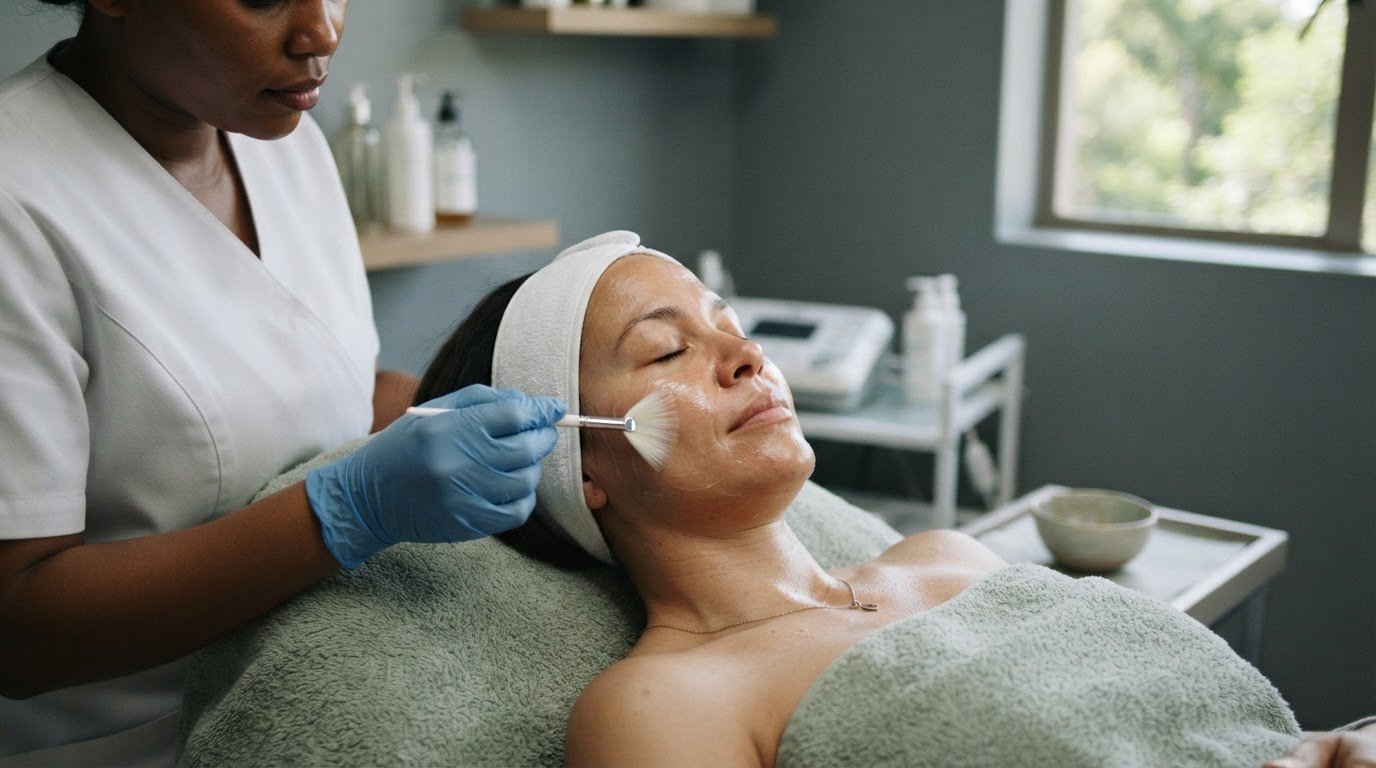
For other skin concerns, The Glow Up Society also offers GA Peels, LHA Peels and Retinol Peels. These are distinct treatments, and the suitable option depends on your concerns and the approach discussed for your skin. A personalised conversation can help you understand the differences and plan your next step.
To discuss your skin concerns and Optiphi Microneedling, contact The Glow Up Society in Fourways.
Choose a considered next step for your skin
Start by getting clear on what you would like to change. Note the areas that concern you, how they affect your confidence and the kind of improvement you hope to see. This gives your skin consultation a personal focus, rather than centring it on a general idea of smoother skin.
If you’re considering microneedling for acne scars in Fourways, The Glow Up Society offers Optiphi Microneedling. GA Peels, LHA Peels and Retinol Peels are also available for different skin concerns. Discuss your priorities to understand which treatment approach best fits your goals.
Take time to choose a path that feels aligned with your skin and your routine. Contact The Glow Up Society to discuss your concerns and explore a considered next step.
Frequently Asked Questions
What is microneedling?
Microneedling uses fine needles to create controlled punctures in the skin. This prompts a repair process that may support changes in texture. Unlike a skincare product applied to the surface, microneedling works through these tiny punctures. Your practitioner can explain how the device and approach are selected for your skin concerns.
Are derma roller results permanent?
Do not assume derma roller results are permanent. Changes in scar appearance may remain visible, but skin continues to change over time, and new acne can create new marks. Distinguish improvement in existing scars from preventing future breakouts. Discuss your expectations before treatment, including the changes you hope to maintain and how ongoing acne could affect them.
Are there any risks or side effects?
Redness can occur after microneedling and may last a few days. As the treatment creates deliberate punctures in the skin, ask your practitioner to explain the expected response for your session and what signs need follow-up. Share relevant skin concerns and your current routine before treatment so you understand preparation, recovery and potential effects to watch for.
How many sessions of microneedling do I need for acne scars?
A doctor may recommend four to six microneedling sessions for acne scars. This is a planning guide, not a fixed prescription for every scar pattern. At your assessment, discuss the areas you want to address and how progress will be reviewed between appointments. This helps you understand the proposed course and decide whether it suits your preferences and schedule.
What is the optimal care for skin after microneedling?
Follow your practitioner’s aftercare instructions, avoid sun exposure during the first week and wait one week before using harsh chemicals. Redness may last a few days, so plan social commitments with this in mind. For example, avoid booking treatment immediately before an event where you would prefer your skin to look settled. Keep this aftercare period distinct from longer-term skin changes.
How effective is microneedling for atrophic acne scars, and how many sessions are typically needed?
Atrophic scars are indented marks left by acne. Findings on post-acne scarring report mild improvement after two microneedling sessions, and moderate texture improvement with good scar-appearance enhancement after six sessions. Those findings don’t identify results for every atrophic scar subtype. A recommended course may involve four to six sessions, with the scar pattern informing the treatment discussion.