Skincare
Medical Weight Management for Women Over 40 in Fourways
· The Glow Up Society

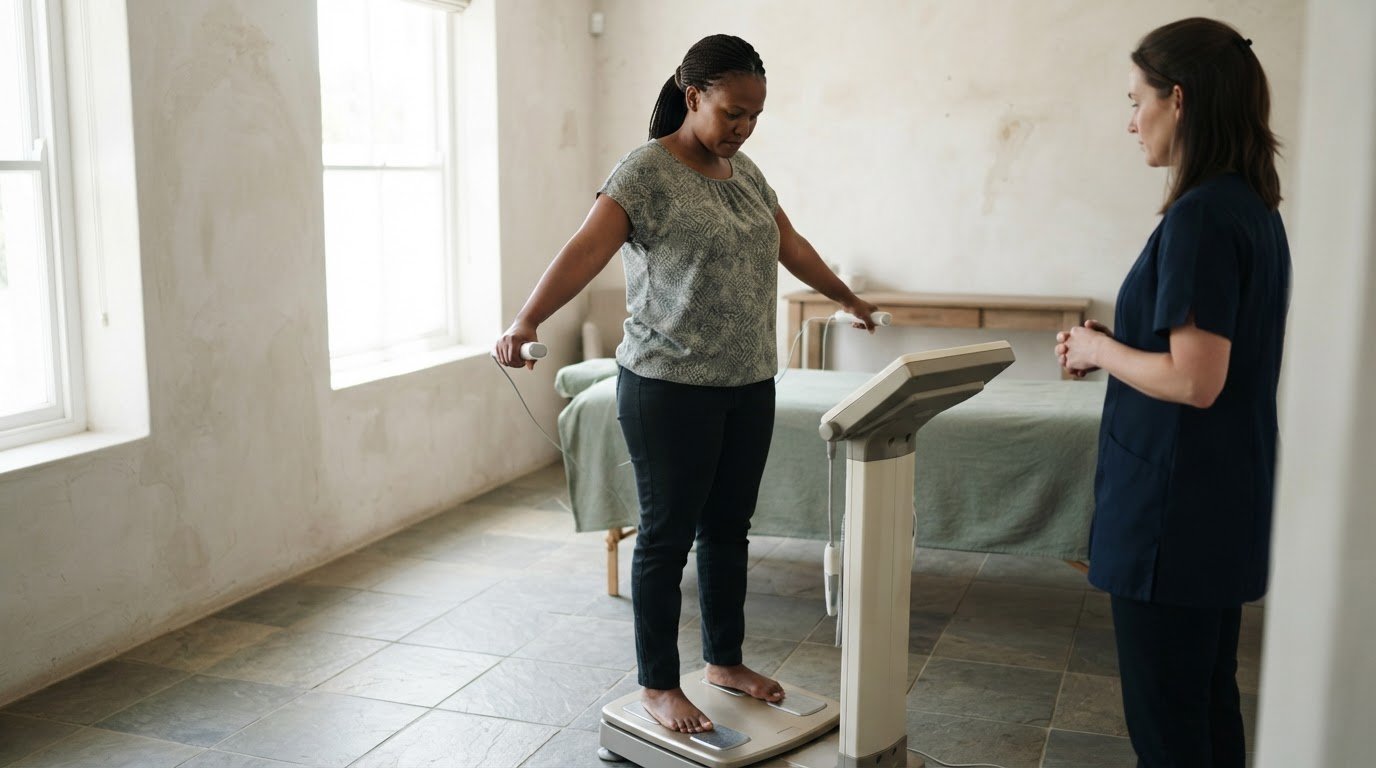
A weight reading alone cannot show how your health and body composition are changing. In medical weight management for women over 40 in Fourways, blood pressure is measured with a cuff, while body composition analysis offers a broader picture than weight alone. Repeated measurements can help inform thoughtful adjustments to your plan.
If you’ve noticed that your progress doesn’t always show on the scales, you’re not alone in wanting a clearer picture. Your needs and priorities can shift over time, so regular monitoring can help make decisions more informed and personal.
This article explains what blood pressure and body composition measurements can show, how to interpret changes between assessments, and how monitoring may inform adjustments to a weight-management plan. The aim is a considered approach that keeps your wellbeing in view.
Key Takeaways
- Learn why weight-loss medicines need careful consideration of possible side effects, health history and other medicines.
- Understand how perimenopause and menopause can influence weight-management needs, and why a personalised approach matters.
- See how blood pressure and body composition measurements can provide useful context beyond the number on the scales.
- Discover how ongoing monitoring can help inform plan adjustments, including through medical weight management at The Glow Up Society.
Table of Contents
- What are the risks, side effects and contraindications of weight-loss medicines for women over 40?
- How do menopause, perimenopause and hormonal changes affect weight management after 40?
- The Glow Up Society: Medical weight management
What are the risks, side effects and contraindications of weight-loss medicines for women over 40?
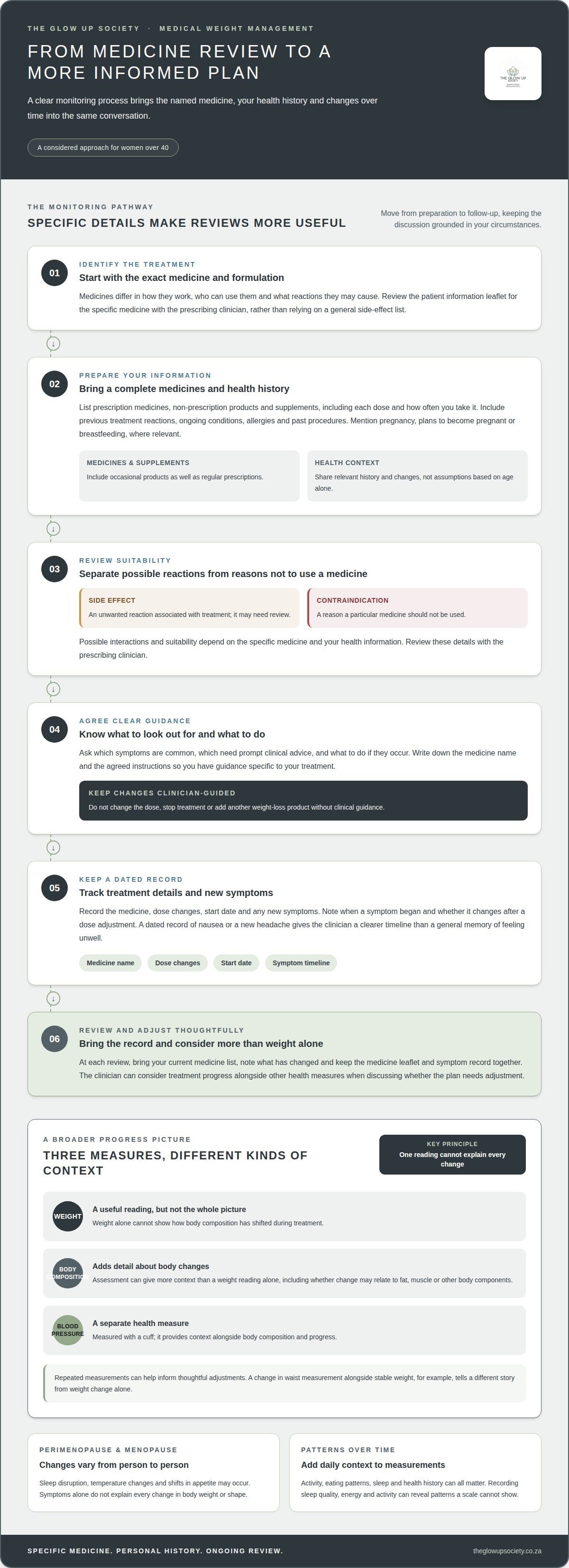
Weight-loss medicines differ in how they work, who can use them and what reactions they may cause. There is no single side-effect list that applies to every medicine. Start with the exact medicine name and formulation, then review its patient information leaflet with the prescribing clinician. This keeps the discussion specific rather than relying on general claims about weight-loss treatment.
A side effect is an unwanted reaction associated with treatment. A contraindication is a reason a particular medicine should not be used. These are different considerations: a symptom might need review, while a contraindication could rule out a medicine altogether. The medicine’s leaflet and your medical history help clarify which applies.
Before treatment, prepare a complete list of prescription medicines, non-prescription products and supplements. Include the dose and how often you take each one. A regular prescription and an occasional herbal supplement both belong on the list. This gives the prescriber a clearer basis for reviewing possible interactions and deciding on an appropriate next step.
Your health history matters as much as the medicine name. Include previous treatment reactions, ongoing conditions, allergies and past procedures. Mention pregnancy, plans to become pregnant or breastfeeding, where relevant. These details can affect suitability. Don’t assume a medicine you used previously remains appropriate if your health or treatment has changed.
Before starting, ask about the expected side effects of the specific medicine. Find out which symptoms are common, which need prompt clinical advice, and what to do if they occur. Write down the medicine name and agreed instructions. Clear guidance is more useful than a broad online list about medicines you may never use.
Monitoring should follow the treatment plan. Record the medicine, dose changes, start date and any new symptoms. Note when a symptom began and whether it changes after a dose adjustment. A dated record of nausea or a new headache, for example, gives the clinician a clearer timeline than a general memory of feeling unwell.
Do not change the dose, stop treatment or add another weight-loss product without clinical guidance. A second product could affect the safety review, even if it is sold as a supplement. If a reaction concerns you, follow the instructions for that medicine. Keep its packaging or leaflet nearby so you can give the correct name.
Weight-loss treatment should also be reviewed alongside other health measures. A clinician may consider blood pressure, body composition, symptoms and progress when assessing whether the plan needs adjustment. One measurement cannot explain every change: a weight reading alone, for instance, does not show how body composition has shifted during treatment.
For women over 40, the same careful review applies; age alone cannot identify a medicine’s risks. Health history, current medicines and the exact product remain central. Share changes such as a new prescription or diagnosis before treatment decisions. This helps keep the discussion grounded in your circumstances, rather than assumptions based on age.
If you are considering medical weight management in Fourways, begin with a clear review of suitability and monitoring. Ask the prescriber to explain the medicine’s intended role, possible side effects, contraindications and follow-up plan. The answers should relate to the named medicine and your health information, not to weight-loss medicines as one broad category.
Keep the medicine leaflet and your symptom record together. At each review, bring your current medicine list and note any changes since the previous discussion. This preparation can make it easier to assess side effects and treatment progress. A plan can then be discussed using specific details rather than guesswork or generic advice.
Risks and side effects vary by medicine and formulation. A side effect is an unwanted reaction; a contraindication is a reason not to use a medicine. Suitability and possible interactions depend on the specific medicine and your health history, including other medicines and supplements, ongoing conditions, allergies, past procedures, and pregnancy or breastfeeding considerations. Review the medicine’s leaflet with a prescribing clinician.
How do menopause, perimenopause and hormonal changes affect weight management after 40?
Perimenopause is a transition, while menopause marks a later stage. During perimenopause, menstrual patterns and symptoms can change. You might notice disrupted sleep, temperature changes or shifts in appetite. These experiences vary and can overlap with other life changes. On their own, they do not explain every change in body weight or shape.
Hormonal changes may influence where the body stores fat, including around the abdomen. Body shape is also affected by activity, eating patterns, sleep and health history. A change in waist measurement alongside stable weight, for example, tells a different story from weight change alone. Looking at several measures provides more useful context.
Sleep can become less settled during perimenopause or menopause. Poor rest may affect daytime energy, mood and decisions about meals or movement. After a disrupted night, for instance, a planned walk may feel harder to complete. Recording sleep quality alongside energy and activity can reveal patterns a scale cannot show.
Symptoms such as hot flushes or night sweats may interrupt routines. If you wake repeatedly, morning exercise may feel less manageable. Rather than treating this as a lack of effort, note the symptom and its effect on daily habits. This can help distinguish a temporary disruption from a routine that needs adjusting.
Muscle and body composition also deserve attention. Weight alone cannot show whether a change comes from fat, muscle or other body components. A body composition assessment can add detail, while blood pressure provides a separate health measure. Over time, these observations can make progress reviews more informative than weighing alone.
Before a review, keep a simple record of menstrual changes, sleep, appetite, activity, weight and waist measurements. Add symptoms such as night waking or changes in energy. These patterns may help explain why a plan feels easier to follow in some weeks than others. The aim is useful context, not perfect tracking.
You can adjust daily routines around changing symptoms. If night sweats affect your sleep, consider whether gentler activity feels more achievable the next day. If your appetite seems different, note when it changes and what was happening beforehand. These observations can inform practical conversations about meals, movement and support without assuming hormones are the only influence.
Review the whole picture before making a major change. Compare current measurements with earlier readings, then consider symptoms and changes to your routine. Stable weight alongside improved strength, for example, may represent progress the scale misses. An unexpected change alongside new symptoms also needs context. A single reading is a snapshot, not a complete account.
Medical weight management for women over 40 in Fourways can take menopause-related symptoms into account alongside personal goals and health measures. If you’re exploring medical weight management for women over 40 in Fourways, a clinician can use your history and monitoring results to discuss whether your plan needs adjustment. Bring clear notes about symptoms and routine changes to support a focused discussion.
The Glow Up Society: Medical weight management
The Glow Up Society offers medical weight management for women seeking a considered approach to changing weight after 40. It may be a useful next step if menopause-related changes, treatment questions or shifting progress have made your current plan feel less suited to you. Monitoring blood pressure and body composition can add context beyond weight alone, helping inform discussions about possible plan adjustments. Your symptoms, health history and goals all matter when considering the way forward. The focus is on an individual approach, rather than assuming the same plan works for everyone. If you’re ready to discuss your next step, contact The Glow Up Society.
Choose a next step that feels right for you
Your next step can be a focused conversation about what you want to change and what feels manageable. For women considering medical weight management for women over 40 in Fourways, an individual discussion can help connect personal goals with a considered plan and ongoing monitoring. Progress is easier to interpret when it is viewed over time, rather than judged by one moment or measurement.
The Glow Up Society also offers GA Peels, LHA Peels and Retinol Peels for different skincare needs. These are separate treatment options, so you can keep your next step focused on the support you are looking for.
If you’re ready to explore your options, contact The Glow Up Society. A thoughtful start can help you move forward with greater clarity and confidence.
Frequently Asked Questions
What medical assessments and blood tests are recommended before starting weight management after 40?
Assessments should reflect your health history, current medicines and the treatment being considered, rather than assume one blood-test panel suits everyone. Start by discussing existing diagnoses, prescriptions and previous test results with the clinician. Blood pressure and body composition measurements can also provide baseline information. Bring a current medicines list and recent results so the assessment can identify which further tests are relevant to your circumstances.