Skincare
Medical Weight Loss in Fourways: A Clinical Guide
· The Glow Up Society

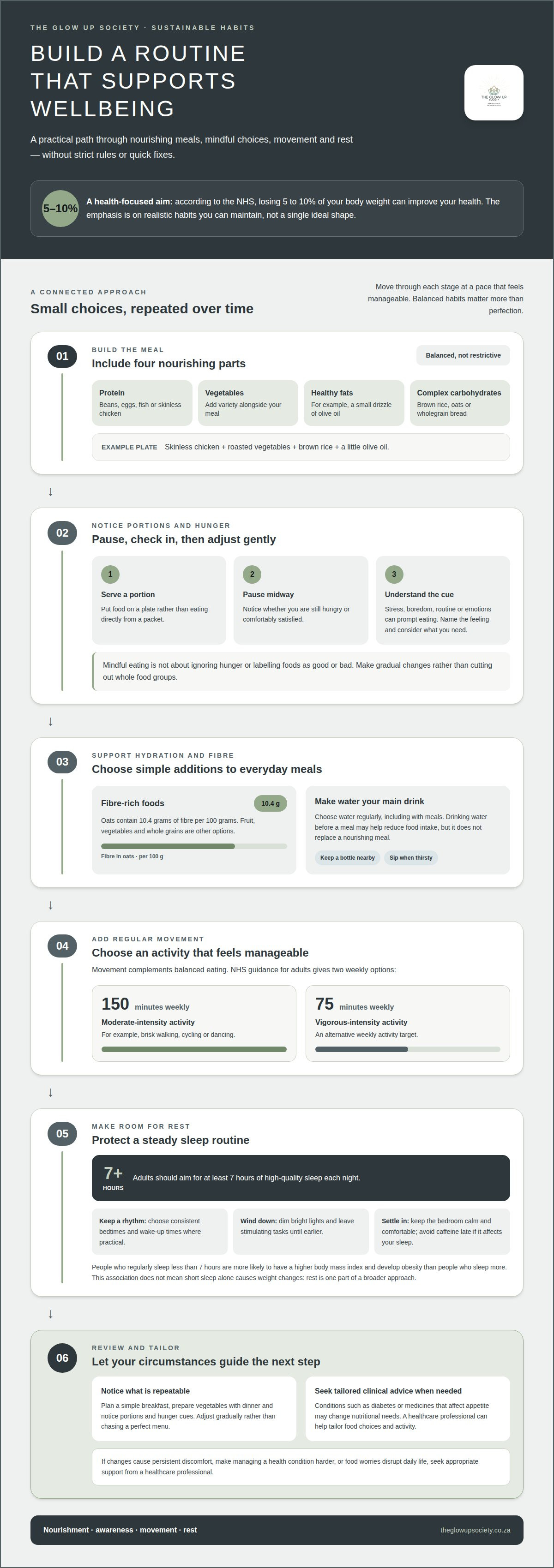
Health, not appearance alone, can be a meaningful reason to consider weight loss. According to the NHS, losing 5 to 10% of your body weight can improve your health. The aim isn’t a hurried change or a single ideal shape, but habits that support your wellbeing and feel realistic to maintain.
It’s understandable to want a clear reason before changing familiar routines. Health can be affected by more than appearance, and sustainable habits often matter more than strict rules. This guide explains why weight may matter and how balanced meals with protein, vegetables, healthy fats and complex carbohydrates can support nourishing choices. Sleep and fibre also have a place in appetite and everyday habits.
The sections ahead explore how to build balanced meals, how sleep and fibre can support appetite and healthy habits, and what a measured, compassionate approach to change can look like. The emphasis is on practical choices you can sustain, rather than quick fixes or pressure to meet someone else’s standard.
Key Takeaways
- Build meals around protein, vegetables, healthy fats and complex carbohydrates to support balanced, sustainable eating habits.
- Consider health as well as appearance when deciding whether changing your weight could be beneficial.
- Make room for consistent, good-quality sleep, as it can influence appetite and everyday food choices.
- Add fibre-rich foods such as fruit, vegetables, oats and whole grains to meals, and explore medical weight management for tailored support.
Table of Contents
- 1. Balanced meals with protein, vegetables, healthy fats, and complex carbohydrates
- 2. Why Lose Weight?
- 3. Sleep and appetite regulation
- 4. Fibre and weight loss
- The Glow Up Society: Medical weight management
1. Balanced meals with protein, vegetables, healthy fats, and complex carbohydrates
Weight loss is easier to approach as a series of nourishing choices, rather than a reason to remove whole food groups. Combine protein, vegetables, healthy fats and complex carbohydrates for satisfying meals. For example, pair skinless chicken with roasted vegetables, brown rice and a little olive oil. Beans, eggs, fish, oats and wholegrain bread are other practical choices for a balanced lifestyle.
Protein and carbohydrates provide 4 calories per gram, while fat provides 9 calories per gram. Healthy fats still belong in meals, but measured portions, such as a small drizzle of oil, make their energy easier to manage. Include vegetables and whole grains as part of a fibre-rich eating pattern. Oats are one option, containing 10.4 grams of fibre per 100 grams.
Choose water regularly, including with meals, and make it your main drink instead of sugary options. Drinking water before a meal may help reduce food intake, but it doesn’t replace a nourishing meal. Keep a bottle nearby and sip throughout the day, especially when you feel thirsty or the weather is warm. For some people, this simple routine makes hydration easier to remember.
To maintain a healthy weight, focus on repeatable habits rather than a perfect menu. Plan a simple breakfast, such as oats with fruit, and prepare vegetables alongside dinner. Notice portions and hunger cues, then adjust meals gradually instead of cutting out whole food groups. These practical steps can support weight loss habits that fit your daily routine.
Movement complements balanced eating. According to the NHS, adults should aim for at least 150 minutes of moderate-intensity activity weekly or 75 minutes of vigorous-intensity activity weekly. Brisk walking, cycling or dancing can provide moderate activity. Pick an option that feels manageable, then build it into your routine.
Can one meal plan suit everyone? No. Conditions such as diabetes or medicines that affect appetite may change nutritional needs. A healthcare professional can help tailor food choices and activity to your circumstances. If changes cause persistent discomfort or make managing a health condition harder, seek clinical advice rather than intensifying restrictions.
2. Why Lose Weight?
Health can be one reason to consider changing your weight, although it isn’t the only measure of wellbeing. According to the NHS, losing 5 to 10% of your body weight can improve your health. That modest aim may feel more manageable than pursuing a dramatic change. Your reasons might include improving comfort during daily activities or supporting a health goal discussed with a healthcare professional.
Mindful eating helps you notice what, when and why you eat. At your next meal, pause midway and check whether you’re still hungry, comfortably satisfied or eating out of habit. Serve a portion onto a plate rather than eating directly from a packet, and put the packet away before you begin. These small steps make portions easier to notice without labelling foods as good or bad.
Eating when you’re not physically hungry can happen for different reasons. Stress, boredom, routine or emotions may prompt eating; a brief pause can help you identify what you need. Try naming the feeling, then choose a response such as a short walk, a glass of water or a meal if you’re hungry. This isn’t about ignoring hunger, but understanding the cue before acting.
Healthy eating and portion awareness work best as repeatable habits, not strict rules. For example, eat at a table without a screen and give yourself time to notice fullness. If a meal leaves you unsatisfied, consider whether it included enough variety rather than simply restricting the next meal. The goal is a balanced pattern you can maintain alongside everyday activity.
Food, weight and body image can become distressing. If eating feels out of control, you regularly skip meals to compensate, or food worries disrupt daily life, speak with a healthcare professional experienced in disordered eating. Eating disorders need compassionate, appropriate support; you deserve help without judgement. If portion awareness feels difficult alone, explore a supported approach to eating habits.
3. Sleep and appetite regulation
Adults should aim for at least 7 hours of high-quality sleep each night. Rest supports a healthy routine alongside nourishing meals and regular exercise. It doesn’t determine body weight on its own, but it can shape how manageable daily habits feel. If late nights leave you tired, start with a consistent bedtime and wake-up time. Keep that routine at weekends too, where practical. A steady rhythm can make it easier to plan meals and activity during the day.
Sleep and appetite are connected. People who regularly sleep less than 7 hours per night are more likely to have a higher body mass index and develop obesity than people who sleep more. This association doesn’t mean short sleep alone causes weight changes. It does make rest worth considering when reviewing appetite, energy and choices around food. Sleep is one part of a broader weight loss approach, not a measure of effort or personal discipline.
A practical evening routine can help protect time for rest. Choose a regular time to wind down, dim bright lights and leave stimulating tasks until earlier in the day. For example, prepare tomorrow’s lunch before settling into a quiet activity, such as reading. If caffeine affects your sleep, avoid having it late in the day. Keep your bedroom calm and comfortable, and set work aside rather than taking it to bed. Small adjustments can make a routine easier to repeat.
Notice how sleep relates to eating and activity across the week. After a poor night, you might reach for convenient snacks, so plan an easy breakfast, such as oats, and prepare a balanced lunch. A short walk can support your daily routine without becoming compensation for food. These habits may help you manage appetite whilst working towards weight loss, but sleep itself isn’t a treatment. If sleep problems persist or affect daily life, discuss them with a healthcare professional, especially if you manage an ongoing health condition.
4. Fibre and weight loss
Fibre-rich foods add volume and texture to meals, helping you feel satisfied after eating. Weight loss is easier to approach when meals remain nourishing and filling, rather than being built around restriction. Try adding beans to soup, vegetables to a sandwich, or lentils to a familiar stew. These simple additions bring variety to everyday meals and can make balanced choices more convenient.
Aim for 2 cups of fruit daily and 6 oz of grains daily as sources of fibre. For example, add fruit to breakfast, choose wholegrain bread at lunch, and serve barley or brown rice with dinner. Beans, peas and lentils are also useful options. Spreading these foods across meals gives you different flavours and textures, instead of relying on one ingredient or changing your whole menu at once.
If your usual meals contain little fibre, increase it gradually. Add vegetables to a meal you already enjoy, then see how the change suits your appetite and comfort. Drink water regularly as you make changes. For instance, serve a glass of water with a bean-based lunch. A gradual approach can make new habits feel more practical than a sudden switch to unfamiliar foods.
Fibre supports a nourishing eating pattern, but it doesn’t determine body weight on its own. Pair fibre-rich foods with protein and variety, and consider how sleep and activity fit into your wider routine. If you feel hungry soon after a meal, review its overall balance rather than simply cutting portions further. Weight loss goals are best supported by changes you can continue comfortably, not short-lived food rules.
If you’d like help considering a sustainable approach, explore support for your health goals.
The Glow Up Society: Medical weight management
The Glow Up Society in Fourways offers medical weight management for people who want clinical support alongside sustainable lifestyle habits. It may be a helpful next step if you’ve been working on balanced eating, sleep and activity but would value guidance shaped around your needs. The focus is on a considered approach, not pressure to pursue rapid change or a one-size-fits-all plan.
In a conversation about your goals, you can discuss the habits you’ve found difficult to maintain and the health factors that matter to you. This can help clarify whether medical weight management fits your circumstances and what support may be appropriate. It’s also reasonable to seek clinical input before making substantial changes, especially if you manage an ongoing health condition or have concerns about eating.
If you’d like to discuss medical weight management, contact The Glow Up Society in Fourways.
Choose a considered next step
Your next step can be a conversation about what matters to you, rather than a commitment to a particular outcome. If you’re considering weight loss support, bring your questions and the habits you’d like help making sustainable. A thoughtful discussion can help you understand how medical weight management may fit alongside your personal health goals.
Skin concerns can be considered separately from weight goals. The Glow Up Society also offers GA Peels, LHA Peels and Retinol Peels for clients seeking these treatments. Each addresses a different skincare interest, so keep your priorities clear when discussing the care you’re looking for.
Contact The Glow Up Society to discuss your goals and take a calm, informed step towards care that feels right for you.
Frequently Asked Questions
Why Lose Weight?
Improving health, comfort or mobility can be a reason to consider weight loss, but personal circumstances matter. A useful first step is to identify what you hope will change, such as finding daily walks easier or addressing a health concern raised during care. Weight alone doesn’t describe your whole health picture, so focus on meaningful goals rather than appearance or comparisons with others.
What about calories and portion control?
Calories describe the energy food provides, while portion awareness helps you notice how much you’re eating. Try serving a meal onto a plate, putting leftovers away, then eating without a screen. If you’re still hungry, allow yourself more rather than treating a smaller serving as a strict rule. This approach can make eating patterns easier to observe without weighing every ingredient or tracking every meal.
Why do I eat when I'm not hungry?
Eating can respond to cues besides physical hunger, including a familiar routine, social setting or an appealing snack within reach. For example, you might nibble whilst watching television even after dinner. Notice the situation without criticism, then decide whether you want the food or would prefer another response, such as making tea or stepping away from the screen. If this feels distressing, seek compassionate support.
What is a healthy and realistic rate of weight loss per week?
A safe amount to aim for is 0.5-2 pounds per week. Progress can vary with starting point, health and the changes you can maintain, so a weekly figure is a guide rather than a measure of personal worth. Focus on steady routines and how you feel. If you’re planning a substantial change, discuss your approach with a healthcare professional, especially if you have an ongoing condition.
What foods and eating patterns support sustainable weight loss?
Choose a varied pattern you can repeat, with meals that suit your preferences, budget and daily schedule. For example, prepare a pot of bean soup for busy evenings or keep ingredients ready for a simple lunch at home. Planning ahead can reduce reliance on last-minute choices. Include foods you enjoy, too; a sustainable approach should feel nourishing, not like a short-term set of restrictions.
What are the risks of rapid weight loss and very low-calorie diets?
Very restrictive eating can be difficult to sustain and may not suit your nutritional needs or health circumstances. Avoid making drastic changes without considering how they affect your energy, eating patterns and wellbeing. Speak with a healthcare professional before starting a new diet or activity programme, particularly if you have an ongoing health condition. They can help you consider an approach that is appropriate for your situation.