Skincare
LHA Peel in Fourways: Is It the Right Treatment for Your Skin?
· The Glow Up Society
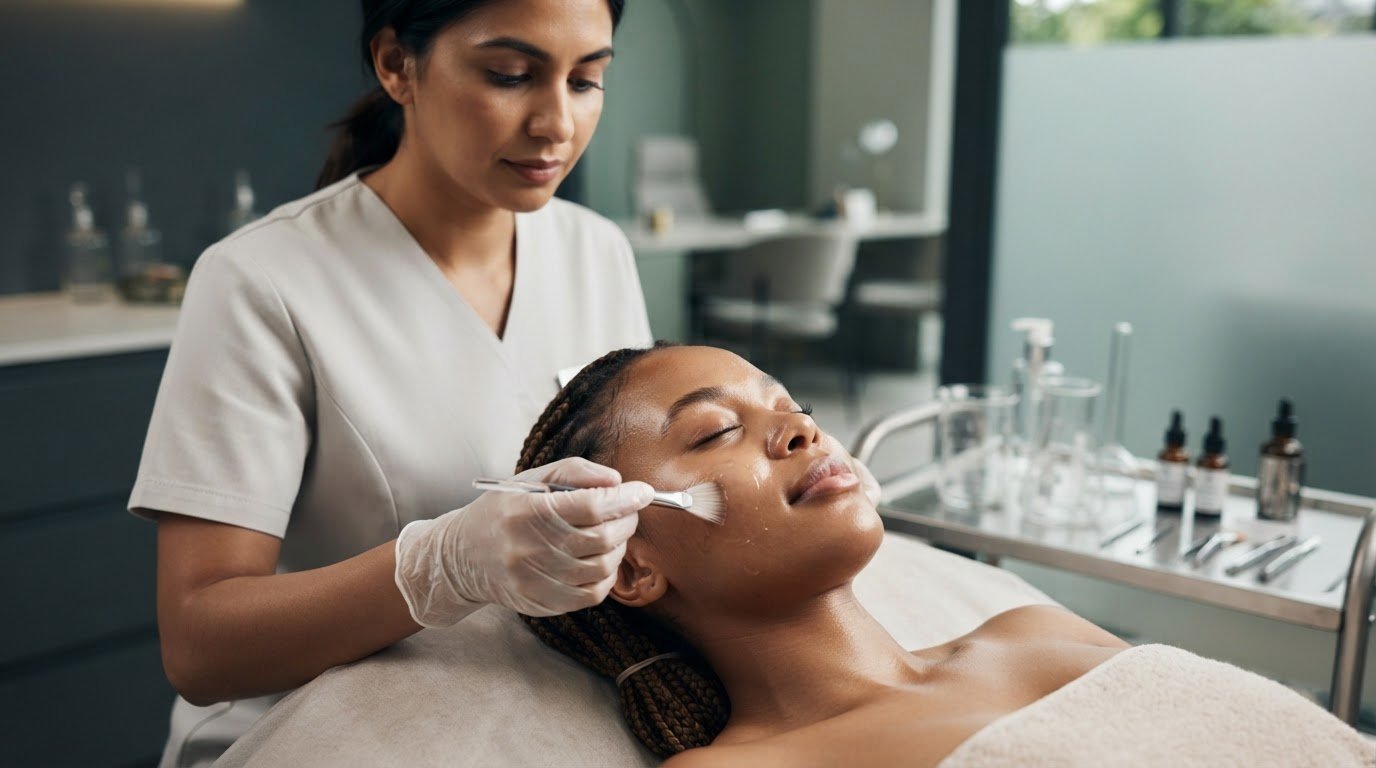
The peel with the strongest-sounding ingredients isn’t automatically the best match for your skin. If you’re considering an LHA peel Fourways, you may be wondering how it compares with a GA or retinol peel, and whether it’s a suitable option for your skin goals.
Choosing a peel is less about finding one “best” treatment and more about matching its exfoliation profile to your skin and circumstances. An individual assessment can help you discuss sensitivity, your current skincare routine and what to expect before deciding.
This guide explains what an LHA peel is designed to address, how it differs from GA and retinol peels, and what its limits may be. You’ll also find practical points to discuss at The Glow Up Society in Fourways, whether you’re visiting from Sandton, Lonehill, Kyalami, Bryanston or North Riding. A considered choice starts with understanding the options.
Key Takeaways
- Understand what an LHA peel is intended to address and why suitability depends on your skin and goals.
- Compare LHA, GA and retinol peels by their broad treatment focus, rather than assuming one is universally better.
- Use an LHA peel Fourways consultation to discuss your skin concerns, sensitivity and what to expect from treatment.
- Know the key stages of an appointment, from skin review to personalised guidance, before deciding how to proceed.
- Explore how The Glow Up Society’s peel options can fit into a considered approach to your skincare goals.
Table of Contents
- LHA Peel in Fourways: What it is and what it addresses
- How an LHA peel works, and why 'gentle' does not mean suitable for everyone
- LHA vs GA and retinol peels: compare the treatment focus in Fourways
- What to expect from an LHA peel appointment in Fourways
- Choosing an LHA peel in Fourways: explore your next step at The Glow Up Society
LHA Peel in Fourways: What it is and what it addresses
An LHA peel is a chemical exfoliation treatment that uses lipohydroxy acid to encourage the shedding of surface skin cells. If you’re exploring skin treatments in Fourways, it may be an option to discuss for a clearer-looking complexion or smoother-feeling texture. Its purpose and suitability should be considered in light of your individual skin.
What does LHA mean in skincare?
LHA stands for lipohydroxy acid, a derivative of salicylic acid, which is a beta hydroxy acid used in skincare. LHA is lipophilic, meaning it has an affinity for oils. In an exfoliating treatment, its intended role is to help loosen and remove surface skin cells. This describes the ingredient category, not a guaranteed result or a promise that it will suit every skin type.
Peels vary in their ingredients, formulations and application, so the name of an acid alone won’t tell you exactly how a treatment will feel or what results to expect. Your skin’s current condition and skincare routine matter too. Discuss the specific peel rather than assuming that “acid” means harsh or that a treatment described as gentle is automatically right for you.
What skin goals might prompt someone to explore an LHA peel?
You might explore an LHA peel if your goals include a fresher-looking complexion, improved-looking clarity or smoother-feeling skin. These are aims to discuss, not guaranteed outcomes. A peel is one possible part of a skincare plan and may not address every concern on its own.
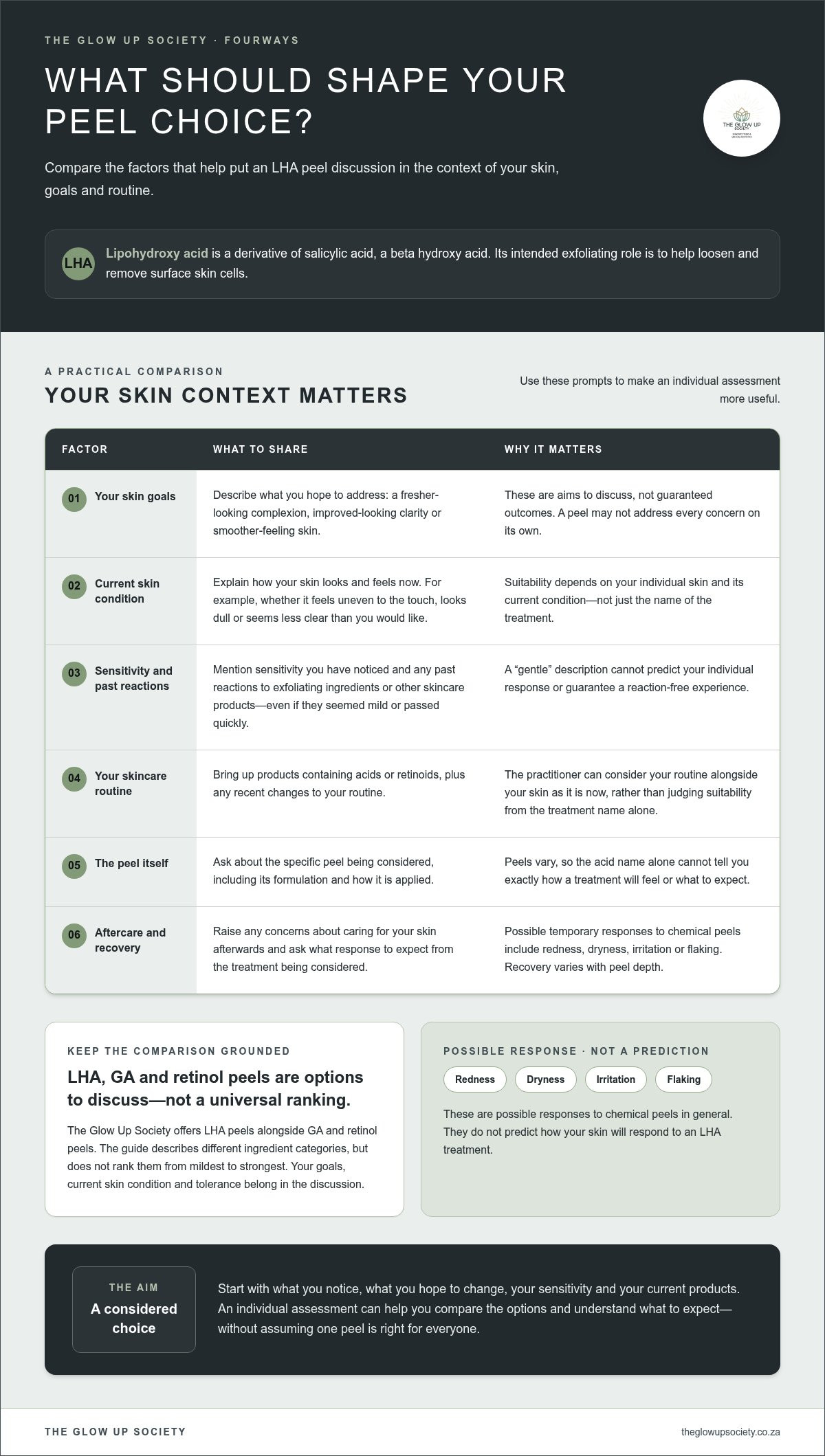
Describe what you notice and hope to change in everyday terms. For example, explain that your complexion feels uneven to the touch, looks dull or seems less clear than you’d like. Mention whether your skin tends to feel sensitive and which products you currently use. These details give the practitioner a clearer picture to consider alongside your goals.
At The Glow Up Society in Fourways, LHA peels are offered alongside GA and retinol peels. A shared goal, such as smoother-looking skin, doesn’t automatically point to the same treatment for everyone. An assessment can review your skin, explain what each peel is intended to do and help you consider which option fits your circumstances. If you’re searching for an LHA peel Fourways, start with your skin goals and an individual assessment, not the ingredient name alone.
In short: LHA means lipohydroxy acid, a derivative of salicylic acid used for exfoliation. An LHA peel may be explored for goals such as clarity and skin texture, while suitability depends on an individual skin assessment.
How an LHA peel works, and why 'gentle' does not mean suitable for everyone
An LHA peel is intended to exfoliate the skin, but the word “gentle” isn’t a personal suitability assessment. How a peel feels and how your skin responds can vary. The formulation, how it’s applied and your skin’s current condition all matter, so a general description can’t predict your individual experience.
Think of an exfoliating peel as one step in a considered skincare plan, not a guaranteed route to a particular result. Even if your goal is simply a smoother-feeling complexion, an assessment can help establish whether an LHA peel is an option to explore at this time.
What can influence whether an LHA peel is appropriate?
Suitability is best discussed in context. Your practitioner can consider what you hope to address, how your skin looks and feels, and whether you’ve reacted to exfoliating ingredients or other skincare products in the past. Mention any sensitivity you’ve noticed, even if it seemed mild or passed quickly.
Your routine is useful information too. Bring up products containing acids or retinoids, as well as recent changes to your skincare. Rather than trying to decide from an online checklist, share these details during an individual assessment. That helps the practitioner consider your skin as it is now, not just the treatment name.
What should readers know about possible reactions and recovery?
Peels can leave skin temporarily red, dry, irritated or flaky. The American Academy of Dermatology describes these as possible responses to chemical peels and notes that recovery varies with the peel’s depth. This is general guidance about chemical peels, not a prediction of how your skin will respond to an LHA treatment.
Don’t assume that a mild-sounding peel guarantees a reaction-free experience or a set recovery period. Your practitioner can explain the expected response for the treatment being considered and give aftercare guidance suited to your skin. If you have a history of sensitivity, previous reactions or concerns about caring for your skin afterwards, raise them before proceeding.
Arrive prepared by noting your main skin goal, current products and any past reactions. This keeps the discussion focused and gives you space to ask what the treatment involves, whether any changes to your routine may be advised, and what signs should prompt you to seek guidance from the clinic.
If you’re considering an LHA peel Fourways, The Glow Up Society offers LHA peels alongside GA and retinol peels. A discussion of your skin and goals can help you compare those options without assuming that one is right for everyone. Explore the clinic’s LHA peel treatment in Fourways as part of that conversation.
LHA vs GA and retinol peels: compare the treatment focus in Fourways
Choosing between LHA, GA and retinol peels isn’t about ranking them from mildest to strongest. They use different ingredient categories, and the discussion should start with your skin goals, current condition and tolerance. At The Glow Up Society in Fourways, these peel types are options to consider through an individual assessment.
| Peel type | Ingredient category | Useful discussion point |
|---|---|---|
| LHA | Lipohydroxy acid, a salicylic acid derivative | Discuss whether its exfoliating profile aligns with your goals and your skin’s current needs. |
| GA | Glycolic acid, an alpha hydroxy acid | Consider whether an alpha hydroxy acid peel is relevant to the changes you hope to address. |
| Retinol | Retinol, a vitamin A derivative | Talk through the treatment’s aims, your existing routine and your tolerance. |
How does an LHA peel differ from a GA peel?
GA means glycolic acid. It belongs to the alpha hydroxy acid (AHA) family, while LHA is related to salicylic acid, a beta hydroxy acid. These are different acid categories with different chemical properties, so the names alone don’t establish which peel is more suitable or how your skin will respond.
For your consultation, describe the result you’re hoping for and any past experience with exfoliating products. That gives the practitioner a more useful basis for discussing LHA and GA than comparing ingredient names in isolation.
How does an LHA peel differ from a retinol peel?
A retinol peel uses retinol, a vitamin A derivative, rather than an exfoliating acid such as LHA or glycolic acid. The ingredient category is different, and the treatment discussion should reflect your goals, skincare routine and how your skin tends to respond to active ingredients. There isn’t a universal hierarchy in which one peel is automatically better.
Descriptions of peel ingredients are a starting point, not a personal recommendation. Your routine, sensitivities and current skin condition can all affect what’s worth discussing, so avoid choosing solely because a peel sounds more powerful or more gentle.
If you’re comparing an LHA peel Fourways with GA or retinol, bring your main skin goal and current product routine into the conversation. The Glow Up Society offers all three peel categories, allowing the discussion to centre on your circumstances rather than a fixed ranking. A considered comparison can help you understand the options before deciding what feels appropriate to explore.
What to expect from an LHA peel appointment in Fourways
An LHA peel appointment should begin with a conversation, not assumptions about what your skin needs. The process can be understood in four broad stages: consultation, skin review, discussion of suitable options and personalised guidance. The details depend on your circumstances, so an in-person professional assessment is important before deciding whether to proceed.
What happens during the consultation?
Start by explaining your skin goals in your own words. Perhaps you’re hoping for a clearer-looking complexion or a smoother feel. Share how your skin is currently, any sensitivities you’ve noticed and the products you use regularly. Mention previous peel or skincare experiences too, including reactions or changes you found uncomfortable. These details help make the conversation relevant to you.
A skin review allows the practitioner to consider your current skin alongside those goals. The treatment discussion can then cover whether an LHA peel is an option to explore, how it compares with other peel categories and what expectations are reasonable. You don’t need to decide from a treatment description alone. Ask questions if any part of the process or advice is unclear.
To make the discussion more useful, you might note down:
- Your main skin goal and what you’d like to understand about the treatment.
- Products in your current routine, particularly exfoliating or active skincare ingredients.
- Any sensitivities, previous reactions or past treatment experiences that feel relevant.
- Questions about possible responses, aftercare and the guidance you’ll receive.
This preparation isn’t a substitute for an assessment. It simply helps you share information that can shape a thoughtful conversation. If you’re travelling to The Glow Up Society in Fourways from Sandton, Lonehill, Kyalami, Bryanston or North Riding, having your questions ready can make your visit more focused.
How can you plan around personalised aftercare?
Aftercare guidance should relate to the treatment discussed and your individual skin. Before proceeding, make sure you understand the clinic’s advice for caring for your skin afterwards, including any guidance about your existing routine. Generic online instructions about specific product changes or recovery expectations may not reflect your treatment.
After your appointment, follow the guidance provided by the clinic. If you’re unsure how an instruction applies to your usual products or routine, ask the treating clinic to clarify it rather than improvising. Personalised advice gives you a clearer basis for caring for your skin and knowing what to do if you have a concern.
If you’re considering an LHA peel Fourways appointment, arrange a consultation to discuss your skin goals and the peel options at The Glow Up Society.
Choosing an LHA peel in Fourways: explore your next step at The Glow Up Society
A considered peel choice starts with three things: the skin goal you want to discuss, an individual assessment and a clear comparison of your options. Ingredient names can help you understand broad differences between treatments, but they can’t determine which one suits your skin. Your current condition, sensitivities and skincare routine all belong in the conversation.
Why consider an individualised peel discussion?
The Glow Up Society offers LHA peels in Fourways, alongside GA and retinol peels. That gives you more than one category to discuss, without making any option automatically better than another. You might be interested in an LHA peel because you want to talk about skin clarity or texture. A practitioner can consider that goal alongside your skin’s current needs and explain how the available peel types differ.
Before your discussion, be specific about what you hope to address. “I’d like my skin to feel smoother” or “I want to understand options for a clearer-looking complexion” gives the conversation a useful focus. You can also mention products you use, past treatment experiences and any sensitivities. This keeps the discussion grounded in your circumstances rather than general claims about an ingredient.
Take time to understand the reasoning behind the option being discussed. Ask what the peel is intended to address, what responses may be possible and what personalised guidance will follow. An informed decision doesn’t require you to choose a treatment on the spot. It means you have a clearer picture of the options and how they relate to your goals.
How can nearby clients take the next step?
If you live in Fourways or nearby Sandton, Lonehill, Kyalami, Bryanston or North Riding, The Glow Up Society offers a local setting to explore an LHA peel. The clinic’s GA and retinol peels can also form part of a considered comparison. Your next step can be a conversation about what you’re hoping to achieve and what your skin may need.
Before arranging your visit, jot down your main goal, the products in your routine and any questions about suitability or aftercare. This simple preparation can help you make the most of an individual discussion. It also makes it easier to compare treatment aims without relying on broad labels such as “strong” or “gentle”.
If an LHA peel Fourways treatment is on your mind, explore the LHA peel service at The Glow Up Society and arrange a discussion about your skin goals. Take the process at your own pace, with clear information to help you decide whether this option feels right to explore.
Take a thoughtful next step for your skin
You don’t need to settle on a peel simply because its name sounds familiar or its description seems appealing. Consider what you’d like to focus on, what matters for your comfort and what you want to understand before deciding. A clear conversation can turn that reflection into a practical next step, without pressure to choose before you feel ready.
If you’re exploring an LHA peel Fourways, The Glow Up Society can help you discuss the treatment in the context of your skin goals. You can also compare an LHA peel with the clinic’s GA and retinol peel options, then take time to consider what feels appropriate for you.
Explore LHA peel treatments at The Glow Up Society and take your next step with considered guidance.
Frequently Asked Questions
What is an LHA peel?
An LHA peel is a skin exfoliation treatment using lipohydroxy acid, an ingredient related to salicylic acid. It is used to encourage the removal of surface skin cells. Formulation and treatment approach can differ, so the ingredient name alone won’t tell you how a particular peel will feel or what it may achieve. Discuss the specific treatment and your expectations during an individual assessment.
Is an LHA peel suitable for sensitive skin?
Suitability for sensitive skin needs an individual assessment rather than a decision based on the peel’s name. Before discussing treatment, note what tends to trigger sensitivity, such as particular skincare products or previous exfoliation. Share any past reactions, even if they settled quickly. This gives the practitioner useful context when considering your skin and whether an LHA peel is appropriate to explore.
Can an LHA peel help with congested or oily-looking skin?
An LHA peel may be one option to discuss if your goals include a clearer-looking complexion, but it shouldn’t be treated as a guaranteed solution for congestion or oiliness. Describe what you mean by “congested”, such as how your skin looks or feels, and mention products you already use. A practitioner can assess your skin and explain whether this peel fits your concern or whether another approach is worth discussing.
How is an LHA peel different from a GA peel?
LHA is related to salicylic acid, while GA stands for glycolic acid, an alpha hydroxy acid. They are distinct ingredient categories, not a simple scale from weak to strong. If you’re comparing them, consider your particular skin goal and how your skin has responded to active skincare before. The practitioner can explain the available options in the context of your assessment, rather than relying on ingredient names alone.
How is an LHA peel different from a retinol peel?
An LHA peel uses an exfoliating acid, while a retinol peel is based on retinol, a vitamin A derivative. The categories differ, so compare them in light of what you hope to address and your existing skincare routine. For example, tell the practitioner if you already use retinol or other active ingredients. That context can inform a discussion about which treatment option may suit your circumstances.
What should I expect after an LHA peel?
Your experience after an LHA peel can vary, so don’t assume a fixed recovery period or a particular reaction. Before treatment, ask what responses may be expected with the specific peel being discussed and what clinic guidance you’ll receive afterwards. Make sure you understand how that advice applies to your usual skincare routine. If you have a concern after your appointment, follow the clinic’s instructions for seeking guidance.
Where can I have an LHA peel in Fourways?
The Glow Up Society offers LHA peels at its medical aesthetics and skincare clinic in Fourways. GA and retinol peels are also available to discuss in relation to your skin goals and assessment. The clinic serves clients from nearby communities including Sandton, Lonehill, Kyalami, Bryanston and North Riding. If you’re considering an LHA peel Fourways treatment, explore the service and arrange a discussion about your next step.