Skincare
Laser Lipo vs Surgical Liposuction: Safety, Risks and Results
· The Glow Up Society
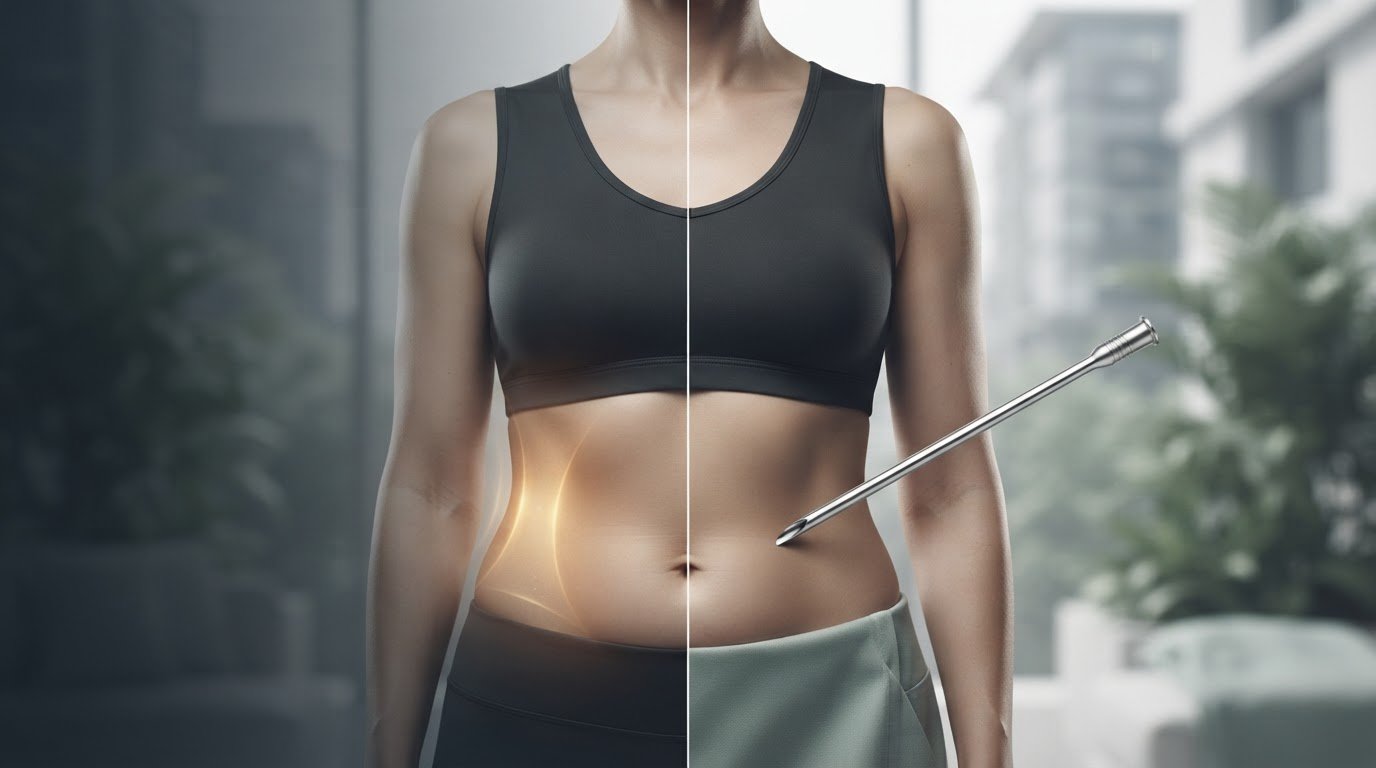
A smoother shape and a lower number on the scales aren’t the same outcome. In the laser lipo vs surgical liposuction comparison, laser-assisted treatment may offer mild skin tightening, while both approaches are used to contour selected areas rather than achieve major weight loss. A litre of fat weighs about 900 g, so removing fat can change your outline without producing a dramatic shift in body weight.
It’s understandable to weigh potential benefits against recovery and safety. The right comparison depends on what you hope to change: localised fat, skin appearance or overall weight.
This guide explains how the procedures differ, what their potential benefits and risks mean in practice, and why body contouring isn’t a substitute for weight management. It also explains where non-surgical support may fit if your goal is broader than reshaping one area.
Key Takeaways
- Match the approach to your goal: targeted contouring and overall weight management are different aims.
- Compare the recovery involved as well as the treatment method when considering what may suit your routine.
- Understand how heat used in laser-assisted procedures can bring additional risks, including burns and uneven contours.
- Look beyond changes on the scales when assessing body-contouring results; the shape of the treated area matters too.
Table of Contents
- Are There Any Benefits to Laser-Assisted Lipo?
- Is laser lipo safer than traditional liposuction?
- Risks, including heat-related burns and scarring
- Weight loss versus body contouring
- The Glow Up Society: GA Peels
Are There Any Benefits to Laser-Assisted Lipo?
Laser-assisted liposuction delivers energy beneath the skin to liquefy fat before suction removes it through a cannula. The heat may also mildly tighten skin by prompting contraction and collagen remodelling. Conventional liposuction removes fat mechanically, without an internal heat source. These procedures are generally intended to alter body contours rather than serve as weight-loss treatments.
Evidence includes a sham-controlled trial in which participants in the treatment group demonstrated an overall reduction in total circumference across all three sites of -3.51 in. (P < 0.001) compared with control subjects who revealed a -0.684 reduction (P < 0.071745), according to Authors of the sham-controlled trial. The result describes circumference change, not a guaranteed outcome for every patient.
Authors of the sham-controlled trial enrolled 67 overweight volunteers in a low-level laser therapy study. Separately, Authors of the review examined 88 studies of laser and other technology-assisted liposuction. A randomised split-abdomen study by Authors of the randomised split-abdomen study included ten women. These findings concern different techniques and study groups, so they don’t establish that every laser procedure tightens skin or removes the same amount of fat.
Results aren’t automatically permanent: maintaining a stable weight can help preserve contour, but remaining fat can still change. The amount removed varies according to the treatment area and planned contour. Traditional liposuction can reshape areas such as the abdomen, flanks, thighs and arms, while laser-assisted liposuction may be considered for a targeted area. Suitability generally depends on localised fat and skin able to retract; marked skin laxity can affect the approach.
In South Africa, costs depend on the treatment area, technique, anaesthesia and facility, with pricing provided after a quote request. At consultation, review the practitioner’s qualifications and clinic accreditation documents, and discuss the procedure and its risks.
If you have substantial loose or sagging skin, surgical skin removal may be more suitable than mild laser tightening. Argo Plasma is a separate term used in skin-tightening discussions, and evidence about laser lipo alone doesn’t establish its effects. Collagen response and skin laxity are important when weighing any tightening technique.
Is laser lipo safer than traditional liposuction?
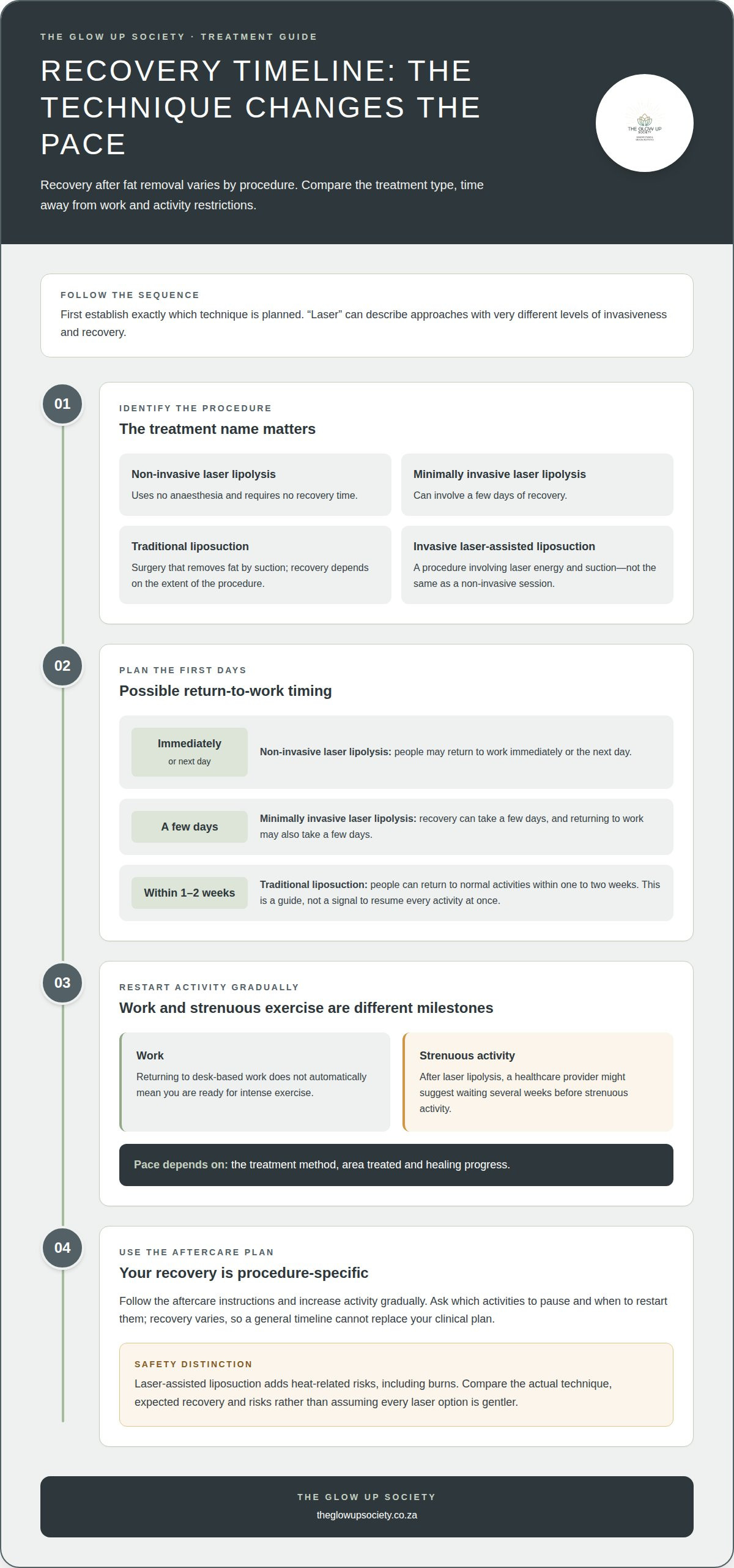
Safety depends on the technique, treatment area and anaesthesia, not simply on the word “laser”. When comparing laser lipo vs surgical liposuction, distinguish non-invasive treatment from procedures involving an incision. Non-invasive laser lipolysis uses no anaesthesia and requires no recovery time. Traditional liposuction is surgery that removes fat by suction, with recovery depending on the procedure’s extent.
After traditional liposuction, people can return to normal activities within one to two weeks. This is a guide, not a signal to resume every activity at once. Daily tasks and strenuous exercise place different demands on healing. Follow your procedure’s aftercare instructions and increase activity gradually.
Recovery after laser treatment varies by type. After non-invasive laser lipolysis, people may return to work immediately or the next day. Minimally invasive laser lipolysis can involve a few days of recovery, and returning to work may also take a few days. These approaches aren’t interchangeable just because both use laser energy.
After laser lipolysis, a healthcare provider might suggest waiting several weeks before strenuous activity. Returning to desk-based work and resuming intense exercise are separate decisions. The treatment method, area treated and healing progress all affect the pace. A clinical aftercare plan can clarify which activities to pause and when to restart them.
In a laser lipo vs surgical liposuction comparison, non-invasive treatment avoids anaesthesia and surgical recovery, while invasive laser-assisted liposuction still involves a procedure. Traditional liposuction also carries surgical risks; laser-assisted liposuction adds heat-related risks, including burns. Compare the actual technique, expected recovery and risks rather than assuming every laser option is gentler.
At consultation, ask for the procedure name, whether it is invasive, the expected time away from work, and activity restrictions. These details help distinguish a non-invasive session from surgical fat removal. If you’re exploring a separate skin-care goal, you can view aesthetic treatment options as another part of your personal care.
Risks, including heat-related burns and scarring
Laser-assisted liposuction adds heat to a procedure that already removes fat. The technique matters because heat can affect both fat and surrounding tissue.
Heat-Related Risks of Laser Lipo
Laser energy heats fat before suction, and uneven heat distribution can result in uneven fat liquefaction. This may leave lumpiness, waviness or irregular contours instead of a smooth outline. Heat may also cause burns, prolonged swelling and, rarely, tissue damage. These are specific considerations for laser-assisted procedures.
Skin tightening is a possible effect of heat, but the same energy needs careful control. The device, energy level and operator’s experience can influence the outcome. A plastic surgeon can explain how the chosen technique applies to your treatment area and how heat is managed during the procedure.
Ask how the plan balances fat removal with the skin’s response. Aiming for mild tightening, for example, doesn’t eliminate the possibility of burns or uneven contours. Understanding both potential effects helps you weigh benefits against risks.
Scarring and Other Risks
Heat-related scarring is an added risk of laser-assisted liposuction because laser energy affects fat and collagen beneath the skin. The procedure also involves an incision for the laser fibre and suction. Scarring can therefore relate to both the incision and heat exposure, not just skin tightening.
Swelling may last longer after laser-assisted liposuction, and uneven fat liquefaction can leave visible contour irregularities. Bruising is sometimes described as less likely because the laser liquefies fat before suction, but this possibility doesn’t rule out other complications. The exact technique matters when comparing risks.
Before an invasive procedure, discuss its specific risks, the planned treatment area and how complications would be managed. Ask the plastic surgeon where the incision will be placed and what could affect scarring or contour. Clear answers support a considered decision, without assuming that laser assistance makes liposuction risk-free.
Weight loss versus body contouring
Liposuction is designed to reshape selected areas, not produce major weight loss. Comparing laser lipo vs surgical liposuction is most useful when your aim is local contouring. Both approaches target fat in a treated area, while weight management addresses broader changes in body weight.
The difference is clear in this example: a 70 kg woman having two litres of fat removed by 360 liposuction would lose under 2 kg on the scales. That modest scale change can sit alongside a visible difference in the treated area. Your weight alone, therefore, doesn’t show the full result of body contouring.
Consider your main goal before comparing procedures. If you want to reshape a specific area, discuss the intended contour, planned fat removal and possible complications with the surgeon. If you want a broader change in weight, liposuction isn’t a substitute for weight management. These goals call for different plans.
You can also track progress using two separate measures: changes in body weight and changes in the treated area’s shape. A stable scale reading, for example, doesn’t necessarily mean the outline is unchanged after fat removal. Conversely, losing weight doesn’t guarantee the particular contour you want. Keeping your goal clear makes the comparison more useful.
For a broader weight-related goal, medical weight management may be more relevant than a contouring procedure. The choice between laser lipo vs surgical liposuction addresses local shaping, not every aspect of weight management. The Glow Up Society offers medical weight management for people seeking support with that wider goal.
The Glow Up Society: GA Peels
The Glow Up Society offers GA Peels for a different aesthetic goal: caring for skin, not removing body fat or reshaping areas through liposuction. If your priority is skin rather than body contouring, a peel may be more relevant. LHA Peels, Retinol Peels and Optiphi Microneedling are also available for skincare-focused goals, rather than fat reduction.
Keep the distinction clear: a skin treatment doesn’t replace surgical or laser-assisted liposuction, and liposuction doesn’t address every skin concern. First consider what you want to change, then choose a consultation focused on that goal. If you’re interested in a GA Peel or another skin treatment, contact The Glow Up Society to discuss your options.
Choose a next step that fits your goal
When comparing laser lipo vs surgical liposuction, start by deciding whether you’re considering body contouring or looking for skin-focused care. Keeping those goals separate can make your next conversation more useful and help you explore options that match what you want to address.
For skin care in Fourways, The Glow Up Society offers GA Peels, LHA Peels and Retinol Peels. These are skin treatments, not alternatives to fat removal. A conversation about your skin goals can help identify a relevant treatment direction, whether you’re in Fourways, Sandton, Lonehill, Kyalami, Bryanston or North Riding.
Take the time you need to identify your priority and discuss it clearly. For skin-focused care, contact The Glow Up Society to explore the available options. A thoughtful next step starts with choosing the goal that feels right for you.
Frequently Asked Questions
Final Thoughts: Why Avoid Laser Fat Removal?
Laser fat removal may not suit you if your goal is substantial weight loss or treatment for marked loose skin. Someone seeking to reduce overall weight, for example, needs a different approach from someone focused on a small area. Invasive laser-assisted liposuction also uses heat, which carries risks such as burns and uneven contours. Match the method to your goal and comfort with risk.
Incisions compared: are laser lipo incisions really smaller?
Laser-assisted liposuction uses an incision measuring 2-3 mm, but that figure alone doesn’t prove it is smaller than every traditional liposuction incision. The comparison also depends on the procedure and how fat is removed. Non-invasive laser lipolysis doesn’t involve an incision, so distinguish it from laser-assisted surgery before comparing incision size or recovery expectations.
What is laser lipolysis?
Laser lipolysis describes the use of laser energy to affect fat cells. It can refer to non-invasive treatments delivered externally or minimally invasive procedures using a laser beneath the skin. In laser-assisted liposuction, the laser liquefies fat before suction removes it. Ask which form is meant, because the term alone doesn’t tell you whether an incision or fat suction is involved.
What is the difference between laser lipo and surgical liposuction?
Laser lipo uses laser energy to affect fat, while traditional surgical liposuction removes fat mechanically with a cannula and suction. Laser-assisted liposuction combines laser energy with suction, so it remains a surgical procedure and isn’t the same as non-invasive laser treatment. Clarify the exact method, especially when a description says “laser lipo” without explaining whether it involves an incision.
How effective is laser lipo compared with surgical liposuction for fat removal?
Effectiveness depends on what is measured: fat removed, change in circumference or skin response. These are different outcomes, so a smaller waist measurement doesn’t directly show how much fat was suctioned. Device choice, energy settings and operator experience can also influence laser-assisted results. For a useful comparison, focus on the intended treatment area and outcome, not a general promise of greater effectiveness.
What are the risks and side effects of laser lipo versus surgical liposuction?
Laser-assisted liposuction can cause burns, prolonged swelling and, rarely, tissue damage. Uneven heating may also leave lumpy or wavy contours. Traditional liposuction doesn’t use an internal heat source, but both surgical approaches involve suction and an incision. Ask which specific technique is planned and how its risks apply to the treatment area, rather than assuming laser assistance removes the risks of surgery.