Skincare
Laser Hair Removal or Waxing: Which Suits Your Skin
· The Glow Up Society
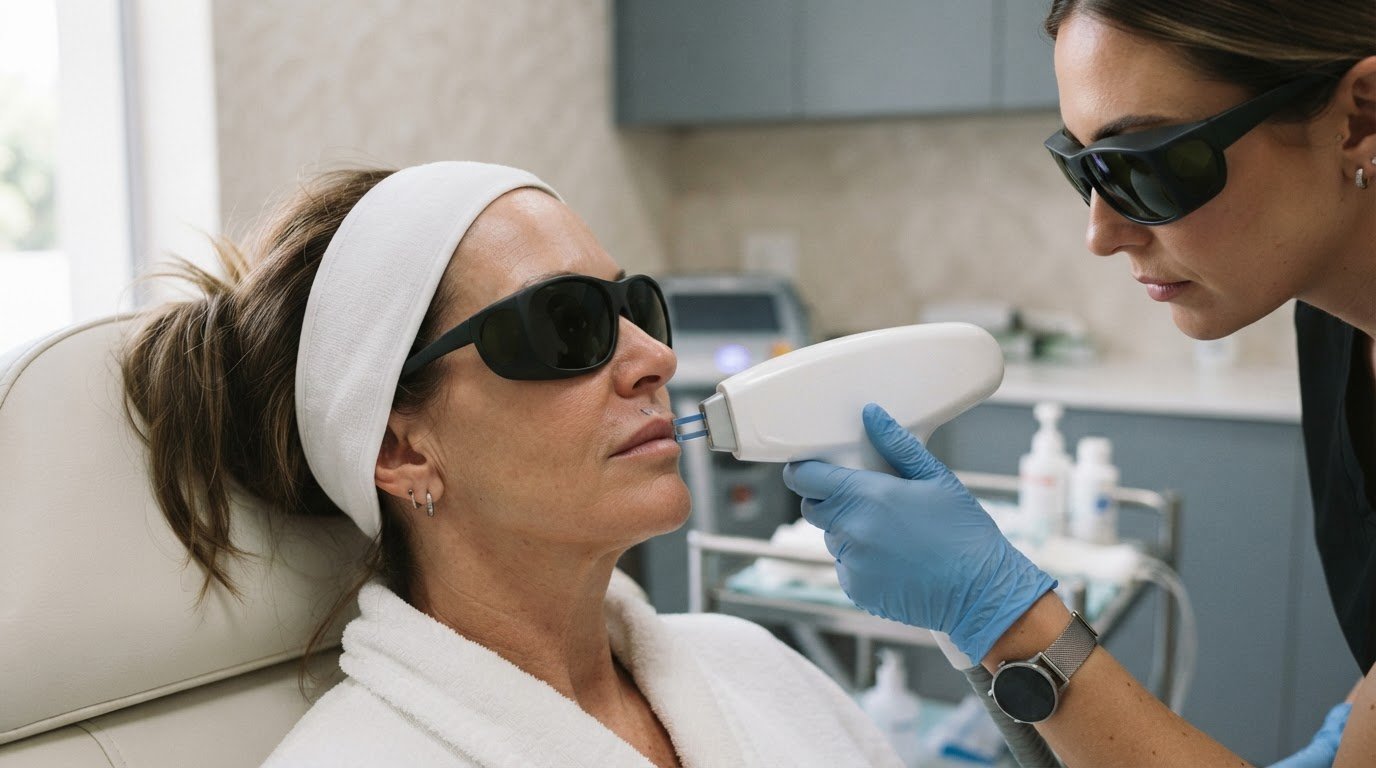
The gentler option depends on your skin and the area you want treated. With laser hair removal vs waxing, waxing removes visible hair temporarily, while laser aims for longer-term hair reduction over a course of treatments. Your hair colour, skin tone, comfort and preferred routine all matter.
It’s natural to weigh convenience against how your skin may feel afterwards, particularly when choosing treatment for the face or another sensitive area. Laser targets pigment in the hair, so very light hair may respond less effectively. Skin tone can also affect which laser technology is suitable.
This guide explains how each method works, how hair colour and skin tone can affect laser suitability, and what to consider for sensitive areas. Use the comparison to weigh up which approach fits your needs and routine.
Key Takeaways
- Plan ahead for laser: avoid waxing or plucking the treatment area for six weeks before a session.
- Hair colour matters because laser targets pigment; blonde, grey and red hair may respond less effectively.
- Consider how your skin responds and the area being treated when weighing temporary waxing effects against laser treatment.
- Use the comparison to decide which method best suits your skin, hair and preferred maintenance routine.
Table of Contents
- First things first: What is laser hair removal and how does it work?
- How laser hair removal works
- Laser suitability for different hair colours and skin tones
- What are the risks and side effects of laser hair removal and waxing?
- The Glow Up Society: Laser Hair Removal
First things first: What is laser hair removal and how does it work?
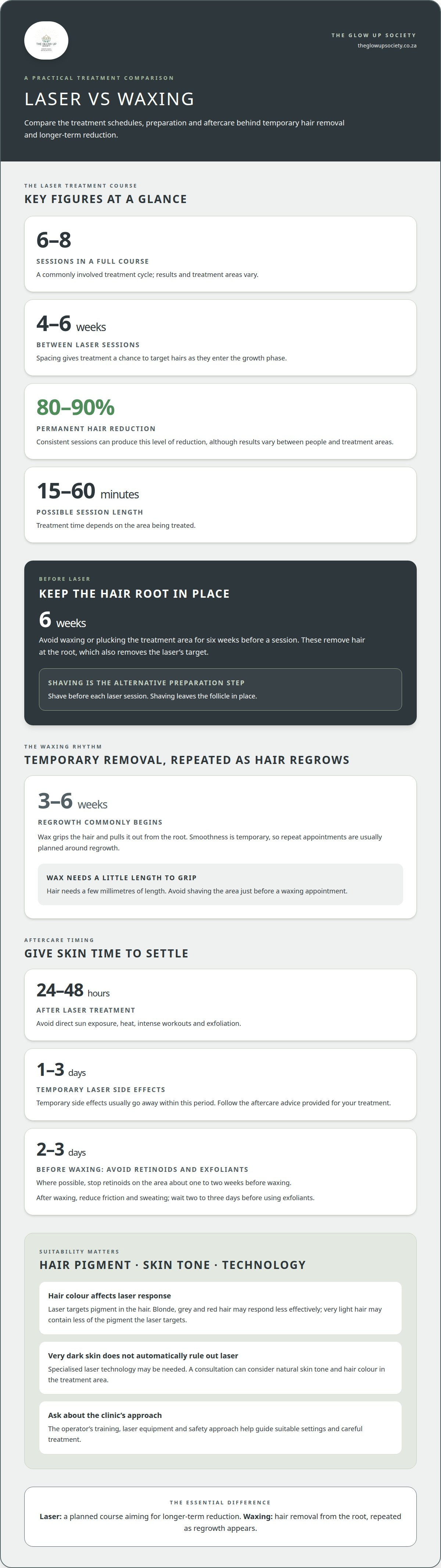
Laser hair removal uses concentrated light to target pigment in hair follicles and reduce future growth. A full treatment cycle commonly involves six to eight sessions, spaced four to six weeks apart. Consistent sessions can produce 80-90% permanent hair reduction, although results vary between people and treatment areas.
Preparation matters. Avoid waxing or plucking the area for six weeks before laser treatment, because removing hair at the root removes the laser’s target. Shave before each session instead. If you usually wax your underarms, for example, pause waxing well before your first appointment.
Session length depends on the area: treatments may take 15-60 minutes. Autumn and winter can be practical timing in South Africa, when skin is usually less exposed to sunlight. After the initial course, maintenance may be needed months or even years later if hair regrows.
For South African clinic choice, ask how the operator’s training, laser equipment and safety approach relate to your skin and hair. These factors help guide suitable settings and careful treatment; clinic qualifications and safety protocols should inform your decision.
After laser treatment, avoid direct sun exposure, heat, intense workouts and exfoliation for 24-48 hours. After waxing, avoid friction, sweating and heavy exfoliation for a day or two; wait 2-3 days before using exfoliants. Follow the aftercare advice for the method you choose.
| Option | Schedule | Hair removal approach | Aftercare focus |
|---|---|---|---|
| Laser | Six to eight sessions, four to six weeks apart | Targets follicles for longer-term reduction | Limit sun, heat and exfoliation |
| Waxing | Repeat as regrowth appears | Removes hair from the root | Reduce friction and sweating |
Choose laser for a planned course of longer-term reduction, or waxing for hair removal without a laser cycle.
How laser hair removal works
Laser light is absorbed by pigment in the hair and converted into heat. This affects the follicle and limits its ability to produce hair. Because the treatment targets hair in its growth phase, follicles respond at different times. Sessions are therefore spaced weeks apart rather than completed in one visit.
Laser aims for lasting hair reduction, but it cannot guarantee that every follicle will stop producing hair permanently. Regrowth may be finer or less dense after treatment. Blonde, grey and red hair can respond less effectively because it contains less of the pigment targeted by laser. Hair colour is an important factor when considering this method.
Waxing works differently: wax grips the hair, then pulls it out from the root. Hair needs a few millimetres of length for the wax to grip, so shaving just beforehand can make removal harder. Short underarm stubble, for example, may be too short for the wax to hold.
Waxing removes hair rather than targeting the follicle with light, so it does not provide the same approach to longer-term reduction. The smoothness is temporary, and regrowth commonly begins within three to six weeks. Timing varies by person and treatment area, so repeat appointments are usually planned around regrowth.
Consider the routine involved with each method. Laser requires a course of appointments, spaced to treat follicles as they enter the growth phase. Waxing removes hair in an appointment but needs repeating as it grows back. When comparing the two, consider whether you prefer a planned course or periodic appointments, and whether your hair colour is suitable for laser.
Laser suitability for different hair colours and skin tones
Laser suitability depends partly on pigment in the hair and skin. Because the light targets hair pigment, blonde, grey and red hair can respond less effectively. Laser treatment may be less effective on very light hair because it contains less pigment. Hair colour is therefore an important consideration when choosing a hair removal method.
Skin tone matters too. Very dark skin does not automatically rule out laser treatment, but specialised laser technology may be needed. The technology should account for the skin and hair being treated. A consultation can consider your natural skin tone and the colour of the hair in the treatment area before planning appointments.
Before laser treatment, avoid waxing or plucking the area for six weeks. These methods remove hair at the root, while laser targets pigment in the follicle. Shaving leaves the follicle in place, making it the alternative preparation step. Sessions are spaced weeks apart so treatment can target hair as it enters its growth phase.
Waxing preparation is different. Hair needs a few millimetres of length for the wax to grip, so avoid shaving the area just before an appointment. Retinoids and exfoliants also need consideration: where possible, stop retinoids on the area about one to two weeks beforehand, and avoid retinoids or exfoliants for two to three days before waxing.
These preparation steps can help you decide which method fits your skin and routine. Laser may be less effective on blonde, grey or red hair, while specialised laser options may be relevant for very dark skin. For waxing, consider whether you can allow enough regrowth for the wax to grip. Weigh your hair pigment, skin tone and preferred appointment pattern.
What are the risks and side effects of laser hair removal and waxing?
Both methods can leave skin temporarily sensitive. After laser hair removal, temporary side effects usually go away within 1-3 days. The Canadian Medical Association notes that laser hair removal carries a risk of complications, even when performed by a medical doctor. This makes treatment safety and appropriate aftercare important considerations.
For the first 24-48 hours after laser treatment, avoid direct sun exposure, heat, intense workouts and exfoliation. For example, postpone a hot bath or vigorous gym session during this period. These steps help limit extra irritation while the treated skin settles. Follow the aftercare instructions provided for your treatment area.
Waxing can cause redness and sensitivity for 24-48 hours. Friction, sweating and heavy exfoliation may add irritation, so avoid them for a day or two after an appointment. Leave exfoliants aside for 2-3 days after waxing. If you wax a sensitive area, plan clothing and activities around this short recovery period.
Medication history matters as well. Avoid waxing for six months after completing isotretinoin treatment for acne. Isotretinoin can make skin more delicate, and waxing during this period may increase the chance of skin injury. Keep this timing in mind if you are planning waxing after acne treatment.
For either method, note how your skin responds after each treatment. Redness or sensitivity following waxing commonly settles within 24-48 hours, while temporary laser effects usually resolve within 1-3 days. If you’re weighing options for a delicate area, consider the likely short-term skin response alongside your preferred hair-removal routine.
Choose aftercare that suits the method: limit sun, heat and exfoliation after laser, and reduce friction and sweating after waxing. To explore a treatment approach tailored to your hair-removal goals, book laser hair removal with The Glow Up Society.
The Glow Up Society: Laser Hair Removal
The Glow Up Society offers laser hair removal for those seeking longer-term hair reduction, as well as waxing and tinting for those who prefer hair removal without laser. Hair colour, skin tone, treatment area and preferred maintenance routine can all help guide your choice.
Consider laser when you’re comfortable with spaced sessions and want to reduce regrowth over time. Waxing may suit you better if you prefer a familiar, repeatable removal method. If you’re still weighing the options, contact The Glow Up Society to discuss laser hair removal or waxing and the approach that best fits your goals.
Choose the routine that feels right for you
Your next step is to match hair removal to your comfort, skin and everyday routine. The laser hair removal vs waxing choice is not simply about which method lasts longer; consider which approach feels manageable for your treatment area and the appointments involved. Think about what matters most, then discuss your preferences and treatment goals.
The Glow Up Society offers laser hair removal and waxing and tinting. For separate skincare goals, treatments also include GA peels, LHA peels and retinol peels. Each option has its own purpose, so focus your hair-removal decision on the method that suits your needs.
For a calm next step, contact The Glow Up Society to discuss your hair-removal preferences. A considered routine can begin with a simple conversation.
Frequently Asked Questions
Is waxing or lasers better?
Neither method is right for everyone; the choice depends on your hair, skin and preferred routine. Laser may suit you if your hair colour responds to pigment-targeting treatment and you are comfortable with a planned course. Waxing may suit you if you prefer individual appointments and temporary hair removal. For example, someone with blonde hair may find waxing more practical than relying on laser reduction.
The final verdict: Which to choose?
Choose based on the result and routine you want. If reducing regrowth over time is your priority, consider whether your hair colour and skin tone are suitable for laser. If you want hair removed without a course of treatments, waxing is a straightforward alternative. Think about the treatment area, your comfort and how often you want to maintain smoothness.
What hurts more, Brazilian wax or laser?
There is no reliable answer that applies to everyone: the sensations differ, and personal sensitivity varies. A Brazilian wax pulls hair from the root, while laser delivers pulses of light to the treatment area. Your experience depends on the area and your individual sensitivity. If comfort is a concern, discuss what to expect for that treatment area before deciding.
What is waxing and how does it work?
Waxing involves applying wax to the area so it grips the hair, then pulling it away. Because the hair is removed from the root, the skin is temporarily smooth while new growth develops. For example, a leg wax covers a broad area, while facial waxing focuses on a smaller one.
How does laser hair removal compare with waxing in effectiveness and results?
Laser aims for longer-term hair reduction over a course of treatments, while waxing removes visible hair temporarily. Waxing regrowth commonly begins within three to six weeks. Laser can be less effective on blonde, grey or red hair because it targets pigment, so hair colour affects suitability. The laser hair removal vs waxing decision comes down to whether you prioritise longer-term reduction or periodic removal.
How many laser hair removal sessions are needed, and how often?
A typical course involves six to eight laser sessions, spaced four to six weeks apart. The treatment plan can vary with the area and hair growth pattern. Treating a smaller area, such as the upper lip, takes less time during an appointment than treating a larger area, although both require a planned course.