Skincare
How RF and Microneedling Compare for Skin Tightening
· The Glow Up Society
More heat doesn’t automatically mean a better skin-tightening treatment. In the choice between RF body contouring and microneedling for skin tightening, the key difference is how each stimulates renewal: radio frequency warms the skin’s deeper layer, whilst standard microneedling creates tiny channels that prompt collagen production without heat. RF can also support body contouring by addressing skin laxity, but it doesn’t work by reaching deeper fat layers.
It’s understandable to want a treatment that suits both your skin goals and the area you’d like to address. The right option depends on whether you’re focused on firmness, texture, body-area skin laxity or a combination of concerns.
This guide explains how RF and microneedling encourage collagen and elastin, how their approaches differ, and when RF may be relevant for body contouring. You’ll also learn how results develop and how long they may last, so you can consider the options with a clearer sense of what each is designed to address.
Key Takeaways
- Match the treatment to your goal: facial texture and firmness call for a different focus from skin laxity across a body area.
- Understand how each approach encourages skin renewal before deciding which treatment better suits your priorities.
- Allow time for collagen-related changes to develop, and consider how skincare habits can influence how long results may last.
- Think of RF body contouring as support for skin firmness, not a method for removing deeper fat.
Table of Contents
- What is radio frequency (RF) skin tightening?
- Collagen and elastin stimulation
- How long results may last
- RF skin tightening for body contouring
- The Glow Up Society: Optiphi Microneedling
What is radio frequency (RF) skin tightening?
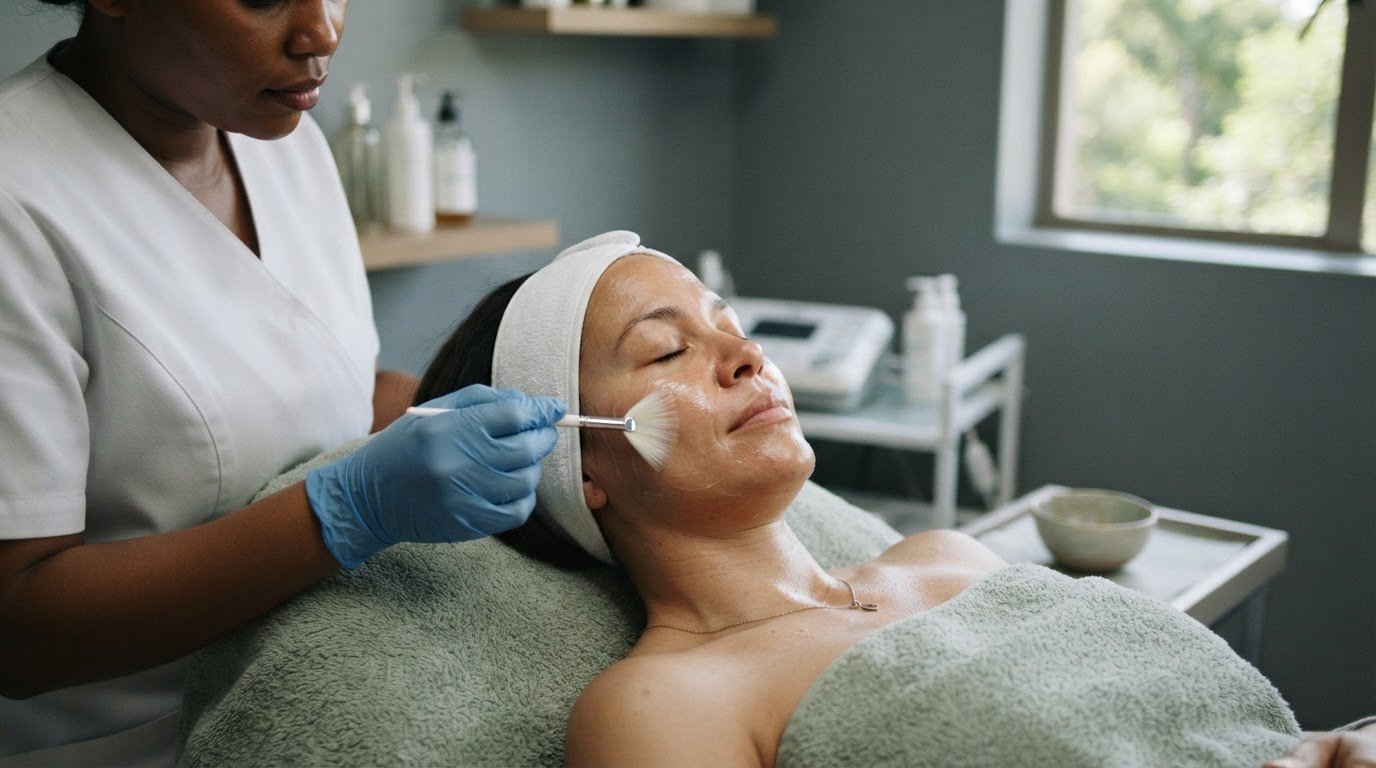
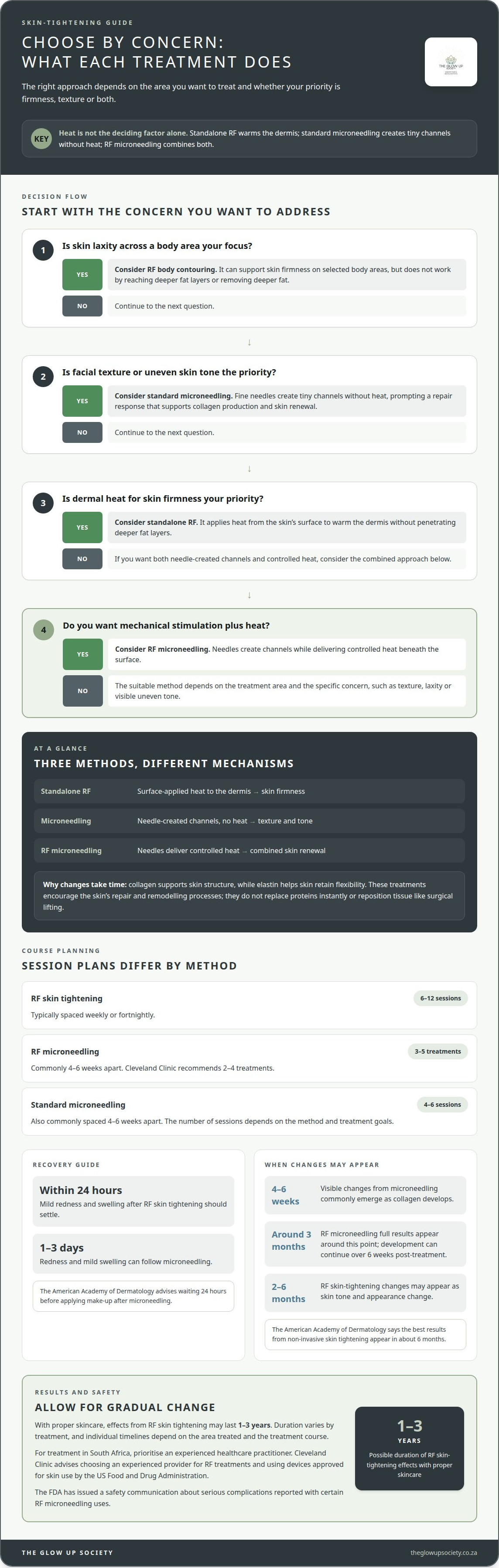
Standalone RF warms the dermis to support firmness, while microneedling uses fine needles to create tiny channels. RF microneedling combines both methods, delivering heat through the needles.
Treatment sessions and spacing
Session plans differ by method. A typical course for RF skin tightening is 6 to 12 sessions, spaced weekly or fortnightly. RF microneedling commonly involves 3-5 treatments, 4 to 6 weeks apart; Cleveland Clinic recommends 2 to 4. Standard microneedling may involve 4 to 6 sessions, also 4 to 6 weeks apart. The number depends on the modality and treatment goals.
Treatment depth and skin concerns
Standalone RF heats the dermis from the skin’s surface without penetrating deeper fat layers. It is generally used as a skin-focused approach rather than being framed as a fat-removal treatment. Standard microneedling creates micro-channels without heat, encouraging skin renewal and helping address texture and uneven skin tone.
RF microneedling combines these approaches: needles create channels while delivering controlled heat beneath the surface. This differs from standalone RF, which applies heat without needles, and standard microneedling, which uses no heat. The right depth and method depend on the area and concerns, such as facial texture, laxity or visible causes of uneven tone.
Treatment areas, recovery and aftercare
Facial treatments can target facial skin, while RF body contouring is used on selected body areas. Microneedling may also be performed on selected areas beyond the face. Mild redness and swelling after RF skin tightening should settle within 24 hours; microneedling can cause redness and mild swelling for 1 to 3 days. The American Academy of Dermatology advises waiting 24 hours before applying make-up after microneedling.
| Option | Heat and depth | Main focus |
|---|---|---|
| Standalone RF | Surface-applied heat to the dermis | Skin firmness |
| Microneedling | Needle-created channels, no heat | Texture and tone |
| RF microneedling | Needles deliver controlled heat | Combined skin renewal |
For South African treatment, prioritise an experienced healthcare practitioner. Cleveland Clinic advises choosing an experienced provider for RF treatments and using devices approved for skin use by the US Food and Drug Administration. The FDA issued a safety communication on 15 October 2025 about serious complications reported with certain RF microneedling uses.
Choose according to your treatment area and whether your priority is firmness, texture or both; combining methods depends on those goals.
Collagen and elastin stimulation
Collagen and elastin help give skin structure and flexibility. From the mid-20s onwards, the body produces less collagen, so skin can gradually lose some firmness. Treatments that stimulate renewal work differently from surgical lifting: they encourage the skin’s own repair processes rather than repositioning tissue. Their purpose is to support gradual changes, not to create an immediate surgical effect.
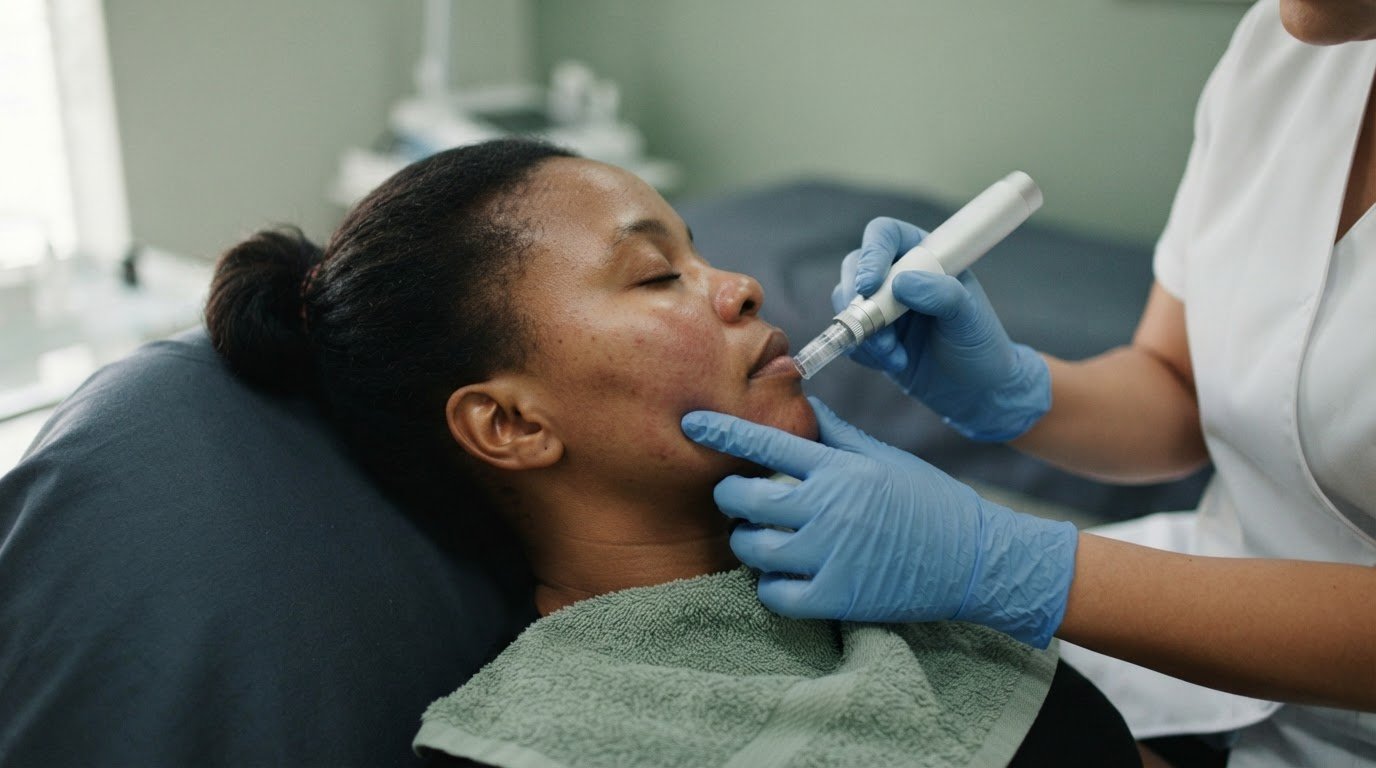
Standard microneedling creates tiny channels at the skin’s surface. This controlled process prompts a repair response that supports collagen production. As the skin remodels, texture and firmness may change progressively. The treatment does not use heat, distinguishing it from radio frequency approaches. It may suit concerns such as uneven texture or early signs of laxity, rather than deeper body-contouring goals.
RF skin tightening uses heat to stimulate collagen remodelling in the dermis. As the tissue responds, new collagen develops over time; changes can take up to 12 weeks as collagen rebuilds. RF microneedling combines needle-created channels with controlled heat delivered through the needles. That pairing addresses the skin through both mechanical stimulation and thermal energy, unlike either standalone method.
Collagen and elastin contribute different qualities: collagen supports structure, while elastin helps skin retain flexibility. Treatments encourage renewal, but they don’t replace these proteins instantly. For example, facial skin may gradually look firmer as remodelling progresses, while texture changes follow the skin’s repair response. The area treated, treatment depth and individual skin concern all shape the approach discussed during a consultation.
Choose by matching the concern to the mechanism. Microneedling focuses on channels and collagen stimulation; RF adds dermal heat for firmness. RF microneedling combines both, while surgical procedures work differently and involve repositioning tissue. If you’re weighing options for facial skin, explore tailored skin treatment options as part of a considered plan.
How long results may last
Timing differs because radiofrequency and microneedling prompt gradual changes, not instant collagen replacement. With microneedling, visible changes commonly emerge within 4 to 6 weeks as collagen develops. RF skin-tightening changes may appear within two to six months as skin tone and appearance change. The American Academy of Dermatology says the best results from non-invasive skin tightening appear in about six months. These milestones describe developing results, rather than an immediate final effect.
RF microneedling also follows a gradual timeline. Its full results appear around 3 months, while the full effect can continue developing over 6 weeks post-treatment. Collagen remodelling helps explain why a device’s visible effect can change after the appointment. Fine lines and skin laxity are concerns people may target, but their appearance develops on individual timelines. A treatment course and the area treated also shape when changes become noticeable.
Duration varies by treatment. With proper skin care, effects from RF skin tightening may last one to three years. The American Academy of Dermatology says non-invasive skin-tightening results can last two to three years with good skin care. For RF microneedling body-contouring, results typically last 12 to 18 months. These ranges describe different treatments, so they shouldn’t be treated as interchangeable promises.
Aftercare and continued skin care matter when maintaining results. Follow the treatment-specific guidance for your skin, and keep a simple record of changes over time, such as photographs taken in consistent lighting. This can help you distinguish gradual improvement from temporary redness or swelling. Unlike surgical skin tightening, non-invasive treatments rely on remodelling rather than repositioning tissue. If your concerns or goals change, reassess which approach fits.
RF skin tightening for body contouring
RF may be one option to discuss when your concern is skin laxity, while deeper fat concerns may call for a different approach. The treatment area and your skin concerns shape the approach. To compare RF body contouring with microneedling for skin tightening, start with the area and concern you want to address.
RF body contouring
Standalone RF delivers heat to the dermis, supporting tighter-looking skin across selected body areas. A session takes about one hour, depending on the treatment area. This differs from RF microneedling, which delivers heat through needles, and from standard microneedling, which uses no heat. RF may suit someone focused on sagging skin, while wrinkles and texture may call for another approach.
In South Africa, treatment cost depends on the area, device and number of sessions, and is given after a quote request. RF is a skin-firming procedure, not a substitute for surgical body contouring or fat removal.
Treatment risks and side effects
Redness and mild swelling can follow RF skin tightening; these effects should go away within 24 hours. Microneedling can cause redness and mild swelling for 1 to 3 days. The FDA issued a safety communication on 15 October 2025 about serious complications reported with certain uses of RF microneedling. Device choice, treatment depth and controlled technique matter.
Report unexpected or persistent symptoms to a medical professional. Distinguish temporary redness from a reaction that worsens rather than settles.
Who should avoid treatment
RF or microneedling may be unsuitable when a person’s skin condition or medical history makes heat or needle-based treatment inappropriate. A medical assessment should consider the treatment area, skin condition, device and planned depth before proceeding. Disclose relevant health information and current skin concerns during that assessment, especially if the area is irritated or healing.
When weighing RF body contouring against microneedling for skin tightening, begin with your main goal: skin firmness or needle-based skin renewal. For a personalised discussion of treatment options, book a skin treatment assessment.
The Glow Up Society: Optiphi Microneedling
The Glow Up Society offers Optiphi Microneedling for readers considering a needle-based approach to skin renewal. It may be relevant if your priorities include facial texture and firmness rather than body contouring with radio frequency. The treatment approach can be guided by your skin concerns and the area you want to address.
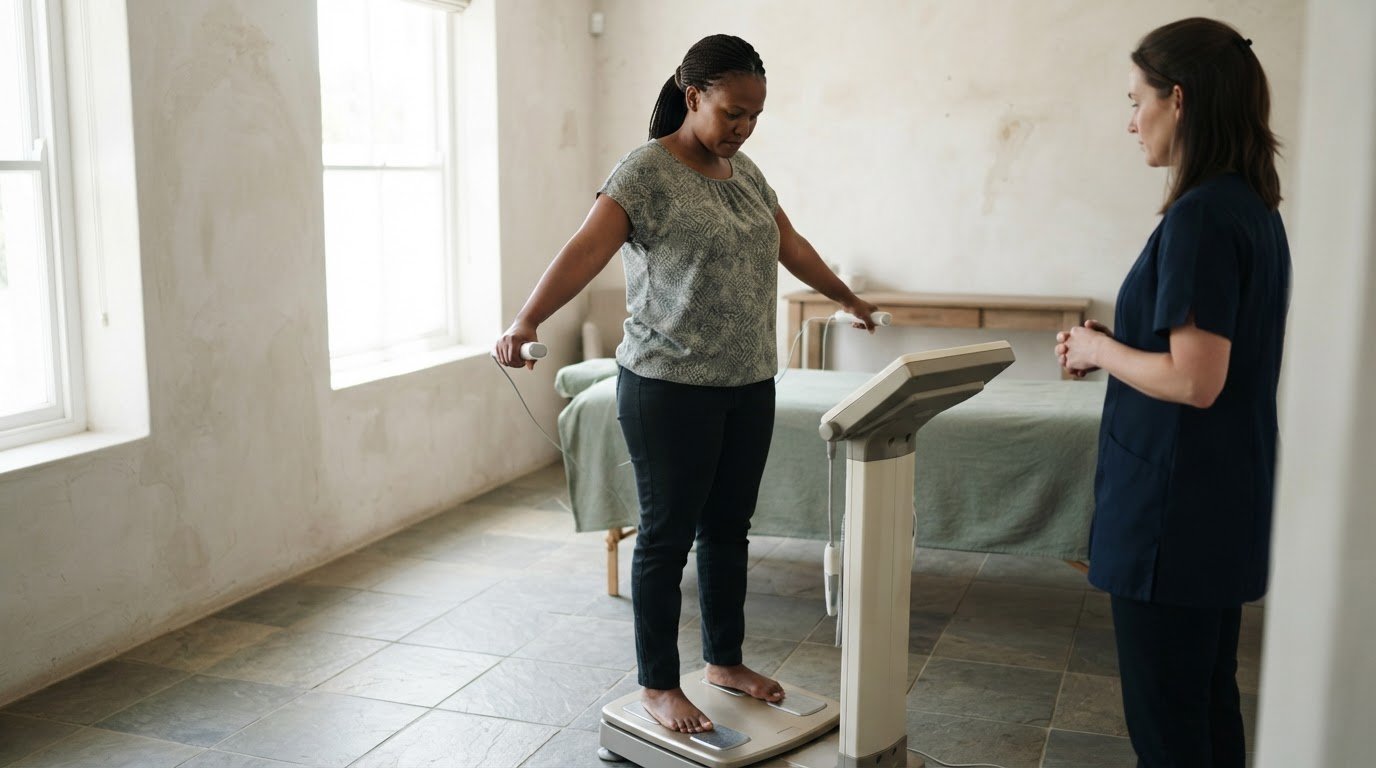
If your goal is body composition rather than skin texture, InBody 270 body composition analysis offers a different kind of support. Skinboosters and GA Peels are also available for other skin goals, but they are distinct from microneedling and RF.
For a calm, personalised conversation about whether Optiphi Microneedling fits your skin goals, contact The Glow Up Society.
Choose a treatment path that fits your goals
Let your next step reflect the change you want to explore, rather than choosing a treatment by name alone. Your decision about RF body contouring versus microneedling for skin tightening can start with a clear distinction: are you focusing on skin firmness across a body area, or on facial skin renewal? A tailored conversation can help connect that priority with an appropriate care plan.
If your wider goals include skin clarity or refinement, The Glow Up Society also offers GA Peels, LHA Peels and Retinol Peels. These are different options from microneedling, and can be discussed in relation to your skincare aims. Your skin concerns and treatment suitability guide the choice.
Take a considered next step and Contact The Glow Up Society to discuss your skin goals. A calm, individual approach can help you move forward with greater clarity.
Frequently Asked Questions
What Causes Skin Laxity?
Skin laxity can develop as the body produces less collagen from a person’s mid-20s onwards. Collagen supports the skin’s structure, while elastin contributes flexibility. These gradual changes may affect how firm skin looks and feels. For example, someone noticing reduced facial firmness may have different priorities from someone concerned about loose skin across a body area.
How does RF body contouring work compared with RF microneedling for skin tightening?
RF body contouring applies radiofrequency heat to the dermis, whereas RF microneedling delivers controlled heat through needles. The distinction is the delivery method: body RF heats from the skin’s surface, while RF microneedling combines heat with needle-created channels. Neither approach should be confused with standard microneedling, which creates channels without using heat.
How effective is RF body contouring versus microneedling for skin laxity and cellulite?
RF body treatments focus on skin firmness and laxity, while microneedling is commonly chosen for skin renewal, such as addressing texture concerns. These are different aims, so consider which change matters most to you. Cellulite is a separate concern; a skin-tightening treatment should not be assumed to remove fat or resolve cellulite. Clarify your primary goal before selecting an approach.
How many RF body contouring or microneedling sessions are needed, and how far apart?
Standalone RF skin tightening commonly involves 6 to 12 sessions, spaced weekly or fortnightly. RF microneedling often uses 3-5 treatments, 4 to 6 weeks apart. Standard microneedling may involve 4 to 6 sessions, also spaced 4 to 6 weeks apart. These are different treatment plans, not interchangeable schedules; the approach depends on the area and concern being treated.
What results can patients expect, and how long do they last?
Microneedling changes may become visible within 4 to 6 weeks, while RF skin-tightening results can take longer as collagen develops. The American Academy of Dermatology says the best results from non-invasive skin tightening appear in about six months and may last two to three years with good skin care. Track your progress with photographs taken in consistent lighting.