Skincare
Healthy Body Recomposition in Sandton and How to Track Progress
· The Glow Up Society
A steady scale reading doesn’t mean your body is standing still. A healthy body recomposition strategy in Sandton focuses on changing the balance of fat and muscle, rather than judging progress by weight alone. You can track that change through body-composition assessments alongside practical signs such as how your clothes fit and how your strength develops.
It’s understandable to look to the scales for a clear answer, but body recomposition is gradual and weight can’t show the whole picture. This guide explains what the process involves, which progress measures offer a fuller view, and how to interpret changes over time. It also covers common pitfalls, including overly restrictive eating, and how processed foods can fit into a balanced approach. By assessing progress calmly, you can focus on consistent changes in body composition, strength and everyday wellbeing, rather than expecting a single number to tell the whole story.
Key Takeaways
- Understand how body recomposition shifts the focus from total weight to the balance of fat and muscle.
- Explore practical ways to notice progress over time, including changes that a scale may not show.
- Learn why overly restrictive eating and rigid food rules can make a sustainable approach harder to maintain.
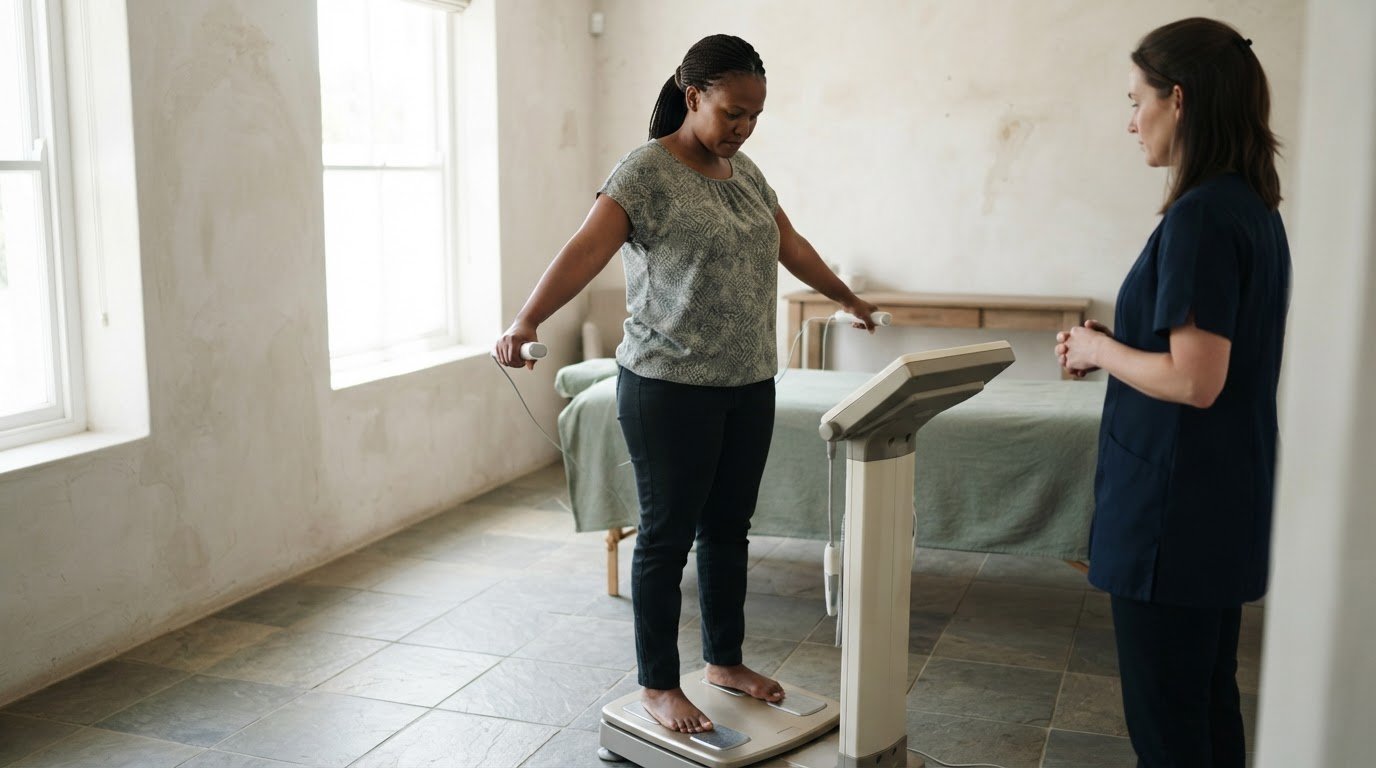
- Discover how Inbody 270 body composition analysis can add useful context to your progress.
Table of Contents
- What exactly is body recomposition?
- Progress tracking beyond scale weight
- Common body recomposition traps
- Limiting processed foods
- The Glow Up Society: Inbody 270 body composition analysis
What exactly is body recomposition?
A healthy body recomposition strategy in Sandton focuses on changing the balance of fat and muscle, rather than weight alone. Body composition describes the amounts of fat and fat-free mass in your body. Fat-free mass includes muscle, bone and water. The aim is to reduce body fat whilst maintaining or building muscle mass. If fat decreases as muscle increases, for example, your weight may change very little even as your composition, fitness and exercise routine change. That is why one scale reading cannot describe every result.
Weight and body mass index (BMI) provide different information from a body composition assessment. Weight measures your total mass, whilst BMI relates weight to height. Neither separates fat from muscle, bone or water. Two people of the same height and weight can therefore have different body compositions. BMI can be a broad screening measure, but it does not show whether a person’s weight comes mostly from muscle or fat. For recomposition, consider it alongside other measures, not as a direct reading of body fat or muscle mass.
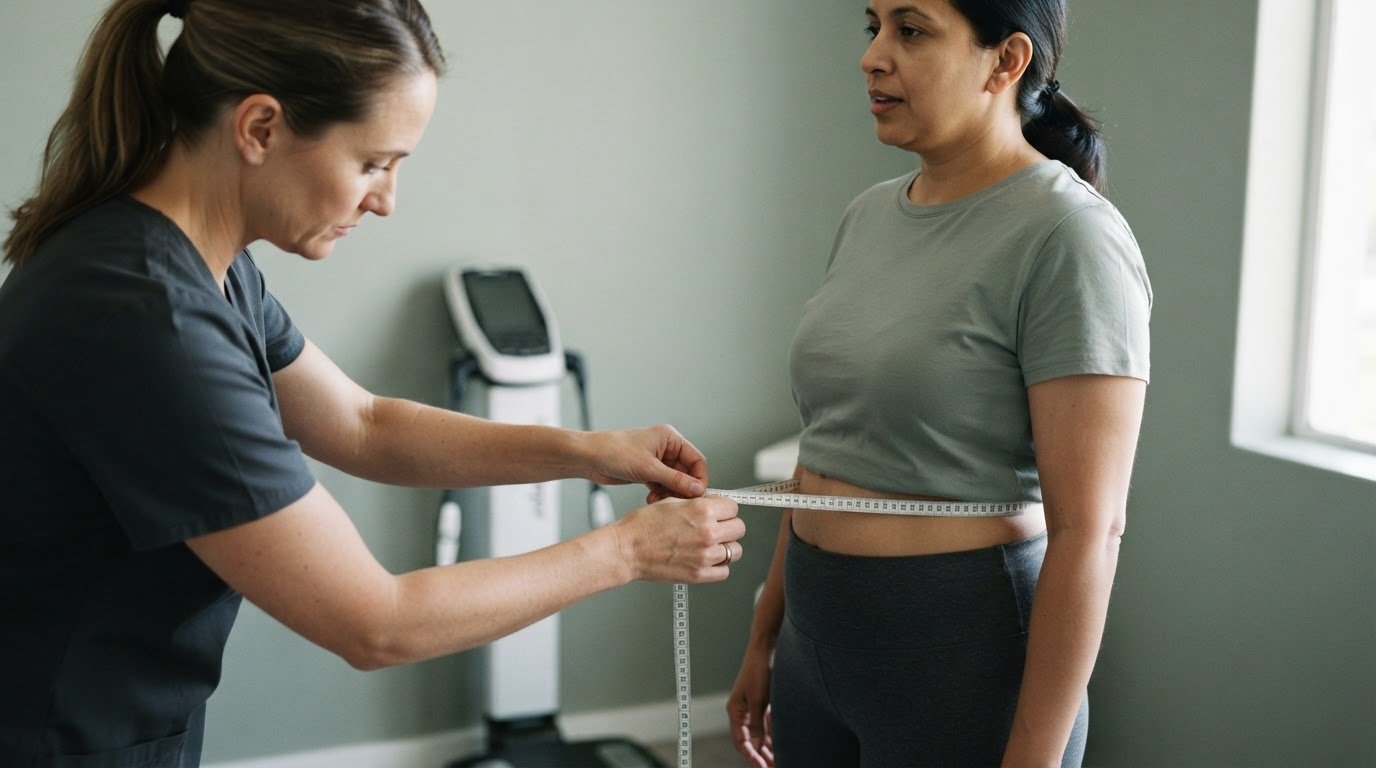
Body composition can be assessed using skinfold calipers, a DEXA scan or hydrostatic weighing, which measures the body underwater. These methods assess composition in different ways, so their results are not interchangeable. An assessment gives you a reference point for later comparisons. Record the method used, then use it again for follow-up measurements where possible. Comparing like with like makes it easier to interpret a trend than switching between assessment methods.
For a healthy body recomposition strategy in Sandton, treat assessment as one part of a wider picture. Pair a composition reading with practical markers such as clothing fit, exercise performance and strength during your routine. If your weight stays stable while strength improves and measurements shift, those details may help explain what the scale misses. Body recomposition is gradual, so a single result is only a snapshot. Measurements taken consistently under similar conditions offer useful context for understanding changes in fat and fat-free mass over time.
Progress tracking beyond scale weight
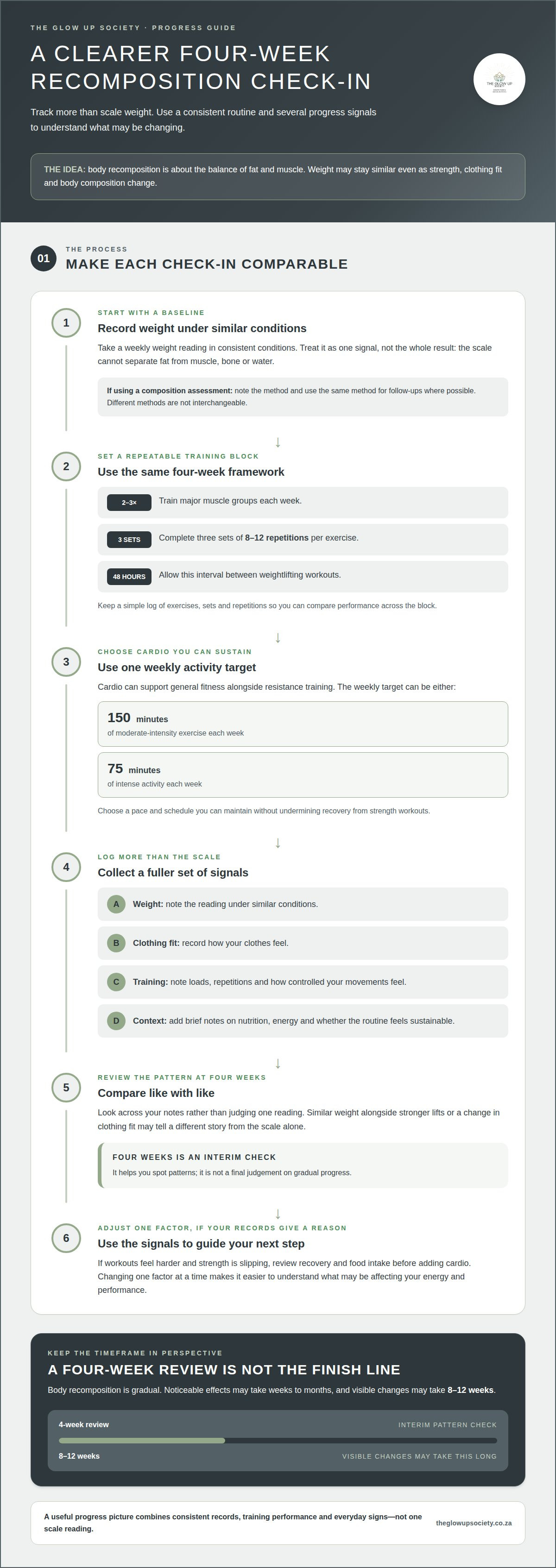
A healthy body recomposition strategy in Sandton uses several progress signals, not just weekly weight. Over four weeks, record weight under similar conditions, how clothes fit, and the loads or repetitions completed during workouts. Stable weight alongside stronger lifts, such as more controlled squats, can tell a different story from the scale alone. Note whether your routine feels sustainable, too. These observations help show whether your approach supports fitness and losing fat without making weight your only measure.
Cardio can support general fitness alongside resistance training. A weekly target can be 150 minutes of moderate-intensity exercise or 75 minutes of intense activity. Choose a pace and schedule you can maintain, rather than adding sessions that undermine recovery from strength workouts.
A four-week workout framework gives you a consistent period for observing patterns. Train major muscle groups two to three times a week, using three sets of eight to 12 repetitions per exercise. Allow 48 hours between weightlifting workouts. Keep a simple log of exercises, sets and repetitions, then compare your performance across those four weeks. Pair the log with brief notes on nutrition and energy, so training changes have useful context.
Body recomposition is gradual, and noticeable effects may take weeks to months. Visible changes may take eight to 12 weeks, so a four-week review is an interim check, not a final judgement. Look for patterns: perhaps your weight is similar, but your clothes fit differently and workouts feel stronger. If losing fat is your goal, consider whether nutrition supports training and recovery. Supplements cannot replace a consistent routine or balanced eating.
A healthy body recomposition strategy in Sandton should make it easier to choose your next adjustment. Compare like with like, then change one factor if your records point to a clear reason. If workouts feel harder and strength is slipping, for example, review recovery and food intake before adding cardio. A calm, consistent record gives you a clearer basis for your next step than chasing daily changes in weight.
Body recomposition is gradual, not a short-term goal. Realistic expectations can help you stick with consistent habits and consider the range of signals you record over time.
Common body recomposition traps
A steep calorie cut can seem like a faster route to losing fat, but it can leave too little energy for exercise and recovery. That may make it harder to preserve muscle as weight falls. A modest deficit is more compatible with training; one body recomposition plan uses 100-300 calories daily. Treat that as an example, not a universal target. Your needs depend on body size, activity and routine. If strength drops and workouts feel consistently harder, review the overall approach rather than cutting food further.
Protein matters, but chasing a high number without considering your overall diet is another trap. Body recomposition guidance gives a daily range of 0.8 to 1.6 grams per pound of body weight. That broad range isn’t a single prescription for everyone. Your food choices, energy needs and training all matter. Include protein across meals and pair it with enough energy to support exercise. A shake may be convenient, but it can’t replace a balanced eating pattern or consistent resistance training.
Another common misstep is expecting every workout to deliver a personal best. Strength can vary with sleep, stress, recovery and the demands of a session. A lighter lift on one day, for example, does not by itself show that you are losing muscle. Look at the pattern in your training log alongside how well you recover. Repeatedly adding sessions or pushing every set to exhaustion can make a routine harder to sustain, rather than improving its quality.
Finally, avoid changing several parts of your plan at once. If you reduce portions, add cardio and change supplements together, it becomes difficult to understand what affects your energy or performance. Keep the main elements steady, then adjust one factor when your records show a clear reason. Losing fat while maintaining muscle calls for a balanced approach: enough food to support training, appropriate protein and progressive exercise. If a plan leaves you drained or weak, review it thoughtfully rather than restricting your intake further.
Food provides the energy needed to support workouts, so an excessive calorie deficit can undermine training. A modest deficit is more appropriate for fat loss, since cutting too many calories can make muscle harder to preserve.
Limiting processed foods
Processed foods can fit into body recomposition, but the type and portion matter. Packaged food is not automatically unsuitable: plain yoghurt, tinned beans and frozen vegetables can make balanced meals easier. A more useful distinction is whether a choice provides nourishing components, such as protein or fibre, or mainly adds energy without keeping you satisfied. Biscuits, sugary drinks and crisps can be easy to overeat, so consider how often they appear and what they replace.
For South African eating habits, build meals around vegetables, fruit, beans or lentils, whole grains and a protein source. This supports overall health while making protein and fibre part of everyday meals. Pair samp and beans with vegetables, for example, or add eggs to wholegrain toast. These combinations can help you manage intake without treating familiar foods as forbidden. Body recomposition does not require eliminating every packaged or convenience food.
Calories still matter for weight loss, but severe restriction can leave too little energy for exercise and recovery. Instead of cutting out whole food groups, compare portions and frequency. You could have water with lunch more often instead of a sweetened drink, while a small serving of crisps can accompany a meal rather than replace it. These changes can create a more balanced pattern without making eating feel rigid. Adequate protein and regular resistance exercise also support efforts to build muscle.
Use a simple food record to notice patterns, not to judge yourself. For several days, note meals, snacks and drinks, then identify one processed choice to adjust. If a convenient snack is low in protein, for instance, you could choose yoghurt or fruit with nuts instead. Keep changes manageable, and pay attention to hunger, energy and training quality. Gaining muscle and losing fat both depend on consistency across nutrition and exercise, not on labelling foods as entirely good or bad.
If weight goals feel difficult to manage alongside everyday eating, explore medical weight management support as a way to discuss a more structured approach.
The Glow Up Society: Inbody 270 body composition analysis
The Glow Up Society offers Inbody 270 body composition analysis as a practical addition to your progress tracking. It can help you look beyond scale weight and consider body composition alongside your exercise routine, nutrition and strength goals. This may be useful when your weight stays steady, but you want a broader reference point for understanding your progress.
Consider an assessment when you’re beginning a recomposition plan or reviewing how your approach is progressing. The results can add context to the changes you notice in everyday life, rather than replacing those observations or your wider health goals. For a calm, individual next step in tracking body composition, contact The Glow Up Society.
Choose a steady next step for your wellbeing
A healthy body recomposition strategy in Sandton works best as part of a routine you can continue, rather than a short-lived push for change. Let your goals guide the next step, whether that means refining your nutrition habits, reviewing your progress or exploring a suitable wellness service. Your approach can evolve as your priorities shift.
The Glow Up Society’s Inbody 270 body composition analysis can support a more informed view of your progress. If your self-care goals also include skin, the clinic offers GA Peels, LHA Peels and Retinol Peels as separate treatments. Each addresses a different area of personal care, so choose according to what matters to you.
Connect with The Glow Up Society to discuss a considered next step. Keep your focus on sustainable habits and progress that feels meaningful to you.
Frequently Asked Questions
How long does body recomposition usually take, and how should progress be measured?
Body recomposition is gradual: changes may take weeks to months to become noticeable, and visible results can take eight to 12 weeks. Assess progress by comparing consistent body-composition measurements over time, rather than reacting to one reading. You can also note practical changes, such as a familiar outfit fitting differently or everyday tasks feeling easier. These signs add personal context to your progress record.