Skincare
Fat Freezing Pain and Side Effects: What to Expect
· The Glow Up Society
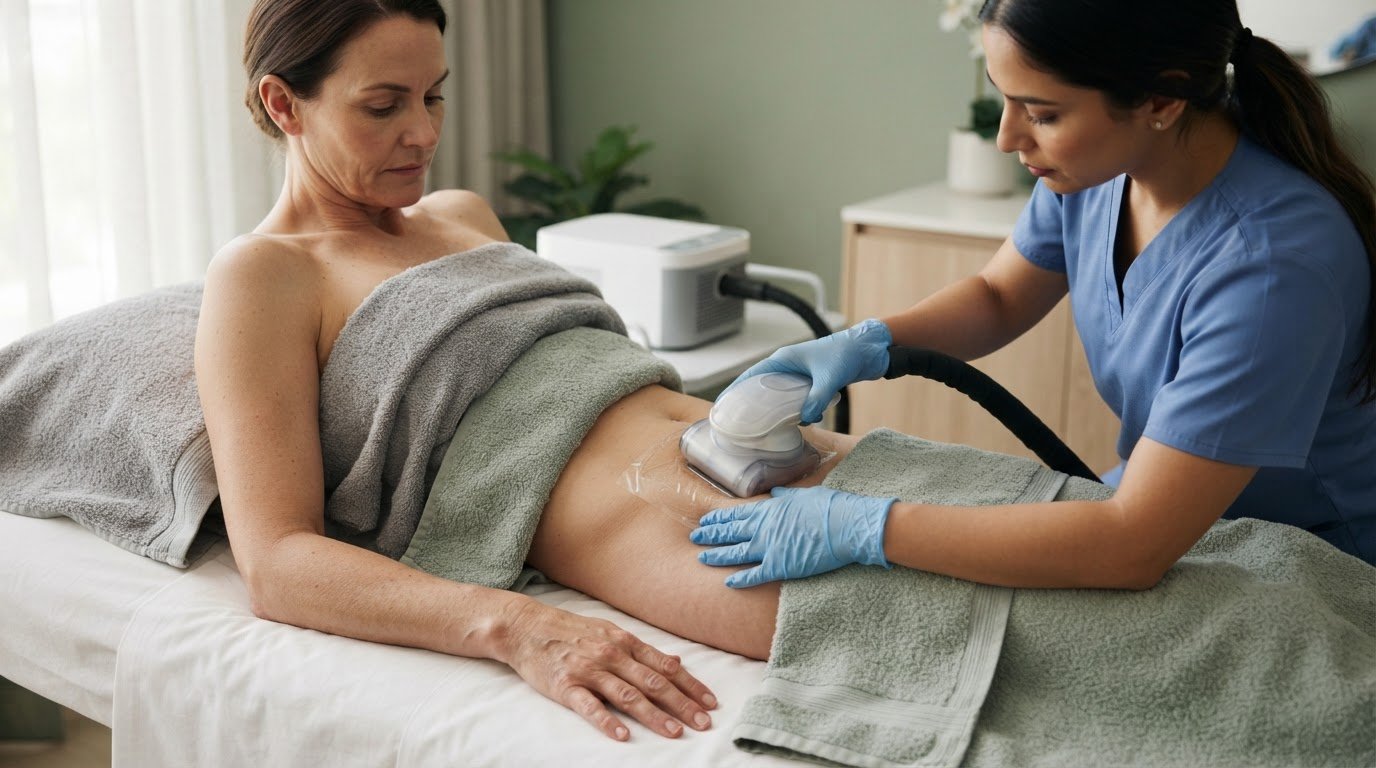
Fat freezing can feel cold and uncomfortable, but the initial sensation usually eases within five to ten minutes. During treatment, you may notice pulling, tingling or aching; afterwards, temporary redness, swelling, bruising or numbness can occur. If you are considering fat freezing, side effects and safety deserve as much attention as the potential contouring results.
It’s understandable to want to know whether treatment hurts and what your body may feel like afterwards. This guide explains how cryolipolysis works, which effects are expected, which are uncommon and what paradoxical adipose hyperplasia (PAH) means for safety. It offers a clear overview of sensations, recovery and rare risks to help you understand what to expect.
Key Takeaways
- Know what cold, pulling and aching sensations can feel like during treatment, and which temporary after-effects are commonly expected.
- Understand how cryolipolysis uses controlled cooling to target fat cells and how the body gradually clears the affected cells.
- Learn why paradoxical adipose hyperplasia (PAH) is an uncommon but important risk, and how its timing differs from ordinary recovery.
- Recognise less common side effects and the signs that deserve medical attention, so you can make a more informed decision.
Table of Contents
- Paradoxical adipose hyperplasia (PAH)
- Fat Freezing Side Effects: Normal, Rare and Is It Safe?
- How cryolipolysis works
- Uncommon side effects
- The Glow Up Society: GA Peels
Paradoxical adipose hyperplasia (PAH)
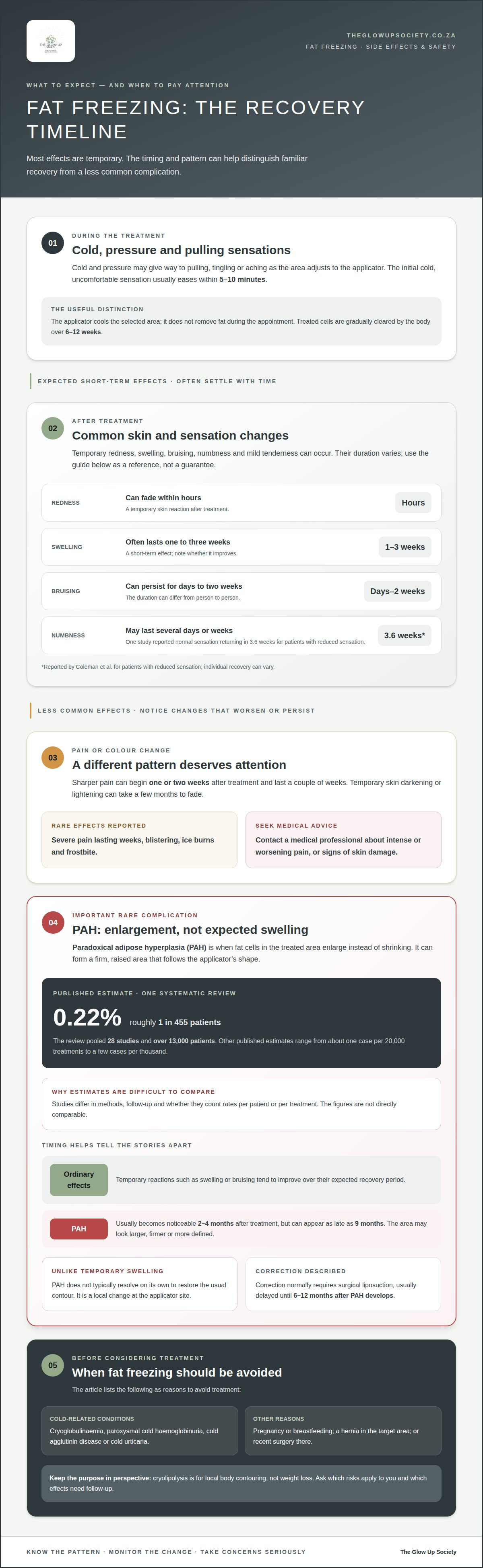
Paradoxical adipose hyperplasia (PAH) is a rare complication in which fat cells in the treated area enlarge instead of shrinking. This can create a firm, raised area that follows the applicator’s shape. Unlike ordinary post-treatment swelling, PAH develops later and does not resolve on its own to restore the area’s usual contour.
Timing can help distinguish PAH from short-term effects. It usually becomes noticeable two to four months after treatment, although it can appear as late as nine months. The treated area may gradually look larger, firmer or more defined, rather than slimmer. Weight changes can also affect body shape, but PAH is a local change at the applicator site.
Published estimates vary. A 2026 systematic review pooling 28 studies and over 13,000 patients reported an incidence of 0.22%, roughly 1 in 455 patients. Other published estimates range from about one case per 20,000 treatments to a few cases per thousand. Differences in study methods, follow-up and whether rates count patients or treatments make direct comparisons difficult.
PAH does not typically resolve on its own. Correcting it normally requires surgical liposuction, which is usually delayed until six to twelve months after PAH develops. This differs from the gradual elimination of treated fat cells expected after cryolipolysis. Consider rare complications, including PAH, alongside temporary effects.
Fat freezing should be avoided by people with cryoglobulinaemia, paroxysmal cold haemoglobinuria, cold agglutinin disease or cold urticaria. It is also not recommended during pregnancy or breastfeeding. A hernia in the target area or recent surgery there are further reasons to avoid treatment. PAH has been reported more often in men, on the abdomen and with older device models.
Fat Freezing Side Effects: Normal, Rare and Is It Safe?
Most expected effects are temporary, but their timing and the treatment’s limits matter when comparing safety with other body-contouring options.
Temporary sensations and skin reactions
During treatment, cold and pressure can give way to pulling, tingling or aching as the treated area adjusts to the applicator. Redness, swelling, bruising, numbness and mild tenderness can follow. Notice when each sensation starts and whether it improves: this can help you recognise a familiar recovery pattern or a change that needs attention.
Duration of common side effects
Redness can fade within hours, while swelling often lasts one to three weeks and bruising can persist for days to two weeks. Numbness may last several days or weeks. Coleman et al. demonstrated that patients with reduced sensation recovered normal sensation in 3.6 weeks, according to Peer-reviewed medical literature. Knowing these timelines helps you describe changes clearly.
Less common pain and colour changes
Sharper pain can begin a week or two after treatment and last a couple of weeks. Temporary skin darkening or lightening can take a few months to fade. Severe pain lasting weeks, blistering, ice burns and frostbite are rare effects. Contact a medical professional about intense or worsening pain or skin damage, rather than treating it as routine recovery.
Safety and treatment comparisons
Cryolipolysis targets local fat without surgery, while liposuction is a surgical procedure; the methods and recovery differ. Cryolipolysis is for body contouring, not weight loss. Most people need one to two sessions per area; initial changes can appear in weeks three to four, with final results visible in months four to six.
In South Africa, ask about the device’s make and model, operator training, screening process and plan for complications. Request documents to verify the device and clinic’s credentials. The price depends on the case and is given after a quote request; the treated area, number of sessions and device can affect the cost. Before booking, ask which risks apply to you, which effects need follow-up and what outcome the treatment can realistically target.
How cryolipolysis works
Cryolipolysis is the clinical name for fat freezing. It uses controlled cooling to target a pinchable pocket beneath the skin. At a clinic, an applicator places the selected area between two cooling paddles, which hold the tissue against the device during the cycle. This non-invasive procedure uses no needles or surgical incisions and targets local tissue that fits within the applicator.
Cooling is intended to affect fat cells while limiting effects on surrounding skin. This allows the device to target fat cells while leaving skin untouched. Cooling damages selected fat cells, but they don’t disappear during the appointment. The body naturally eliminates this debris over 6 to 12 weeks following treatment. The change develops gradually, rather than through immediate removal of tissue.
A session takes about 30 to 60 minutes, depending on the body area treated. The clinician positions the applicator over the selected pocket. The device then maintains cooling for the treatment cycle. Harvard scientists discovered cryolipolysis in 2008. The method has been in clinical use for over 15 years. Those milestones describe its history, not an individual’s outcome.
The intended effect is local contouring, not weight loss. Cryolipolysis targets a defined pocket that the applicator can hold, rather than overall body weight. A paradoxical response reverses the intended effect: instead of shrinking, fat in the treated area enlarges. This is a complication, not the normal cooling response. The distinction clarifies what the procedure is designed to do.
When the cycle ends, the cooling stops, but the body’s response continues. The applicator does not remove fat during the session. This matters when interpreting treatment photographs: an immediate image records the cooling session, not later cellular clearance. The method targets a local fat pocket, while total body weight may remain unchanged.
Uncommon side effects
Reported complications need context, not just a single percentage. A review covering more than 850,000 cryolipolysis procedures found an overall adverse-event rate of roughly 0.1%. That figure groups different reported events together; it doesn’t mean every event was severe, or that each complication occurs at the same rate. Interpreting fat freezing side effects and safety means considering both the type of event and its impact.
A less familiar effect is a temporary applicator outline that remains visible for a day or two. Note its shape and whether it fades, rather than judging the result immediately after the session. Describe a mark that persists or changes to a medical professional, particularly if it appears alongside new skin damage.
For a useful record, note the treatment date, when a new change appeared and how it developed. For example, record whether a visible mark is shrinking or becoming more pronounced. These details help distinguish a brief local reaction from a complication that needs assessment, without relying on memory alone.
Seek medical advice for visible skin injury, a persistent change in texture or symptoms that worsen rather than settle. Avoid applying products without advice or trying to treat damaged skin yourself. A clinician can examine the area and decide whether further assessment is appropriate. Clear observations support decisions about fat freezing side effects and safety better than assumptions based on photographs alone.
Keep expectations measured: an adverse-event rate describes a group, not an individual prediction. Before treatment, understand how to report a new concern and who will assess it. This practical plan matters because uncommon effects may need attention beyond routine aftercare, even when they do not resemble typical temporary reactions.
The Glow Up Society: GA Peels
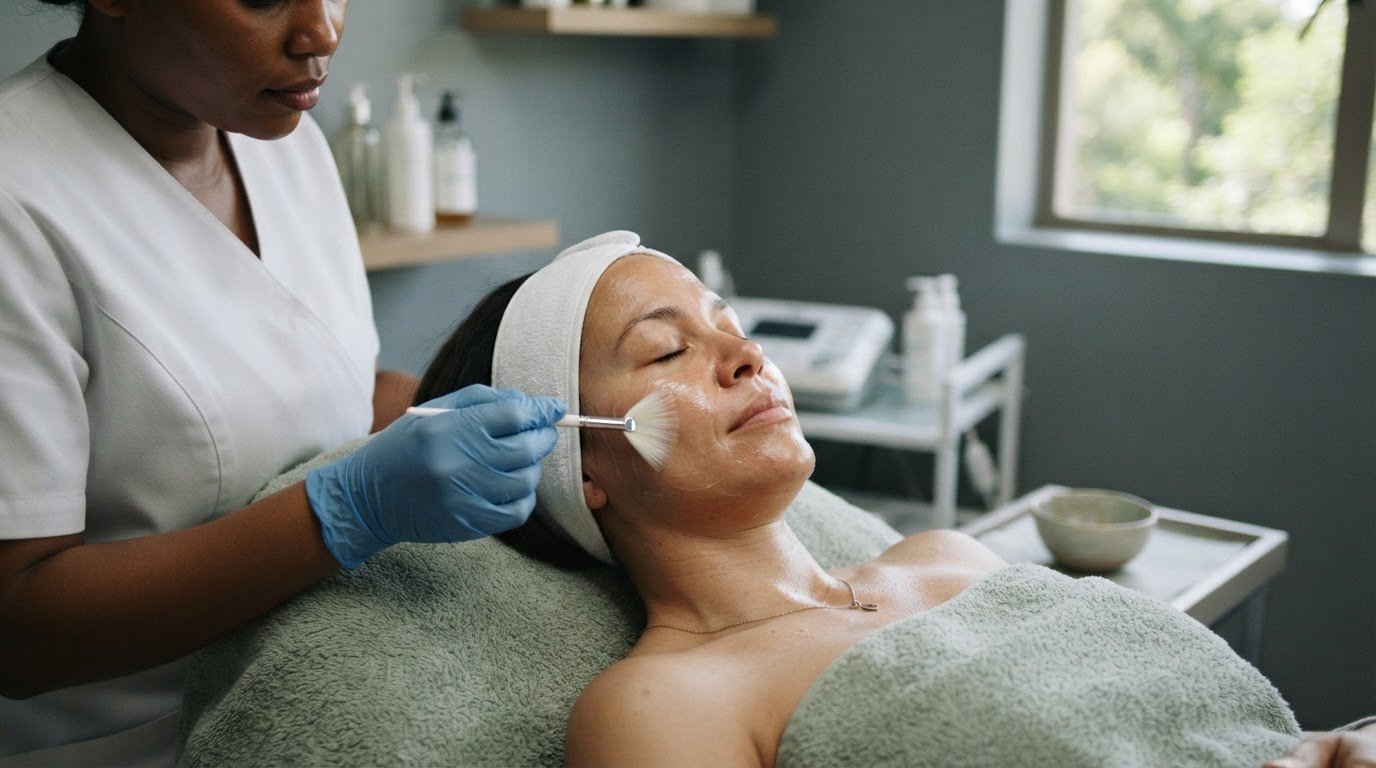
The Glow Up Society offers GA Peels for people exploring a separate, skin-focused aesthetic treatment. Fat freezing targets local body fat, while a peel addresses the skin. A peel is not a substitute for body contouring or a treatment for paradoxical adipose hyperplasia.
If your goal is to improve skin texture or refresh your complexion, GA Peels may be relevant. LHA Peels and Retinol Peels offer other peel options, while Optiphi Microneedling is another skin-focused treatment. The right choice depends on your skin goals and the area you want to address.
For a new firm enlargement, persistent pain or skin injury after fat freezing, seek medical assessment rather than relying on a peel. If you’d like to explore skin treatments, contact The Glow Up Society.
Choose a next step that fits your goals
A considered choice starts with what you want to change, how you feel about treatment and what level of intervention feels right for you. Understanding fat freezing side effects and safety can help you weigh those priorities instead of focusing on a single treatment in isolation. Note the outcome you hope for and any concerns you want addressed before deciding.
If your next step is to explore a separate skin-care goal, keep it distinct from body contouring and choose an option suited to your concern. The Glow Up Society offers skin-treatment options to support your aesthetic-care journey. Take the time you need to make an informed choice.
Contact The Glow Up Society to start a conversation about your skin-care goals.
Frequently Asked Questions
Does fat freezing hurt?
Fat freezing can feel uncomfortable, especially as cooling begins, but don’t ignore sharp or intense pain. Tell the operator promptly if the sensation feels excessive or changes suddenly, rather than trying to endure it. Afterwards, tenderness or altered sensation can make clothing feel irritating against the area. Loose clothing and noting when discomfort starts can help you describe changes clearly.
How does fat freezing work?
Fat freezing uses an applicator to cool a local pocket of fat beneath the skin. The body then gradually clears affected cells, so treatment does not immediately remove fat or change the number on the scales. It is intended for local body contouring, not general weight loss. Suitability partly depends on whether the area has a pinchable pocket the applicator can hold.
Can I have fat freezing if I am on medication?
Discuss your medicines with the clinician before treatment; do not stop or change them yourself. Include prescribed medicines, over-the-counter products and supplements, and explain why you take each one. This context informs a review of your medical history, health conditions and treatment area. Mention any past reactions to cold or changes in sensation, as these details can affect the safety assessment.
Can I lower my own risk?
Share relevant health information before treatment, including cold-related conditions, pregnancy or breastfeeding, a hernia in the target area, and recent surgery there. Do not use at-home fat-freezing devices, which can injure skin. Follow the clinic’s aftercare guidance and keep track of changes in the treated area. If you notice worsening pain, blistering or an unusual increase in firmness, arrange medical assessment.
Can fat freezing cause serious complications?
Yes. Serious complications are uncommon, but reported problems include paradoxical adipose hyperplasia, frostbite, ice burns and blistering. A local area that enlarges instead of reducing needs assessment, as do visible skin injury and severe, persistent pain. Note clearly when the change began and how it develops. This gives a medical professional useful context when assessing the area.
Can fat freezing damage organs or nerves?
The applicator is intended to target a pinchable layer of fat beneath the skin, not internal organs. Nerve-related effects have been reported, including temporary numbness or delayed pain. These symptoms do not automatically mean lasting nerve damage, but persistent altered sensation or severe pain needs medical assessment. Before treatment, mention any existing numbness, nerve symptoms or reduced sensation in the area you are considering.