Skincare
Cryolipolysis vs Cavitation: Choosing a Fat Contouring Option
· The Glow Up Society

The more intensive-sounding treatment isn’t automatically the better match. For cryolipolysis versus cavitation for stubborn fat, the key difference is the target: cryolipolysis uses controlled cooling for localised, pinchable fat pockets, while ultrasound cavitation uses sound waves to affect fat beneath the skin and may suit broader contouring goals. Radio frequency is more suited to mild skin laxity and reduced firmness than to stubborn fat reduction.
It’s understandable to want a clear answer when an area hasn’t changed as you’d hoped. The right comparison depends on whether your priority is a defined fat pocket, a broader area or skin that feels less firm. Each approach works differently, and treatment schedules and the timing of visible changes can vary.
This guide explains how cryolipolysis, ultrasound cavitation and radio frequency compare, including what each is designed to address and how treatment schedules differ. You’ll get a clearer sense of which option aligns with your goals, and when body contouring may not be the right route.
Key Takeaways
- Match the treatment to your main concern: a localised fat pocket, a broader contouring goal or reduced skin firmness.
- Understand why cryolipolysis and ultrasound cavitation work differently, and what that can mean for treatment planning.
- Consider the timing of visible changes and the limits of each approach before choosing a direction.
- Explore how skin-focused treatments may complement your wider aesthetic goals when fat contouring isn’t the only priority.
Table of Contents
- What Is Body Contouring?
- What is Ultrasound Cavitation?
- Comparison of fat freezing, cavitation and radio frequency
- How ultrasound cavitation works
- The Glow Up Society: GA Peels
What Is Body Contouring?
Body contouring focuses on shaping selected areas, rather than treating every concern alike. Cryolipolysis, ultrasound cavitation and radio frequency differ in their targets, treatment schedules and intended outcomes.
Choosing Treatments for Individual Concerns
Start by identifying the concern and area: a pinchable fat pocket, broader contouring across the thighs or mild skin laxity. Cryolipolysis is designed for localised fat pockets, while ultrasound cavitation may suit larger areas and concerns about cellulite. Radio frequency is more closely aligned with reduced firmness. These distinctions help match a treatment to your goal, rather than choosing by name alone.
Treatment Mechanisms and Permanence
Fat freezing cools targeted fat cells, which crystallise and break down; the body gradually clears the damaged cells through the lymphatic system. Cryolipolysis reduces fat, not body weight, and does not target visceral fat. Ultrasound cavitation uses sound waves to create microscopic bubbles beneath the skin and affects fat-cell contents rather than cell number. Radio frequency addresses skin firmness, not primarily stubborn fat.
Treatment Duration and Applications
A cryolipolysis session typically takes 35-60 minutes per area, with 1-3 sessions recommended for a treatment area. The number of applications also depends on the area: treating the entire front of the belly evenly may require four or more. Ultrasound cavitation is typically delivered over multiple sessions, with treatment duration and spacing varying by treatment area and plan.
| Option | Main concern | Typical schedule | Mechanism |
|---|---|---|---|
| Cryolipolysis | Localised fat pockets | 1-3 sessions per area | Cooling breaks down fat cells |
| Ultrasound cavitation | Broader contouring, cellulite | 2-6 sessions, 1-2 weeks apart | Sound waves affect fat-cell contents |
| Radio frequency | Mild skin laxity | Usually a course | Targets skin firmness |
For more than one concern, treatment sequence matters. One approach targets fat deposits with cryolipolysis first, then uses cavitation to refine contour; allow at least 4-6 weeks between these treatments. This sequence is distinct from using radio frequency for reduced firmness, so define each goal and treated area before planning combined treatments.
Choose according to your concern, such as a defined fat pocket, broader thigh contouring or mild loose skin.
What is Ultrasound Cavitation?
Choosing between fat-reduction treatments means weighing results, timing and suitability, not just the treatment name. Cryolipolysis uses cooling; ultrasound cavitation uses sound waves. Neither is a surgical weight-loss method.
After cryolipolysis, the body gradually clears affected fat cells. Full results may become visible after 8-12 weeks, with changes sometimes continuing for up to 6 months. Cryolipolysis is intended to address localised fat concerns rather than significantly loose skin. Fat freezing is intended for localised pockets, not general weight reduction.
Ultrasound cavitation may show visible changes after 2-4 sessions. Plans often involve two sessions a week over one to two months, although the schedule varies. It may support body-shape and skin-texture improvements, including the appearance of cellulite, but results vary with the treatment area and individual response. A combination plan doesn’t automatically improve outcomes: a cited trial found no added benefit from cavitation after cryolipolysis.
Possible cryolipolysis effects include mild redness or numbness in the treated area. Paradoxical fat hyperplasia occurs in less than 1 percent of patients, and surface irregularities or asymmetry can occur. The evidence here doesn’t establish specific cavitation side-effect rates, so discuss possible effects for your treatment and health history.
People with cold-related conditions such as cryoglobulinaemia should avoid cryolipolysis. Cavitation may also be unsuitable if a health condition or the treatment area makes it inappropriate; suitability depends on the person and procedure.
In South Africa, ask the practitioner to explain their relevant qualifications, device training and experience with the specific procedure. They should also explain expected outcomes, limitations and possible risks clearly.
Neither treatment targets visceral fat or replaces weight loss through lifestyle changes and exercise. If weight management is your main goal, explore medical weight management support alongside advice suited to your needs.
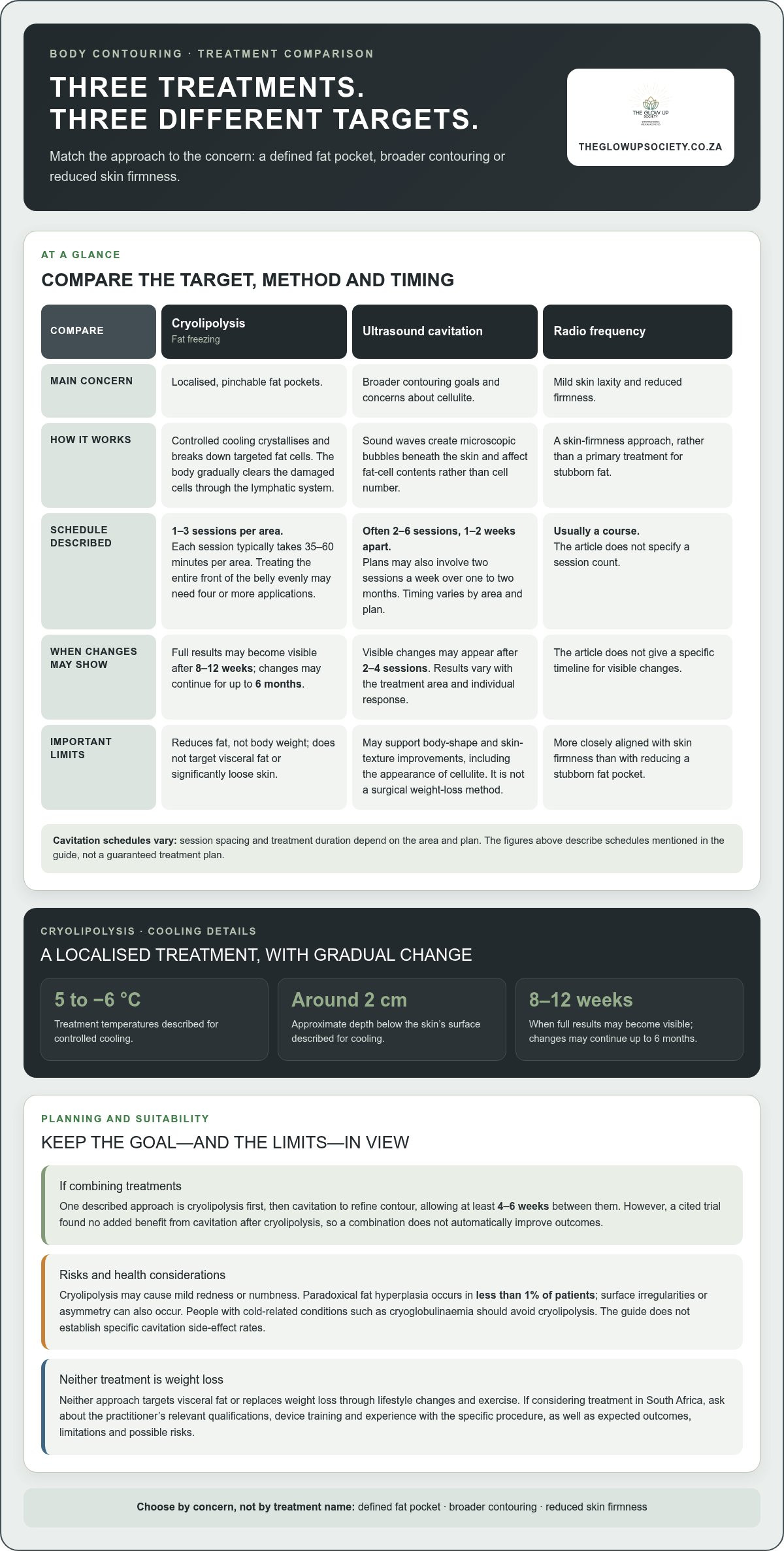
Comparison of fat freezing, cavitation and radio frequency
These treatments address different targets, so compare the tissue concern before choosing. Cryolipolysis is non-surgical fat reduction; ultrasound cavitation focuses on fat-cell contents, while radio frequency is suited to mild loose skin and reduced firmness. None replaces diet and exercise or treats visceral fat.
During cryolipolysis, controlled cooling makes targeted fat cells crystallise and break down. The cooling reaches the fat layer, with treatment temperatures described as 5 to -6 degrees Celsius and penetration around 2 cm below the skin’s surface. The body gradually clears damaged cells through the lymphatic system. This method reduces fat-cell number rather than simply changing cell size, but it isn’t surgery and doesn’t promise weight loss.
Ultrasound cavitation uses sound waves to form microscopic bubbles beneath the skin. It primarily affects fat-cell contents, which are metabolised and eliminated naturally. Radio frequency has a different contouring role: it is more appropriate when mild skin laxity, rather than a stubborn fat pocket, is the main concern. Choose a treatment based on the desired outcome, not the device’s name.
| Option | Primary target | How it works | Best aligned concern |
|---|---|---|---|
| Cryolipolysis | Subcutaneous fat cells | Cooling breaks down targeted cells | Localised, pinchable fat pockets |
| Ultrasound cavitation | Fat-cell contents | Sound waves create microscopic bubbles | Broader contouring or cellulite appearance |
| Radio frequency | Skin firmness | Radio-frequency treatment | Mild loose skin |
Fat freezing may reduce the fat layer by 20-25% in treated areas, although outcomes differ. Cavitation and radio frequency are generally delivered as courses, unlike the typically more targeted cryolipolysis approach. A cited trial found no additional benefit from adding cavitation after cryolipolysis, so combining methods should have a clear purpose rather than being automatic.
Choose cryolipolysis for a defined fat pocket, cavitation for broader contouring or radio frequency for mild skin laxity. If your concern is visceral fat or overall weight, these treatments aren’t the appropriate choice.
How ultrasound cavitation works
Ultrasound cavitation uses sound waves to create microscopic bubbles in the fat layer beneath the skin. As these bubbles form and collapse, they disrupt fat cells and release their contents. The process is non-surgical, unlike procedures that remove fat through an operation. It is intended for contouring, not overall weight loss.
After treatment, released fat is metabolised and eliminated naturally by the body. Cavitation affects fat-cell contents rather than reducing the number of fat cells. This distinction explains why it isn’t the same as cryolipolysis, which targets fat cells through cooling. Neither method treats visceral fat, the fat deeper within the abdomen.
Ultrasound cavitation may suit broader areas, such as the stomach, hips or thighs. It can support improvements in body shape and skin texture, and may help with the appearance of cellulite. Unlike surgical fat-reduction procedures, it does not involve an operation to remove tissue. The goal is gradual contouring of selected pockets.
A session typically takes 20-40 minutes per area. Treatment plans commonly involve 2-6 sessions, usually spaced 1-2 weeks apart. Some plans use two sessions a week over one to two months, while approximately 10 sessions may be used for optimum results. The number depends on the treatment area and individual plan. Visible changes may appear after 2-4 sessions, though responses vary.
Think of cavitation as a course of treatments rather than a single fat-removal session. It doesn’t replace lifestyle measures, diet or exercise, and it won’t remove visceral fat. Those distinctions matter if your priority is weight reduction rather than contouring a specific area. For a considered next step, explore aesthetic care options suited to your wider goals.
The Glow Up Society: GA Peels
The Glow Up Society offers GA peels as part of its skin-focused treatment options. If your concern is skin care rather than a localised fat pocket, GA peels, LHA peels, retinol peels and Optiphi microneedling are distinct options to discuss. These are not fat-reduction treatments, so consider them separately from cryolipolysis or ultrasound cavitation.
Begin by identifying the change you’re seeking: body contouring, a skin-focused treatment or both as separate goals. This helps you align your choices with the concern each treatment is intended to address.
Contact The Glow Up Society in Fourways to discuss a skin-focused treatment that suits your goals.
Choose a next step that fits your goals
Choosing between cryolipolysis and cavitation for stubborn fat is one part of a broader self-care decision. Before committing to a treatment plan, consider what change matters most to you and whether body contouring or skin care is the priority. If your goals include skin-focused care, GA peels, LHA peels and retinol peels are options to discuss separately from fat reduction. Let your individual goals and suitability guide the next step.
A thoughtful conversation can help you clarify your priorities and consider an approach that feels appropriate for you. Contact The Glow Up Society today to explore your options. Take the next step at your own pace, with a clearer sense of what you want to achieve.
Frequently Asked Questions
What Is Fat Freezing?
Fat freezing is a non-surgical body-contouring treatment that uses controlled cooling to target selected fat pockets. It’s intended for shaping areas such as the abdomen or flanks, not for general weight loss. For example, someone whose weight is stable but who has a localised bulge may explore it as a contouring option. It doesn’t replace lifestyle measures or treat deeper visceral fat.
What is Cryolipolysis?
Cryolipolysis is the clinical name for fat freezing. The terms describe the same treatment, rather than two different options. A practical distinction is between this targeted approach and weight-management care: cryolipolysis addresses a specific subcutaneous area, while medical weight management is intended for broader weight-related goals. Clarify which concern you want to address before considering a treatment plan.
Can fat return after cavitation?
Yes, the treated area can change again if your body’s fat stores increase. Cavitation affects fat-cell contents rather than removing the cells themselves, so it shouldn’t be treated as permanent protection against future changes. For example, changes in body weight may affect contour over time. Maintaining steady lifestyle habits can support broader goals, although cavitation itself isn’t a weight-loss programme.
Cryolipolysis vs Cavitation: Which Works Best for Stubborn Fat?
For cryolipolysis versus cavitation for stubborn fat, the better fit depends on the area and your goal. Cryolipolysis is intended for a defined, pinchable pocket, while cavitation may suit broader contouring or concerns about the appearance of cellulite. Radio frequency is more aligned with mild skin laxity. If your concern is overall weight or visceral fat, these contouring treatments aren’t the right choice.
Do these procedures require long recovery periods and downtime?
These non-surgical treatments generally involve minimal downtime rather than a long recovery period. Cryolipolysis doesn’t usually require activity restrictions, though mild redness or numbness can occur in the treated area. Cavitation is also described as having minimal downtime. If you’re planning around work or exercise, consider the treatment schedule and possible temporary effects when organising your routine.
Do these treatments vary in price?
Yes, treatment costs can differ according to the area treated, the technology used and the number of sessions in the plan. Cavitation sessions and cryolipolysis applications may also be structured differently, making direct comparisons difficult. Pricing depends on the case and is provided after a quote request, based on factors such as the treatment area, chosen method and planned sessions.