Skincare
Cryolipolysis for a Flat Stomach: Sessions, Timing and Risks
· The Glow Up Society
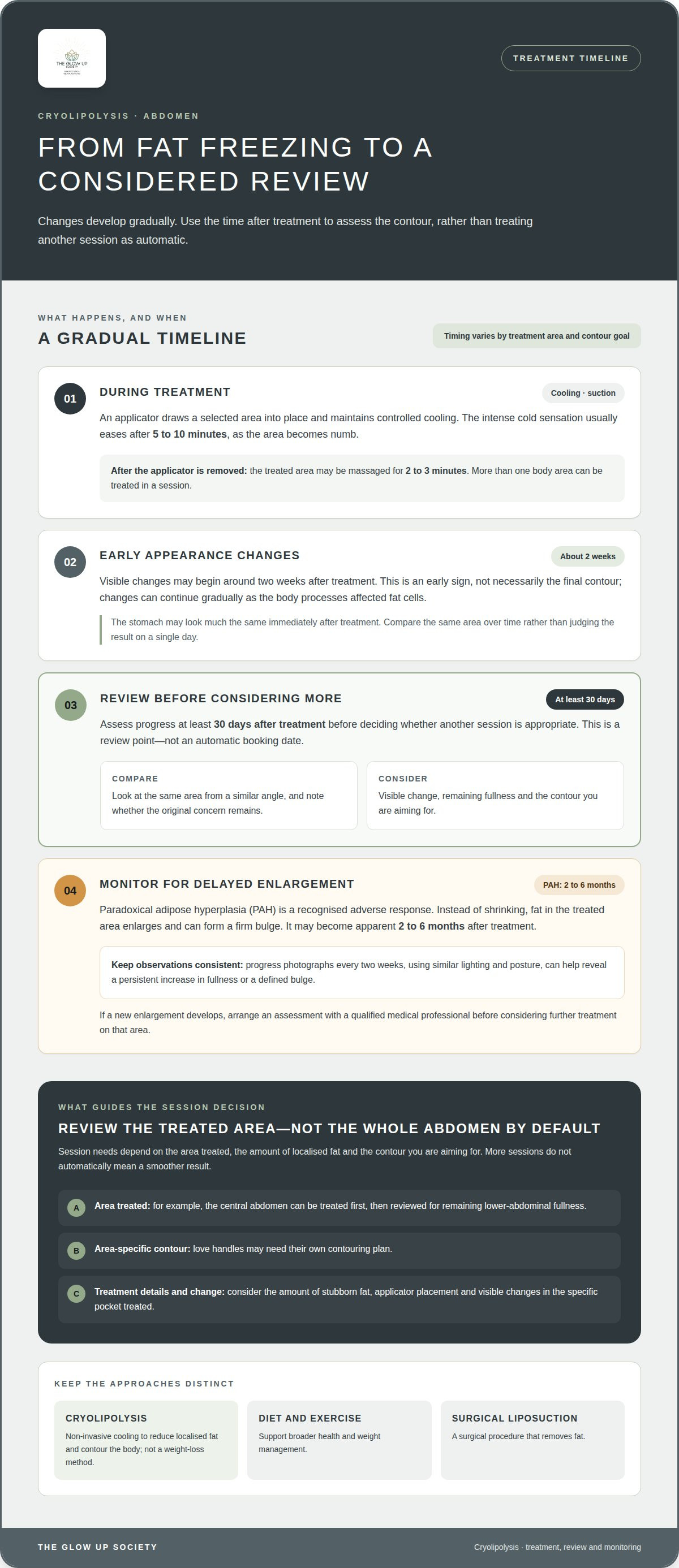
A flat-stomach goal doesn’t automatically call for one freezing session. The number of cryolipolysis sessions you may need for a flat stomach depends on the area treated, the amount of localised fat and the contour you’re aiming for. Progress is assessed at least 30 days after treatment before deciding whether another session is appropriate.
It’s natural to want a clear timeline and to understand the risks before choosing a treatment. Cryolipolysis uses controlled cooling to target fat beneath the skin, with changes developing gradually rather than immediately. This guide explains what a session involves, how treatment spacing is considered and when results may become visible. It also covers the rare risk of paradoxical adipose hyperplasia, so you can make an informed decision.
Key Takeaways
- Session needs depend on the area and your contour goals, so assess progress at least 30 days after treatment before considering another session.
- Paradoxical adipose hyperplasia can cause treated fat to enlarge and may become apparent 2 to 6 months after treatment.
- Expect an intense cold sensation at first; it usually lessens after 5 to 10 minutes as the area becomes numb.
- Visible changes may begin around two weeks after treatment, while remaining fat cells can still expand with weight gain.
Table of Contents
- Paradoxical adipose hyperplasia risk
- Waiting time between sessions
- What cryolipolysis and fat freezing involve
- When do cryolipolysis results appear and how long they last?
- The Glow Up Society: GA Peels
Paradoxical adipose hyperplasia risk
Paradoxical adipose hyperplasia (PAH) is a recognised adverse response to cryolipolysis. Instead of shrinking, fat in the treated area enlarges and can form a firm bulge. PAH generally becomes apparent 2 to 6 months after treatment, rather than immediately. That delayed change matters when you’re assessing whether freezing has helped a stubborn area. A fuller contour developing during this period shouldn’t be mistaken for the smooth reduction you hoped to achieve.
Monitor the treated area over the months after a session. Progress photographs taken every two weeks can help you compare its appearance consistently, using similar lighting and posture. Look for a persistent increase in fullness or a defined bulge where the applicator was placed. Changes can be difficult to judge from memory alone. If a new enlargement develops, arrange an assessment with a qualified medical professional before considering further treatment on that area.
CoolSculpting is a brand name associated with cryolipolysis, not a separate explanation for PAH. The risk concerns how treated fat responds, so a different device name doesn’t make a new bulge something to ignore. Cryolipolysis uses controlled cooling; surgical liposuction removes fat through a procedure. These are different approaches, and a concern after cooling should be assessed before deciding whether surgery or another option is suitable.
Diet and exercise support general health and weight management, but they don’t establish the cause of a localised change after treatment. PAH is not the same as simply retaining stubborn fat, and another cryolipolysis session may not address an enlarging treated area. Record when the change began and how it develops. That timeline, alongside photographs and treatment details, gives a medical professional useful context to assess the area and discuss next steps.
Waiting time between sessions
Allow time after treatment before assessing progress and considering another session. The abdomen can look or feel different as the treated area settles, so an immediate decision may not reflect its developing contour. This interval is an assessment point, not an automatic booking date. It gives you time to compare the area with your original goal and consider whether further fat reduction would address what remains.
The question of how many cryolipolysis sessions are needed for a flat stomach is best considered after assessing the treated area. For example, you might treat the central abdomen first, then review whether fullness remains across the lower abdomen. A separate area, such as the love handles, may need its own contouring plan. The area treated, the amount of stubborn fat, applicator placement and visible changes all help guide the decision.
At the review, use consistent observations rather than relying only on how your clothes fit on a particular day. Compare the same area of your abdomen from a similar angle and note whether the original concern remains. If the applicator focused on a particular pocket of fat, assess that pocket specifically. This can help distinguish an area that may benefit from further attention from one where the contour has already shifted towards your goal.
More sessions don’t automatically mean a smoother result. A measured review after 30 days helps connect the decision to visible progress, remaining fullness and your desired contour. This is also when to revisit how many cryolipolysis sessions may be appropriate for a flat stomach, rather than treating the whole abdomen by default. If you’re considering aesthetic goals more broadly, explore personalised aesthetic care as a separate part of your planning.
What cryolipolysis and fat freezing involve
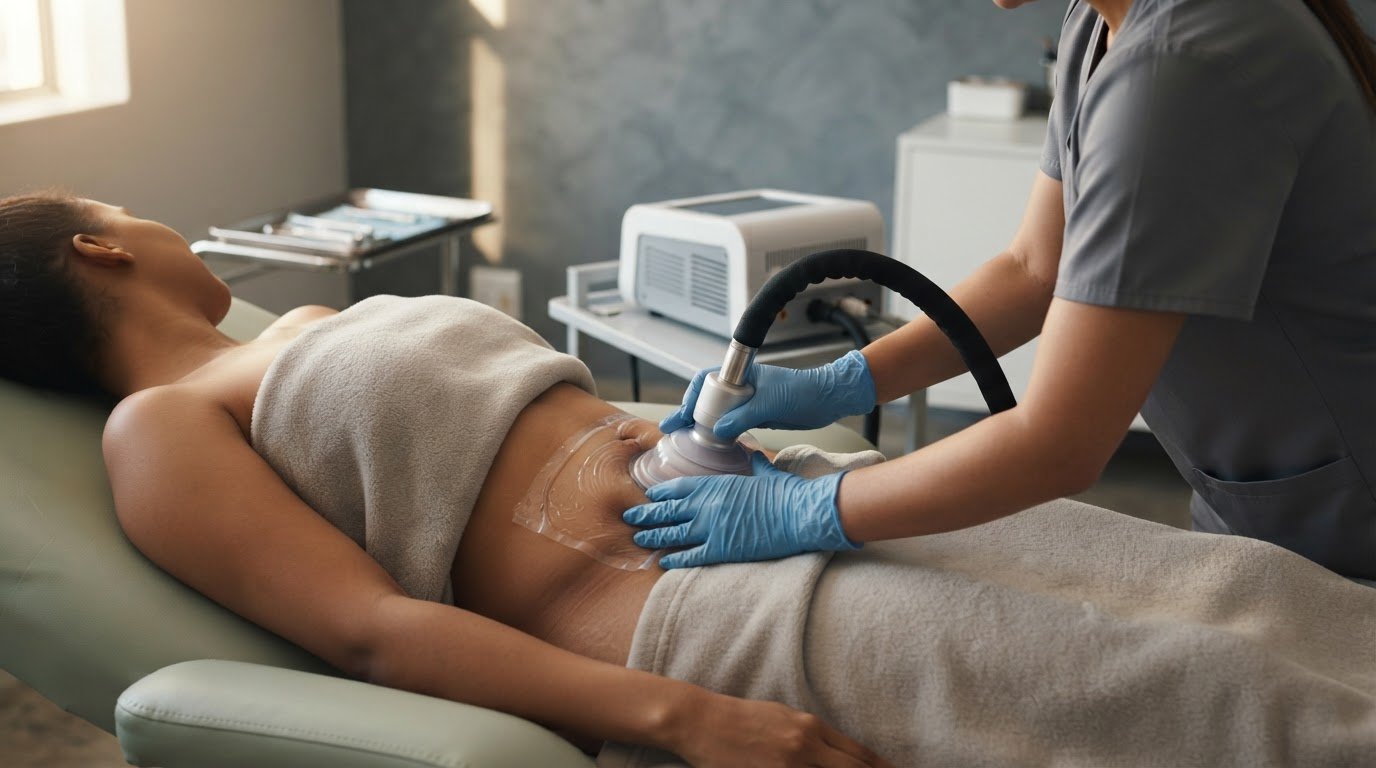
Cryolipolysis, often called fat freezing, uses controlled cooling to target fat cells beneath the skin. An applicator draws a selected area into place using suction, then maintains a controlled temperature during treatment. Cold sensations usually ease after 5 to 10 minutes as the area becomes numb. After the applicator is removed, the treated area may be massaged for 2 to 3 minutes. More than one body area can be treated during a session.
For a flatter stomach, the applicator is positioned over a defined area of abdominal fat. Thighs or another suitable area can also be considered during treatment. Cryolipolysis is non-invasive, unlike surgical liposuction, but it isn’t a weight-loss method. It aims to reduce localised fat and contour the body, whilst diet and exercise support broader health and weight management. It won’t address every cause of abdominal fullness or replace surgery when a more substantial change is needed.
Is cryolipolysis effective for achieving a flat stomach compared with diet, exercise or liposuction? It can help reduce a localised pocket of fat, whilst diet and exercise address overall weight and liposuction is a surgical option. These approaches work differently, so the right comparison depends on whether your concern is stubborn belly fat or broader weight change.
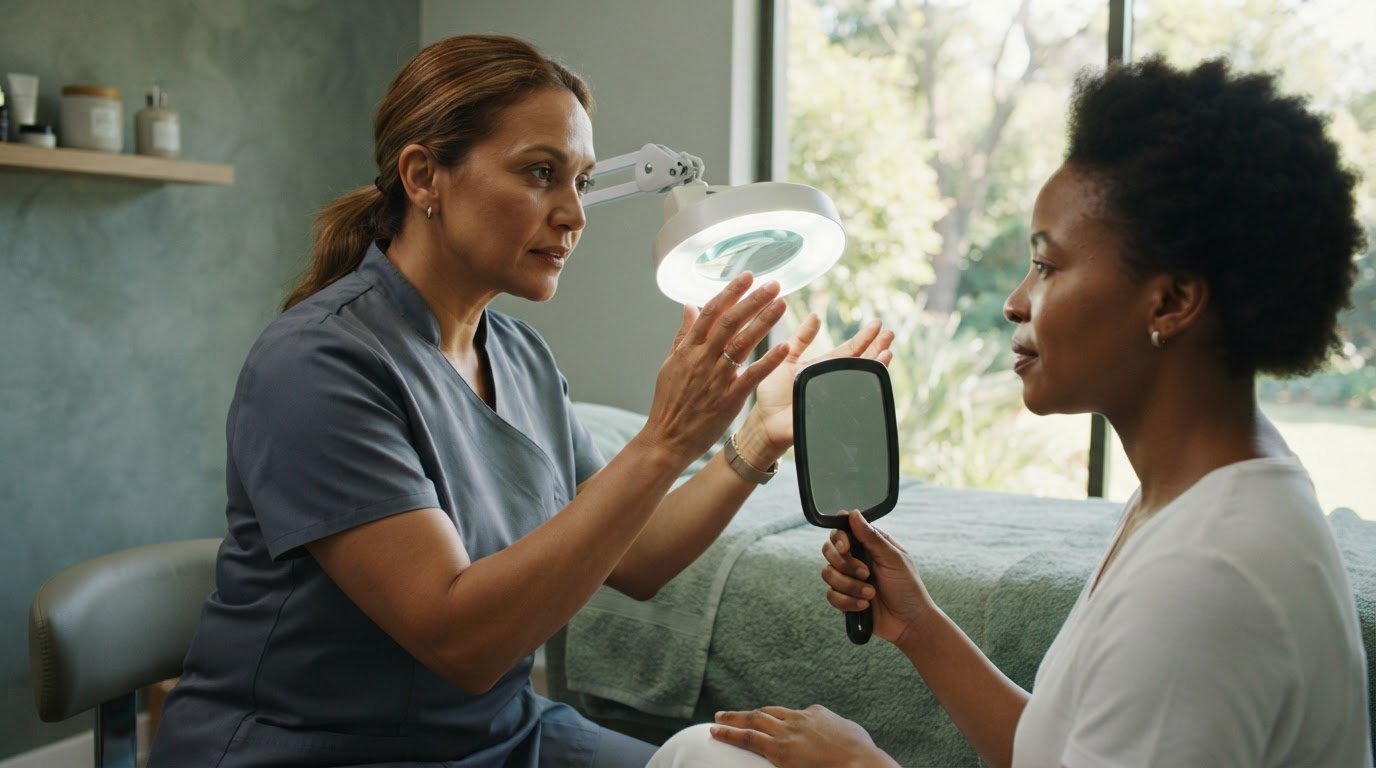
Before treatment in South Africa, use a consultation to discuss your health, the treatment area and your expected outcome. Ask who will perform the procedure, which device and applicator will be used, how its temperature is controlled and how side effects are managed. Request an explanation of the device instructions and maintenance, as well as the practitioner’s relevant training. Clear answers help you understand the process, but don’t replace a personal assessment of suitability.
When do cryolipolysis results appear and how long they last?
Most clients begin to see appearance changes about two weeks after cryolipolysis. This early change is a first sign, not necessarily the final contour. The treated area develops gradually as the body processes affected fat cells. Your stomach may look much the same immediately after treatment, then appear more defined later. Comparing the same area over time gives a clearer picture than judging the outcome on one day.
A first session may produce only a modest change in the treated area. This helps explain why one treatment might create a subtle change rather than a flat stomach. The outcome also depends on the location and amount of fat treated, alongside your desired contour. A small pocket below the navel, for example, can look different from broader fullness across the abdomen.
Fat cells eliminated through cryolipolysis don’t regenerate. However, the treated area is not immune to future changes: remaining fat cells can expand with weight gain. The visible contour can therefore change if your weight increases, even when the eliminated cells haven’t returned. Maintaining a steady, healthy routine supports your overall wellbeing and helps you understand changes in your body shape over time.
Use your original treatment goal as a reference when reviewing the result. If you wanted a softer lower-abdomen contour, assess that area specifically rather than expecting a change across your entire stomach. The distinction between localised fat reduction and overall weight change can help set a realistic measure of progress. If you’re considering broader aesthetic goals alongside body contouring, explore your aesthetic treatment options.
The Glow Up Society: GA Peels
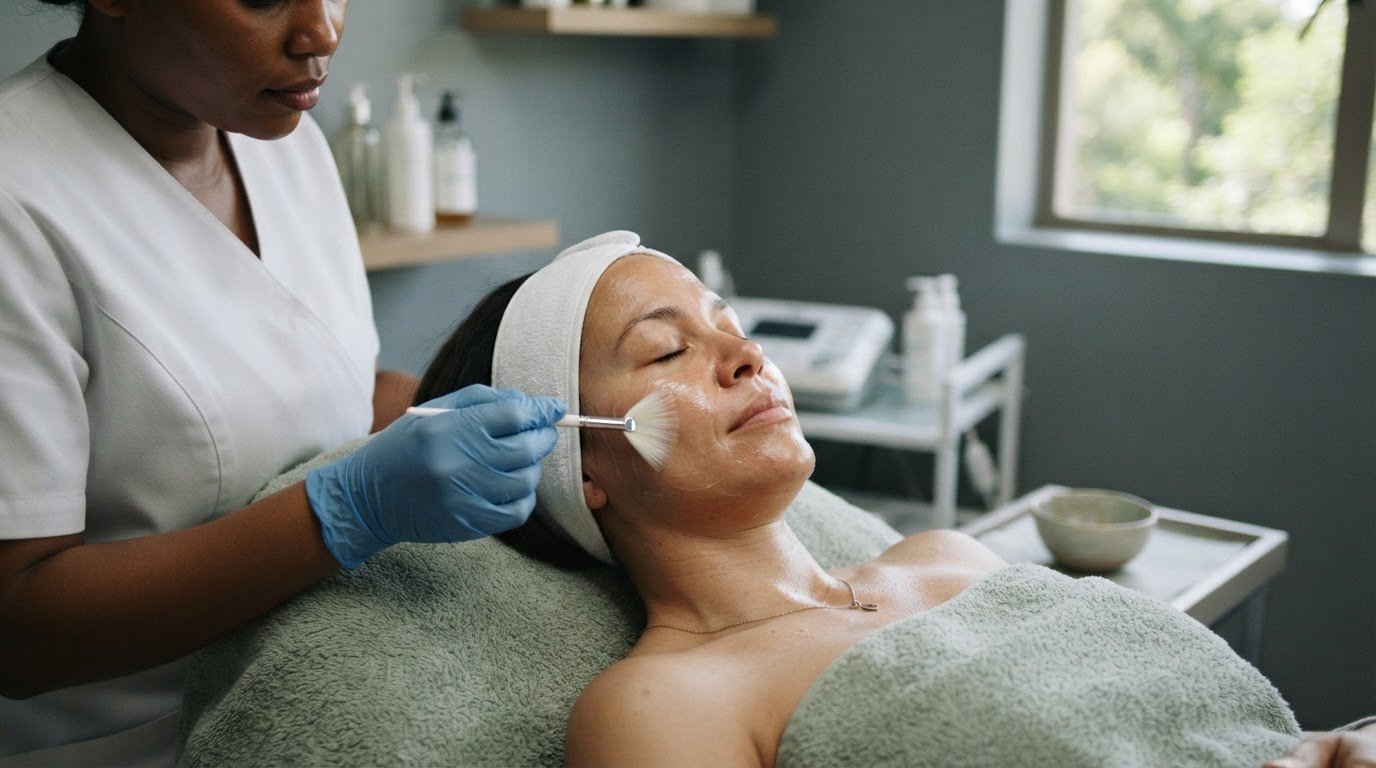
The Glow Up Society offers GA Peels for people looking to address skin concerns alongside body-contouring goals. Cryolipolysis targets localised fat, while a peel is a separate skin treatment, so the two serve different purposes. If your focus also includes skin texture or radiance, GA Peels, LHA Peels and Retinol Peels offer distinct options to discuss. Optiphi Microneedling is another option for skin-focused goals.
Consider these treatments for your skin needs, rather than as a way to change abdominal fat or replace cryolipolysis. A conversation about your priorities can help you understand which approach is relevant to your goals. For a calm next step, contact The Glow Up Society in Fourways, serving people from Sandton, Lonehill, Kyalami, Bryanston and North Riding.
Choose your next step with care
Your next step is to clarify what you want to address and keep each treatment aligned with that goal. If you’re asking how many cryolipolysis sessions you may need for a flat stomach, focus on the body-contouring outcome you’re seeking. Skin texture or radiance is a separate concern, with its own treatment options and considerations.
The Glow Up Society offers GA Peels, LHA Peels and Retinol Peels for skin-focused goals. These treatments are distinct from cryolipolysis, so consider them when your priority is skin rather than abdominal fat. A thoughtful conversation can help you explore which approach fits what you’d like to address.
Contact The Glow Up Society to discuss your aesthetic goals and take a considered next step.