Skincare
Chemical Peel for Pigmentation: How Treatment Count and Risks Vary
· The Glow Up Society
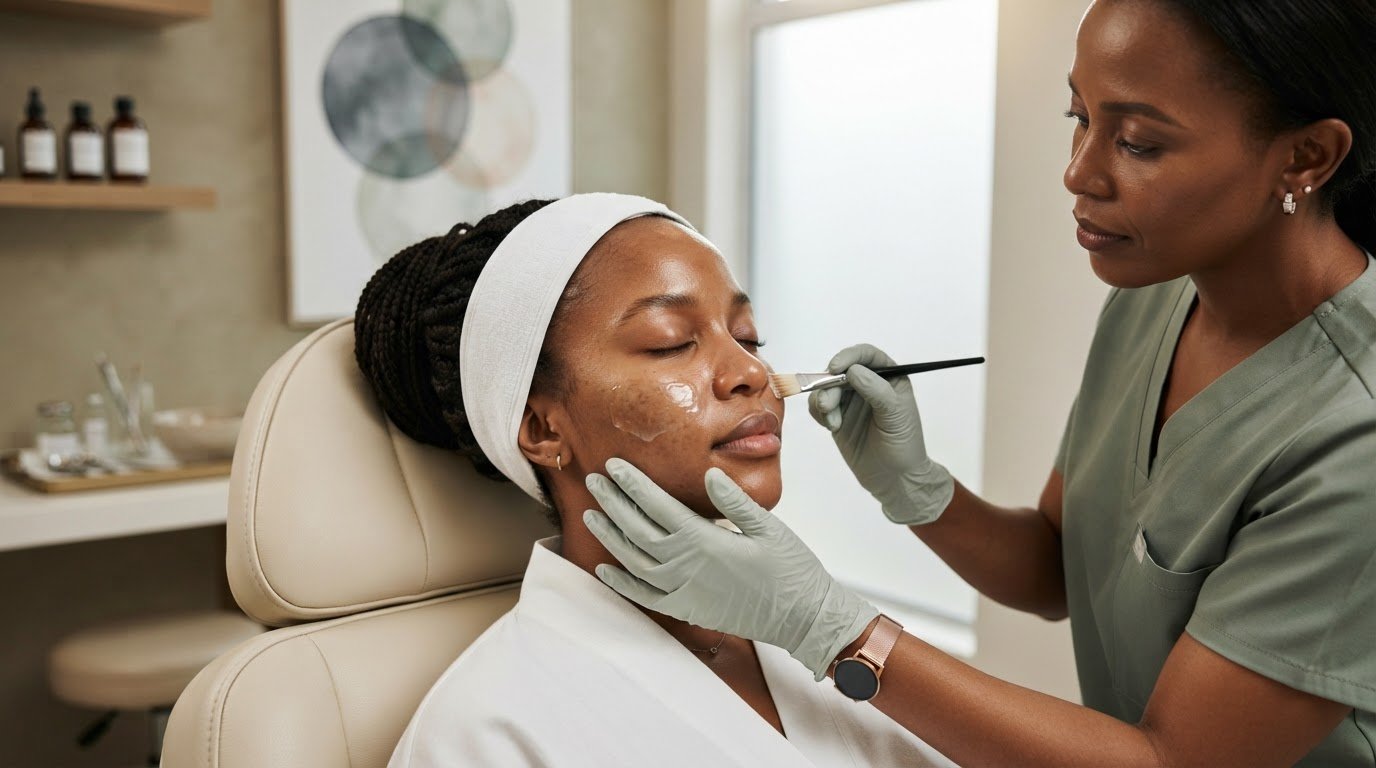
There is no fixed number of treatments for a chemical peel for pigmentation. Mild dark patches may begin to improve after one or two sessions, while a course of three to five light peels is typically used to work towards a desired result. The interval and number depend on peel depth and how your skin responds.
It’s natural to want a clear estimate before starting, but a stronger peel is not automatically a better fit. Light, medium and deep peels differ in how they affect the skin, recovery and treatment frequency. Pigmentation type, severity and skin suitability all help shape the plan, and some peels can increase the risk of further discolouration. Understanding recovery and sun protection can help you weigh the options.
Key Takeaways
- Mild pigmentation may start to improve after one or two sessions, while a light-peel course commonly involves three to five treatments.
- Peel depth affects both treatment spacing and recovery, so stronger treatments don’t automatically mean faster or more suitable results.
- Skin tone, sensitivity, active infections and certain skin conditions can influence whether a peel is appropriate.
- Understand how sun exposure and post-treatment care can affect the risk of further pigmentation.
- Explore how different peel options may fit your skin goals and suitability.
Table of Contents
- How Many Chemical Peels for Hyperpigmentation?
- Contraindications and candidate suitability
- How peel strength and pigmentation severity affect treatment numbers
- Pigmentation risks and complications
- Light, medium, and deep peel types
- The Glow Up Society: GA Peels
How Many Chemical Peels for Hyperpigmentation?
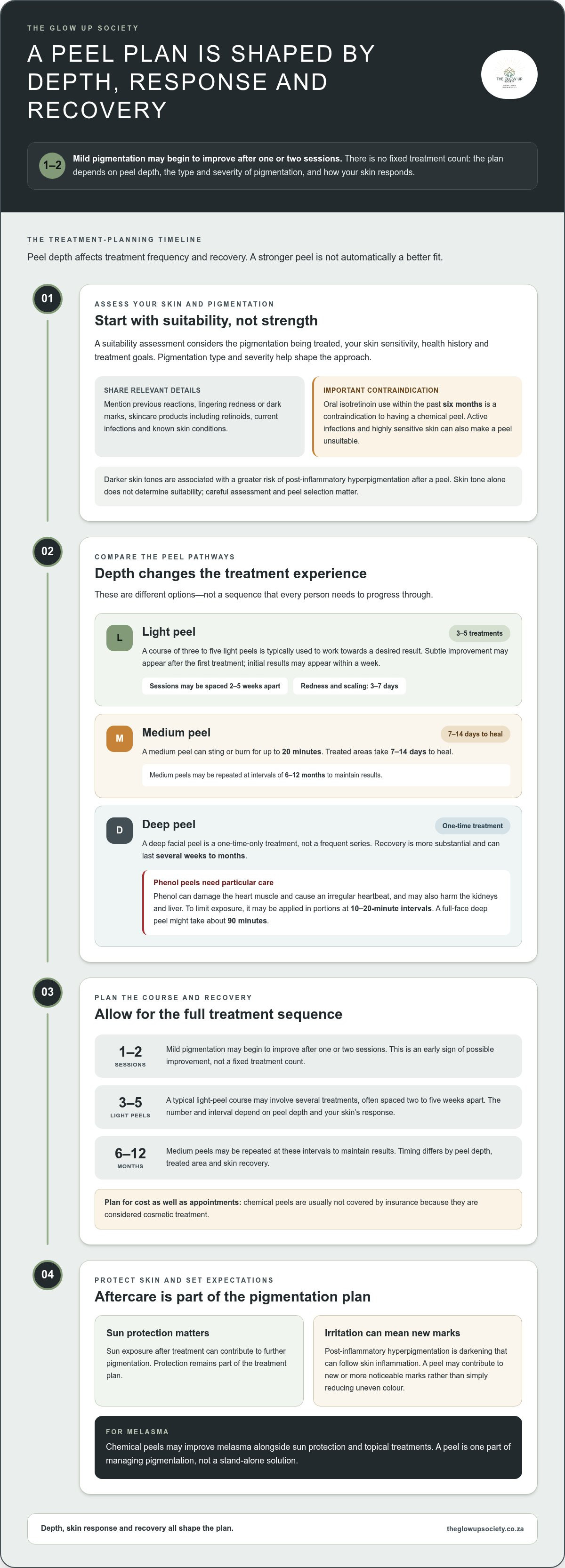
There isn’t one treatment count for every case. Mild pigmentation may begin to improve after one or two sessions, whilst peel depth, skin response and the type of discolouration shape the wider plan.
Melasma and uneven skin colouring
Melasma causes dark patches, while uneven skin colouring can have several causes. Chemical peels may improve melasma alongside sun protection and topical treatments, according to Melbourne City Dermatology. A peel is one part of managing pigmentation, not a stand-alone solution.
Melasma can be associated with pregnancy or taking birth control pills, and a peel may help improve the patches. The distinction matters because the cause and depth of the pigment affect the treatment approach. Light peels may show subtle improvement after the first treatment, but a course may be needed for a visible change.
Expectations for different peel depths
Peel depth describes how deeply the chemical solution acts, influencing both recovery and treatment frequency. Light chemical peels may produce initial results within a week. Redness and scaling can last three to seven days, and a course of three to five light peels is typically used to work towards the desired result.
Medium peels can sting or burn for up to 20 minutes, with treated areas taking seven to 14 days to heal. Deep peels involve more substantial recovery, often lasting several weeks to months. A deep facial peel is a one-time-only treatment, rather than a frequent series.
BHA peels and post-inflammatory pigmentation
BHA means beta hydroxy acid, an exfoliating acid used in some peels. Post-inflammatory hyperpigmentation is darkening that can follow skin inflammation. This matters because irritation from a peel can contribute to new or more noticeable marks rather than simply reducing existing uneven colour.
Darker skin tones are associated with a greater risk of post-inflammatory hyperpigmentation after a peel. This does not make skin tone a diagnosis; it makes careful assessment, suitable peel strength and recovery care important. Sun exposure after treatment can also contribute to further pigmentation, so protection remains part of the treatment plan.
Insurance and cosmetic treatment
Chemical peels are usually not covered by insurance because they are considered cosmetic treatment. This can matter when planning a course: several light sessions may be spaced two to five weeks apart, so the number of appointments affects the overall commitment.
Medium peels may be repeated at intervals of six to 12 months to maintain results. These timings are not interchangeable. Peel depth, the area treated and the skin’s recovery all influence how a course is arranged. Consider the likely sequence and aftercare together, rather than judging a peel by its first visible change alone.
Phenol exposure in deep peels
Phenol is used in some deep chemical peels, which require particular care because its effects can extend beyond the skin. A deep phenol peel can damage the heart muscle and cause an irregular heartbeat, and may also harm the kidneys and liver.
To limit exposure, phenol may be applied in portions at 10- to 20-minute intervals. A full-face deep peel might take about 90 minutes. These details help explain why deep peels differ sharply from light treatments in risk, recovery and frequency. They are not simply a stronger version of a light peel.
Contraindications and candidate suitability
A peel’s suitability depends on skin sensitivity, medical history and the pigmentation being treated. In South Africa, look for a practitioner who can explain their training, assess your skin, and discuss the procedure’s risks, aftercare and alternatives clearly.
Suitability for darker skin tones
Darker skin tones are associated with a greater risk of post-inflammatory hyperpigmentation after a chemical peel. Irritation or inflammation can leave new dark marks, complicating the original concern. Skin tone alone does not mean every peel is unsuitable, but it makes the peel type and strength important considerations.
Peel depth matters too. A medium or deep procedure can affect the skin more substantially than a light peel, so do not assume that someone else’s experience will apply to you. An assessment considers your skin’s response to previous treatments and whether a gentler approach or an alternative is more appropriate.
Consultations for peel suitability
A suitability consultation assesses your skin, health history and treatment goals before a peel is chosen. This matters because the same procedure can have different implications for someone with sensitive skin, an active infection or a history of pigmentation after inflammation.
Use the discussion to understand why a particular peel is being considered, what recovery involves and how aftercare supports your skin. A practitioner should explain the reasoning in language you understand, rather than treating peel strength as a measure of likely benefit.
Share relevant health and skincare details before treatment. Oral isotretinoin use within the past six months is a contraindication to having a chemical peel. Active infections and highly sensitive skin can also make a peel unsuitable, while certain skin conditions may call for an alternative. These details can affect whether treatment proceeds and which approach is considered.
Describe your pigmentation and any past reactions to skincare procedures. For example, mention whether a previous treatment left lingering redness or dark marks. Explain which products you use, including retinoids, and disclose any current infection or known skin condition. These details help distinguish the concern being treated from factors that could affect recovery.
Skin suitability is not decided by colour labels alone. The increased risk of post-inflammatory pigmentation in darker skin tones calls for thoughtful selection, not blanket assumptions about every person or peel. A practitioner’s explanation should connect your skin’s needs with the proposed procedure, expected recovery and ways to reduce irritation.
If the discussion leaves you unclear about the peel’s purpose, depth or aftercare, pause before proceeding. A considered plan should address your concerns and explain why the chosen approach fits your skin. You can explore skin treatment options as part of understanding approaches to your skin goals.
How peel strength and pigmentation severity affect treatment numbers
Peel strength determines how deeply the chemical solution acts, while pigmentation severity helps shape the treatment plan. Superficial treatments usually involve a course, whereas stronger peels need more recovery between sessions. The aim is measured improvement, not simply choosing the deepest peel.
With light peels, a subtle change may appear after the first treatment. A course of three to five light peels is typically used to work towards the desired goal, with sessions repeated every two to five weeks. Mild hyperpigmentation may begin improving after one or two sessions. More persistent or extensive pigmentation can require a different approach and longer-term planning.
For chemical peel sessions generally, the interval typically ranges from one to four weeks, depending on peel strength and skin recovery. That range is not a schedule for every peel: light peels may be repeated every two to five weeks, while medium peels may be spaced six to 12 months apart to maintain results. Skin recovery helps determine when another treatment can take place.
Recovery also varies by depth. A light peel may involve little downtime, with recovery within hours to a few days. A medium peel can take seven to 14 days to heal, while a deep peel may need several weeks to months. After a deep peel, healing may take 14 to 21 days. These differences matter when arranging treatments around work or social plans.
Sensations vary during treatment. Stinging or burning with a medium peel may last up to 20 minutes. Afterwards, skin may look red or flaky for a few days. With a light peel, redness and scaling may last three to seven days. Allow for healing before deciding whether visible changes mean another session is needed.
Preparation can help your skin respond more comfortably. Avoid tanning and direct sun exposure for two weeks before each treatment. Unless a physician advises otherwise, stop retinoid products one to two weeks beforehand. Avoid hair-dying, permanent-wave or hair-straightening treatments, facial masks and facial scrubs during the week before your peel. Certain hair-removal techniques should also be stopped about a week beforehand.
There are other timing details. Don’t shave the treated area during the 24 hours before a peel. After treatment, use daily high-SPF, broad-spectrum sunscreen to help prevent further pigmentation. Following a medium peel, avoid sunlight until your skin is completely healed. Keep skin moisturised and avoid harsh products during recovery.
In practical terms, a light-peel course usually means three to five sessions, often two to five weeks apart. After a medium peel, healing takes seven to 14 days, and maintenance sessions may be spaced six to 12 months apart. The depth, pigmentation pattern and skin’s recovery influence the schedule.
Pigmentation risks and complications
A peel can affect existing pigment as well as the skin’s surface. Sun exposure during recovery is one factor that can contribute to post-inflammatory hyperpigmentation.
Risk of worsening pigmentation
Worsening pigmentation means dark marks become more noticeable or new marks appear after treatment. This matters when your goal is to address uneven skin, because some chemical peels may worsen melasma rather than improve it. Darker skin tones are also associated with a greater risk of post-inflammatory hyperpigmentation after a peel.
Sun protection is central to reducing further pigment changes. Sun exposure can contribute to post-inflammatory hyperpigmentation, so daily high-SPF, broad-spectrum sunscreen is recommended after a peel. After a medium peel, avoid sunlight until the skin is completely healed. These steps help protect treated skin during recovery.
Chemical peel risks
Chemical peel risks include unwanted changes in pigmentation, particularly when treatment causes inflammation. This concern applies across peel strengths, but deeper treatments affect the skin more extensively and require longer recovery. Trichloroacetic acid is a peel ingredient; its name alone does not show how a peel will affect your skin.
Some peels may worsen melasma, so choosing the treatment carefully matters when melasma is the concern. A history of pigment changes after inflammation and darker skin tone are relevant factors. They help explain why treatment suitability and sun protection matter, rather than relying only on the peel’s intended effect.
Phenol peels carry specific risks beyond visible skin changes. Deep chemical peels using phenol can damage the heart muscle and cause an irregular heartbeat; they can also harm the kidneys and liver. Phenol exposure is limited by applying the peel in portions at 10- to 20-minute intervals. This is one reason deep peels differ from lighter treatments.
Recovery can also affect day-to-day plans. Redness and scaling after a light peel may last three to seven days, whilst medium-peel healing takes seven to 14 days. Deep-peel healing may take 14 to 21 days, with recovery sometimes lasting several weeks to months. Allowing time for healing matters because treating skin before it recovers can add to irritation.
After a peel, keep your skin moisturised and avoid harsh products. Daily high-SPF, broad-spectrum sunscreen helps prevent further pigmentation. After a medium peel, avoid direct sunlight until the skin is completely healed. These care steps support recovery, especially when sun damage or uneven colour is already a concern.
Light, medium, and deep peel types
Peels are grouped by how deeply they act: superficial, medium or deep. Depth affects treatment frequency, recovery and the level of aftercare needed.
Glycolic and lactic acids are alpha hydroxy acids; salicylic acid is a beta hydroxy acid, or BHA, and TCA means trichloroacetic acid. The ingredient name alone does not determine a peel’s depth or suitability for pigmentation. Formulation and the treatment plan matter too.
Superficial peels act closer to the skin’s surface and are often used as a course. Three to five light peels are typically used to work towards a desired result, with sessions repeated every two to five weeks. A subtle change may appear after the first treatment. Light peels may produce initial results within a week, although redness and scaling can last three to seven days.
Medium peels act more deeply and involve a longer recovery. Treated areas take about seven to 14 days to heal, and stinging or burning during treatment may last up to 20 minutes. Medium peels may be repeated at intervals of six to 12 months to maintain results. Their deeper action can make them unsuitable for some skin types, particularly where pigment changes are a concern.
Deep peels reach further into the skin and are not usually repeated as a frequent series. A deep chemical peel applied to the face is a one-time-only treatment. Healing may take 14 to 21 days, and recovery can last several weeks to months. Deep peels using phenol also carry risks to the heart, kidneys and liver, making their risk profile distinct from superficial treatments.
For pigmentation, a stronger peel should not be mistaken for a better match. Relevant factors include pigment type, skin tone, sensitivity and how much recovery your routine can accommodate. Some peels may worsen melasma, so the intended depth must be considered alongside the condition being treated.
After any peel, daily high-SPF, broad-spectrum sunscreen helps prevent further pigmentation, according to Melbourne City Dermatology. After a medium peel, avoid sunlight until the skin is completely healed. This matters because sun exposure during recovery can contribute to post-inflammatory hyperpigmentation.
Choose based on depth, pigment concern and recovery needs, rather than acid name alone. Explore a personalised peel approach for your skin goals.
The Glow Up Society: GA Peels
The Glow Up Society offers GA Peels as one option for people exploring chemical peel treatments for pigmentation. LHA Peels and Retinol Peels are also available, alongside Optiphi Microneedling. Each approach differs, so the type of pigmentation, skin sensitivity and recovery needs matter when considering which treatment may suit your goals.
If you’re weighing a peel against microneedling, focus on the concern you want to address and the aftercare you can accommodate. A treatment discussion can help you understand the available options and how they relate to your skin priorities, without assuming one approach suits everyone.
For a calm conversation about your options, contact The Glow Up Society.
Choose a considered next step for your skin
Choosing a chemical peel for pigmentation involves more than selecting an ingredient or treatment depth. It is also an opportunity to clarify your priorities, understand your skin’s needs and feel comfortable with the care plan before beginning.
The Glow Up Society offers GA peels, LHA peels and retinol peels. A conversation about your pigmentation concerns and skin suitability can help you explore these options thoughtfully. An individual assessment guides the approach that fits your needs.
Contact The Glow Up Society to discuss your skin goals and take your next step with confidence.
Frequently Asked Questions
How Many Sessions Are Needed?
Mild pigmentation can begin to improve after one or two sessions, while a light-peel course typically involves three to five treatments. If marks remain after an early session, that alone does not mean the treatment has failed. The planned course depends on peel depth, the pigmentation pattern and your skin’s recovery. Keep a simple record of changes between appointments to discuss how your skin is responding.
Which chemical peels work best for pigmentation and melasma?
No single chemical peel for pigmentation is best for everyone. Glycolic, lactic and salicylic acids, and trichloroacetic acid, or TCA, differ in formulation and treatment depth; the ingredient name alone does not establish suitability. Melasma requires particular care because some peels can worsen it. The decision should account for your skin tone, sensitivity and the cause of uneven colour, alongside sun protection and topical care.
What are the risks and side effects of chemical peels, especially for darker skin tones?
Possible concerns include irritation, redness, scaling and changes in pigmentation. Darker skin tones are associated with a greater risk of post-inflammatory hyperpigmentation, meaning inflammation can leave dark marks. Sun exposure during recovery can contribute to further pigmentation, so aftercare matters. Deep phenol peels have additional risks, including heart rhythm disturbance and harm to the kidneys or liver. Risks vary by peel depth and ingredient.
How should you prepare for a chemical peel and care for skin afterward?
Before treatment, tell the practitioner about medicines, skincare products and recent procedures, so these can be considered in the plan. Avoid shaving the treated area during the 24 hours before a peel. After treatment, keep skin moisturised, avoid harsh products and use daily high-SPF, broad-spectrum sunscreen. If you’re unsure whether a product belongs in your routine during recovery, leave it out until your aftercare guidance addresses it.
How long does pigmentation take to improve after a chemical peel?
Light peels can produce initial results within a week, and subtle improvement may appear after the first treatment. That early change is not the same as the full result of a course. Pigment response depends on its cause, peel depth and whether the skin recovers well between treatments. Compare the same areas in consistent lighting over time, rather than judging progress from a single day’s appearance.
Who should avoid chemical peels, including people with melasma or sensitive skin?
People who have taken oral isotretinoin during the past six months should not have a chemical peel. Active infections, highly sensitive skin and certain skin conditions can also make a peel unsuitable or call for an alternative. Melasma is not automatically a reason to avoid every peel, but some peels can worsen it. Skin tone, irritation history and the specific treatment all affect suitability.
Are chemical peels safe to use with retinoids, hydroquinone, or other pigmentation treatments?
Retinoid products are generally stopped one to two weeks before a peel, unless a physician advises otherwise. Tell the practitioner about hydroquinone and every other pigmentation product you use, including how often you apply them. The combination and timing should account for the peel’s strength and your skin’s condition. Do not add several active products during recovery, when harsh skincare can irritate freshly treated skin.