Skincare
Chemical Peel Aftercare: A Calm, Clear Guide to Recovery
· The Glow Up Society

What if the best thing you can do after a chemical peel is keep your routine simple? Chemical peel aftercare can feel uncertain when redness, tightness or peeling appears, especially when online advice about washing, products and sun protection doesn’t agree. Some changes can be part of recovery, but your skin still deserves gentle, considered care.
If you’re wondering what to do after a peel, focus on three things: handle your skin gently, protect it from the sun and follow the instructions for the peel you received. The right approach depends on the treatment and your individual skin, so a one-size-fits-all routine may not be suitable.
This guide explains what your skin may feel like as it recovers, how to keep your routine gentle and which signs call for professional advice. You’ll also learn why it’s best to let peeling happen naturally, and how cleansing, moisturising and sun protection can support a calmer recovery. At The Glow Up Society in Fourways, GA, LHA and retinol peels are tailored to individual skin concerns, with aftercare guidance suited to your treatment and skin.
Key Takeaways
- Dryness, sensitivity and flaking can vary according to your peel and your skin.
- Build a gentle chemical peel aftercare routine around your clinic’s instructions for cleansing, moisturising and sun protection.
- Picking or trying to speed up flaking can disrupt recovery. Follow your instructions about when to pause active skincare.
- Aftercare guidance can differ for GA, LHA and retinol peels, so don’t assume there is a fixed recovery timeline.
- Unexpected or worsening symptoms are a reason to seek personalised advice from your treating clinic.
Table of Contents
- Chemical peel aftercare: what can your skin feel like afterwards?
- A gentle chemical peel aftercare routine for the first days
- What to avoid after a chemical peel, and why
- Does aftercare change after a GA, LHA or retinol peel?
- Chemical peel aftercare in Fourways: when to contact your clinic
Chemical peel aftercare: what can your skin feel like afterwards?
There isn’t one response that everyone should expect after a peel. Your experience depends on the treatment and how your skin responds. Temporary dryness, tightness, sensitivity, redness or visible flaking may occur, but the timing and intensity vary. Some people notice little visible peeling. The amount of flaking isn’t a measure of whether the treatment has worked.
Post-peel aftercare means supporting your skin gently as it recovers, following the instructions for your peel. Resist the urge to rub, pull or speed up loose flakes. For general context on the treatment itself, read this overview of chemical peel types and purposes.
Which changes may be part of a normal recovery?
Your skin may feel drier or more delicate than usual. Mild tightness or sensitivity can also make familiar products feel different. Flaking may be subtle or more noticeable, and it doesn’t happen in the same way for everyone. Avoid comparing your skin with someone else’s or relying on a fixed day-by-day timeline.
Follow the written instructions supplied after your treatment, even if general advice online suggests a different routine. Those directions are specific to your peel and explain what to apply, how to cleanse and what to avoid. If you’re unsure whether a change is expected, ask your treating clinic. Don’t experiment with new products to try to settle your skin.
When should you seek advice about your skin?
Contact your treating clinic promptly if symptoms feel severe, worsen rather than settle, or seem unexpected based on the guidance you were given. Intense discomfort, marked swelling, extensive blistering or possible signs of infection, such as increasing warmth, spreading redness or discharge, deserve professional attention. These examples aren’t a diagnosis; your clinician can assess your skin in context.
A question about mild dryness, using a recommended product or resuming your usual routine can be raised with the clinic for personalised guidance. A rapidly worsening reaction, severe pain, significant swelling or symptoms affecting your eyes should not wait for a routine reply. Seek urgent medical attention if symptoms are severe or you feel seriously unwell.
In Fourways, The Glow Up Society offers GA, LHA and retinol peels tailored to individual skin concerns. Since the treatment and your skin both shape recovery, advice from the clinic that treated you is more useful than copying someone else’s routine. Keep your written aftercare instructions close, note any changes that concern you and share those details when seeking guidance.
A gentle chemical peel aftercare routine for the first days
A simple routine can make recovery feel more manageable, but the order and timing should follow the instructions from the clinician who treated you. Their guidance takes precedence over general advice, including what to use, when to wash and when to apply each product. If anything is unclear, ask the treating clinic rather than guessing or copying another person’s routine.
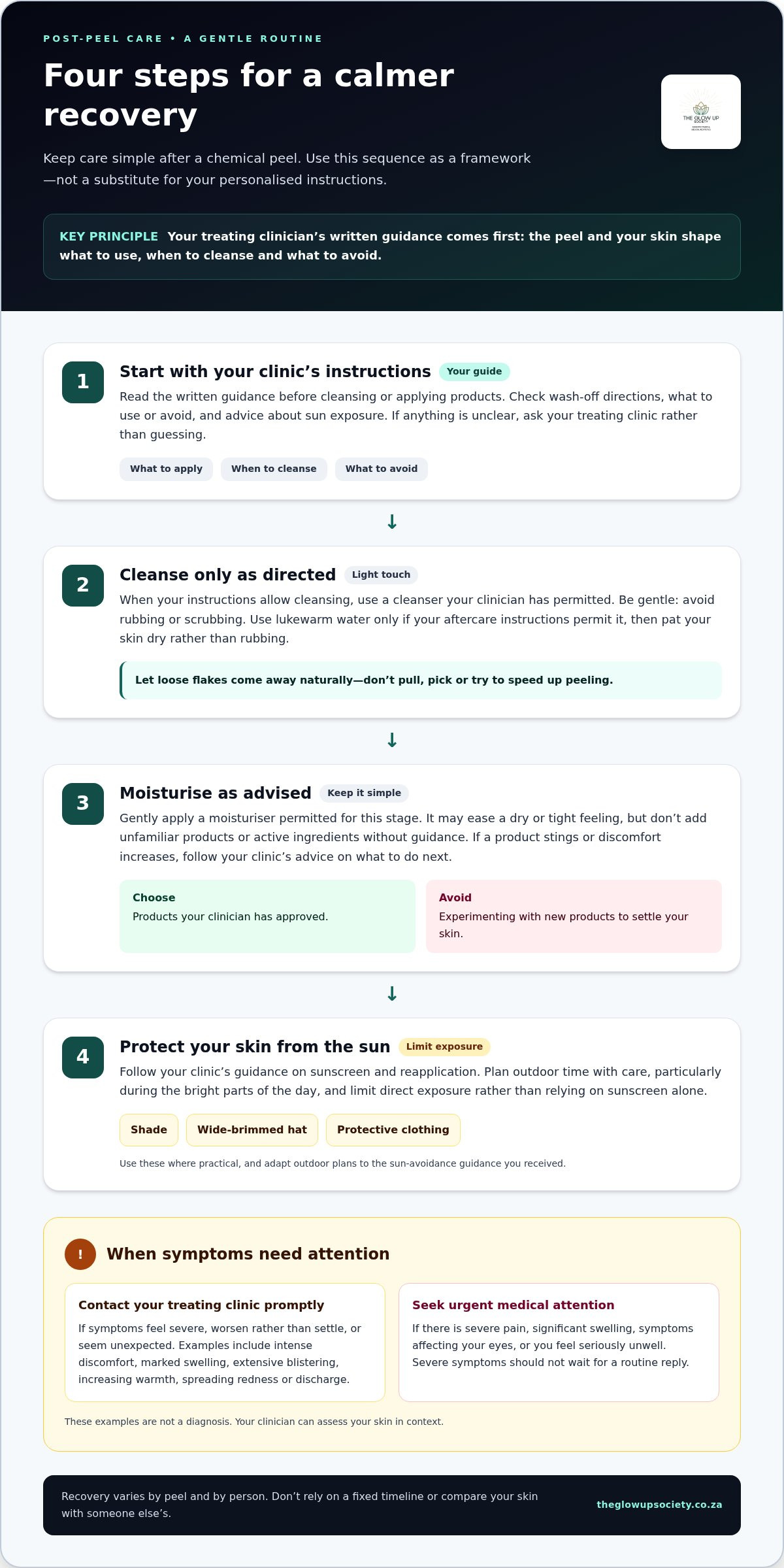
Use this sequence as a framework, not a substitute for your personalised instructions:
- Start with your clinic’s instructions. Read the written guidance before applying products or cleansing. Note any wash-off directions, products to use or avoid, and advice about sun exposure.
- Cleanse only as directed. When your instructions allow cleansing, use a light touch and a cleanser your clinician has permitted. Avoid rubbing, scrubbing or hot water unless your provider has specifically advised otherwise.
- Moisturise as advised. Apply a permitted moisturiser gently to support comfort. Don’t add new products or active ingredients just because your skin feels dry. Check that they’re suitable for your post-peel routine.
- Keep sun protection in mind. Follow your clinic’s guidance on sunscreen, shade and limiting direct exposure. Sunscreen is one part of protection, not a reason to spend long periods in the sun.
Gentle handling avoids unnecessary friction on skin that may be more sensitive. Consistent sun protection also helps limit exposure during recovery. For a general medical overview of the healing process and possible risks, see the Mayo Clinic chemical peel recovery guidance. Your treating clinician’s instructions should guide your own routine.
How should you cleanse and moisturise after a peel?
Keep each step calm and simple. Use lukewarm water only if your aftercare instructions permit it, and pat your skin dry rather than rubbing. Choose products your clinician has approved for this stage. Moisturising may ease a dry or tight feeling, but avoid layering unfamiliar formulas or active ingredients without guidance. If a product stings or discomfort increases, follow your clinic’s advice on what to do next.
How can you protect freshly treated skin from the South African sun?
Plan outdoor time with care, particularly during the bright parts of the day. Follow the clinic’s advice about sunscreen and reapplication, and use shade, a wide-brimmed hat or protective clothing where practical. Limit direct exposure rather than relying on sunscreen alone. If your plans involve spending time outdoors, adapt them to the sun-avoidance guidance you received.
Aftercare is personal. GA, LHA and retinol peels may come with different product and timing instructions, and your skin’s response matters too. The Glow Up Society offers tailored peel care in Fourways. Explore personalised peel guidance for support that reflects your treatment.
What to avoid after a chemical peel, and why
It can be tempting to speed up flaking or return to your full skincare routine as soon as your skin looks ready. Resist that urge. During recovery, the surface may be delicate, and extra friction or unapproved products can add irritation. Your chemical peel aftercare instructions should guide what to pause and when to resume it. Restrictions vary with the peel and your skin, so there isn’t one restart date that suits everyone.
Take particular care with actions that rub, heat or expose your skin. Follow your treating clinician’s guidance about:
- Picking, pulling or scrubbing at flakes, even if they catch on clothing or look uneven.
- Retinoids, exfoliating acids, abrasive scrubs and other active skincare products.
- Unnecessary rubbing from face cloths, cleansing tools or vigorous drying.
- Heat and direct sun exposure, especially if these conflict with your clinic’s recovery advice.
This isn’t a universal ban on every activity or product. It’s a reminder to let your skin settle before making changes and to follow the guidance provided for your treatment.
Should you use retinoids, exfoliants or acne products straight away?
Don’t restart retinoids, exfoliating acids or abrasive scrubs without guidance from your treating clinician. Some acne products also contain active ingredients, so check the label and ask whether they fit your aftercare plan. The right time to resume them depends on the peel and how your skin is recovering. Reintroduce products only as advised, and don’t layer several active ingredients to try to accelerate results.
Can you pick peeling skin or cover it with make-up?
Let flakes loosen on their own. Pulling or picking can irritate delicate skin and disturb the recovering surface, even when a loose edge seems easy to remove. Don’t use a scrub, cloth or tool to make peeling happen faster. If flaking feels uncomfortable or you’re unsure how to care for it, follow your written instructions or ask the treating clinic.
Make-up timing depends on your clinician’s instructions and your skin’s condition. If make-up has been permitted, use clean hands and applicators, and apply it gently without rubbing. If your skin feels sore, looks unusually irritated or is still visibly unsettled, avoid covering it until you’ve received guidance.
Keep the rest of your routine calm, too. Avoid unnecessary friction and follow your clinic’s advice about activities that create heat or involve prolonged sun exposure. If you’re unsure whether a product or activity is suitable, don’t guess based on someone else’s peel or routine. Your treating clinic can tailor advice to your treatment and how your skin is responding.
Does aftercare change after a GA, LHA or retinol peel?
Yes. Your instructions should reflect the peel you received, its formulation and application protocol, and how your skin responds. GA, LHA and retinol peels are not interchangeable, so another person’s routine or a generic online schedule may not suit your treatment. The name of the peel alone doesn’t tell you exactly what to apply or when to resume your usual products.
Aftercare should follow the exact peel protocol, not a generic online schedule. Use the written guidance from your appointment as your reference, and ask your treating clinician if anything is unclear.
| Peel type | Why instructions may differ |
|---|---|
| GA peel | The formulation and treatment protocol help determine the products and care steps recommended afterwards. |
| LHA peel | Your clinician tailors guidance to the specific treatment and your skin’s response, rather than relying on a general routine. |
| Retinol peel | Instructions reflect the peel used, your treatment plan and how your skin is recovering. |
Why do GA, LHA and retinol peel instructions differ?
GA refers to glycolic acid, LHA to lipo-hydroxy acid, and retinol peels use retinol. These names describe different peel categories, but they don’t establish a universal aftercare timetable or predict precisely how your skin will feel. The formulation, how the peel was applied and your individual response all matter. Follow the directions supplied for your appointment, including advice about cleansing, moisturising, sun protection and products to pause.
At The Glow Up Society in Fourways, GA, LHA and retinol peels are tailored to individual skin concerns. That personal approach matters after treatment, too. Guidance should relate to the peel you received and your skin, not a protocol copied from another clinic or an online discussion.
How can you keep your routine simple while skin recovers?
Stick to the essentials your treating clinic has approved. Use only the cleansing and moisturising steps you’ve been advised to follow, and avoid introducing new products whilst your skin is sensitive. A new serum or several active ingredients can make it harder to know what your skin is responding to and may not fit your recovery instructions.
- Keep your written aftercare directions somewhere easy to refer to.
- Make a note of questions about products, cleansing or when to return to your usual routine.
- Record changes that concern you rather than adjusting the treatment plan yourself.
If you’re considering a peel or would value care tailored to your skin concerns, explore GA, LHA and retinol peels at The Glow Up Society.
Chemical peel aftercare in Fourways: when to contact your clinic
After a peel, your treating clinic is the best source of advice about what to expect from your specific treatment. Get in touch if a symptom is unexpected, worsening or doesn’t fit the written instructions you were given. You don’t need to work out the cause yourself. Describe what you’re noticing and let the clinician guide your next steps.
Severe discomfort, marked swelling, blistering or possible signs of infection call for prompt professional attention. If symptoms feel severe or you feel seriously unwell, seek urgent medical care rather than waiting for routine follow-up. For less urgent questions, such as whether a product is suitable or when to return to your usual routine, contact the clinic that treated you.
What details should you share when asking about a reaction?
A clear account can help your treating clinic understand the change. Note when your peel took place, when the symptom first appeared, and whether it is improving, staying the same or worsening. Mention any skincare products used since treatment, including anything outside your written plan. If you have a photo showing how the area has changed, share it if the clinic’s usual communication method allows.
- Describe the sensation or visible change in plain terms, such as discomfort, redness or swelling.
- Explain where it appears and whether it has spread or changed.
- List the products you’ve applied and when you used them.
- Refer to your aftercare instructions and follow any guidance from your treating clinic.
How can personalised aftercare support your next steps?
Advice tailored to your peel and individual skin concerns is more useful than copying another clinic’s protocol. Treatments in the same category can have different formulations or application instructions, and skin responses vary. The Glow Up Society is based in Fourways and offers GA, LHA and retinol peels tailored to individual skin concerns. Personalised guidance can help you understand how to care for your skin and what to do next.
Keep your written instructions handy, and contact the treating clinic if you’re unsure about a change or the next step in your routine. For severe or rapidly worsening symptoms, seek urgent medical attention. If you’re exploring tailored peel care in Fourways, explore chemical peels at The Glow Up Society.
Carry gentle care into your next skin decision
Your recovery can offer useful clues about what feels comfortable for your skin and which parts of your routine you may want to discuss with a clinician. Keep that experience in mind before making changes or planning another treatment. A considered next step is more helpful than rushing to add products or repeat advice that wasn’t written for you.
Good chemical peel aftercare is personal, and questions are a natural part of caring for your skin. If you’re considering a peel, think about your skin concerns and the kind of guidance that would help you feel at ease. At The Glow Up Society, GA, LHA and retinol peels are tailored to individual skin concerns, with care offered in Fourways and nearby communities.
Explore the options at your own pace and take the next step when it feels right. Explore chemical peels at The Glow Up Society for calm, personalised guidance.
Frequently Asked Questions
How long does it take for skin to recover after a chemical peel?
Recovery time varies according to the peel, your treatment plan and your individual response, so there isn’t one timeline that applies to everyone. Your skin’s appearance alone may not tell you whether it has fully recovered. Follow the instructions from your treating clinic, including guidance on returning to your usual routine. If a change is unexpected, worsening or causing concern, contact the clinic for advice.
Is peeling a sign that a chemical peel has worked?
Visible flaking isn’t a reliable way to judge whether a peel has worked. Some people notice little visible peeling, and this alone doesn’t show that the treatment was ineffective. Don’t pick or pull at flakes to encourage more shedding. Instead, assess your progress in relation to the goals discussed before treatment and your clinician’s guidance at follow-up.
Can I use moisturiser after a chemical peel?
Moisturiser may be part of your aftercare, but the suitable product and timing depend on your peel and clinic’s protocol. Use a product your treating clinician has approved rather than choosing a new formula based on general online advice. Whilst your skin is sensitive, avoid introducing active or unfamiliar products. If an approved moisturiser causes unexpected discomfort, stop and contact the clinic for guidance.
Can I wear make-up after a chemical peel?
There isn’t one make-up schedule that suits every peel. Follow your treating clinician’s instructions and consider how your skin looks and feels before applying anything. Avoid make-up on irritated or broken skin unless your clinician advises otherwise. Once use is permitted, keep brushes and applicators clean, and apply gently. If make-up causes discomfort or your skin seems more irritated afterwards, ask the clinic what to do next.
Should I use sunscreen after a chemical peel?
Sun protection is an important part of post-peel care, but follow your clinic’s specific advice on sunscreen and how to use it. Shade, protective clothing and limiting direct exposure can provide additional precautions, particularly during outdoor activities. Sunscreen doesn’t make prolonged exposure appropriate whilst your skin is recovering. If you’re unsure how to manage sun protection around your plans, ask your treating clinic for guidance.
Can I use retinol or exfoliating acids after a chemical peel?
You may need to pause retinoids and exfoliating products, but the right pause and restart timing depends on your treatment and your skin’s recovery. Follow your treating clinic’s instructions rather than a general online schedule. Avoid adding other active products whilst your skin is sensitive. Before restarting your usual routine, ask which products to resume and whether to reintroduce them gradually.
What should I do if my skin feels unusually painful or looks worse after a chemical peel?
Contact your treating clinic promptly if pain is severe, symptoms are worsening or a change feels unexpected. Don’t try to diagnose the cause or apply another treatment without advice. Tell the clinic when the peel took place, what changed and which products you’ve used since. If symptoms seem urgent or you feel seriously unwell, seek urgent medical attention. This applies whether you’re in Fourways or nearby Sandton, Lonehill, Kyalami, Bryanston or North Riding.