Skincare
Botulinum Toxin Explained: Uses, Safety, and Results
· The Glow Up Society

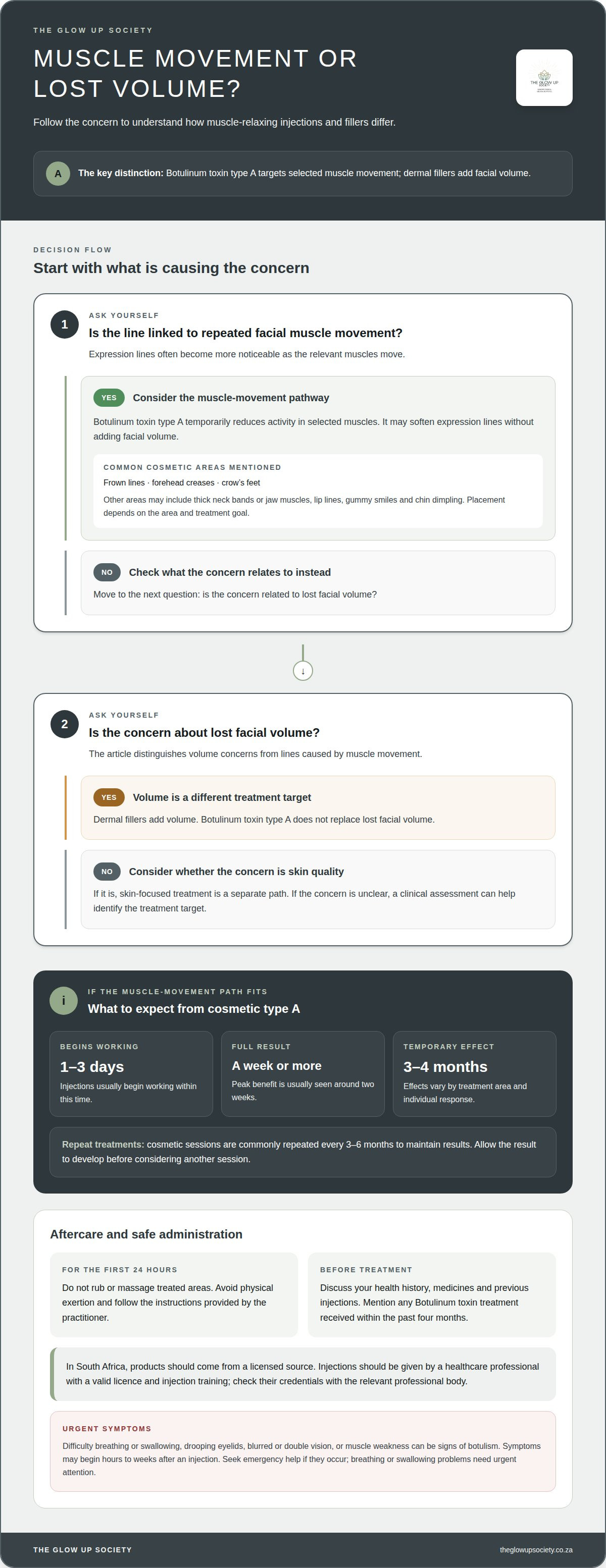
Botulinum toxin type A temporarily reduces activity in selected muscles, helping soften expression lines without adding facial volume. Cosmetic treatments commonly target frown lines, forehead creases and crow’s feet, with effects typically lasting about three to four months. The key distinction is that Botulinum toxin works on muscle movement, not skin volume.
It’s easy to group wrinkle treatments together, but Botulinum toxin and dermal fillers work differently. One targets muscle movement; the other adds volume. The right approach depends on the concern you want to address. Understanding this difference helps clarify what each treatment may, and may not, change.
This guide explains how type A works, which cosmetic concerns it may treat, what results can look like and how to care for treated areas. You’ll also learn how its coverage compares with fillers, helping you consider which option best matches your goals and make an informed decision.
Key Takeaways
- Learn how type A temporarily reduces muscle activity and why it differs from treatments that add facial volume.
- Explore which expression lines and other cosmetic concerns may be treated, and what results can typically look like.
- Understand possible side effects and simple aftercare steps, including why Mayo Clinic advises not rubbing or massaging treated areas for 24 hours.
- Compare the areas muscle-relaxing injections may address with the concerns dermal fillers are designed to treat.
Table of Contents
- What is botulinum toxin type A?
- What cosmetic conditions can be treated with Botox?
- Aftercare and treatment frequency
- Botox coverage and comparison with dermal fillers
- The Glow Up Society: GA Peels
What is botulinum toxin type A?
Type A is a form of protein produced by Clostridium botulinum. In targeted cosmetic treatment, it reduces activity in selected muscles, softening some lines without surgery.
Cosmetic uses and effects
Cosmetic injections temporarily relax specific muscles, reducing the movement that forms some expression lines. The action is local: treatment targets selected muscles rather than adding volume to the skin. This distinction matters when deciding whether a concern relates to muscle action or lost volume. Botulinum toxin types A through G are identified, and types A and B are used clinically. Type A is used in these cosmetic treatments.
Facial lines and wrinkles
For facial lines, type A is commonly used for frown lines, forehead creases and crow’s feet near the eyes. These lines become more noticeable with repeated muscle movement, so relaxing the relevant muscle can soften their appearance. Other cosmetic areas include thick neck bands, thick jaw muscles, lip lines and gummy smiles. Botulinum toxin may also improve chin dimpling, lift mouth corners or soften a square jawline. Placement depends on the area and treatment goal.
Cosmetic and medical uses
The same muscle-relaxing action has cosmetic and medical uses, but the purpose differs. Cosmetic treatment addresses appearance concerns; medical treatment may address severe underarm sweating, cervical dystonia, blepharospasm, strabismus, chronic migraine and overactive bladder. Botox is a registered brand name for a prescription medicine containing type A. These uses are distinct, and cosmetic treatment is not a substitute for medical care.
In South Africa, products should come from a licensed source, and injections should be administered by a healthcare professional with a valid licence and injection training.
There is no single treatment cost. The price depends on the treatment area, amount required and clinical assessment, and is provided after a quote request.
Choose an administrator with a valid healthcare licence and injection training. Check their credentials with the relevant professional body before treatment.
What cosmetic conditions can be treated with Botox?
Cosmetic treatment can soften lines caused by repeated facial muscle movement. It reduces the signal that prompts a targeted muscle to contract, rather than replacing lost facial volume. This distinction helps separate movement-related lines from concerns better addressed by other approaches. Cosmetic effects are temporary, and suitability depends on the area and the person’s health.
Effects don’t appear immediately. Injections usually begin working within 1 to 3 days, while full results may take a week or more. Cosmetic effects typically last about three to four months. The change is gradual: movement in the treated muscle eases, which can soften the appearance of lines. The timing and duration vary by treatment area and individual response.
Common side effects include pain, swelling or bruising around the injection site. Some people also experience headache, flu-like symptoms or an upset stomach. A facial toxin injection can temporarily cause a drooping eyelid. These reactions are different from the intended effect on muscle activity, so note when they begin and how they change after treatment.
In some cases, effects may extend beyond the injection site. Botulism symptoms can begin hours to weeks after an injection and may include difficulty breathing or swallowing, drooping eyelids, blurred or double vision, or muscle weakness. Seek emergency help if these symptoms occur. Breathing or swallowing problems need urgent attention.
People who are pregnant or breastfeeding should discuss Botox treatment with a healthcare professional. Medical history also matters, including conditions affecting muscles or nerves, and medicines that may influence treatment risks. Botox has medical uses for certain conditions, including chronic migraine and overactive bladder, but cosmetic treatment is not a substitute for medical care. A clinical assessment helps distinguish the purpose and risks of each treatment.
If your concern is skin quality rather than muscle movement, explore skin-focused treatment options as a separate path.
Aftercare and treatment frequency
Before treatment, discuss your health history, medicines and previous injections with the practitioner. Mention any Botulinum toxin treatment received within the past four months. For a cosmetic appointment, the practitioner assesses the facial area and identifies the muscles to target. Injections are placed at selected sites, and patients can usually go home the same day.
Aftercare helps protect the treated area while it settles. Mayo Clinic advises not rubbing or massaging treated areas for 24 hours after Botulinum toxin injections. Follow the treatment instructions you receive, and avoid physical exertion for 24 hours. These simple steps reduce pressure and disturbance around the injection sites after your appointment.
Results develop gradually, with peak benefit usually seen around two weeks. Cosmetic effects last several months, and treatments are commonly repeated every three to six months to maintain results. The interval depends on the area treated and how long the effect lasts for you. Allow the result to develop before considering another session.
Frequency also varies by medical condition. Patients receiving injections for chronic migraine commonly return about every three months. In a blepharospasm study, patients typically received injections every 13-15 weeks. Cervical dystonia is another medical use, but its schedule differs from cosmetic care. A clinician considers the condition and response when planning follow-up.
Botulism symptoms after an injection can include difficulty breathing or swallowing, drooping eyelids, double vision and muscle weakness. They may begin hours to weeks after treatment. Seek emergency help if these symptoms occur, particularly if breathing or swallowing is affected. Don’t wait for a routine appointment when urgent symptoms arise.
Botox coverage and comparison with dermal fillers
“Coverage” can mean which areas a treatment addresses, rather than how much skin it covers. Botox targets selected muscles linked to movement lines, such as forehead creases or crow’s feet. Dermal fillers work differently: they add volume in areas such as the cheeks or lips. Start by matching the concern to its cause, whether movement or volume loss.
For example, a line that appears when you frown may relate to repeated muscle action. A hollow cheek or a lip needing added fullness calls for a volume-focused discussion instead. Neither approach treats every concern across the face. Botox can soften selected expression lines, while fillers reshape or support specific areas. A treatment plan depends on the location and appearance you want to address.
Product units also need careful distinction. Botox units are not directly interchangeable with Dysport or Xeomin units. These products have different formulations, so their unit counts shouldn’t be used as a simple dose comparison. The product, target area and intended muscle action all matter. A larger number on one product label doesn’t automatically mean broader coverage or a stronger result.
Coverage also differs between cosmetic and medical treatment. A medical injection may address symptoms of a condition, such as chronic migraine, rather than facial appearance. Cosmetic treatment focuses on selected appearance concerns. Serious symptoms after an injection, including difficulty breathing or swallowing, need emergency attention. Treatment can’t prevent every concern, and choosing a method for the wrong cause may leave the main issue unchanged.
For skin concerns that aren’t caused by muscle movement or volume loss, consider a Clarity & Clear Facial as a different treatment category. The key takeaway: compare the area and concern first, then consider which method addresses that underlying cause.
The Glow Up Society: GA Peels
The Glow Up Society offers GA peels for readers exploring skin-focused care rather than treatments aimed at muscle movement or facial volume. Other options include LHA peels, retinol peels and Optiphi microneedling. Each is a different treatment category, so your choice can centre on your skin goals and preferred approach.
These services are separate from botulinum toxin injections and dermal fillers. They may suit you better if you’re looking for a peel or microneedling treatment, rather than a change to muscle activity or facial volume. Consider your goals to explore the options thoughtfully.
For a calm next step, contact The Glow Up Society or visit theglowupsociety.co.za.
Choose the next step that suits your skin goals
Start by identifying the change you want to explore. If your focus is muscle movement, consider that separately from concerns centred on skin texture, clarity or renewal. The right category depends on the outcome you value, not simply on the treatment name.
Botulinum toxin is one part of a broader aesthetics conversation, while a skin-focused approach may better suit goals that do not centre on muscle activity. The Glow Up Society offers GA peels, LHA peels and retinol peels. These are options to discuss if you’re looking for a peel-based skin treatment.
A thoughtful conversation can help you set priorities and explore an approach that feels aligned with your needs. Contact The Glow Up Society to discuss your skin goals and available treatments. Take your time, ask what matters to you, and choose your next step with care.
Frequently Asked Questions
What is Botox?
Botox is a registered brand name for a prescription medicine containing botulinum toxin type A. The name is often used casually for treatments involving similar injections, but it refers specifically to that brand. This distinction matters when discussing a product or treatment plan: ask which medicine is being used, rather than assuming every muscle-relaxing injection is Botox.
Is the procedure safe?
Botulinum toxin injections can cause side effects, so safety depends on appropriate product use, injection placement and the person’s health. Common reactions include tenderness, swelling or bruising at the injection site. Tell the practitioner about medicines, health conditions and previous treatments before proceeding. Discussing the intended area and possible reactions helps you make an informed decision.
When should I call my healthcare provider?
Seek emergency help for difficulty breathing or swallowing, marked muscle weakness, double vision or drooping eyelids after an injection. These symptoms can appear hours to weeks later. For less urgent concerns, such as persistent injection-site discomfort or a result that seems uneven, contact your healthcare provider for advice. Don’t wait for a routine appointment if breathing or swallowing is affected.
What is botulinum toxin and how does it work?
Botulinum toxin is a substance produced by the bacterium Clostridium botulinum. In carefully targeted injections, it interrupts signals between nerves and selected muscles, reducing contraction in that area. The effect is temporary, and the treatment’s purpose depends on where it is used. The same basic action can support cosmetic treatment or care for certain medical conditions.
What medical and cosmetic conditions is botulinum toxin used to treat?
Cosmetic uses include softening selected facial lines, while medical uses include severe underarm sweating, cervical dystonia, blepharospasm, strabismus, chronic migraine and overactive bladder. These are distinct treatment goals, not interchangeable indications. For example, migraine treatment addresses a medical condition, whereas injections for forehead lines focus on appearance. The area treated and reason for treatment shape the clinical plan.
What are the different botulinum toxin brands and how do they compare?
Examples of type A products include Botox, Dysport and Xeomin. They share a broad treatment category, but their formulations and product units differ. Botox units are not directly interchangeable with Dysport or Xeomin units, so their numbers shouldn’t be compared as equivalent doses. The chosen product and injection plan are considered together, rather than selected by brand name alone.