Skincare
Botox Treatments in Fourways: A Clear Guide
· The Glow Up Society

Botox is used for expression lines linked to facial movement, while dermal fillers address a different concern: lost facial volume. The right option depends on what you want to soften, smooth or restore. Comparing Botox with Dysport can help clarify how these treatments differ.
It’s natural to want a refreshed appearance without losing the expressions that make your face yours. This guide explains which cosmetic concerns Botox may address, how it compares with Dysport and fillers, and what risks and aftercare considerations to discuss.
You’ll find an overview of what each treatment is designed to address, how their roles differ, and why a personalised assessment matters when considering aesthetic care in Fourways.
Key Takeaways
- Identify whether your concern is caused by repeated facial movement or relates to volume loss, as this helps clarify which treatment approach may suit it.
- Compare botulinum toxin products by their intended use and treatment area rather than assuming their effects are interchangeable.
- Understand the possible side effects and aftercare considerations before deciding whether an injectable treatment feels right for you.
- If your focus is skin renewal rather than expression lines, The Glow Up Society’s GA Peels offer a different treatment route to explore.
Table of Contents
- Botox risks and side effects
- Botulinum toxin types and products
- What cosmetic conditions can be treated with Botox?
- Botox compared with Dysport and dermal fillers
- The Glow Up Society: GA Peels
Botox risks and side effects
Botulinum toxin treatment can cause temporary effects, and aftercare helps limit avoidable irritation. Before Botox, share details of recent injections and your health history.
Side effects and safety
Possible effects include temporary tenderness, bruising, swelling or headache around the injection area. What you experience can depend on the treatment site and plan. Tell the practitioner about your medicines, health conditions and previous injections, including any botulinum toxin injection within the past four months.
In South Africa, look for a healthcare practitioner with relevant clinical training, current professional registration and experience with facial injections. A reputable clinic explains the proposed product, risks and aftercare clearly. Ask how the treatment plan relates to your goals and what support is available if you have concerns afterwards.
Follow the aftercare advice you receive after Botox. Common precautions include staying upright for three to four hours, avoiding pressure on the treated area for 12 hours, and avoiding strenuous activity for 24 hours. Seek urgent medical attention if you develop difficulty breathing or swallowing.
Who should avoid Botox
Pregnancy and breastfeeding are reasons to postpone elective cosmetic injections and discuss timing with a healthcare practitioner. Safety information in these circumstances is limited, so treatment is generally deferred. This gives you time to consider your options without rushing into a decision.
Discuss any history of allergic reactions, neuromuscular conditions, infection near the planned injection site, or medicines that may affect treatment. These details can change the safety assessment. A practitioner should review your medical history before proceeding, rather than focusing only on the area you want treated.
A suitable consultation gives you time to ask questions and understand the proposed approach. You should know which symptoms warrant medical attention and whom to contact if they occur. If the discussion feels rushed or your questions remain unanswered, pause before deciding whether to proceed.
Botulinum toxin types and products
Botulinum toxin products are used for different treatment goals. Knowing their names and basic action helps you understand a proposed plan and why cosmetic use differs from botulism, the illness associated with this toxin.
Botox and Dysport are names you may encounter in aesthetic discussions. Both are botulinum toxin products, but they’re distinct brands, not interchangeable names for one product. The product and treatment area shape the plan. Ask which product is proposed and what effect it aims to achieve.
At the nerve-muscle connection, botulinum toxin temporarily interrupts signals that prompt muscle contraction. With less repeated movement, certain expression lines can appear softer. Its effect is local to the treated muscles; unlike fillers, it doesn’t add volume. This explains why Botox and dermal fillers address different concerns.
Botulism is a serious illness caused by botulinum toxin. It differs from a planned cosmetic procedure, which uses a product in a controlled clinical setting. The shared toxin name can sound concerning, but the purpose and method of use differ. Understanding this distinction can help you discuss Botox more clearly.
Product history offers context. In the United States, Oculinum received approval in 1989 for clinical use treating adult strabismus and blepharospasm. Its original approval was granted under the 1983 US Orphan Drug Act. These are historical United States approvals, not South African treatment guidance.
For a cosmetic consultation, focus on the product’s intended effect, the muscles being treated and the likely outcomes. Ask how the plan relates to your facial movement and goals. This gives you a clearer basis for comparing options without assuming brand names guarantee identical results.
If you’re exploring B.Toxin treatments, use your consultation to discuss how the proposed approach fits your aesthetic goals.
What cosmetic conditions can be treated with Botox?
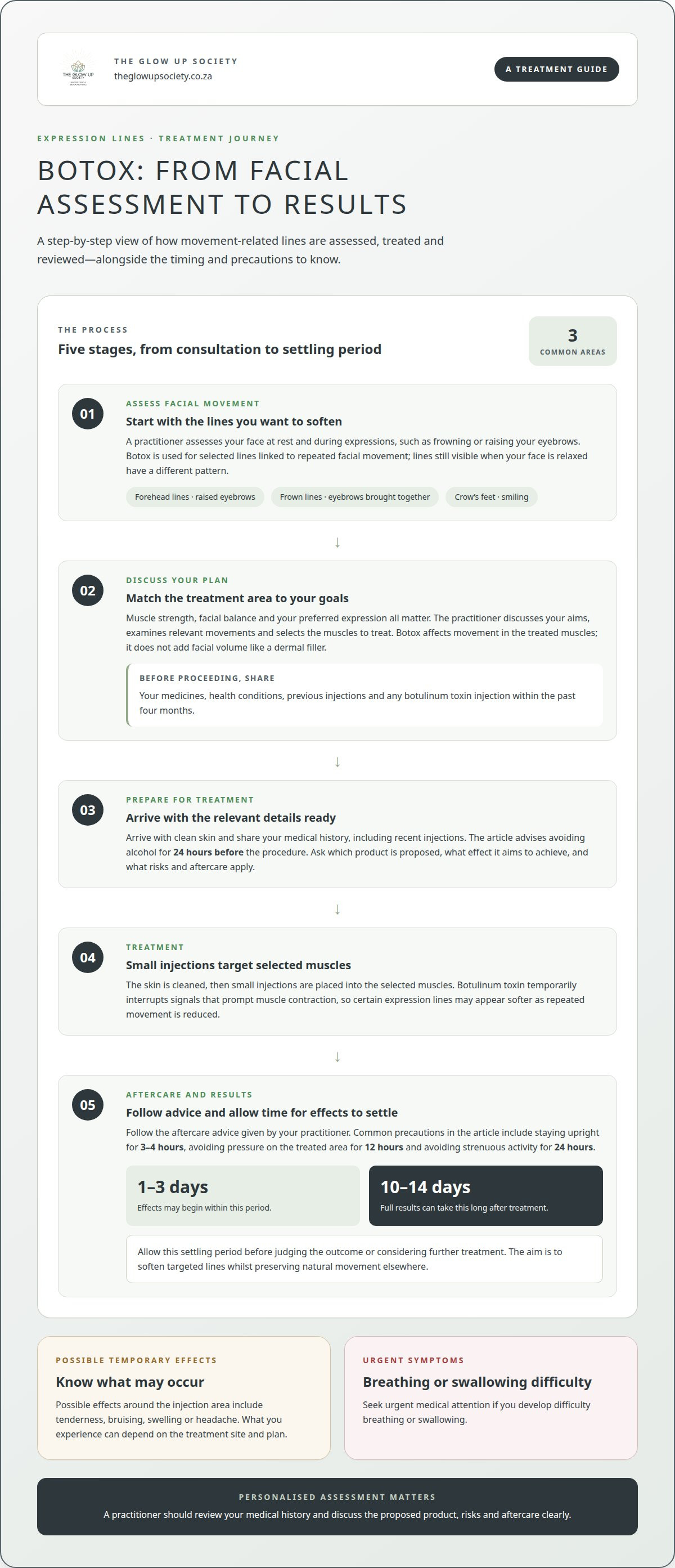
Cosmetic botulinum toxin treatment is used for selected expression lines. Common examples include forehead lines, frown lines between the eyebrows and crow’s feet beside the eyes. These lines become more visible as specific facial muscles contract during repeated expressions.
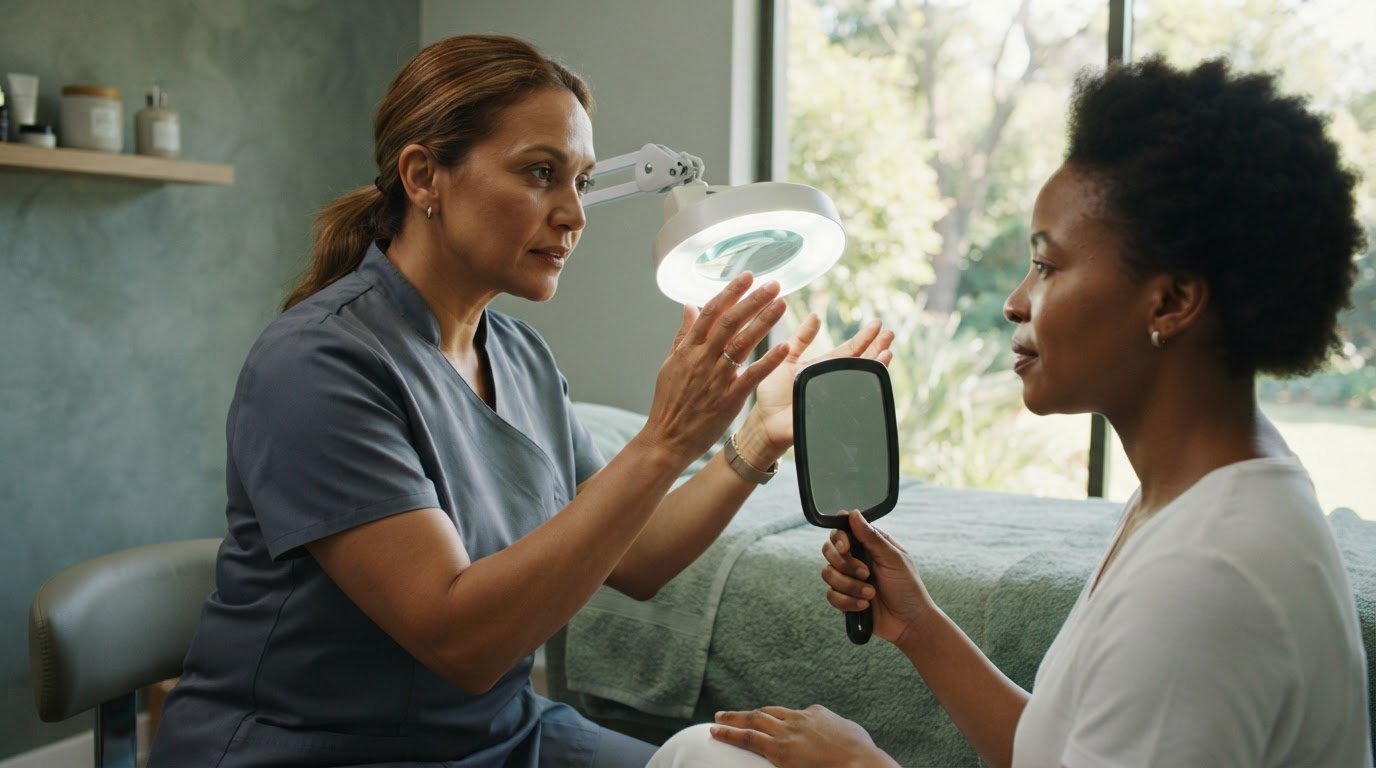
The treatment is intended for lines linked to movement. A practitioner assesses your face at rest and during expressions, such as frowning or raising your eyebrows. Lines that remain visible when your face is relaxed have a different pattern, so the consultation should distinguish them from movement-related creases.
- Forehead lines: horizontal creases that appear when you raise your eyebrows.
- Frown lines: vertical marks between the eyebrows when you bring them together.
- Crow’s feet: fine lines at the outer corners of your eyes when smiling.
These are common cosmetic treatment areas, not a standard plan for every face. Muscle strength, facial balance and your preferred expression all matter. Treating one area can influence how surrounding muscles move, so placement should reflect your features and goals.
During treatment, the practitioner discusses your aims and examines the relevant facial movements. The skin is cleaned, then small injections are placed into selected muscles. Tell the practitioner about your medicines, previous botulinum toxin treatment and any health conditions before the procedure.
To prepare, avoid alcohol for 24 hours before the procedure. Arrive with clean skin and share your medical history, including recent injections. These details help the practitioner plan the treatment area and discuss relevant precautions.
Results don’t appear immediately. Effects may begin within 1 to 3 days, while full results can take 10 to 14 days after treatment. Allow this settling period before judging the outcome or considering further treatment. The goal is to soften targeted lines whilst preserving natural movement elsewhere.
Botox compared with Dysport and dermal fillers
Botox and Dysport are brand names for botulinum toxin products, both used to reduce muscle activity in selected facial areas. Dermal fillers work differently: they add volume where contours appear hollow or less defined. Start with the concern you want to address, not the product name.
For example, a frown line that deepens as you bring your eyebrows together is linked to muscle movement. A hollow cheek is a volume concern instead. A line visible even when your face is relaxed may need a different assessment from one that appears mainly during expression.
- Botox: a botulinum toxin brand used for selected movement-related lines.
- Dysport: another botulinum toxin brand, with its own product and treatment plan.
- Dermal fillers: products used to add volume and support facial contours.
Botulinum toxin products aren’t measured or planned as though brand names were interchangeable. The product, injection placement and muscles involved shape the approach. A consultation should explain why a particular option suits your facial movement and desired result. Effects can wear off within three to six months after botulinum toxin therapy.
Fillers don’t relax an active muscle, just as toxin treatment doesn’t replace lost volume. Some people have concerns involving both movement and contour, but that doesn’t mean combining treatments is necessary. First identify the feature you want to address, then understand which treatment is designed for it.
For a skin concern such as blemishes or congestion, neither approach addresses the underlying skincare goal. A Clarity & Clear Facial is a non-injectable option to explore for that different need. For movement lines or volume changes, use a consultation to discuss the relevant treatment category and its intended effect.
The Glow Up Society: GA Peels
If your priority is skincare rather than expression lines or facial volume, The Glow Up Society offers GA Peels. A peel may be a more relevant conversation if you want to address your skin’s overall appearance rather than muscle movement.
Your skin goals can guide the next step. The Glow Up Society also offers LHA Peels, Retinol Peels and Optiphi Microneedling, giving you different skincare options to discuss. Each takes a different approach, so a conversation about your concerns can help you consider which aligns with your goals.
Botulinum toxin and skin treatments have distinct roles. If your main concern is uneven texture or another skin-focused goal, explore skincare options separately from injectable treatments. If you’re unsure how to describe your concern, explain the change you’d like to see and discuss suitable approaches.
Contact The Glow Up Society in Fourways to discuss your skin goals and treatment options.
Choose a next step that fits your skin goals
A thoughtful aesthetic decision starts with the change you want to see, not a treatment name. If you’re considering Botox, describe your priorities and how you’d like your natural expressions to feel. For concerns centred on skin texture or tone, a skincare-focused option may be a better direction to explore.
The Glow Up Society offers GA Peels, LHA Peels and Retinol Peels as distinct skincare options. They provide a starting point for discussing your complexion goals and the type of treatment you’re considering. The right next step is one that reflects your individual needs and comfort.
For a calm discussion about available skincare treatments, contact The Glow Up Society. Take the time you need to make a considered choice and feel at ease with your path forward.
Frequently Asked Questions
What is Botox?
Botox is a brand name for a botulinum toxin product used in cosmetic and medical settings. The name is often used conversationally for the treatment, but it refers to a specific brand, not every product in this category. Dysport is another brand. If you’re discussing treatment, ask which product is intended and what concern it addresses.
When should I call my healthcare provider?
Contact your healthcare provider if you experience a severe, worsening or unexpected symptom after treatment. Explain when you had the injection, which area was treated and what has changed. Seek urgent medical care if you have difficulty breathing or swallowing. Keep your provider informed about any other botulinum toxin injections, including those received within the past four months.
What is Botox and how does it work?
Botulinum toxin temporarily interrupts signals between nerves and selected muscles, reducing their activity. Effects develop gradually rather than appearing immediately after an appointment. They may begin within 1 to 3 days, with full results visible within 10 to 14 days. Allow that time before assessing the change, and follow the aftercare instructions given for your treatment.
What conditions is Botox used to treat?
Botulinum toxin is used cosmetically for selected movement-related facial lines, such as forehead lines, frown lines and crow’s feet. It also has medical uses, including chronic migraine treatment. This is mainly used for people experiencing headaches on 15 or more days a month. Medical uses and cosmetic treatments have different aims, so clarify which concern a proposed treatment addresses.
How long do Botox results last and how often are treatments needed?
Effects may last 3 to 4 months, depending on the condition being treated. Retreatment is commonly recommended after about three to four months. These timings describe a general treatment pattern, not a fixed schedule for everyone. The area treated, the goal and how your body responds all shape when another appointment may be appropriate.
What are the risks and side effects of Botox?
Risks and side effects can vary with the treatment area, product and your health history. Before treatment, share relevant medical conditions, medicines and previous injections, including botulinum toxin treatment within the past four months. Ask for a clear explanation of possible effects, aftercare and symptoms that should prompt you to contact your healthcare provider.