Skincare
Body Contouring After Pregnancy in Fourways
· The Glow Up Society
75% of women weighed more 12 months after giving birth than before pregnancy, according to a National Institutes of Health study. Body contouring after pregnancy in Fourways is about addressing changes such as stubborn abdominal fullness, altered skin tone or areas that feel different after pregnancy, with options shaped by your recovery and personal goals.
It’s understandable to want to feel comfortable in your body again while giving it time to heal. Body contouring does not replace recovery, and the right approach depends on what has changed, whether you’re breastfeeding and how you’re healing after a vaginal birth or C-section.
This guide explains what body contouring can involve, why abdominal changes and fat retention vary, and how breastfeeding and C-section recovery may affect timing and suitability. You’ll also learn what to consider when exploring options in Fourways and nearby Sandton, Lonehill, Kyalami, Bryanston and North Riding, so you can make an informed decision.
Key Takeaways
- Diastasis recti affects approximately 60% of women during pregnancy and postpartum, and may still be present for some at 12 months. Understanding whether abdominal fullness relates to muscle separation can help you consider suitable next steps.
- Body contouring is best considered in the context of your recovery, abdominal changes and weight stability, rather than as a substitute for postpartum healing.
- Breastfeeding and C-section recovery are important when thinking about treatment timing. Give particular attention to healing around the incision before exploring options.
- For skin-focused care, The Glow Up Society offers GA Peels. They are distinct from treatments aimed at abdominal muscle separation or fat reduction.
Table of Contents
- Diastasis recti and the postpartum abdominal pooch
- What Is Body Contouring After Pregnancy?
- Breastfeeding and C-section considerations
- Post-pregnancy body changes and fat retention
- The Glow Up Society: GA Peels
Diastasis recti and the postpartum abdominal pooch
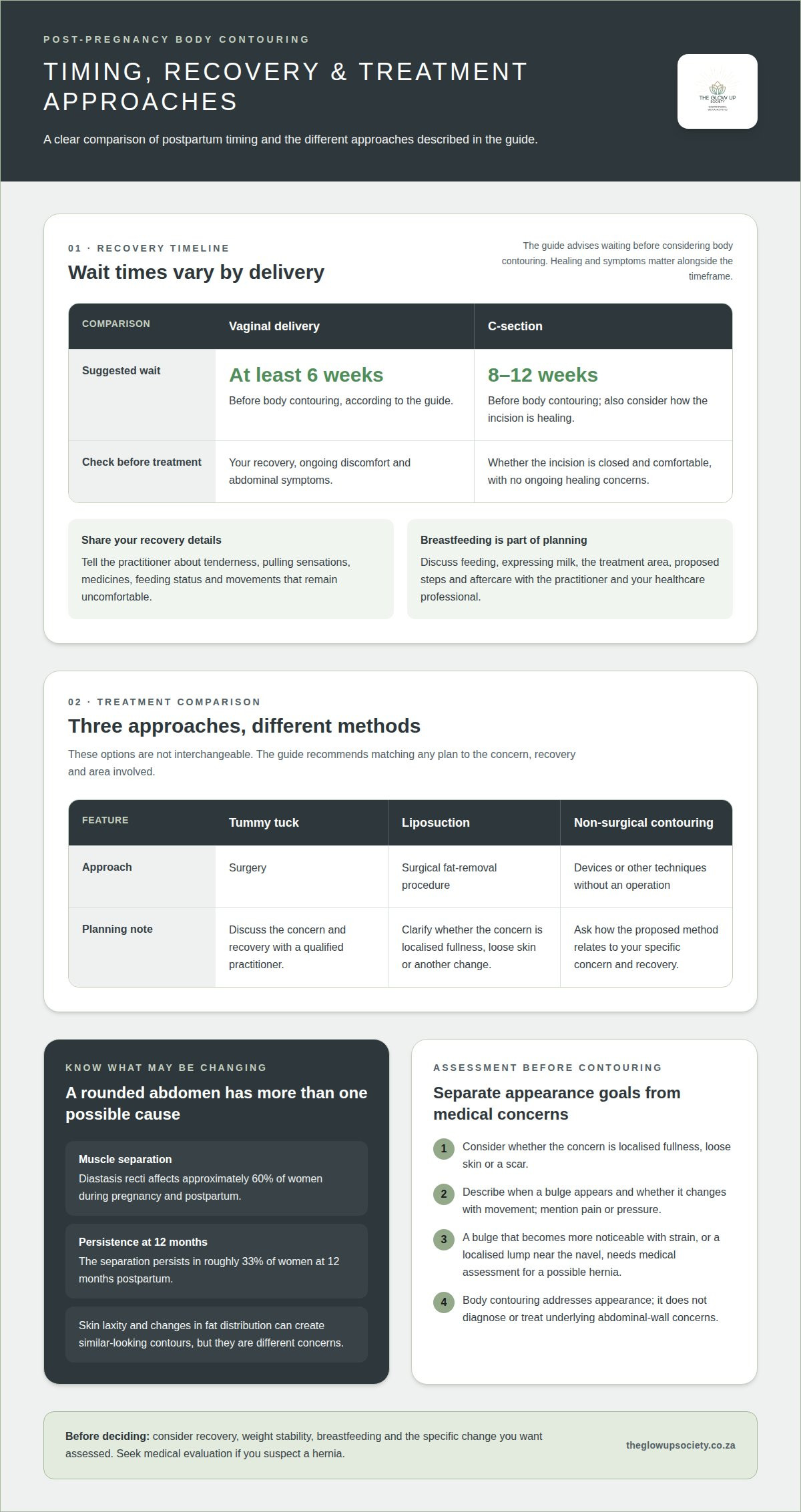
A rounded abdomen after pregnancy doesn’t always reflect retained fat alone. Diastasis recti occurs in approximately 60% of women during pregnancy and postpartum. It describes separation of the abdominal muscles along the midline as the abdomen expands. The separation persists in roughly 33% of women at 12 months postpartum. This can affect abdominal support and contribute to a visible bulge.
Skin laxity, changes in fat distribution and muscle separation can create similar-looking abdominal contours, but they are different concerns. Identifying what contributes to your shape matters before considering contouring. A bulge that becomes more noticeable when you strain, or a localised lump near your navel, needs medical assessment for a possible hernia. Body contouring addresses appearance rather than diagnosing or treating underlying abdominal-wall concerns.
Start with an assessment of your abdominal wall, skin and recovery history. Describe when the bulge appears, whether it changes with movement, and whether you feel pain or pressure. These details can help distinguish a broad midline ridge from a localised lump. If you suspect a hernia, seek medical evaluation before aesthetic treatment or abdominal exercises.
For muscle separation, focus on controlled core engagement rather than adding strain too soon. A physiotherapist can guide suitable movements, such as gentle breathing with abdominal activation, and adapt them to your symptoms and control. Stop any exercise that causes pain, pressure or pronounced doming along the midline. Body contouring after pregnancy in Fourways may be relevant to skin or surface-contour concerns, but it cannot replace targeted rehabilitation for diastasis recti.
What Is Body Contouring After Pregnancy?
Postpartum contouring refers to approaches for changes in shape, skin and body composition after pregnancy. Your goals, recovery and the type of change you want to address all guide treatment planning.
Treatment candidacy and weight stability
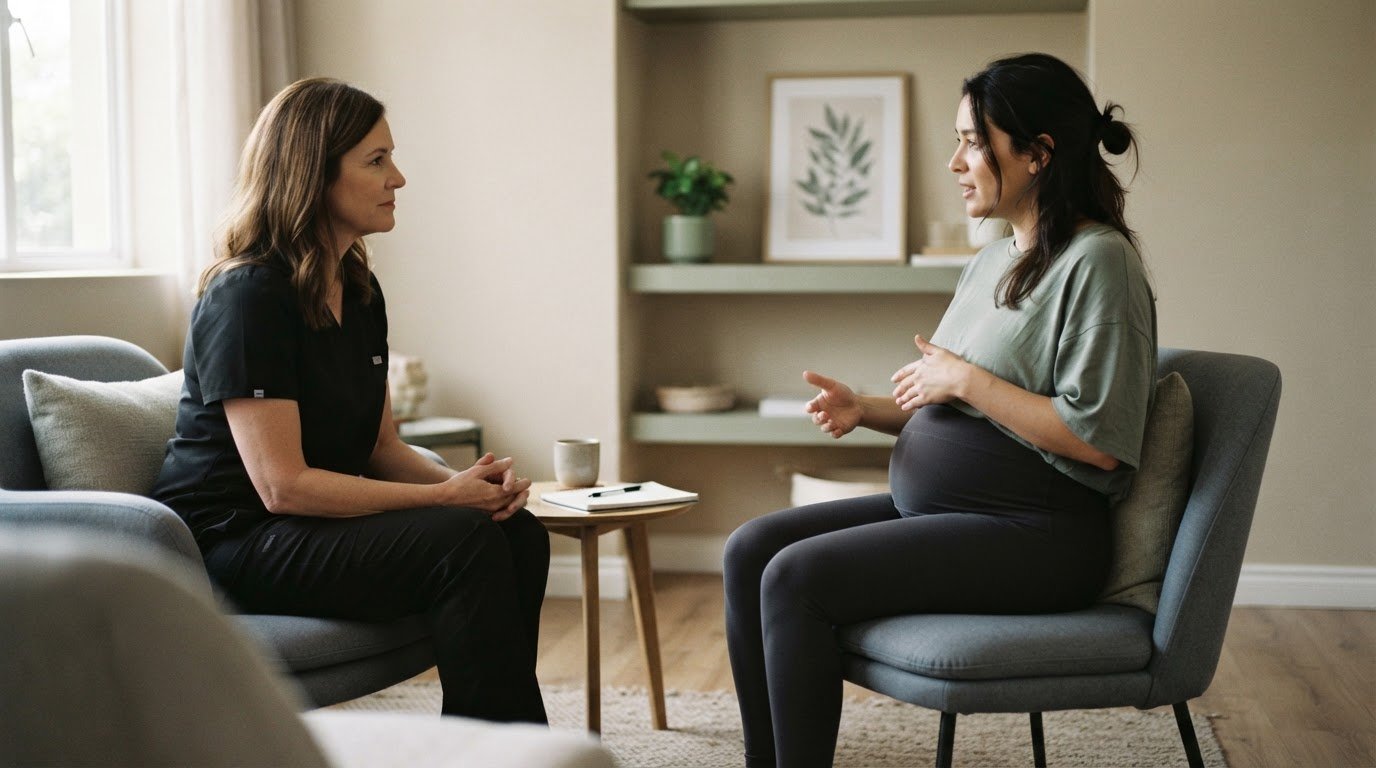
Consider whether your weight is still changing and whether your main concern is localised fullness, loose skin or a scar. Each calls for a different approach. If your weight continues to shift, the area you want to treat may change too. A personalised consultation can clarify your priorities, review relevant health history and help set practical expectations before a plan is made.
Recovery and treatment eligibility
Timing depends on delivery and healing. The page advises waiting at least 6 weeks after vaginal delivery and 8-12 weeks after a C-section before body contouring. A healed incision, ongoing discomfort, abdominal symptoms and breastfeeding are relevant details to discuss. An assessment should distinguish aesthetic goals from concerns needing medical care, then match any proposed treatment to your recovery and the area involved.
A tummy tuck, liposuction and non-surgical contouring take different approaches. A tummy tuck is surgery, liposuction is a surgical fat-removal procedure, and non-surgical methods use devices or other techniques without an operation. These options are not interchangeable, particularly for loose skin, abdominal separation or localised fat.
Medical aid cover in South Africa depends on your scheme’s benefits and how it classifies the procedure. Review your plan’s wording for exclusions and medical-necessity criteria before budgeting. Cosmetic treatment and care for a medical condition may be assessed differently.
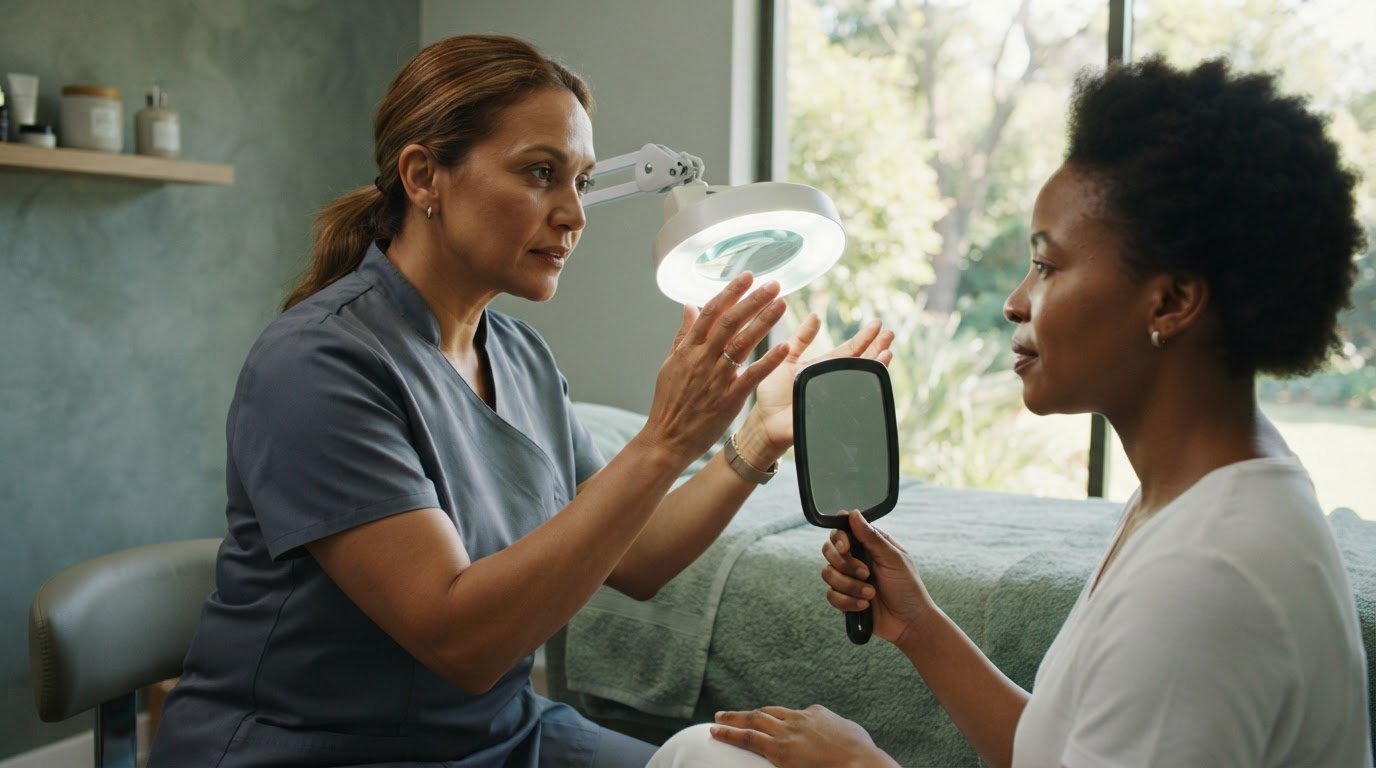
When choosing a Fourways provider, check the practitioner’s qualifications, current registration with the relevant South African professional council, and scope of practice through the council’s official register. Ask how the proposed plan addresses your specific concern. Stretch marks and C-section scars also need individual assessment: their age, texture, colour and healing affect which skin-focused approach may suit them.
Breastfeeding and C-section considerations
Breastfeeding and abdominal surgery both affect treatment planning. Include your feeding status, delivery date and medicines in your health history. Abdominal treatment differs from treatment elsewhere, so describe your goal clearly. For example, distinguish a concern about skin texture from one involving a healing incision.
Wait 8-12 weeks after a C-section before starting body contouring. Use this timeframe alongside the condition of your incision. Before treatment, consider whether the scar is closed and comfortable, with no ongoing healing concerns. Tell the practitioner about tenderness, pulling sensations or changes around the scar, and avoid treating an area that remains unsettled.
Discuss breastfeeding before choosing a treatment. Explain whether you’re feeding, expressing milk or combining feeding methods, and identify the area you want treated. The method, location and any products used all matter. Ask about the proposed treatment steps and aftercare, then consider them alongside advice from your healthcare professional.
Your recovery also affects practical comfort. Holding a feeding position, lifting your baby or lying face down may put pressure on a tender abdomen. Abdominal treatment, for example, may feel different from treatment on an arm or thigh. Share which movements remain uncomfortable, and mention any wound-care instructions you’re following after surgery.
Before an assessment, note your delivery date, whether you had a C-section, feeding status, medicines, allergies and symptoms. Include the exact area and outcome you hope to address, such as contour, skin texture or scar appearance. This helps keep the discussion focused. If a clinician has advised avoiding pressure or treatment near the incision, follow that advice and raise it before proceeding.
Post-pregnancy body changes and fat retention
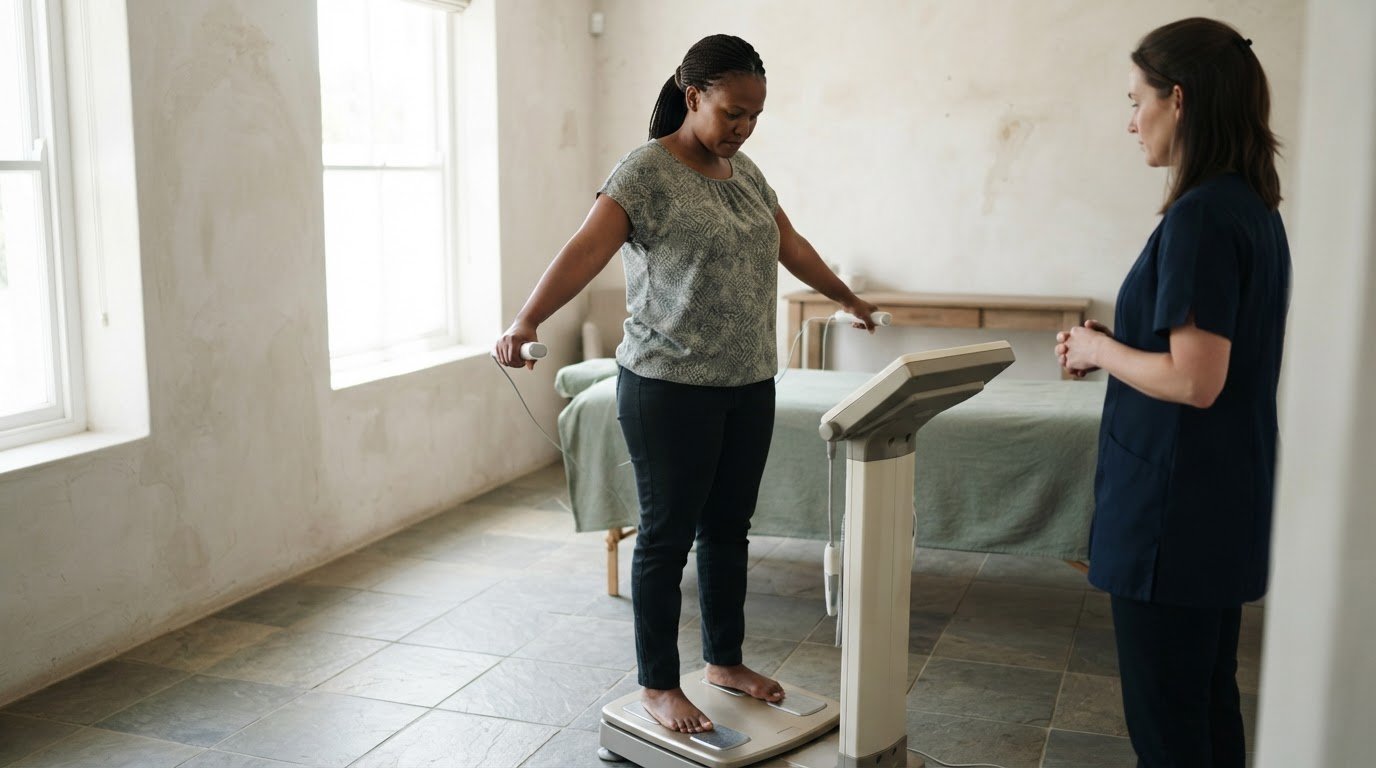
Postpartum weight changes don’t follow one pattern. According to a National Institutes of Health study, 75% of women weighed more 12 months postpartum than before pregnancy. That figure describes overall weight, not where weight is carried. A change around your waist may reflect several factors, including fat distribution, skin laxity and abdominal muscle changes.
Weight retention can also vary in amount. A National Institutes of Health study found that 47.4% of women retained over 10 pounds at 12 months postpartum, whilst 24.2% retained over 20 pounds. These findings show why a single measure, such as a clothing size, cannot explain what has changed for you. Consider your overall weight pattern alongside the specific area that concerns you.
Separate general weight change from a localised contour concern. Note whether fullness is across your abdomen or concentrated in one area, and whether it has changed during recovery. You can also record changes in clothing fit and how the area feels. These observations may clarify whether your priority is body composition, skin texture or abdominal contour. Each calls for a different discussion.
Timing matters too. A postpartum outcomes study found that 20% of women returned to their pre-pregnancy weight within the first three months after delivery. That early change doesn’t define everyone’s longer-term pattern. If your weight is still shifting, reassess your goals before focusing on a fixed contour. Stable measurements and a clearly defined treatment area can make planning more relevant to your current needs.
Before considering an aesthetic approach, write down your main goal and the changes you’ve noticed. If you’d like to discuss your skin concerns and next steps, arrange a personalised discussion.
The Glow Up Society: GA Peels
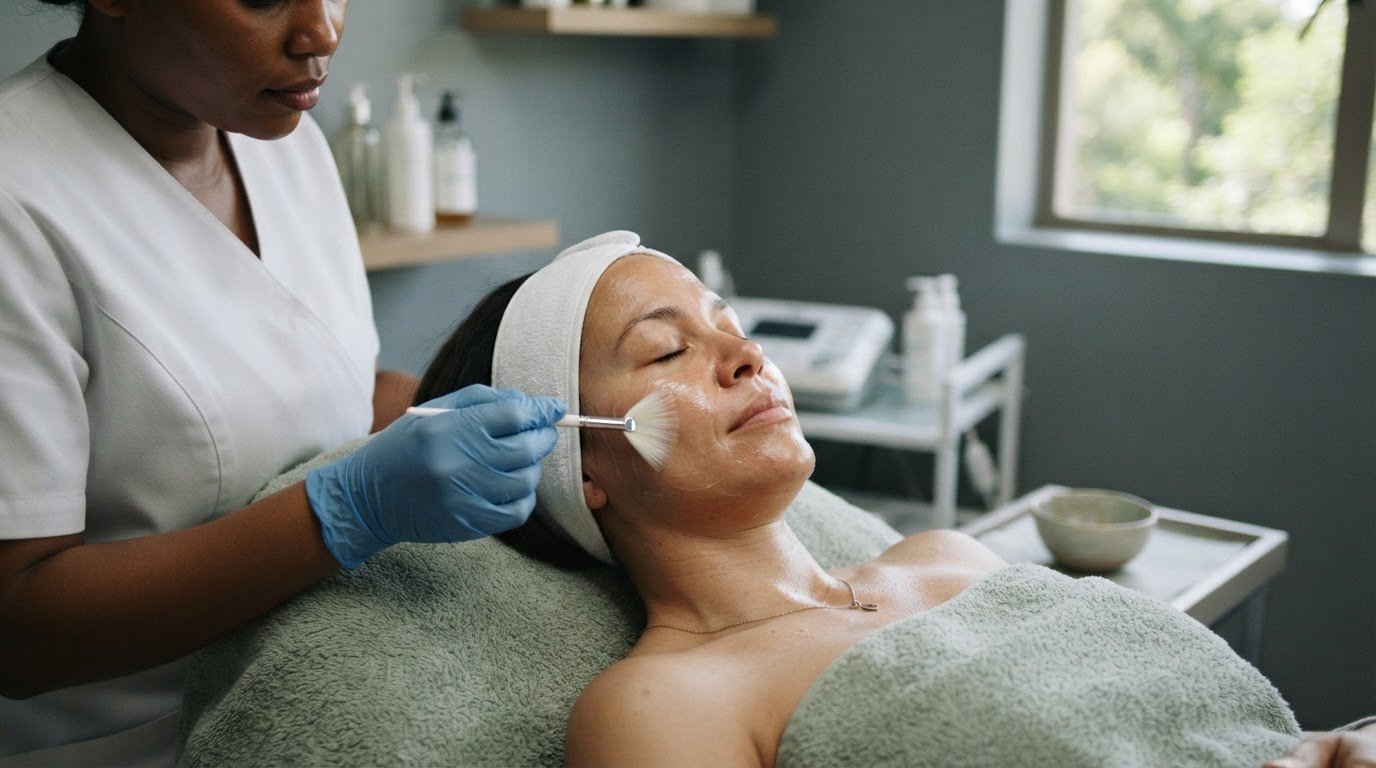
The Glow Up Society offers GA Peels as a skin-focused option when your postpartum concern involves skin appearance rather than abdominal shape. A peel does not remove localised fat or address separated abdominal muscles, so it cannot replace body contouring or rehabilitation.
If your goal is to refresh your skin, GA Peels may be worth discussing. LHA Peels and Retinol Peels are other options, while Optiphi Microneedling offers a different skin-focused approach. Your concern, skin condition and recovery context help determine which option may suit you.
Describe the area and change you’d like to address when discussing your options. The Glow Up Society can help you explore its skin treatments in relation to that goal. Contact the clinic to discuss skin-focused care in Fourways, serving Sandton, Lonehill, Kyalami, Bryanston and North Riding.
Choose a next step that fits your goals
Your next step can be a focused conversation about the change you want to address, whether that means understanding your abdominal contour or exploring skin care. It may help to keep those goals distinct, since skin-focused care addresses different concerns from body contouring. If you’re considering body contouring after pregnancy in Fourways, clarity about your priorities can guide a more relevant discussion.
For skin-focused care, The Glow Up Society offers GA Peels, LHA Peels and Retinol Peels. These options may be relevant when your interest is skin appearance rather than body contouring. You can share your skin concerns and learn which treatments may suit your goals.
Contact The Glow Up Society to discuss your skin-care options. Take the next step at a pace that feels comfortable, with your wellbeing and personal goals at the centre.
Frequently Asked Questions
Are Hips Permanently Wider After Pregnancy?
Not always. A change in hip width after pregnancy can reflect pelvic structure as well as soft tissue. Weight distribution, muscle tone and posture can also affect how your hips look and feel. For example, compare how trousers fit across your hips with changes in your waist rather than relying on one clothing size. Your shape may continue to change as recovery progresses.
Does Body Sculpting Work for Postpartum?
Body sculpting can address selected contour concerns, but it does not treat every postpartum change. A device-based approach may focus on localised fullness, while excess skin or muscle-function concerns need different consideration. Be specific about your goal, such as a defined area of fullness rather than overall weight change. For body contouring after pregnancy in Fourways, the method should match the concern being addressed.
Does Mum Pooch Ever Go Away?
A bulge can become less noticeable, but the cause matters. A change linked to posture or overall body composition differs from loose skin or abdominal muscle separation. Notice whether the contour changes when you stand, sit or engage your core. A bulge that is painful, forms a distinct lump or changes suddenly needs medical attention, not cosmetic treatment.
How Does Electromagnetic Muscle Stimulation Help Postpartum Recovery?
Electromagnetic muscle stimulation induces repeated muscle contractions, which can support muscle conditioning. It doesn’t replace rehabilitation or establish that abdominal separation has resolved. Clinical studies measured 19% improvement in diastasis recti with HIFEM+RF. That figure describes study findings, not a guaranteed outcome for every person. A useful discussion distinguishes muscle function from visible contour and considers whether stimulation suits your recovery goals.
How Does Radiofrequency Tighten Postpartum Skin?
Radiofrequency delivers energy into tissue to create controlled heating, which can encourage collagen remodelling and improve the appearance of skin firmness. It targets skin quality, not separated abdominal muscles or hernias. Ask which area is being treated and what changes the method is intended to address. Skin laxity and localised fullness are distinct concerns, even when they affect the same abdominal area.
What Areas Can Be Treated After Pregnancy?
Depending on the method and treatment plan, contouring discussions may include the abdomen, flanks, thighs or upper arms. These are examples, not a promise that every area suits every technique. Skin-focused treatments address different concerns from body contouring. The Glow Up Society also offers GA Peels, LHA Peels and Retinol Peels for skin, not fat reduction.