Skincare
Aromatherapy Massage: Using Essential Oils During Pregnancy
· The Glow Up Society
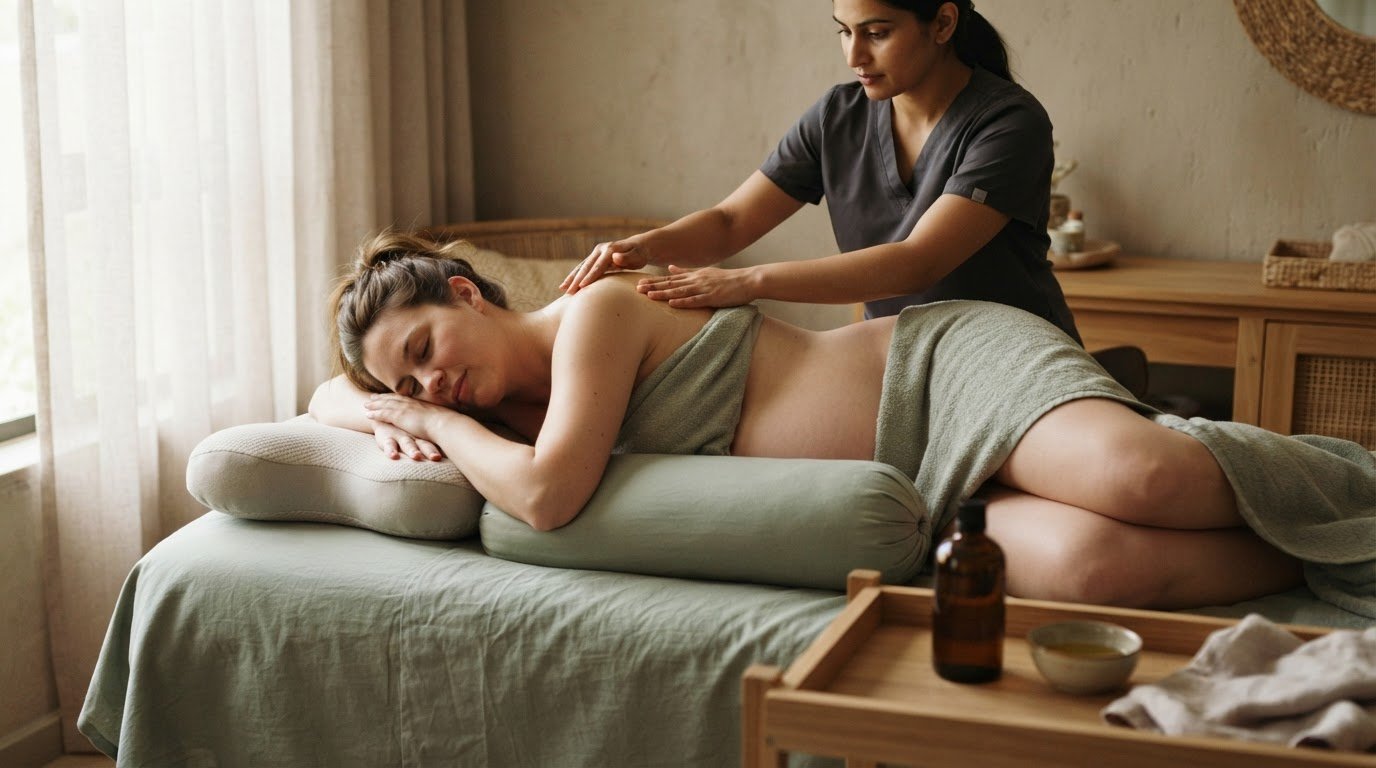
A soothing scent does not automatically make an essential oil suitable during pregnancy. An aromatherapy massage may support relaxation and short-term relief from aches, but effects vary and pregnancy calls for careful choices. Knowing which oils are used and how they are applied matters.
It is understandable to wonder whether aromatherapy works, especially when you are seeking comfort without unnecessary risk. Massage has been linked to short-term reductions in physical aches and pains and improved mood, while individual oils do not produce the same response for everyone. During an aromatherapy massage, dilution, skin sensitivity and your health history all matter.
This guide explains how an aromatherapy massage works, how essential oils may be incorporated into a session, and what to consider during pregnancy. It also offers a balanced look at the evidence and practical safety points to discuss with your doctor, including which oils may be suitable for you.
Key Takeaways
- Massage may support short-term relief from aches and a lift in mood, but essential oils can affect people differently.
- Learn how oils may be used in a massage, from diluted blends applied to the skin to scent added to a towel or face-cradle cover.
- During pregnancy, discuss suitable oils with your doctor and share health conditions, allergies and sensitivities before a session.
- Explore what the available evidence says, including a study of Roman chamomile massage, and when The Glow Up Society’s Massage Treatments may be a relevant next step.
Table of Contents
- What Is Aromatherapy Massage?
- Ways to incorporate essential oils into massage sessions
- Aromatherapy massage during pregnancy
- What are the benefits and evidence for aromatherapy massage?
- The Glow Up Society: Massage Treatments
What Is Aromatherapy Massage?
Aromatherapy massage combines massage techniques with essential oils, aromatic plant extracts that are usually diluted before skin application. Swedish massage focuses on hands-on techniques such as gliding and kneading, while aromatherapy adds scent and oil selection to the experience.
Potential benefits during massage
Essential oils add aroma to massage and may support relaxation or comfort for some people. The National Cancer Institute notes potential benefits for anxiety, depression, insomnia, nausea and pain. For example, a calming scent may make a session feel more soothing, while a citrus aroma can feel fresh and uplifting. The scent’s effect is personal, so it’s useful to notice which aromas feel pleasant or distracting.
Evidence for aromatherapy benefits
Evidence suggests possible benefits, but findings vary by oil, outcome and individual response. Some studies have found that stimulating oils, including lemon, orange and tangerine, can boost mood. Another study found a greater decrease in anxiety symptoms after massage with chamomile than after massage without aromatherapy. These examples suggest scent may influence the experience, but they do not establish that every oil produces the same effect.
What a session involves
A session usually begins with a conversation about your preferences, sensitivities and the areas you want addressed. The therapist can then select a suitable scent and dilute the oil in massage lotion or a carrier oil before applying it. Expect techniques such as flowing strokes and kneading, with the aroma accompanying the treatment. Tell the therapist if a scent feels uncomfortable.
Arrive with enough time to discuss your preferences and any sensitivities. Wear comfortable clothing that is easy to change out of; during the massage, you are typically covered with a towel or sheet, with only the area being treated uncovered. Before the session starts, agree on a scent and pressure that feel comfortable to you.
Ways to incorporate essential oils into massage sessions
Essential oils can be introduced through scent in the air or diluted for application to the skin. The method and oil choice shape the experience, so each should suit your preferences and sensitivities.
Methods of incorporating essential oils
Inhalation brings a chosen aroma into the massage space without applying it directly to your skin. A therapist may place 1 to 2 drops on a face-cradle cover, or prepare a warm aromatherapy towel with 4 to 5 drops in water. These approaches let you experience the scent while avoiding direct skin contact.
For dermal application, essential oils need dilution in a carrier oil or massage lotion. A suggested full-body dilution is 1 to 5 percent in carrier oil. The therapist can also use a smaller amount on a limited area, with the blend selected for the session. Citrus oils, including lemon and orange, may increase skin sensitivity to sunlight after application.
Oil choices for sleep, anxiety and headaches
Oil selection depends on the scent you enjoy and the purpose of the session, rather than a guaranteed effect. Chamomile has been studied alongside massage for anxiety, while lemon, orange and tangerine are stimulating aromas that some studies associate with improved mood. These examples offer a starting point for discussing your scent preference.
For sleep or headaches, do not assume one oil will work for everyone. Lavender, chamomile and peppermint are examples you may encounter in aromatherapy, but individual responses differ. Mention your goal to the therapist and choose an aroma that feels comfortable, rather than treating it as a substitute for medical care.
Quality matters, too. Choose oils from suppliers with solid reviews and independent third-party testing. Clear information about an oil’s identity and composition can inform selection; avoid products with unclear labelling or an uncertain source. A therapist can use these details when selecting an oil for inhalation or diluted application.
Aromatherapy massage during pregnancy
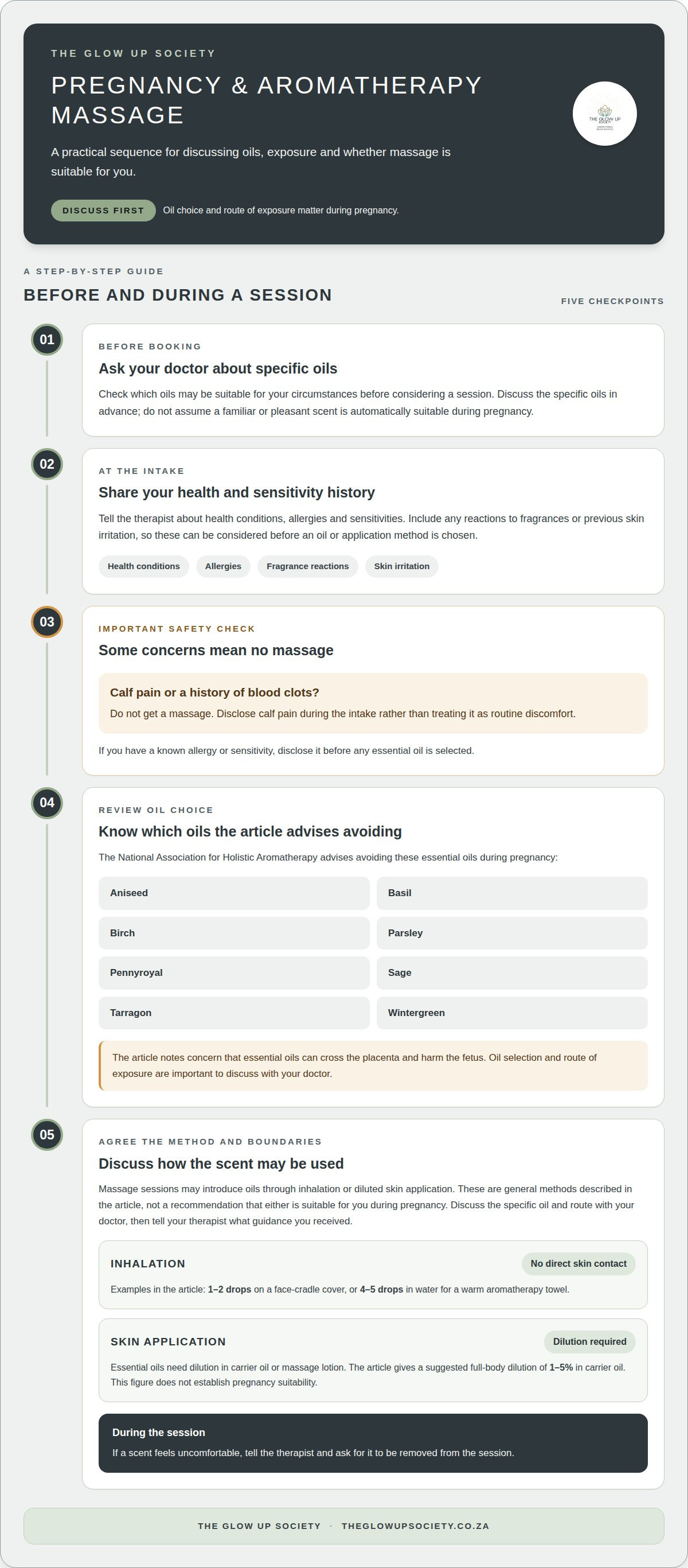
Pregnancy changes how you approach massage and essential oils. Before a session, the therapist should complete a thorough intake to identify health conditions, sensitivities and allergies that could affect oil use. Share relevant details, including reactions to fragrances or previous skin irritation. This gives the therapist information to consider when deciding whether to use an oil and whether inhalation or skin application is suitable.
Some oils require particular caution. The National Association for Holistic Aromatherapy advises avoiding aniseed, basil, birch, parsley, pennyroyal, sage, tarragon and wintergreen essential oils during pregnancy. The reason for caution differs by oil, so do not treat a familiar scent as automatically suitable. Before considering a session, ask your doctor which oils may be safe for your circumstances.
There is also concern that essential oils can cross the placenta and harm the fetus. This makes oil selection and route of exposure important considerations, rather than details to leave until the massage begins. Discuss the specific oils with your doctor in advance, then tell the therapist what guidance you received. If a scent causes discomfort, say so and ask for it to be removed from the session.
Some symptoms mean you should avoid massage altogether. Pregnant people with calf pain or a history of blood clots should not get a massage. Disclose calf pain during the intake rather than treating it as routine discomfort. If you have either concern, do not proceed with a massage. The same careful approach applies if you have a known allergy or sensitivity: disclose it before any essential oil is selected.
A considered session starts with clear communication, not a preselected fragrance. Your doctor’s advice, health history and response to particular scents all matter. If you are pregnant, discuss oils as part of planning the massage, and ensure the therapist knows your relevant health information before treatment begins.
What are the benefits and evidence for aromatherapy massage?
Massage therapy has been linked to short-term reductions in physical aches and pains. Improved mood is another reported outcome. These findings concern massage overall, so they don’t show how much essential oils contribute. That distinction matters when weighing claims about scent alongside touch. An aromatherapy session combines both elements, making it difficult to assume that an observed benefit comes from the oil alone.
A trial involving 103 cancer patients found an association between Roman chamomile massage and decreased anxiety and improved symptoms after two weeks, according to the National Cancer Institute. This result offers a specific example of research into massage with an essential oil. It doesn’t establish that every person will experience the same effects, or that Roman chamomile has the same impact across different health circumstances.
Findings about mood also differ by oil and study. One study found that lavender did not affect mood, while other research has reported mood benefits from stimulating aromas. These differences are a reason to consider the particular oil and outcome being studied, rather than treating “aromatherapy” as one uniform intervention. A result about mood, for example, does not automatically demonstrate an effect on pain or sleep.
To read the evidence practically, separate the effects of massage from those of added scent. Ask what outcome a claim concerns, such as anxiety, mood or physical discomfort, and note which oil was examined. Study participants and treatment periods matter, too. The Roman chamomile trial’s two-week finding applies to its stated group and timeframe, not every massage session or essential-oil blend.
Overall, massage has evidence of short-term benefits, while findings for individual oils are mixed. Use research as context, not as a promise of a particular result. Your experience can depend on the scent, the massage itself and your own response. Keeping those factors distinct offers a balanced way to assess potential benefits without assuming one oil suits everyone.
The Glow Up Society: Massage Treatments
The Glow Up Society offers Massage Treatments if you are seeking time to relax and feel more comfortable. The evidence discussed above can help set realistic expectations: massage may support short-term relief, while people can respond differently to essential oils. If you are pregnant or have health concerns, discuss massage and any proposed oils with your doctor before treatment.
Start by considering your priorities, such as easing tension or setting aside time to unwind. Share these goals and any relevant sensitivities when discussing a treatment, so the conversation can focus on what matters to you. Contact The Glow Up Society to discuss Massage Treatments and your needs.
Choose a considered next step
Your next step can start with the outcome you want from a treatment, whether that is a calm pause or support for a skin concern. If you are considering an aromatherapy massage during pregnancy, discuss suitable oils with your doctor before arranging a session. Share your preferences and any relevant sensitivities, so your choices reflect your comfort and wellbeing.
For skin-focused care, The Glow Up Society also offers GA Peels, LHA Peels and Retinol Peels. These are distinct treatment options, not substitutes for massage, and can be considered according to your skincare goals.
Take time to choose the approach that feels right for you. Contact The Glow Up Society to discuss your treatment interests and possible next steps. A thoughtful conversation can help you move forward with greater clarity and care.
Frequently Asked Questions
Does aromatherapy work?
Aromatherapy may help some people feel calmer or more comfortable, but results depend on the oil, the person and the outcome being considered. In an aromatherapy massage, distinguish the scent’s effect from the massage itself: a pleasant aroma may make a session feel more relaxing, while findings for particular oils vary. Treat aromatherapy as a complementary wellness approach, not a reliable way to treat a health condition.
What is this type of massage and how does it work?
An aromatherapy massage combines hands-on massage with essential oils used for their scent, skin application or both. Inhaling an aroma and experiencing massage touch are separate parts of the session, so your response may reflect either or both. For example, you might enjoy a scent in the room but prefer unscented lotion on your skin. Tell the therapist which approach feels comfortable.
What essential oils are commonly used?
Lavender, chamomile, peppermint and citrus oils such as lemon or orange are examples used in aromatherapy. The choice depends on the scent you prefer and the intended atmosphere, not a guaranteed effect. For instance, you may find a floral aroma more calming than a bright citrus scent. Mention your preference before the session, especially if a fragrance has caused discomfort before.
What are the risks, side effects, and contraindications?
Possible concerns include skin irritation, fragrance discomfort and increased sun sensitivity after citrus oils are applied. Some oils may irritate people with asthma or other breathing problems. Extra caution matters if you take multiple medicines, have a seizure disorder, severe allergies or chemical sensitivities. Wintergreen has specific cautions for people taking blood thinners. Share these factors during the therapist’s intake before any oil is used.
Is this massage safe during pregnancy or for people with medical conditions?
Pregnancy or a medical condition calls for an individual safety discussion before using essential oils. Ask your doctor which oils may be suitable, then share that advice and your health history during the therapist’s intake. The National Association for Holistic Aromatherapy advises avoiding aniseed, basil, birch, parsley, pennyroyal, sage, tarragon and wintergreen during pregnancy. Pregnant people with calf pain or a history of blood clots should not receive massage.