Skincare
4 Things to Know About Bikini Line Ingrown Hairs
· The Glow Up Society
A closer shave isn’t always a smoother outcome. To help prevent ingrown hairs on your bikini line, shave in the direction of hair growth with a sharp, clean razor and shaving gel, and avoid shaving too closely. An ingrown hair is one that stays trapped beneath the skin instead of growing through it.
Shaving can leave the bikini line irritated or uncomfortable. A gentle routine may help: moisturise after hair removal, avoid picking at bumps and pause shaving while an ingrown hair settles.
Read on to learn what causes ingrown pubic hairs, how moisturising after shaving may help, and when symptoms call for medical advice. You’ll also find practical ways to adjust your hair-removal routine and reduce the chance of future bumps.
Key Takeaways
- Shave in the direction of hair growth and avoid a very close shave to help reduce irritation and trapped hairs.
- Use a gentle moisturiser after shaving to soothe the skin and support a calmer hair-removal routine.
- Know when a bump needs medical attention, especially if it becomes very painful, hot or swollen, or you feel unwell.
- Leaving at least 1 mm of stubble when shaving can help reduce ingrown hairs, according to the NHS.
Table of Contents
- 1. What is an ingrown pubic hair?
- 2. Moisturising after shaving
- 3. When to seek medical advice
- 4. Preventing ingrown hairs over time
- The Glow Up Society: Laser Hair Removal
1. What is an ingrown pubic hair?
An ingrown hair grows from its follicle but remains trapped beneath the skin instead of emerging. On the bikini line, it may look like a small raised bump where hair removal took place. Shaving is commonly associated with ingrowns, while waxing, plucking and threading can also contribute. Coarse or curly pubic hair may curl back beneath the surface, making it more likely to become trapped. Ingrown hairs often appear one or two days after hair removal, although a trapped hair can take several days or longer to reach the surface.
Shaving direction matters because cutting against the natural growth pattern can leave hair with a sharp tip that turns towards the skin. For a gentler shave, soften the pubic area with warm water, apply shaving gel, then move the razor in the direction of hair growth. Rinse the blade after each stroke and avoid repeatedly passing over the same patch. Dead skin can also obstruct a follicle, so gentle exfoliation may help keep the surface clear. Avoid scrubbing a sore or inflamed bump.
No single method is best for everyone, but avoiding hair removal is the most reliable way to prevent hair-removal-related ingrowns. If you prefer a smooth finish, an electric shaver may cut less closely than a traditional razor. Trimming leaves hair in place rather than removing it from the root, while laser hair removal is a longer-term option that can reduce regrowth. Waxing removes hair from the root but can also lead to ingrowns.
Hair-removal cream dissolves hair so it can be wiped or scraped away, and may be less likely to cause ingrowns than shaving, waxing or threading. Before applying it to the bikini line, test a small patch elsewhere and wait 24 hours for a reaction. Whichever method you choose, follow its directions and keep the skin comfortable with a light moisturiser after removal. A careful routine can reduce irritation without promising that every ingrown hair will be avoided.
2. Moisturising after shaving
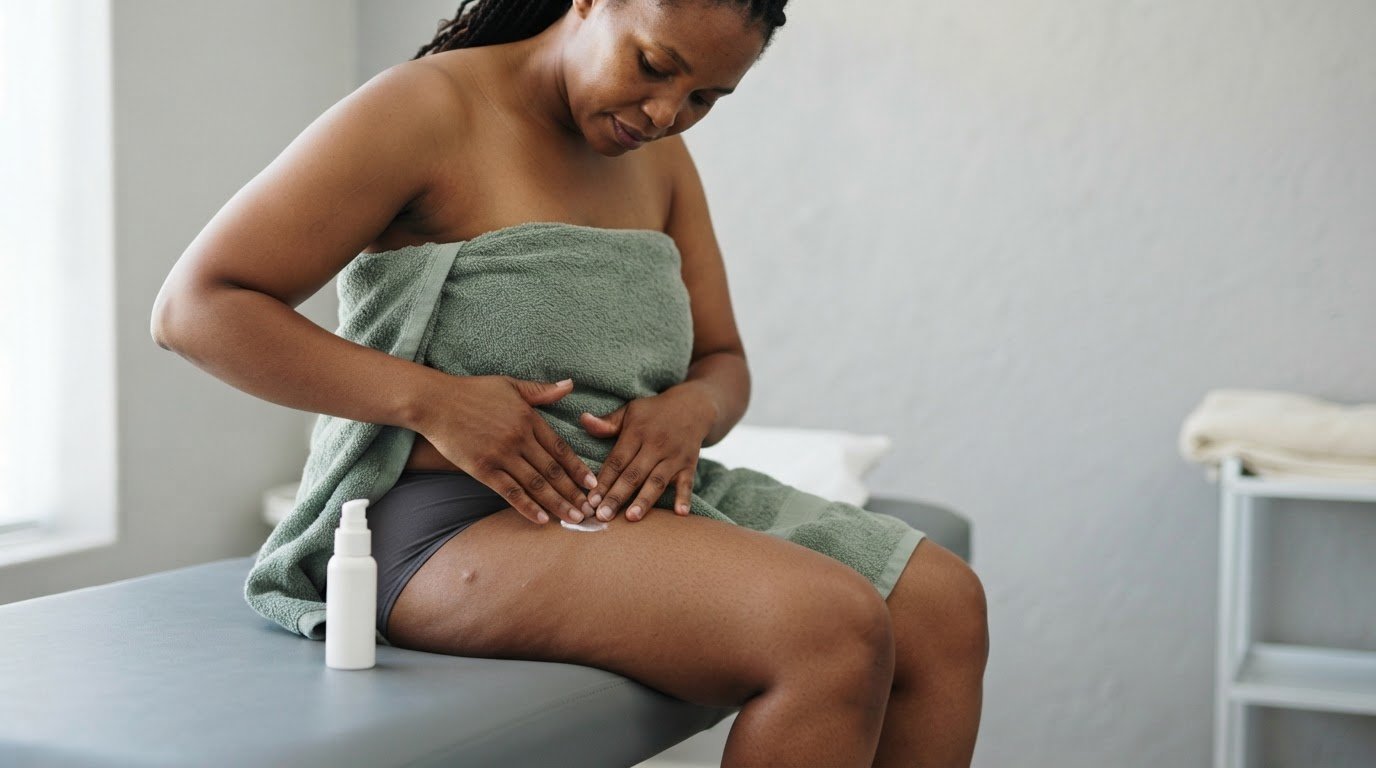
Moisturising after hair removal can help calm irritation and lower the risk of ingrown hairs. If the skin feels warm or looks red after shaving, hold a cool, wet cloth against it first. Then apply a lightweight, non-greasy moisturiser to the outer bikini area. This helps keep skin comfortable without leaving a heavy film. Choose a gentle formula, and stop using it if it stings or makes irritation worse. Moisturiser supports the skin; it doesn’t remove a hair trapped beneath the surface.
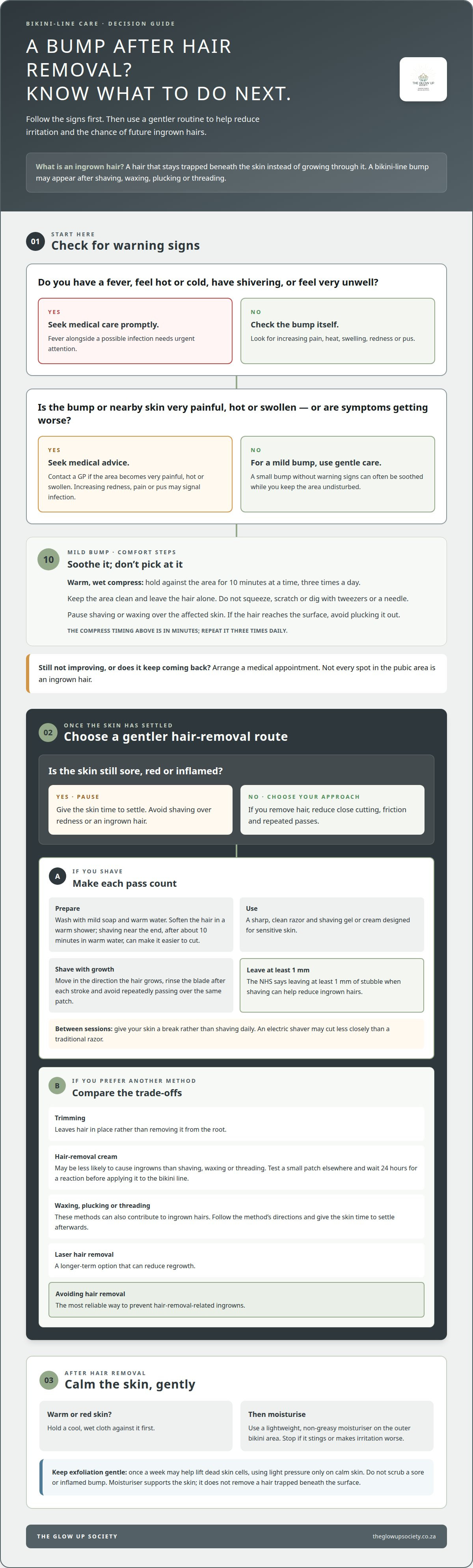
For a gentler shave, start with clean skin and prepare the area before using a razor. Wash with mild soap and warm water, then soften the hair in a warm shower. Shaving near the end of a shower, after about 10 minutes in warm water, can make the hair easier to cut. Apply shaving gel or cream designed for sensitive skin. Use a sharp, clean razor, shave in the direction of growth and rinse the blade after every stroke. A few careful strokes create less friction than repeatedly shaving the same patch.
Practical tools and techniques for shaving the bikini area include a sharp, clean razor, sensitive-skin shaving gel and light strokes in the direction of hair growth. An electric shaver is another option if you want to avoid a very close cut. Neither method can prevent every bump, but reducing friction and repeated passes may help prevent irritation. Avoid shaving over existing redness or an ingrown hair.
Waxing and tweezing need different preparation. For waxing, apply wax in the direction the hair is growing, then pull it off in the opposite direction. Before tweezing, soften the skin and hair with a warm shower, bath or warm washcloth. After either method, a cool cloth followed by a light moisturiser can soothe the surface. Gentle exfoliation may help clear dead skin, but avoid exfoliating an irritated bump. Give the skin time to settle before another hair-removal session.
3. When to seek medical advice
A small bump after shaving can be an ingrown hair, but changes around it need attention. Redness, increasing pain or pus may signal infection, especially if the surrounding skin feels hot or swollen. A trapped hair can cause tenderness, but worsening symptoms are a reason to seek medical advice rather than continue treating the area yourself. Stop shaving or waxing the affected skin while it settles, and avoid squeezing or scratching the bump.
Contact a GP if the ingrown hair or nearby skin becomes very painful, hot or swollen. Seek medical care promptly if you develop a fever, feel hot or cold, experience shivering, or feel very unwell. Fever alongside possible infection needs urgent attention. These signs may indicate that inflammation has spread beyond a small bump, and a healthcare professional can assess the skin and decide whether treatment is needed.
For a mild bump without these warning signs, a warm, wet compress can soothe the area. Hold it against the skin for 10 minutes at a time, three times a day. Keep the area clean and leave the hair alone; digging with tweezers or a needle can damage skin and introduce bacteria. Don’t shave over the bump with razors, since friction may worsen irritation. If the hair becomes visible at the surface, avoid plucking it out.
Arrange a medical appointment if ingrown hairs keep returning despite changes to your hair-removal routine, or if a bump doesn’t improve. Repeated or persistent symptoms deserve an assessment, as not every spot in the pubic area is an ingrown hair. A GP may remove a trapped hair using a sterile needle or blade. If infection is present, treatment may include an antibiotic ointment or wash; a more severe infection may need oral antibiotics, as directed by a healthcare provider.
4. Preventing ingrown hairs over time
A useful approach to how to prevent ingrown hairs on the bikini line is to reduce repeated friction and avoid cutting hairs very close to the skin. If you shave, use a clean, sharp razor and make as few strokes as possible. The NHS says leaving at least 1 mm of stubble when shaving can help reduce ingrown hairs. That small change may help stop cut hairs curling back towards the skin as they grow.
Give your skin a break between hair-removal sessions rather than shaving daily. Gentle exfoliation can help lift dead skin cells that may block a hair follicle. Try exfoliating once a week, using light pressure only on calm skin. Avoid exfoliating a sore or inflamed bump, as added friction can worsen irritation. If you use an exfoliant around hair removal, leave 24 hours before or after the session.
Clothing and skincare habits can also reduce rubbing around the bikini line. Choose comfortable, breathable underwear and avoid tight garments that chafe, especially after hair removal or while a bump is present. Change out of damp clothing, and cleanse gently instead of scrubbing. A light moisturiser after shaving can support skin comfort; stop using it if it stings or increases redness. These everyday choices help keep friction low as new hair grows.
A practical routine for how to prevent ingrown hairs on the bikini line should suit your skin and be easy to maintain. Notice whether particular hair-removal methods are followed by recurring bumps, then consider an alternative if irritation continues. Laser hair removal is one longer-term option for people who frequently experience ingrown hairs. Explore a longer-term hair-removal approach as a next step towards a routine that feels more comfortable.
The Glow Up Society: Laser Hair Removal
The Glow Up Society offers Laser Hair Removal for people seeking a longer-term alternative to repeated shaving or waxing. Laser treatment targets hair follicles and can reduce regrowth, which may help if ingrown hairs keep returning after hair removal. It’s an option to consider once existing irritation has settled, rather than a treatment for an infected or painful bump.
Laser hair removal is not the right fit for every situation, and results vary. A discussion about your hair-removal goals and skin concerns can help you decide whether it suits your routine. If you’re ready to explore this option, contact The Glow Up Society.
Make your routine feel more comfortable
A considered approach to preventing ingrown hairs on your bikini line starts with noticing how your skin responds over time. Rather than changing several habits at once, adjust one part of your routine and observe whether the area feels more comfortable afterwards. This can help you make choices that suit your skin, hair growth and personal preferences, rather than following a routine that feels difficult to maintain.
If recurring bumps are making hair removal uncomfortable, a longer-term option may be worth discussing. Laser Hair Removal at The Glow Up Society can be a next step to explore when you want to reduce reliance on frequent shaving or waxing. A conversation can help you consider whether it aligns with your goals and current skin concerns.
Contact The Glow Up Society to discuss your hair-removal goals and take a calm, considered next step towards greater comfort.
Frequently Asked Questions
What is an ingrown pubic hair?
An ingrown pubic hair is a strand that curls or grows back into the skin instead of emerging normally. It may appear as a small bump near a hair follicle, sometimes with a visible hair beneath the surface. A bump in the genital area can have other causes too, so don’t assume every spot is an ingrown hair, particularly if it changes or persists.
How do you treat ingrown hairs?
For a mild ingrown hair, place a warm, wet cloth over the bump for about 10 minutes, three times a day. Keep the area clean and pause shaving or waxing there until it settles. Don’t squeeze, scratch or dig at the hair, as this can damage the skin. If it becomes increasingly sore or shows signs of infection, seek medical advice.
When should I see a healthcare provider?
Seek medical advice if the bump or nearby skin becomes very painful, hot or swollen, or if you notice pus and spreading redness. A fever, shivering or feeling very unwell alongside a suspected infection calls for prompt care. A healthcare provider can assess whether the problem is an ingrown hair and decide if treatment, such as antibiotics, is appropriate.
When should you get help?
Arrange an appointment if ingrown hairs keep returning despite changes to your hair-removal routine, or if a bump does not improve. Repeated symptoms may need a closer assessment, since other skin conditions can resemble an ingrown hair. Avoid trying to remove a deeply trapped strand yourself. A GP can examine the area and, if needed, remove a visible hair using sterile instruments.
What causes ingrown hairs on the bikini line?
Ingrown hairs develop when a growing strand becomes trapped beneath the skin or curls back into it. Shaving, waxing, plucking and threading can all be associated with them. Coarse or curly pubic hair may be more prone to curling beneath the surface. Friction and irritation around recently treated skin can also make bumps more uncomfortable, so give the area a break if it feels sore.
How can you prevent bikini-line ingrown hairs when shaving?
Prepare the skin with warm water and shaving gel, then use a clean, sharp razor with light strokes in the direction of hair growth. Avoid repeatedly shaving the same patch or aiming for a very close finish. The NHS says leaving at least 1 mm of stubble can help reduce ingrown hairs. After shaving, rinse the skin gently and apply a light moisturiser if comfortable.